In a continued effort to improve our coverage, we’re introducing a weekly feature for TrainsPRO. It will be a weekly recap, highlighting our most popular stories of the week, and also occasionally shining a spotlight on stories that you might have missed, but that our editorial team believes might develop into the next big story in the rail industry. The following are the best-performing TrainsPRO stories for the week of Mar. 6, 2026.
Long court battle could add more than $1 billion to cost of Hudson Tunnel
Key contracts cannot be awarded until all federal funding is assured
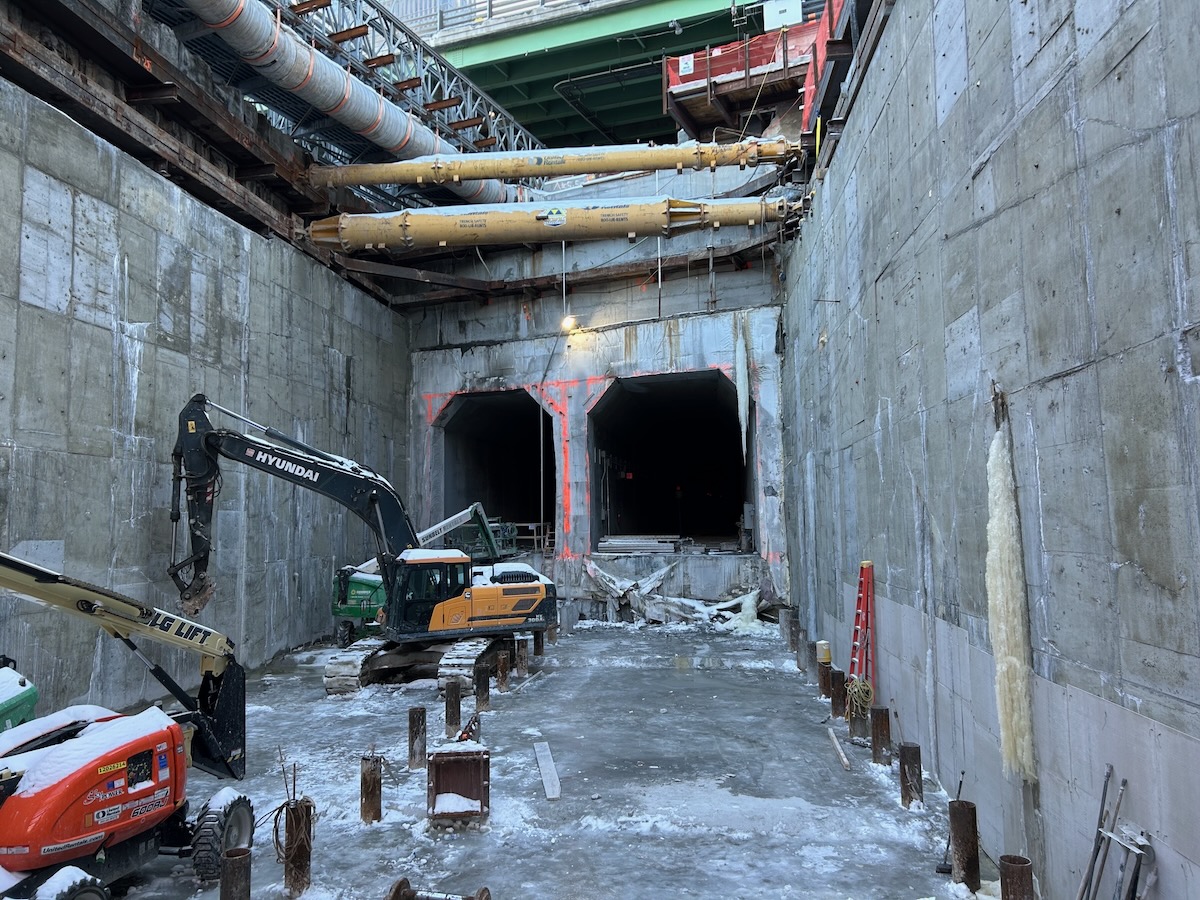
NEWARK, N.J. — A prolonged court fight over funding for the Hudson Tunnel project could add over $1 billion to the final cost of the rail tunnels between New York and New Jersey, NJ.com reports.
That figure comes from an online forum conducted Monday, March 2, by the Regional Plan Association, a nonprofit planning group representing 31 counties in the tristate New York-New Jersey-Connecticut area.
PRA CEO Tom Wright told participants that a six-month delay to the project could add $720 million to $1.34 billion to the multibillion-dollar project. The federal government has released some $236 million in funding withheld since last October, allowing construction to resume after halting on Feb. 6 [see “Work restarting …,” Trains.com, Feb. 24].
But the Gateway Development Commission, which oversees the project, said last week it will not award two key contracts — to build the tunnel itself, as well as the surface line leading to it in New Jersey — until it is assured it has access to all $15 billion in previously committed federal grants and loans. Those contracts were scheduled to be awarded late last year or early this year.
Two lawsuits — one by the states of New York and New Jersey, and one by the Gateway Commission — are seeking to ensure the release of all the funding. The states’ suit led to a ruling by U.S. District Court Judge Jeannette Vargas ordering that the funds be released while the suit continues; the federal government is appealing that decision.
President Donald Trump, in a social media post after the court ruling, called the project a “future boondoggle” and said the federal government would be responsible for “not one dollar” of any cost overruns [see “Hudson Tunnel work to resume …,” Feb. 18, 2026].
CN introduces two America 250 locomotives
‘Screaming Eagle,’ ‘Air Force One’ designs to operate across railroad’s U.S. network
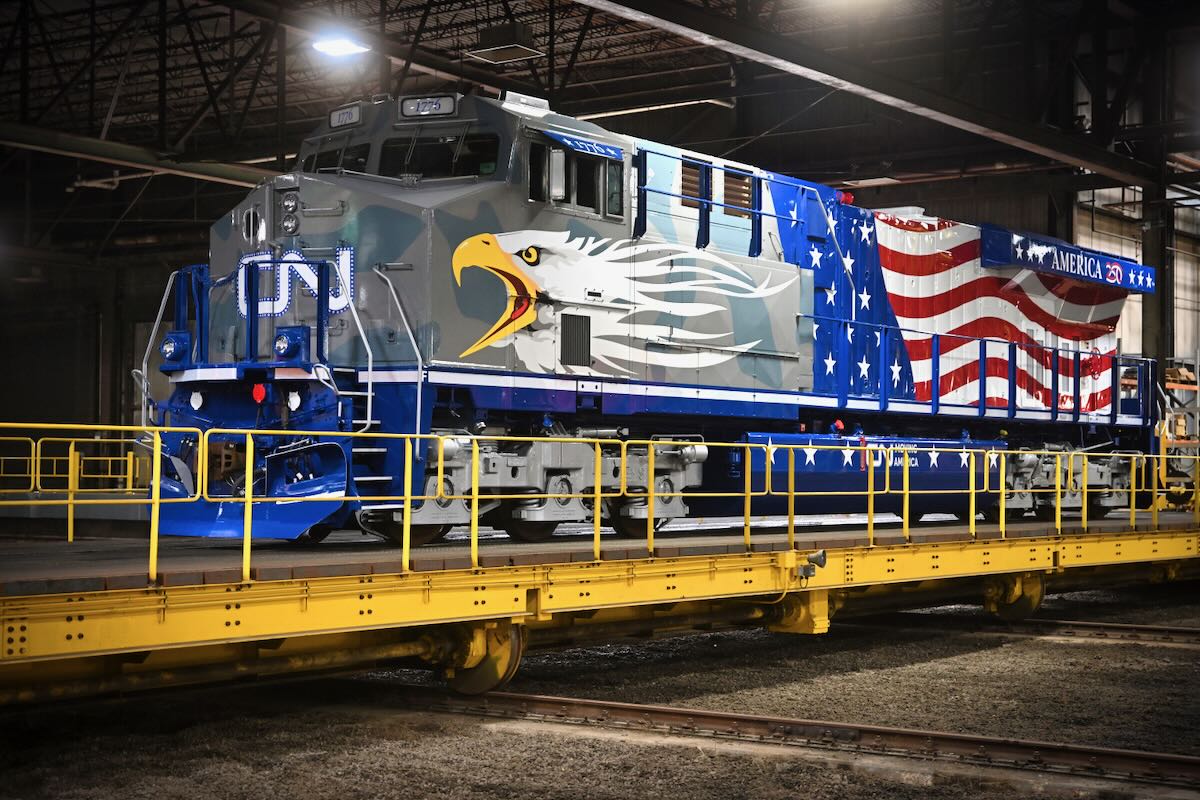
HOMEWOOD, Ill. — Canadian National today unveiled two locomotives to launch its celebration of the 250th anniversary of American independence, saying the units “represent the dual pillars of the American story: independence and innovation.”
Locomotive No. 1776 features a “Screaming Eagle” design. “The ‘Screaming Eagle’ has deep historical roots,” the railway says in a press release, “long associated with military service, where it has come to represent courage, sacrifice and unwavering commitment to the nation. As the national emblem, the eagle represents sovereignty and resolve; in flight, it represents vision, leadership and the enduring pursuit of liberty.”
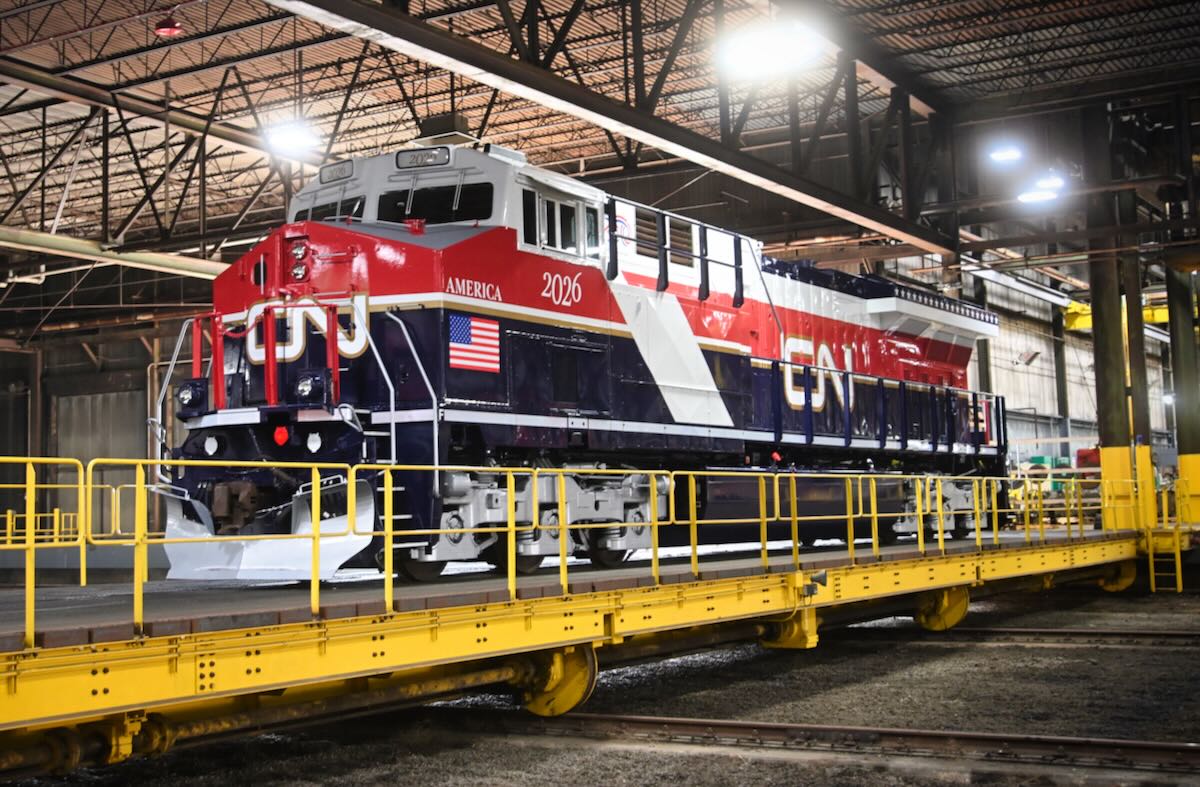
The second unit, No. 2026, is inspired by the design of Air Force One, which the railway describes as “a global symbol of precision, innovation, and national security. The design reflects America’s leadership in engineering and advanced technology, underscoring the powerful link between transportation innovation and strength.”
CN CEO Tracy Robinson says, “America’s 250th anniversary is an opportunity to reflect on the ideals and vision that helped shape the United States of America and the innovation that continues to define it. At CN, we are proud to have played a vital role in the country’s past and are excited to continue connecting U.S. industries, communities and supply chains for generations to come.”
Adds Chief Operating Officer Patrick Whitehead, “These locomotives are more than commemorative designs, they are rolling tributes to the resilience, ingenuity and pursuit of liberty that define the American experience. We are proud to pay tribute to this incredible milestone and to continue delivering safely and reliably for our customers and the communities across this great country.”
The locomotives will begin service immediately and are expected to operate across CN’s U.S. network throughout 2026.
The railroad also released this video to accompany the unveiling of the locomotives.
CN becomes the second Class I railroad to introduce America 250 designs, following CPKC, which unveiled its first of five units on Tuesday [see “CPKC becomes first Class I …,” Trains.com, March 3, 2025].
Federal judge says administration can’t kill New York’s congestion tolling (updated)
Ruling says transportation secretary cannot revoke previous approval
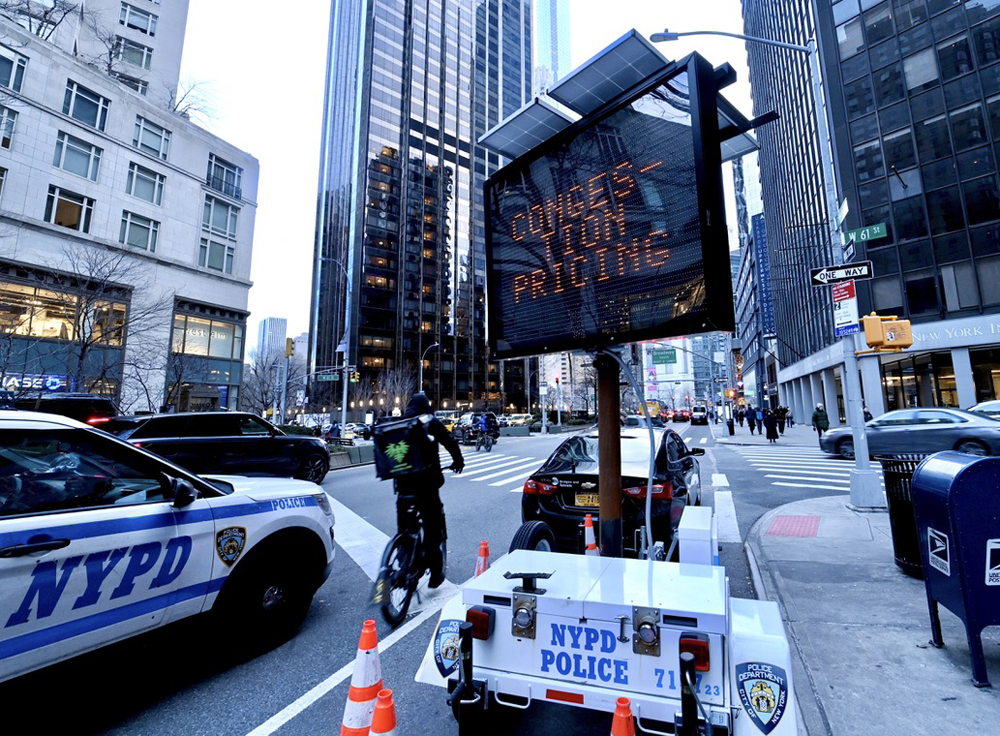
NEW YORK — The Trump Administration’s effort to kill New York’s congestion tolling program — which helps fund Metropolitan Transportation Authority capital projects — has been ruled illegal by a federal judge.
The government cannot revoke its previous approval of the program, U.S. District Court Judge Lewis L. Liman wrote in a 149-page ruling today (March 3, 2026).
It would be hard, Liman wrote, to imagine “a more definitive repudiation of contractual obligations by any party to any form of agreement” that that contained in the administration’s Feb. 19, 2025, letter demanding an end to the program. That letter, from Transportation Secretary Sean Duffy to New York Gov. Kathy Hochul, contended the Federal Highway Administration’s prior approval “was not authorized by law” because of a lack of non-toll options for drivers, and because it was intended to raise money for the MTA rather than reduce congestion. [See “New York MTA sues …,” Trains.com, Feb. 19, 2025].
In a press release announcing the letter, Duffy called the program “a slap in the face to working class Americans and small business owners.” President Donald Trump — who had said during his campaign that he would kill the tolling program — wrote in a social media post that day, “Congestion pricing is dead. Manhattan, and all of New York is saved. Long live the king!”
That drew a sharp response from Hochul, who said in a statement, “We are a nation of laws, not ruled by a king. … We’ll see you in court.” The MTA filed suit that day.
Among the government’s arguments was that its move to revoke the federal permission was not final, and therefore was not subject to court review. Liman rejected that argument, noting that Duffy’s Feb. 19 letter said “in no uncertain terms that ‘I am rescinding FHWA’s approval’” of the program. “Accepting the Secretary’s view as to the finality of agency action here,” the judge wrote, “would permit any government agency to forever frustrate judicial review, by the mere expedient of offering, on the eve of review of what otherwise was a final agency action, that the agency was prepared to reconsider.”
Hochul and the MTA were both quick to issue statements following today’s ruling.
“The judge’s decision is clear: Donald Trump’s unlawful attempts to trample on the self-governance of his home state have failed spectacularly,” Hochul said in her statement. “Congestion pricing is legal, it works, and it is here to stay. The cameras are staying on.”
Hochul also called the tolling program “a once-in-a-lifetime success story” that has “yielded huge benefits: reduced gridlock, safer streets, and cleaner air, all while unlocking critical funding for mass transit upgrades.”
Said MTA CEO Janno Lieber, “We’ve said it all along, and Judge Liman’s clear, detailed ruling leaves no doubt: congestion pricing is legal. It’s here to stay. And it works. Traffic is down, business is up, and we’re making crucial investments in a transit system that moves millions of people a day.”
The New York Times reports that a Department of Transportation spokeswoman said the agency was considering an appeal of the ruling, saying the tolling program “made federally funded roads inaccessible to commuters without providing a toll-free alternative.”
Liman, the judge who issued today’s ruling, had previously allowed the tolling to continue while the matter was decided in court [see “Federal judge issues temporary restraining order …,” Trains.com, May 27, 2025].
The tolling program, which launched on Jan. 5, 2025, covers Lower Manhattan below 60th Street, save for some key perimeter highways and one tunnel. It charges $9 for most vehicles entering the area during peak hours. The state and MTA have offered extensive statistics showing the benefits of the program [see “New York, MTA say first year of congestion pricing is a success,” Trains.com, Jan. 6, 2026].
New Berkshire CEO: BNSF needs to improve its profitability
“The gap to the industry’s best remains too wide,” Greg Abel wrote in his first letter to shareholders
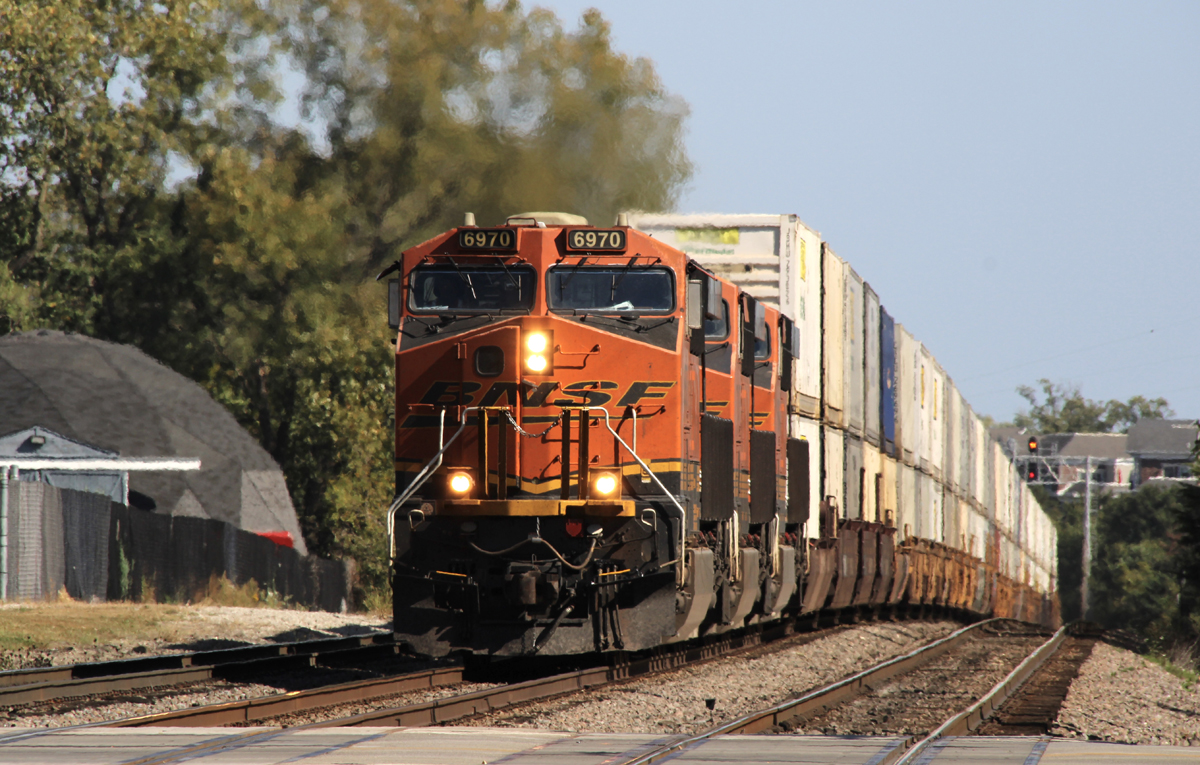
OMAHA, Neb. — BNSF Railway needs to close the operating-ratio gap with the other Class I railroads, new Berkshire Hathaway CEO Greg Abel said on Saturday in his first annual letter to shareholders.
BNSF continues to perform well from a safety standpoint and has improved its efficiency and service, Abel wrote. “In 2025, shipments spent less time idling at terminals and moved through the network faster than in nearly any year in the company’s history,” Abel noted.
“These gains matter, but they are not enough; more progress is needed to translate operational improvements into stronger financial results,” Abel wrote. “We view operating margin (the inverse of the industry’s operating ratio) as the best measure of performance. In 2025, BNSF’s operating margin improved to 34.5% from 32.0% in 2024. It remained only modestly above its five-year average.”
BNSF’s 2025 operating ratio of 65.5% was 5.7 points behind the 59.8% performance of western rival and industry leader Union Pacific.
“The gap to the industry’s best remains too wide and closing it will require continued improvements in efficiency and service. Each one-percentage-point improvement in operating margin generates approximately $230 million of incremental operating cash flow for our owners,” Abel wrote. “The team recognizes the significance of this opportunity, and we will be disappointed if we do not deliver a substantial improvement over the next few years.”
Abel’s letter indicated that the core principles Chairman Warren Buffett set at Berkshire Hathaway remain intact — including letting the conglomerate’s companies have a large degree of autonomy.
Last year BNSF produced $8.1 billion in net operating cash flows and returned $4.4 billion to Berkshire in the form of dividends. That was slightly above the five-year average of $4.1 billion.
BNSF’s operating earnings increased 7.8% last year, to $8.05 billion, on flat revenue of $23.3 billion. Net earnings increased 8.8%, to $5.47 billion. The railroad’s operating expenses declined 3.7%.
For the year, the railway’s overall volume was relatively flat at a 0.3% gain over 2024. Three of BNSF’s four business segments gained volume for the year, however.
Consumer products volume — which includes intermodal and automotive traffic — increased 1.2% last year. “The volumes increase was primarily due to higher intermodal shipments resulting from higher West Coast imports and a new intermodal customer, and an increase in automotive vehicle volumes,” Berkshire said.
Industrial products segment volume declined 4.6%, largely due to declines in shipments of construction products, plastics, and petroleum products.
Agriculture and energy products shipments increased 3.2% due to higher grain exports and petroleum fuel shipments, partly offset by declines in domestic grain and feed volume.
Coal traffic was up 1.1% as higher natural gas prices made coal more competitive for electricity generation.
New legislation would require railroads to conduct automated and human track inspections (updated)
Bill sets requirements for frequency of inspections, immediate action when defects are found
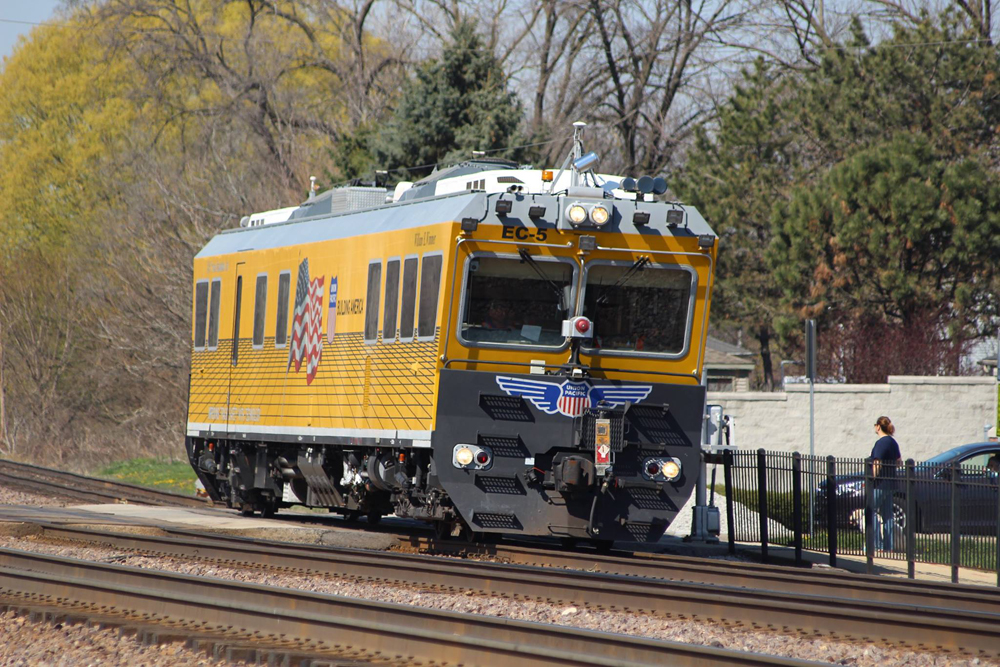
WASHINGTON — In the latest in a recent series of rail safety bills, U.S. Sens. Tammy Baldwin (D-Wis.) and Josh Hawley (R-Mo.) announced on Wednesday, March 4, that they would introduce legislation requiring railroads to maintain visual track inspections in conjunction with automated track inspection systems.
U.S. Rep. Dina Titus (D-Nev.) is leading the companion legislation in the House of Representatives.
The Secure Tracks Act will require all track designated as Federal Railroad Administration Class 3 or higher — that is, track with speed limits of 40 mph or more for freight and 60 mph or more for passenger — to receive visual track inspections twice a week. It also requires all track classifications to receive automated inspections at specified frequencies, using the Track Geometry Measurement System.
The bill would also require any defect to be corrected or otherwise addressed immediately upon detection, and requires inspectors to immediately initiate action to address such defects. And it prohibits the secretary of transportation from granting any waiver of safety regulations if the proposed alternative method of inspection or monitoring fails to identify all conditions recognized as unsafe under FRA regulations.
“Safety must be our top priority when it comes to our nation’s railroads,” Hawley said in a press release. “Technology can help us monitor our railways but there is no substitute for in-person inspections conducted by railroad professionals. … Technology must serve workers — not the other way around.”
Said Baldwin, “I am all for using technology to keep our trains on the tracks and communities safe from derailments, but what we have learned is that technology can’t do it all alone. It misses things that humans see and hear, and if we want to make sure our railroads are safe, we need both technology and real people who have the experience and knowledge.”
The complete bill is available here. Ten rail labor organizations have endorsed the measure.
The senators say in the press release that automated inspection can detect only 26% of all track defects, with the remaining 74% detected only by a human being.
The Association of American Railroads, in a statement today (March 5), disputed the premise behind the bill.
“Railroads currently use Automated Track Inspection (ATI) as a complement to manual, visual inspections to improve safety across the network—an approach proven to identify 200 times more track defects than visual inspections,” said Ted Greener, AAR senior vice president, communications. “In fact, FRA data shows that in 2025 freight railroads had the lowest rate of track-caused accidents in railroad history, thanks in part to the deployment of advanced technologies, like ATI. Taken together, this blended approach is working and delivering significant safety gains across the freight rail network and in communities. Efforts to undermine implementation of ATI and other technologies in the future, like the Secure Tracks Act, are bad for safety, consumers, and communities nationwide.”
The bill joins other legislation introduced in the last two weeks, including the latest version of the Railway Safety Act in the Senate [see “Senators introduce new version …,” Trains.com, Feb. 24, 2026] and the Railroad Safety Enhancement Act in the House [see “House members introduce …,” Feb. 26, 2026].
— To report news or errors, contact trainsnewswire@firecrown.com.