





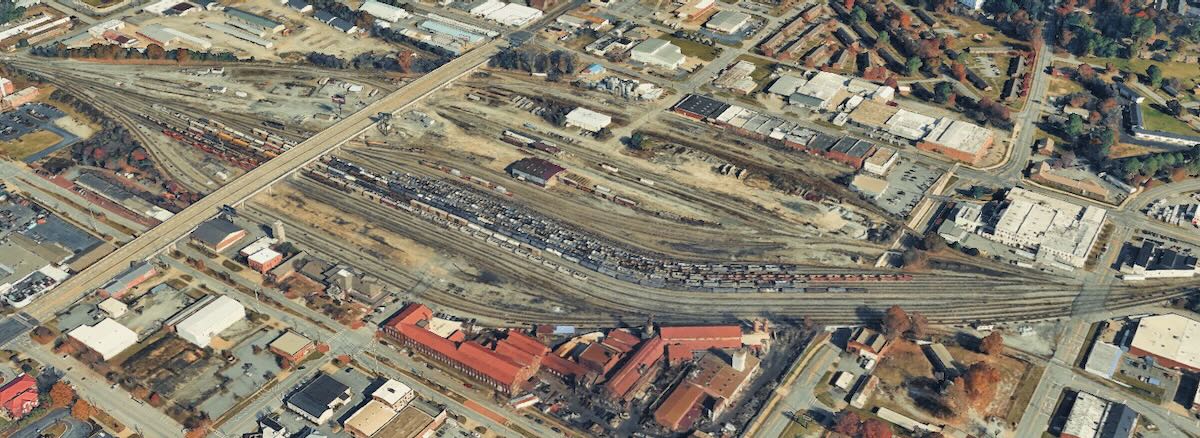
COLUMBUS, Ga. — A Georgia city’s lawsuit claiming ownership of most of a Norfolk Southern rail yard landed in federal court on Wednesday (Feb. 25), where a judge will now determine if that is the proper venue for the dispute.
Neither the railroad nor the City of Columbus believe it is.
WRBL-TV reports Judge Clay Land of U.S. District Court for the Middle District of Georgia held a 90-minute hearing on the case, in which Columbus asserts much of the land occupied by the yard reverted to city ownership in the 1970s with the end of passenger rail service. The city originally filed the suit claiming ownership last year in Muscogee County Superior Court and argues that is where it should remain. Norfolk Southern — a defendant along with Genesee & Wyoming — had the case transferred to federal court as a matter of interstate commerce, but argues that it is actually a matter for the Surface Transportation Board as the regulator of rail transportation.
Land took the case under advisement and will issue an order on the jurisdiction question at a later date.
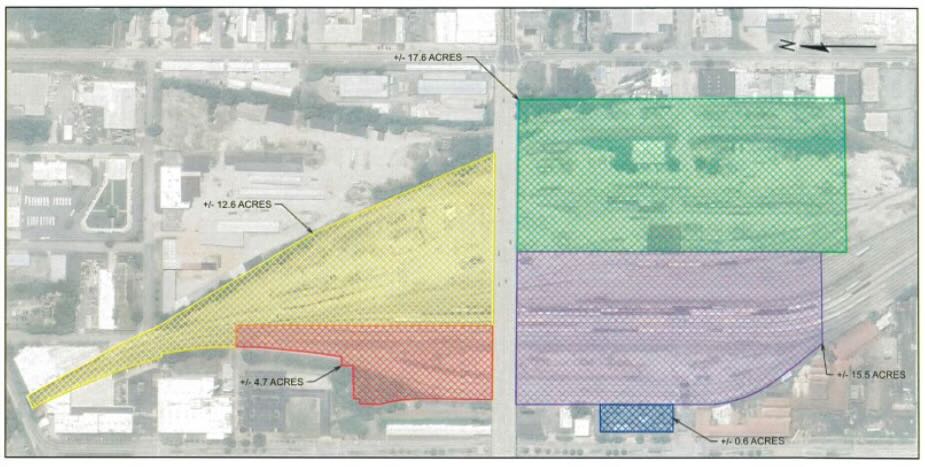
The Consolidated Government of Columbus, or CCG, filed suit in Superior Court in August 2025, arguing that under an 1847 agreement with the Muscogee Railroad Co., it provided public land “for the purpose of locating a depot” in the city. No deed was involved; instead, the city government passed resolutions conveying the land subject to specific limitations, including a provision in which the land would revert to the city if it was no longer used for a depot.
“For more than a century, the railyards were used more or less as CCG and the Railroad intended with the benefits of that use flowing to the citizens of Columbus,” the suit says. “Then, the Railroad ceased passenger services in Columbus and sold and/or demolished its depots. This triggered the terms of reversion, and title to both railyards is now vested in CCG. However, the Railroad remains on the property and uses it for its own non-public purposes which do not include the operation of a depot.”
The Muscogee Railroad Co. was a predecessor of the Central of Georgia, which in turn is now part of NS. G&W is involved because two of its short lines, the Columbus & Chattahoochee Railroad and Georgia Southwestern Railroad, interchange with NS at the yard in Columbus and lease land from NS.
The suit, the city says, is to regain control of the land and “recover for the losses and damages CCG has suffered” from the railroads’ continued use of the property.
NS and G&W, in their filing to move the matter to federal court, note that the Columbus action acknowledges that the yard has been used for decades for interstate rail operations, and “thus is part of the national rail network. As a result, the federal Surface Transportation Board has exclusive jurisdiction over the ‘construction, acquisition, operation, abandonment, or discontinuance’ of these tracks and facilities.”
Court documents say the yard handles approximately 45,000 railcars annually, and is also the only rail access point to the U.S. Army’s base at Fort Benning, Ga., part of the federal Strategic Rail Corridor Network.
The filing moving the case to federal court and the original Columbus lawsuit are available here.
— To report news or errors, contact trainsnewswire@firecrown.com.


I think this will end up like the Palestine, Texas case where the RR was allowed to walk away from a long agreed to contract. Here there does not seem to even be a written contract.
This should be an interesting case, because at least according to Wikipedia, the word depot does not exclusively refer to passenger operations but also complete freight operations, including maintaining equipment and receiving and transporting freight.