




Q How have traffic patterns changed on the former Illinois Central line just west of Hawthorne Yard in Cicero, Ill., since Canadian National took over? Also, what is the latest on its future east of the ex-Elgin, Joliet & Eastern (now CN)? How much freight will be diverted off the Iowa line onto that route? […]
Tag: Train Basics
Eastern railroad hats
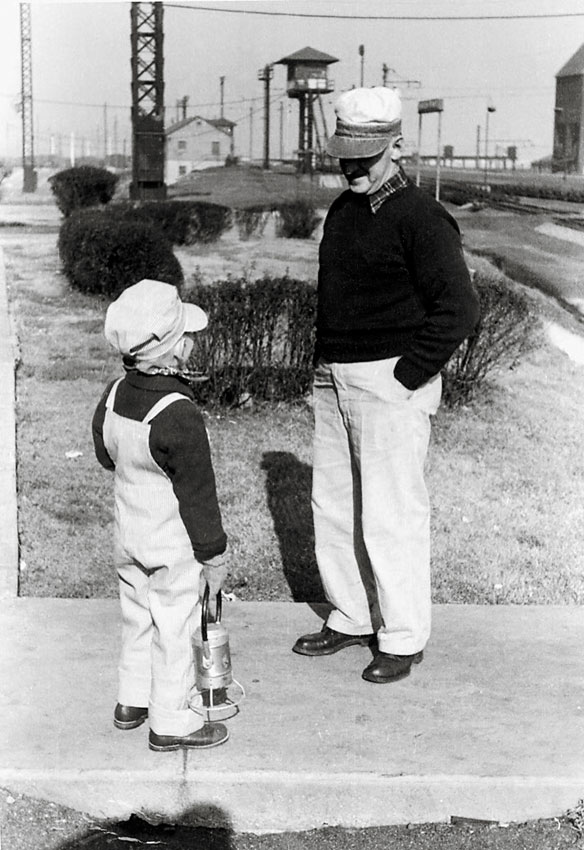
Richard Benton (left) with a railroader in a traditional Eastern hat at Potomac Yard in the 1950s. Richardson D. Benton Ben Curtis’ father’s Eastern railroad hat (left) and the new version Kromer Cap will begin offering. Ben Curtis (left) Q My father wore this style train cap in the 1960s, purchased in the Boston area. […]
Gantlet vs. gauntlet
Q Is it gantlet or gauntlet? My dictionary describes the former as a type of railroad track and the latter as an armored glove. But now my railroad guru tells me that all railroads use “gauntlet” to describe the track. Which is it? – D.G. Townsend, Falls Village, Conn. A Always trust your dictionary. Gantlet […]
Railroad air brake systems
Q I just saw the preview for “Unstoppable.” How can a train with no air in the reserve tank and brake cylinders roll away? I thought once all the air is drained the brakes will automatically apply?— Andrew Marino, Lincoln Park, N.J. A Railroad air brake systems need air pressure to function, and it’s held […]
Air hoses on locomotives
Q This is a follow-up question to one in the July 2010 issue about the three air hoses on locomotives (page 58). I saw engines in the ’70s and earlier with four hoses and some with only two. Why the difference?— Dan Mirabelli, Neenah, Wis. A The two-line m.u. setup was generally for 14EL-equipped units. […]
Measuring track curvature
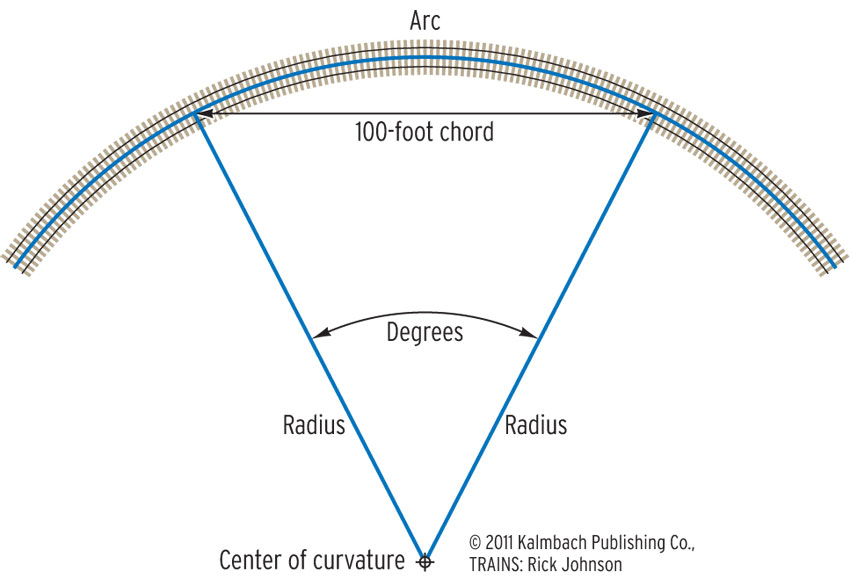
Q How do railroad design engineers measure track curvature in the United States? I believe it has something to do with measuring the degrees between two radii of a circle having the track as the arc length, but I don’t fully understand how it is measured, or from where exactly on the tracks the radii […]
Ask Trains from December 2010
Q I’ve read that when some railroads sent their steam locomotives in for a complete overhaul, they changed the main drivers to a disc type. Why would they do this?— Alex Jamieson, Chatham, Ont. A Changing to disc-type drivers was done on a case-by-case basis. The older style spoke drivers had a tendency to break […]
Diesels invade N&W’s Blue Ridge Grade
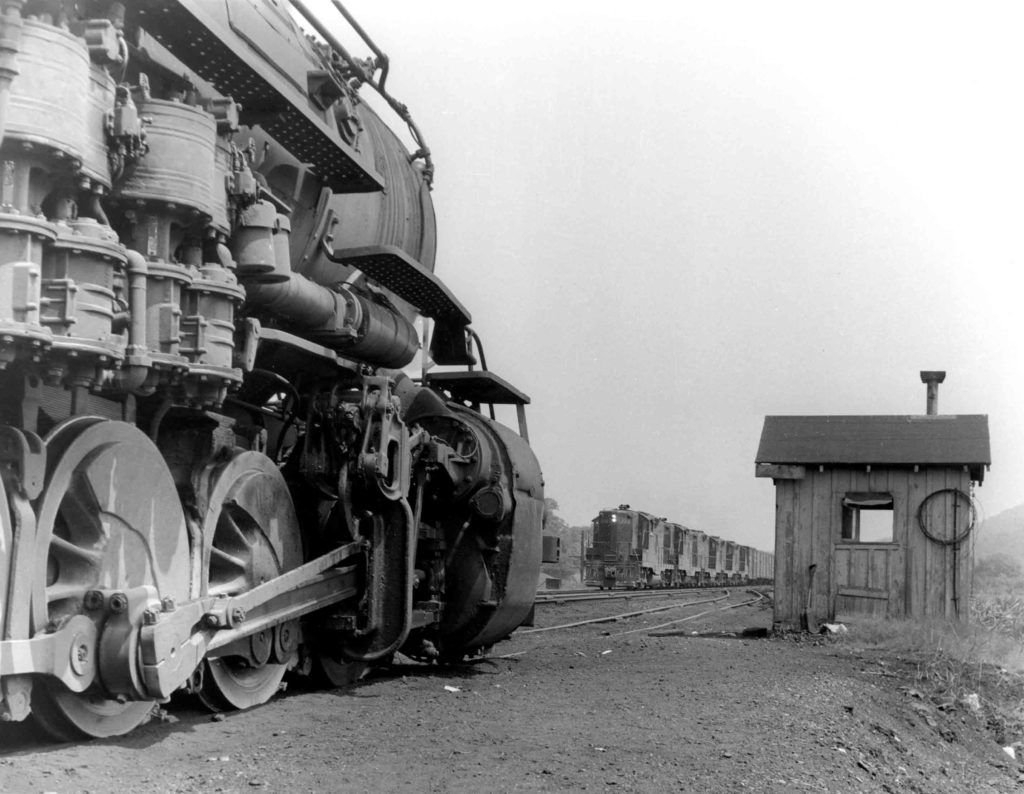
Jim Shaughnessy Geeps at Boaz – 1 Framed by a waiting Y6 and the siding shanty, five N&W GP9’s pass the Blue Ridge Grade helper siding at Boaz, Va., with a westbound boxcar train in August 1958. Jim Shaughnessy Geeps at Boaz – 2 Another August 1958 photo finds three GP9’s bringing a merchandise train […]
CP Rail’s multifaceted Multimark
[…]
Coal cars’ reporting marks exposed
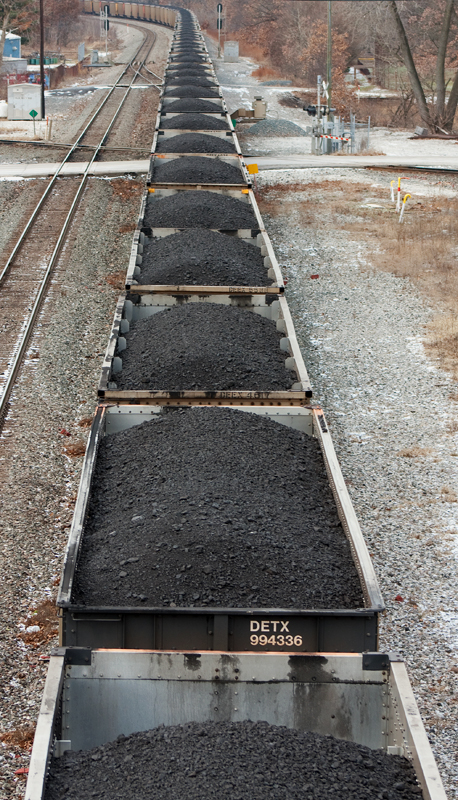
BNSF 9801 led this coal train through Willow Creek, Ind., on Jan. 1, 2009. DETX 994336 is one of 5,700 coal cars owned by Detroit Edison Co. Kathi Kube It’s easy enough to identify reporting marks for Class I railroads, as well as a multitude of short lines and regionals, but the reporting marks on […]
Ask Trains from September 2009
Q How do railroads figure how much power is necessary for a train?– Richard Panarese, Mesa, Ariz.A Railroads determine power needed for a train based on the route, and the train’s weight and priority. BNSF, for instance, considers the “horsepower per ton” required based on what officials call the train’s “transportation service plan.” The transportation […]
Ask Trains from May 2009
Q In March Trains, an article on the demise of semaphore signals on the former Monon [Page 14] mentioned that CSX was doing away with lineside pole lines and their maintenance. It said the new system will use Electro Code, a system where signal communications run through the rails. How is this done?– Richard K. […]
