
Steam locomotive profile: 4-6-2 Pacific
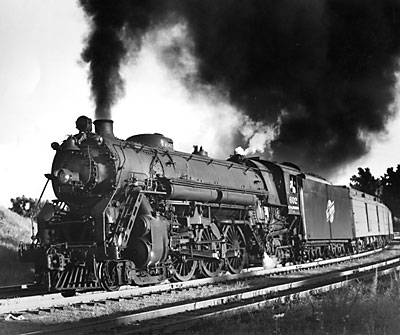
Chicago St. Paul Minneapolis Omaha Pacific 4-6-2 No. 602

C&NW subsidiary Chicago, St. Paul, Minneapolis & Omaha owned the world’s heaviest and most powerful Pacifics. No. 602 – one of the road’s three giant 4-6-2s, built by Alco in 1930 – blasts through St. Paul, Minn., with train 514 on July 5, 1953. W. H. N. Rossiter The 4-6-2, or Pacific type, grew out […]

Read More…

Steam locomotive profile: 4-6-4 Hudson

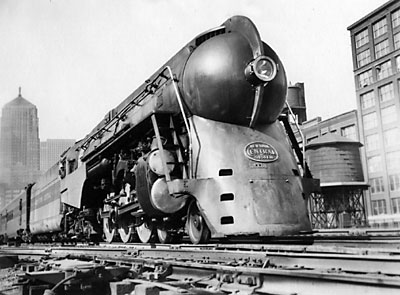
New York Central Twentieth Century Limited 4-6-4 Hudson

Henry Dreyfus created the timeless design worn by the streamlined 4-6-4s that pulled the Twentieth Century Limited. New York Central rostered North America’s largest fleet of Hudsons. In this photo, one of the speedsters prepares to depart LaSalle St. Station in Chicago. W.C. Merle, II In the early 1920s, as passenger train lengths grew and […]

Read More…

Steam locomotive profile: 4-8-2 Mountain

Classic Trains logo

BY Neil Carlson The development of the 4-8-2 grew out of the need for a locomotive with greater power than the Pacific to handle heavy passenger trains in mountainous terrain. The first 4-8-2 in North America was built at Alco’s Richmond plant and delivered to the Chesapeake & Ohio in 1911. Chessie wanted an engine […]

Read More…

Steam locomotive profile: 4-6-6-4 Challenger

Union Pacific 4-6-6-4 Challenger No. 3976

Better than most railroads, perhaps, the Union Pacific understood fast freight service. With an expansive network of lines spread across the western states, the railroad had to maintain fast schedules in order to remain competitive. Mindful of this, UP purchased the first heavy fast freight locomotives: unique three-cylinder 4-12-2s, built by Alco from 1926 to […]

Read More…

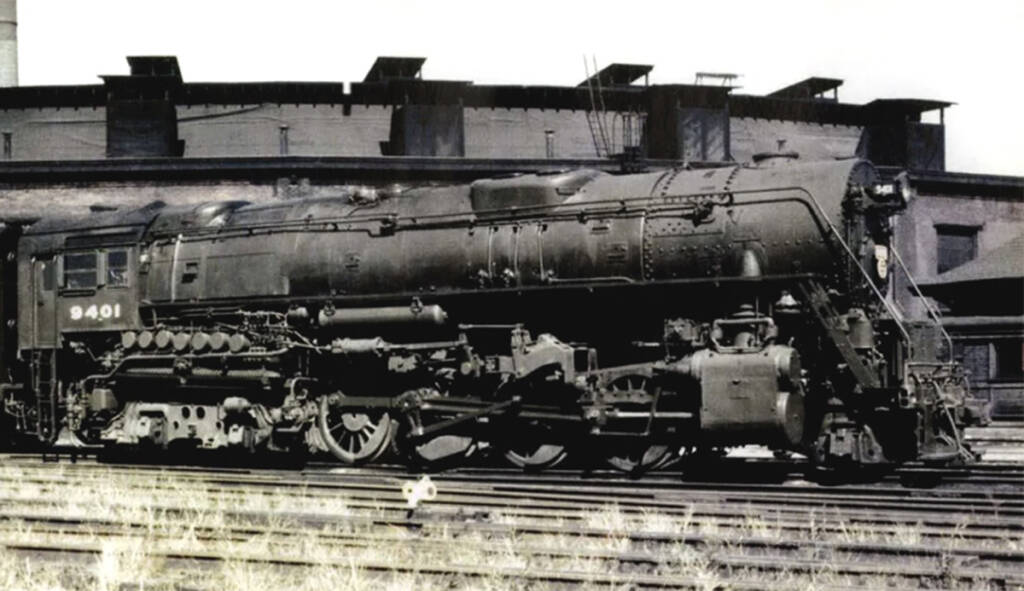
Steam locomotive profile: 4-8-8-4 Union Pacific Big Boy

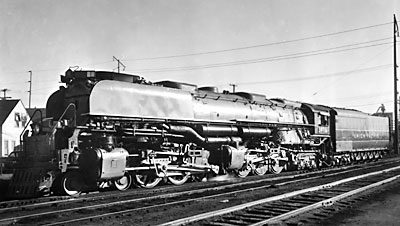
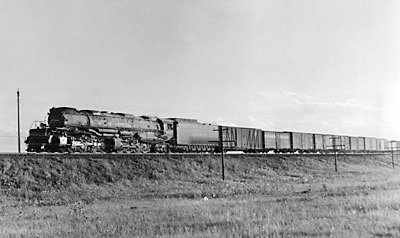
Union Pacific 4-8-8-4 Big Boy

The proving ground for Union Pacific’s locomotives was a 75-mile portion of its busy main line between Ogden, Utah, and Evanston, Wyo. Eastward trains faced a climb through the Wasatch Mountains on grades of 1 percent or better. It was an expensive line to operate, particularly given UP’s practice of running big trains that typically […]

Read More…

Louisville & Nashville: Still reliable after all these years

Classic Trains logo

It was on March 5, 1850, that the Kentucky legislature approved a charter for the Louisville & Nashville Railroad Company. The first through train operated between L&N’s namesake end points in 1859. Had it not been for dynamic leadership, vision, money, and some luck, the L&N might not have matured beyond this original route and […]

Read More…

The Berkshire: Fast-Freight Legend

A black Berkshire steam locomotive and tender is shown stationary in a vintage color photo

In 1920, when American railroads emerged from 26 months of government control, the prevailing philosophy of freight-train operation was to hang as many cars as possible behind a locomotive and send it out to drag its way along the line. Three locomotive types were ideal for drag freight: 2-10-2, 2-6-6-2, and 2-8-8-2. The 2-10-2 and […]

Read More…

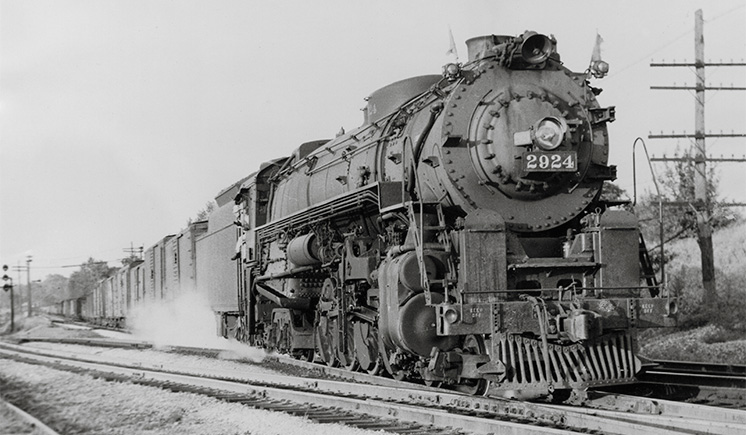
Wabash Railway Steam Locomotives in the 20th Century

Wabash2924

The Wabash Railway of 1900 was part of the empire that George Gould inherited from his father Jay. Its lines linked Detroit, Toledo, Chicago, St. Louis, Kansas City, Omaha, and Des Moines, and formed major hubs at Decatur, Ill., and Moberly, Mo. It had just received trackage rights on the rails of the Grand Trunk […]

Read More…

New York, Chicago & St. Louis: the Nickel Plate Road

In 1879 and 1880, a syndicate headed by George I. Seney, a New York banker, assembled the Lake Erie & Western Railway, a line from Fremont, Ohio, to Bloomington, Ill. After a dispute with the New York Central System about the routing of freight, Seney decided to build a line to connect the LE&W to […]

Read More…