
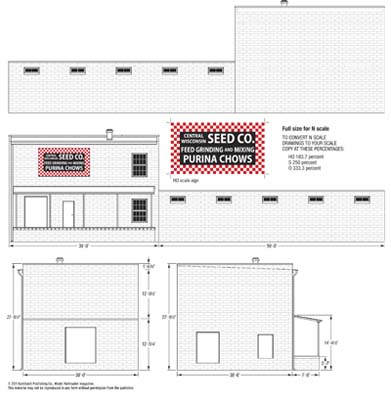
Central Wisconsin Seed Co. building plans in N, HO, O, and S scales
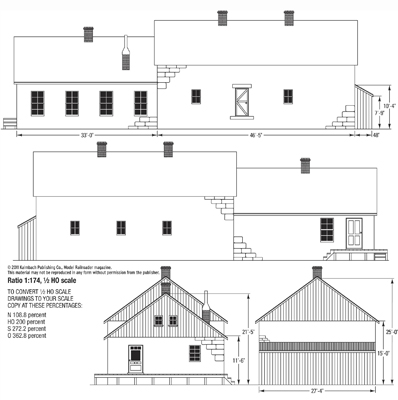
Wisconsin Central Seed Co

The full-size Central Seed Co. was built shortly after World War II. What made this business interesting is that it received rail shipments from the Green Bay & Western at one end of the building and Soo Line at the other. Truck shipments were handled at the covered dock. In the February 2012 issue of […]

Read More…

Nuckolls Packing structure drawings in N, HO, S, and O scales

Nuckolls Packing

Nuckolls Packing is one of many structures depicted in period photos of Telluride shot from the mountain south of town and published in The RGS Story, Volume II by Russ Collman (Sundance Publications, out of print). The industry was on a siding, so it was an ideal subject for my model, which would serve as […]

Read More…

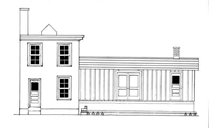
Small freight house drawings in N, HO, S, and O scales

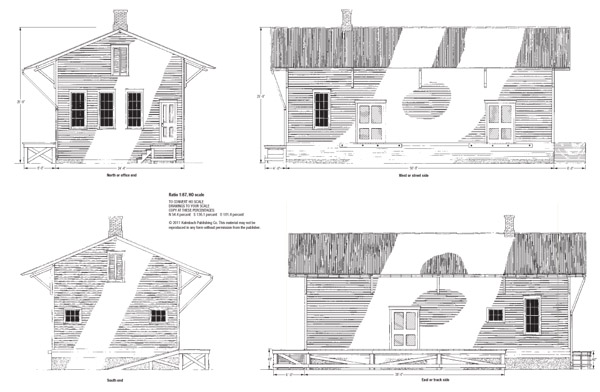
A small Pennsylvania RR freight house

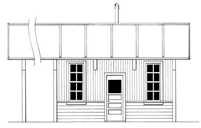
Small freight houses were once a common sight in rural towns across North America. Built in the early 20th century, they provided a link for less-than-carload-lot (LCL) and full carload shipments between the railroad and its local customers. This freight house served Montour Falls, a small community about two miles south of Watkins Glen, N.Y., […]

Read More…

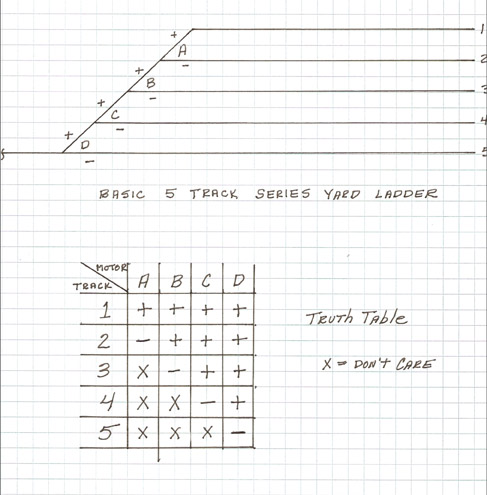
Design procedure for yard ladder control using slow-motion switch motors

Design procedure for yard ladder control using Tortoise switch motors- figure 1

Introduction In an article in the August 2011 Model Railroader, I described a method to control yard ladders with a single rotary switch. By simply turning the rotary switch, all turnouts would automatically line up for the selected yard track. The method was based on using a bipolar power supply, Tortoise switch machines, and one […]

Read More…

Plans for a 1:29 scale watchman’s tower

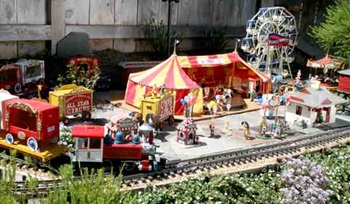
Garden Railways

This PDF is formatted to print on your home printer. Most pieces are formatted to fit on a 8.5″ x 11″ piece of paper. For larger parts of the plan, you will see “break lines.” Line up the break lines to create the larger piece. Despite our best efforts to compress this file, it is […]

Read More…

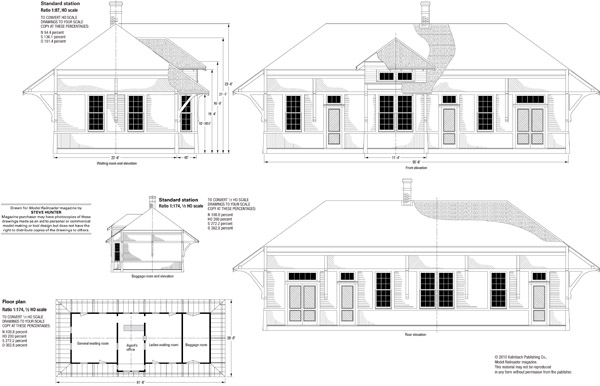
Standard station drawings

Standard Station

The early 1900s were a period of great expansion and modernization on the Prince Edward Island Ry. (PEIR). Existing stations were replaced or expanded, new locomotives and cars were acquired, and a number of branch lines were built. Three of these branch lines shared a very attractive standard station design. These stations were built at […]

Read More…

Selective compression techniques for large-scale structures

Selective compression techniques for large-scale structures

In the April 2011 issue, Kevin Strong describes how to create purpose for your garden railway. He suggests using a technique for structures called “selective compression.” Download this related article by Jack Verducci, who describes how to use this technique. […]

Read More…

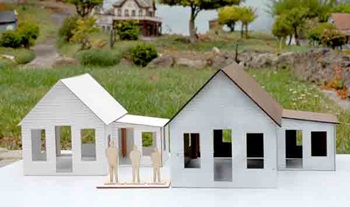
Build a 1:22.5-scale warehouse with loading dock

Build a 1:22.5-scale warehouse with loading dock

Download the PDF of this project here. This PDF is formatted to print on your home printer. Most pieces are formatted to fit on a 8.5″ x 11″ piece of paper. For larger parts of the plan, you will see “break lines.” Line up the break lines to create the larger piece. Despite our best […]

Read More…

Construct a simple and reliable helix

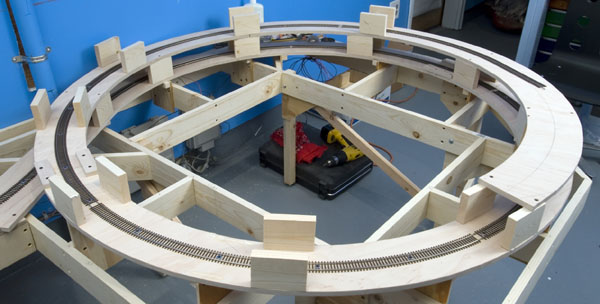
Making sure the first level of a helix is as stable, secure, and smooth as possible makes the remaining levels go together easier.

A house, a car, and a layout all have something in common: they turn out better when they’re built on a solid framework. This is especially true of a helix. A helix – a spiral ramp meant to lift a model train from one level of a layout to another – may not be prototypical, […]

Read More…

Build a 1:22.5-scale Wiscasset station PDF

Build a 1:22.5-scale Wiscasset station

Download the PDF of this project here. This PDF is formatted to print on your home printer. Most pieces are formatted to fit on a 8.5″ x 11″ piece of paper. For larger parts of the plan, you will see “break lines.” Line up the break lines to create the larger piece. Despite our best […]

Read More…