
Choosing rail for the garden railroad
Garden Railways

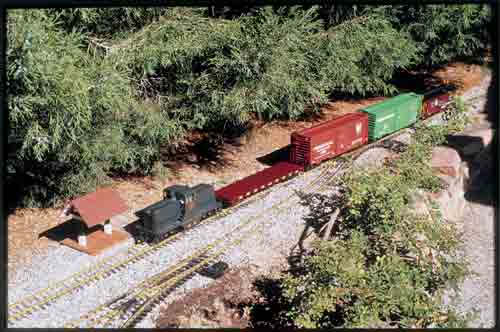
Rail comes in many different sizes and materials. Here’s a little background information to help you chose the one that’s right for you. Rail sizes The size of model-train rail in any scale is referred to by “code.” For instance, in large-scale railroading we commonly use code-332, code-250, or code-215 rail, although code 197 is […]

Read More…

Ask Trains from May 2009

Q In March Trains, an article on the demise of semaphore signals on the former Monon [Page 14] mentioned that CSX was doing away with lineside pole lines and their maintenance. It said the new system will use Electro Code, a system where signal communications run through the rails. How is this done?– Richard K. […]

Read More…

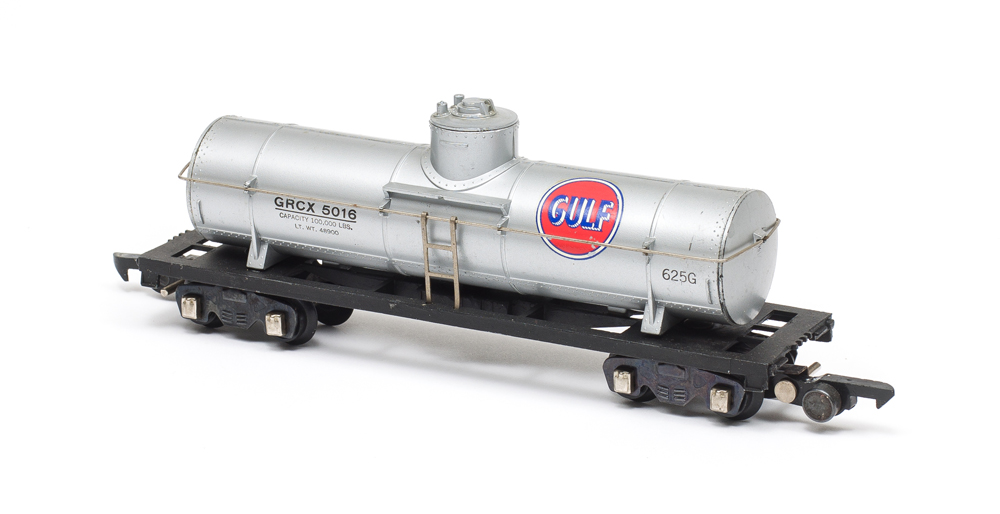
Why does my American Flyer rolling stock have white residue?

Singledome car

Q: Can you suggest how to safely remove the white residue that builds up on the bottom of my American Flyer rolling stock? – Bruce K. Davis, Youngwood, PA A: We receive this question several times a year. For some reason this white residue problem is more common with American Flyer S gauge trains of […]

Read More…

Storing trains

Q: I have Marx and Lionel trains and accessories, both old and new. How do I store them so that my daughters and I can enjoy them when we move to a new home with more space? My house has just two levels and three bedrooms. We live in Maryland and the temperature and humidity […]

Read More…

Broken belt on a postwar Lionel No. 364 log loader

Classic Toy Trains magazine logo

Q: I have a Lionel No. 364 conveyor belt log loader which was received as a gift in the 1940s or early 1950s. The red conveyor belt has disintegrated over time and I would like to know how to service the accessory to get it back into operation. Also, I would appreciate knowing the approximate […]

Read More…

Defect detectors

An Amtrak train en route from Milwaukee to Chicago on Canadian Pacific’s double-track main line hurtles by a metal cabin and some trackside apparatus. Over the radio, a stilted voice intones “CP detector, milepost five seven point six. Main track: two. Total axles: one six. No defects. Temperature: five three degrees. Detector out.” A moment […]

Read More…

Freight car classifications

The Association of American Railroads has 11 basic classification of freight cars. Most of the major classes have subclasses, and you’ll find them by clicking on the links below. The following was taken from the July 2002 Official Railway Equipment Register, published by Commonwealth Business Media. The National Model Railroad Association also offers reprints of […]

Read More…

Freight car markings

Conrail. Milwaukee Road. Santa Fe. Rail Box. Anyone who watches freight trains is familiar with these and other names blazoned across the sides of freight cars. But that’s just advertising, which some companies omit for economy’s sake. And if a car changes hands, its new owner may not even bother to paint out the old […]

Read More…