





GLASGOW, Scotland — The Caledonian Sleeper, the overnight passenger rail service between London and five Scotland destinations, is in the enviable position of having fully recovered, and then some, from the collapse in demand faced by all forms of transportation during the COVID-19 pandemic.
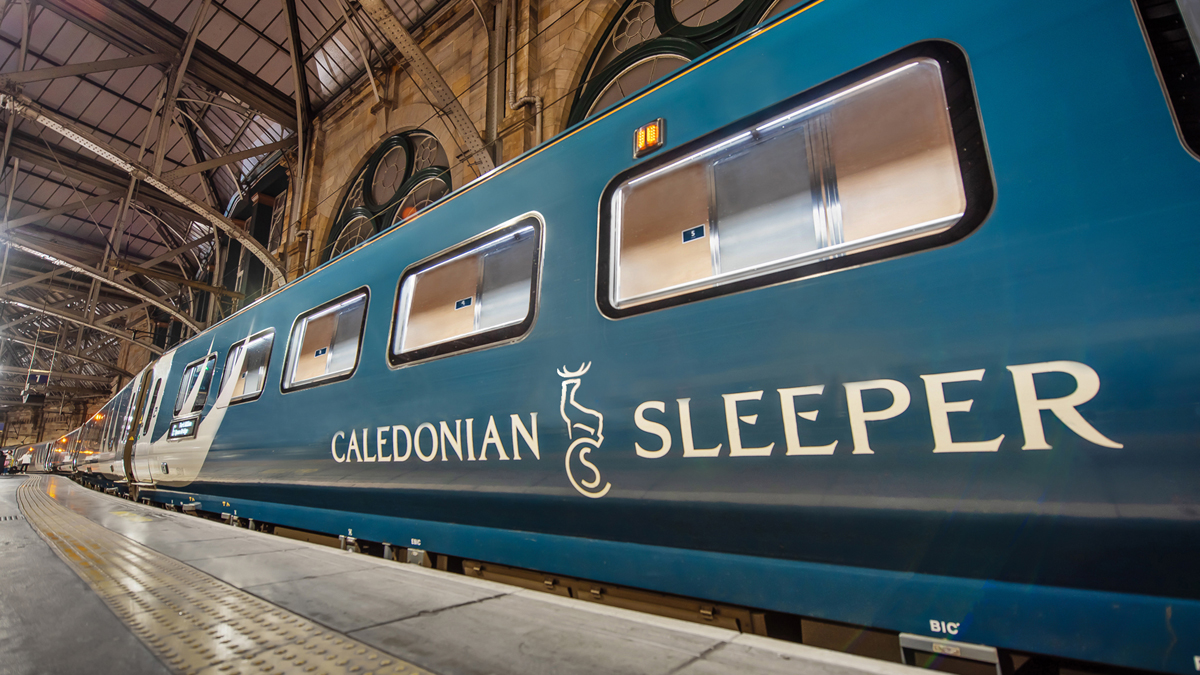
The operation profiled in the March 2026 issue of Trains is unquestionably successful, handling 300,000 journeys a year. But success brings its own challenges, in this case a limited ability to continue growing. For the Sleeper, the limitations are physical: The 16-car trains leaving London Euston station are the longest that facility can handle. Even if a longer train could be handled, the Sleeper only has a fleet of 75 cars, built by Spain’s CAF and in service since 2019, and most of those are accounted for in the current operation.
“We have 11 seated coaches; we need nine every day,” says Graham Eastwood, the Sleeper’s operations director. “We’ve got 10 club coaches; we need nine every day. We have 14 accessible coaches; we need 12. And we have 40 sleepers, of which we need 36 every day. So while we have a fleet of 75, nine spares, those nine spares are then divided into four different variants. That’s where fleet availability is one of our biggest operational challenges, because you look at that one spare Club coach that we have, guess what? That’s going to see its overhaul next week, and therefore, you’ve not got a spare. So if something else happens, that’s that’s a real, real tight spot for us.”
So how does the service continue to grow? And what does its future look like?
“From a sales point of view, I would definitely like a couple more calling points,” Marshall said, addressing the first of those questions. “There’s definitely some tourist towns in the UK, especially in the North of Scotland, that I would like to see on the map. And I think the Scottish community would benefit from that, as well, in terms of access to London.”
Marshall hinted during our mid-September conversation at Sleeper headquarters in Glasgow that one additional calling point was on the horizon, and on Oct. 1, the operation announced a new stop for the Highlander in Birmingham, England, beginning Jan. 15. In a subsequent email, he explained why the addition made sense.
“Birmingham (and the entire West Midlands) is one of the largest metropolitan areas in the UK,” he wrote, “and as such there is a large population to generate demand for inbound tourism to the Scottish Highlands, while of course there is plenty of touristic appeal in the West Midlands to encourage tourists to go south.” He also said that by using the existing Highlander service, it “gives us another opportunity to stimulate demand for the service, especially during those shoulder and winter periods.”
Eastwood, in discussing the design process for the current equipment, said there had been serious consideration to developing “pod” seating for the train’s seated coach — think something like a business-class airline seat, “somewhere between a seat and a room. It gives you that space where you could perhaps get a better sleep.” [The troubled California high-speed rail project has included such an option in conceptional designs for its equipment.]
That concept was dropped when designers were unable to come up with something that met industry safety and crashworthiness standards. But the idea is one both he and Marshall mentioned as something they’d like to revisit, perhaps during a refresh of the Sleeper fleet. (While the cars are not quite seven years old, by the way, such a refurbishment might not be as far off as you might think. That fleet has reached 750,000 miles of service, and is in the process of its first overhaul, which entails rebuilds of the wheelsets — wheels, bearings, and brake pads.)
Operationally, Eastwood foresees a day in the not-too-distant future when the Highlander no longer has to swap its electric locomotive for diesels for the three sections operating north of Edinburgh.
“Technology has advanced such that bi-mode locomotives are available,” he says, “where they can start to make use of discontinuous electrification. So in Scotland, as the wires start to go up more and more, we can start to make more of that — reduce the amount we’re spending on diesel, reduce emissions, and reduce that matter that we put into the environment.”
Roughly 30% of the route-miles currently require diesels, he said. “If we had a locomotive that could do what we needed to do, we could have 30% of our Highland route not using diesels. That’s not insignificant. … If I’ve got a loco that can take me all the way from London to Inverness without having to change horses halfway through, then that does give you operational resilience, as well.” (A new locomotive model being tested elsewhere in England provides an example for a solution, although it may not be the eventual choice: The battery-electric-diesel Class 93, built by Switzerland’s Stadler, is designed for freight and passenger use, with a top speed of 110 mph.)
Beyond that, potential avenues for growth become more speculative — and expensive.
“One of the things we’re doing just now is looking at what would more sleeper services in the UK look like,” says Eastwood. “We’re probably at the very early stages of starting to understand the feasibility of that. … If you really wanted to materially change what we do, you would then be looking to invest in rolling stock, and whether or not we could make that feasible. Because we are heavily subsidized by the Scottish government, it’s challenging, because it’s not that cheap to lease or buy assets, maintain them, and operate them.
“But that would be certainly what we’d be looking to explore next, to see what the opportunity is, and whether we could do something different and more across the UK.”
More about the Sleeper
Some additional notes from the conversation with Marshall and Eastwood:
Who does (and owns) what: Keeping in mind the most fundamental difference between U.S. and UK railroading — that in the UK track is owned by a government entity, Network Rail, with all operations by separate public or private franchise holders — it’s not unusual that the Sleeper leases, rather than owns, that 75-car fleet.
“There’s joint funding between the NatWest Bank and the Scottish government,” Eastwood says. “We lease that asset. … That’s the nature of the franchised operator, where you’re there 10 years, 15 years. You’re not going to invest lots of capital, so therefore you lease. … You’ve got all these what we call rolling stock owning companies, which are effectively banks that have got this forward-facing asset management arm.”
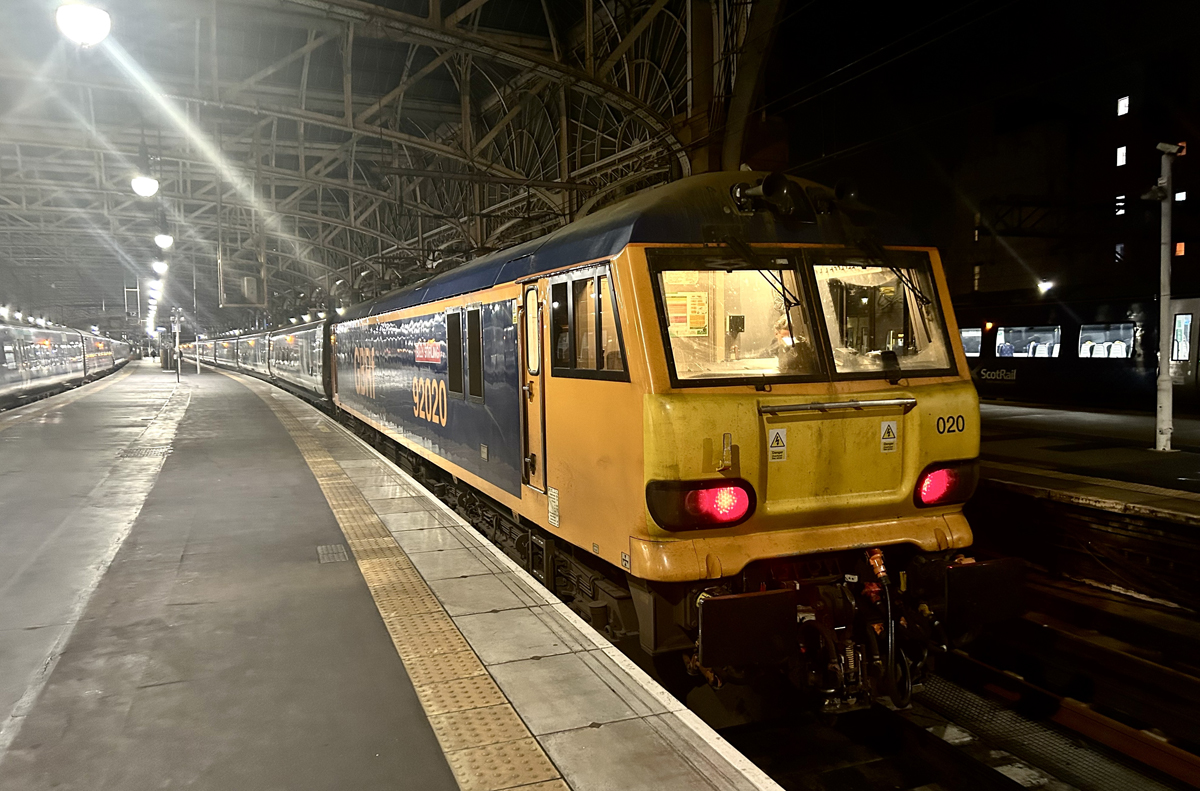
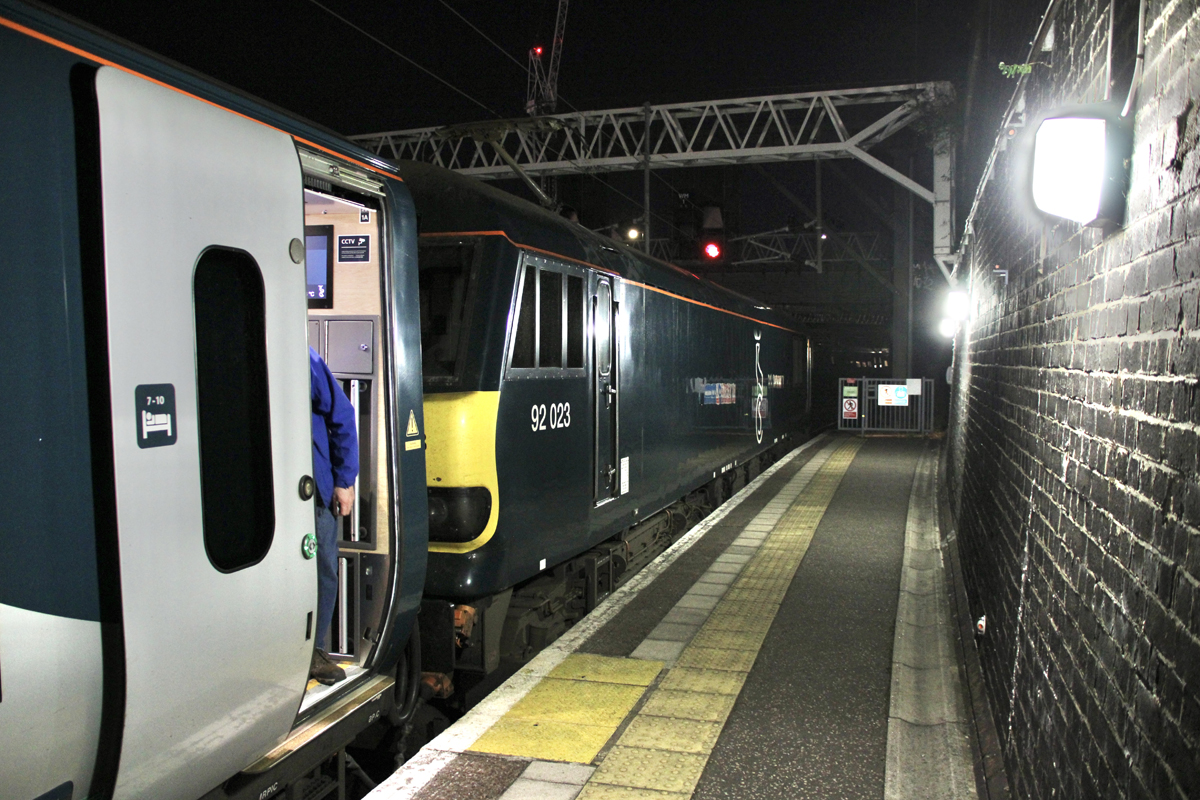
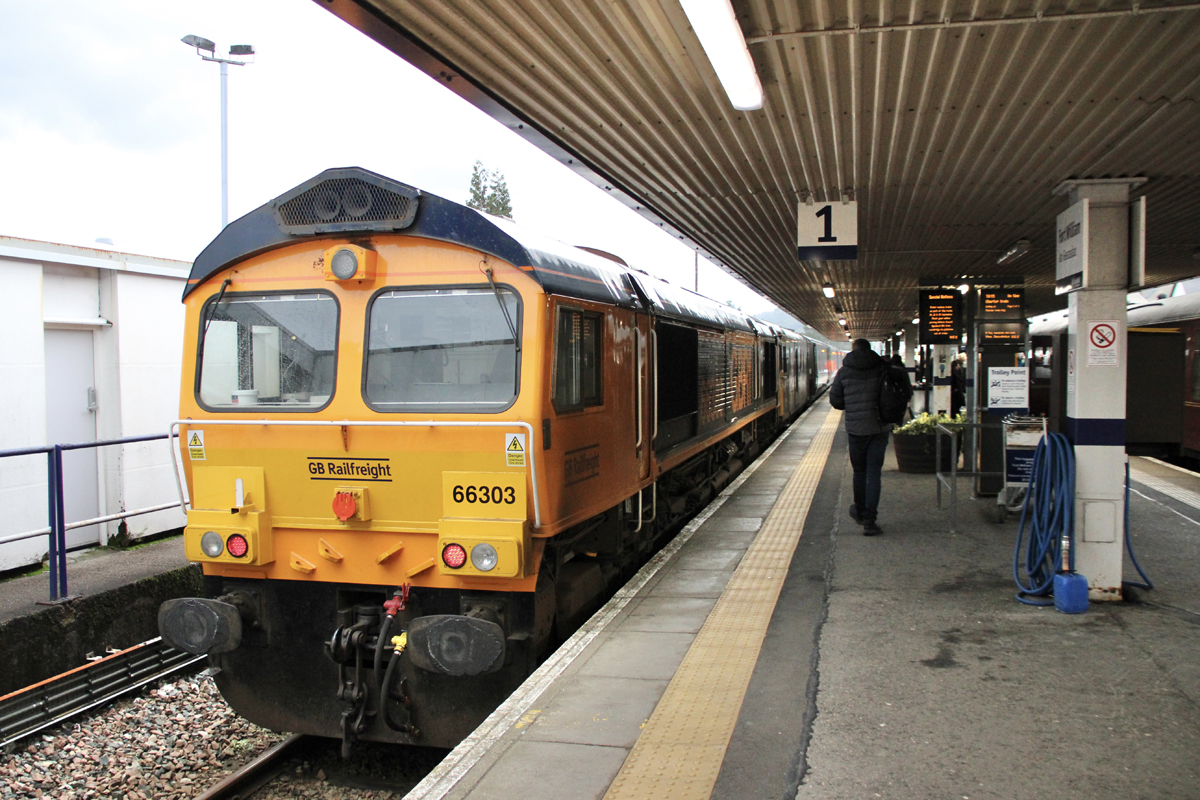
The Sleeper does not own or lease its locomotives; those — and their drivers — are provided under a contract with freight franchise GB Railfreight. The standard locomotive on the electrified portion of the route is a Class 92, a 6,700-hp C-C locomotive built by Brush Traction, a manufacturer bought by Wabtec in 2011. On the diesel segments north of Edinburgh, the standard locomotive is a Class 73/9, a B-B, dual-mode locomotive rebuilt by Brush Traction to include a 1,600-hp diesel. (Original Class 73 units had just a 600-hp diesel). There run in pairs, in part because of the electrical demands of the passenger cars, or with an EMD Class 66 (basically an SD40-2 in a double-cab carbody), since there are just six of the Class 73/9 locomotives available.
Alstom has the contract for car maintenance, which is handled at the company’s Polmadie facility in Glasgow. That facility celebrated its 150th anniversary in October 2025 by opening to the public for the first time in 25 years, as detailed here.
Caledonian keepsakes: In 2025, the Sleeper launched an online souvenir shop (sleepersouvenirs.scot) with a modest selection of products. “We wanted to launch it online, “ says Marshall, “understand the buying pattern and what people are interested in, and then we’ll sort of do a capture range in each of the Sleeper-branded lounges” — in London, Fort William, and Inverness — “where people just grab something if they see what they like, rather than waiting for it to arrive.”
And what’s been popular so far?
“As you would expect, cuddly toys,” he says. “There’s a toy train and a toy stag” — the Sleeper’s logo features a stylized stag — “that are incredibly popular. Those are the two top sellers, followed closely by posters.” Attractive vintage-style posters of Sleeper destinations decorate the lounges (and the Sleeper offices); smaller versions are offered for sale. After that, lambs-wool tartan scarfs and blankets, featuring the Sleeper’s own tartan design, began selling well as cold weather arrived.
For a time, the store could not ship to the U.S. That has changed, so if you’re longing for a plush-toy version of a Sleeper locomotive — or any number of other items — you can find the store here. I really like the posters and have a couple on order. (One note of caution: International shipping is, as you might expect, not cheap.)
Learn more about Caledonian Sleeper operations in behind-the-scenes video coverage presented on Trains.com Video!
— Updated Jan. 11 at 7:50 a.m. to correct details on Class 73/9 locomotives. To report news or errors, contact trainsnewswire@firecrown.com.


I didn’t have an opportunity to ride the Sleeper, but in 2002, my youngest daughter made her first trip to the Irish Dance World Championships in Glasgow. In our spare time, we took a couple of short trips to Sterling and Edinburg to see the castles and hear the “1 o”clock gun” at Edinburg. Yes, it makes a big noise! Both trips on the train were very enjoyable, and on the return trip to Glasgow from Edinburg, the train was nearly filled with both tourists and locals returning home from a day’s work. I compared it with the “Caltrain” service on the San Francisco peninsula and had a conversation with a nice lady and we spoke about the service and other subjects.
No idea what others think. But to be honest I liked the Mk III sleepers better than the CAF ones. The Mk III ride better (GWR is still using them) and nothing is rattling inside of the compartment. I just had around 10 journeys on the new equipment but the clatter sound gets worse and connecting doors between compartments don’t stay open anymore.
Interestingly the class 73s were originaly electric locos (3rd rail DC) with an aditional diesel engine to run them on non electrifed lines. So pretty much the thing they are trying to invent right now