





CHICAGO — With temperatures hovering around zero over the weekend of Dec. 12-14, most Amtrak trains were able to leave Chicago on time, but a number were delayed more than two hours at their points of origin, while others had to contend with disabled freight trains.
Meanwhile, service resumed through areas flooded earlier in the week in the Pacific Northwest.
Trouble began Thursday, Dec. 11, when the westbound Blue Water was nearly two hours late at its first stop. The next day’s train departed Port Huron three and a half hours late. The train normally operates push-pull with a Charger locomotive at each end. Today (Sunday, Dec. 14), with temperatures below zero, another Michigan train, the Pere Marquette, was stopped for two hours after leaving Grand Rapids for a “mechanical assessment” before the problem was resolved.
Terminal delays impacted a number of trains at Chicago or shortly after leaving. These included Friday’s California Zephyr (two hours, 22 minutes late) and Floridian (one hour, 41 minutes late); Saturday’s Southwest Chief (one hour, 16 minutes late); and Sunday morning Lincoln Service train No. 301, which departed two hours, 35 minutes late after what Amtrak called a “mandatory locomotive adjustment.”

Saturday’s westbound Chief was later delayed more than two additional hours by a disabled BNSF freight west of Galesburg, Ill. The nearly four-hour delay resulted in a four-hour layover for the eastbound Chief at Kansas City, Mo., today to allow the engineers and conductors from the Saturday westbound train to get mandatory crew rest. Similarly, a stalled Union Pacific freight blocked westbound Missouri River Runner No. 311 today, causing it to be held at Jefferson City, Mo., for more than two hours.
The eastbound Chief arriving in Chicago on Saturday was nearly six hours late, also impacted by the disabled freight and “an intermittent communication outage on the route ahead.” Alerts had attributed two hours of earlier delay between Lamy, N.M., and La Junta, Colo., to “heavy freight train interference” on a segment of BNSF where the two Chiefs are the only trains on the line.
Derailment, flooding issues in the West
Further west, a Union Pacific derailment near Colfax, Calif., resulted in the westbound California Zephyr short-turning in Reno, Nev., on Saturday to become the eastbound train. Chartered buses provided connections for passengers at Reno, while passengers from both trains were also accommodated on Capitol Corridor service west of Sacramento.
Also on Saturday, service resumed in Washington state that had been halted because of severe flooding north and east of Seattle [see “Washington flooding spurs …,” Trains.com, Dec. 11, 2025]. The westbound Empire Builder was the first through the flood area. Its eastbound counterpart departed Seattle following a locomotive swap, then lost an hour east of Everett, Wash., through previously flooded areas. Saturday afternoon’s Amtrak Cascades round trips to and from Vancouver, British Columbia, also resumed operation though Mount Vernon, Wash., which suffered severe Skagit River flooding. Few delays were reported for those trains, and the Builders were able to manage four days of below-zero North Dakota temperatures through Saturday with minimal disruption.
— To report news or errors, contact trainsnewswire@firecrown.com.


And St. (Santa) Nick (Claus) just loved the timing. Back when the RRs offered dinner gratis to any poor folk traveling on Christmas Day.
I have something to add to Charles Landey’s reminisces of the “good old days”.
In the first days of Amtrak, a number of “heritage” cars were overhauled. Seems emphasis was given to appearance instead of function. The insides were painted/decorated to make sure they were Amtrak standard. But nobody thought to replace the steam lines with head-end power (HEP) which the North Western began using on many of its intercity trains at least fifteen years earlier.
I had some tough train trips in the 1970’s in those cars. Rode back from New Orleans to Chicago in a mid-winter cold snap. Left New Orleans about 4:30 PM – temp. 45F. Reached Jackson, MS about suppertime, now 32 F. Steam heat started failing in North MS. At Dyersburg, TN about 12 midnight (zero outside) carmen went beneath to try to thaw lines. By Carbondale, back of train was freezing up. My seatmate and I pooled overcoats to make blankets for two as coaches were getting cold. We got to Chicago a few hours late (22 below), but thank God the diner near the front was till warm and we at least had a decent breakfast.
Freight RRs having problems as well?? Also the communication problems seem to indicate PTC may not be communicating as well?
Today’s equipment is too sensitive to severe conditions especially cold because the manufacturers are not experienced with RR technology. In addition todays RR operate with bare minimum staffing, too many issues for too few employees.
Galen — Some time around 1976 I left Boston on the Lakeshore with frozen steam lines, headed for Toledo and very cold in the coaches. Carmen tried to thaw the lines at several points along the way —- They didn’t succeed but they did try. Those employees, as you say, no longer exist.
As in most similar cases, Mother Nature demands!
“Alerts had attributed two hours of earlier delay between Lamy, N.M., and La Junta, Colo., to “heavy freight train interference” on a segment of BNSF where the two Chiefs are the only trains on the line.”
Love this!
RE: The photo caption above the article.
(a) It’s not winter. It’s late autumn.
(b) Zero F or a bit below is NOT “extreme cold” in the Great Lakes. It’s a not terribly unusual December 14th.
(c) Generations of railroaders working lines like MILW, GN and CNW and the Canadian railroads routinely ran trains in conditions far worse than this.
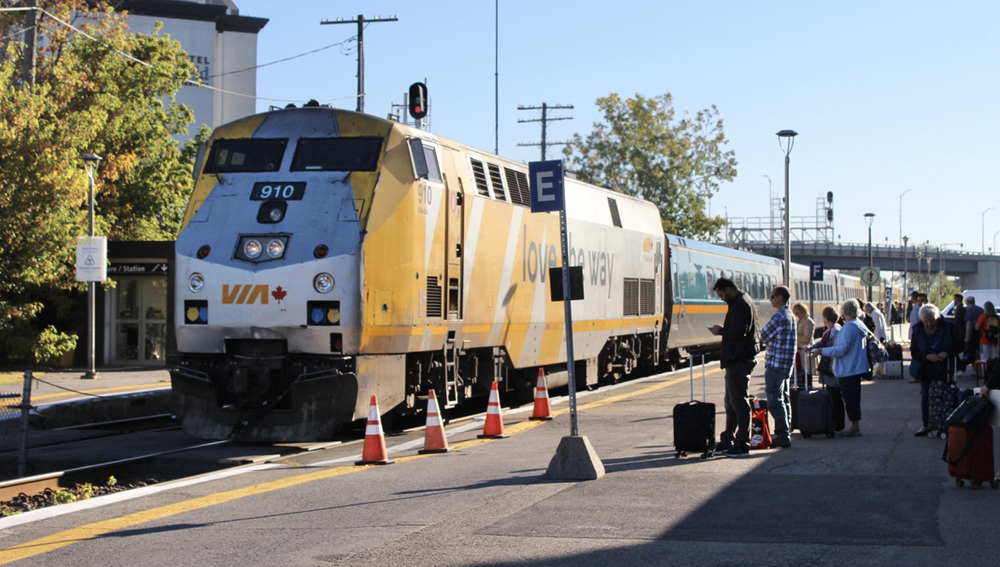
* First image related to the article: as stated, March 30, 2025, that is, a spring day…
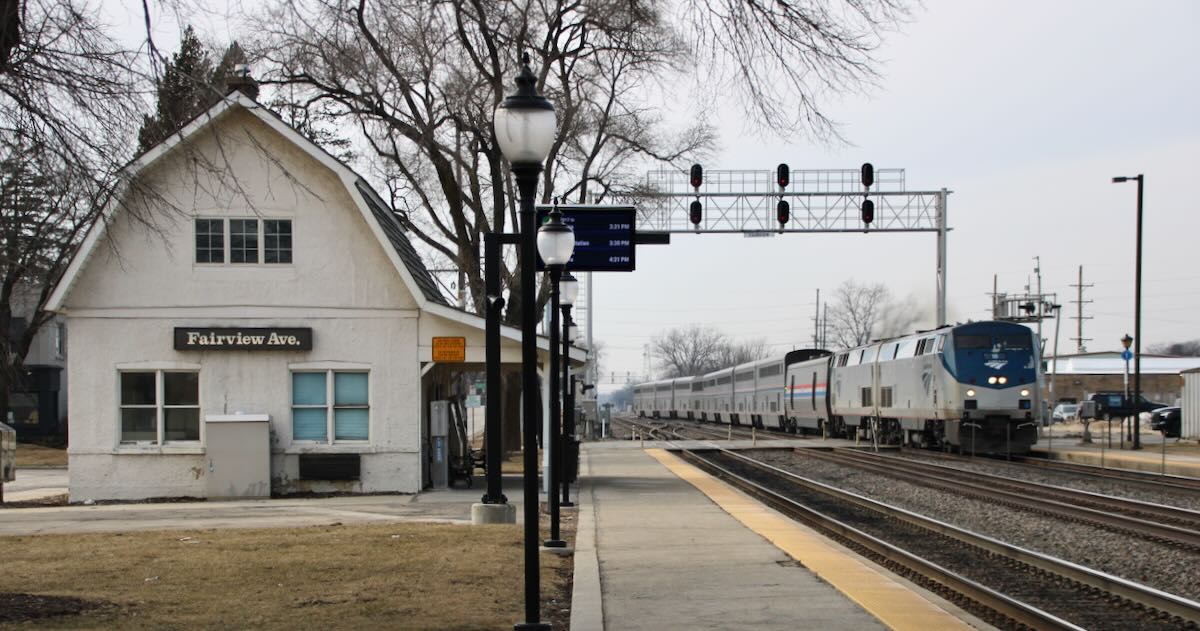
* Second image related to the article: as stated, November 30, 2025, that is, the last day of autumn…
Around here, the “last day of autumn” is the day before the Winter Solstice, which this year is December 21st, 2025.