





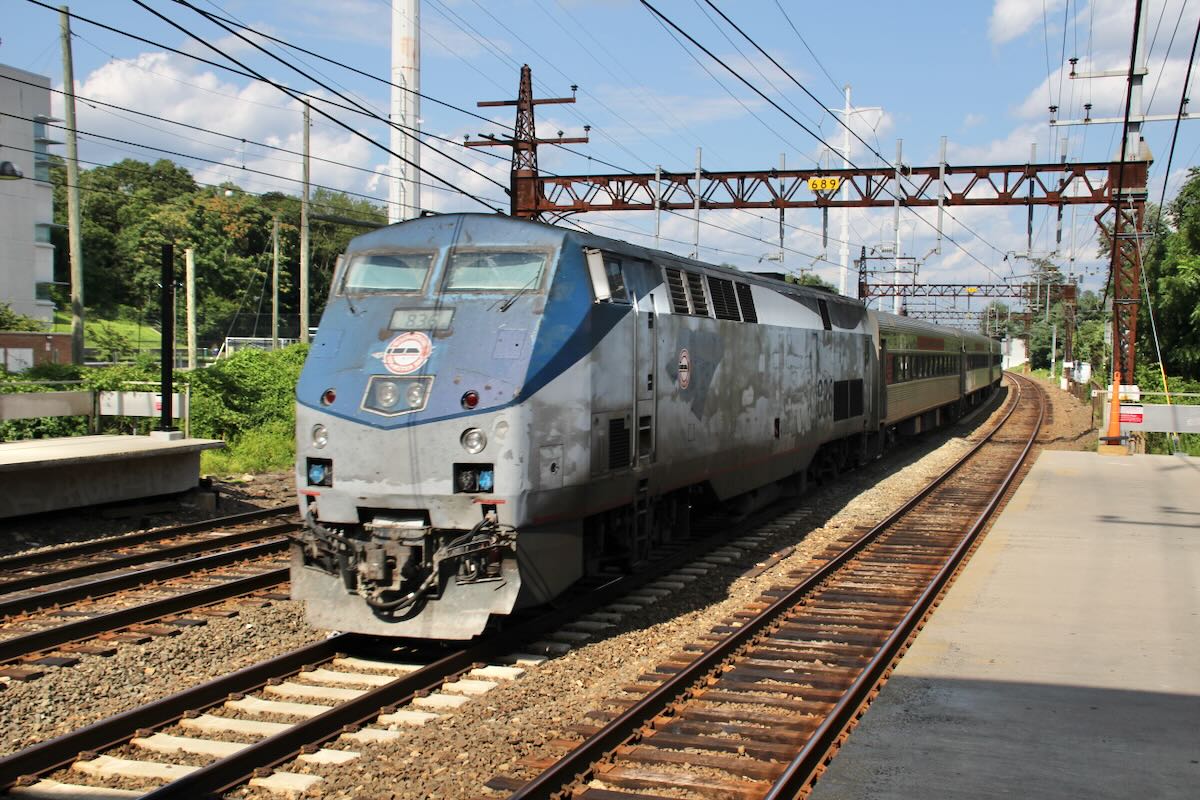
HARTFORD, Conn. — Connecticut’s Shore Line East commuter rail operation could revert to diesel-powered trains under a budget-saving move, the state’s transportation commissioner told a budget hearing last week.
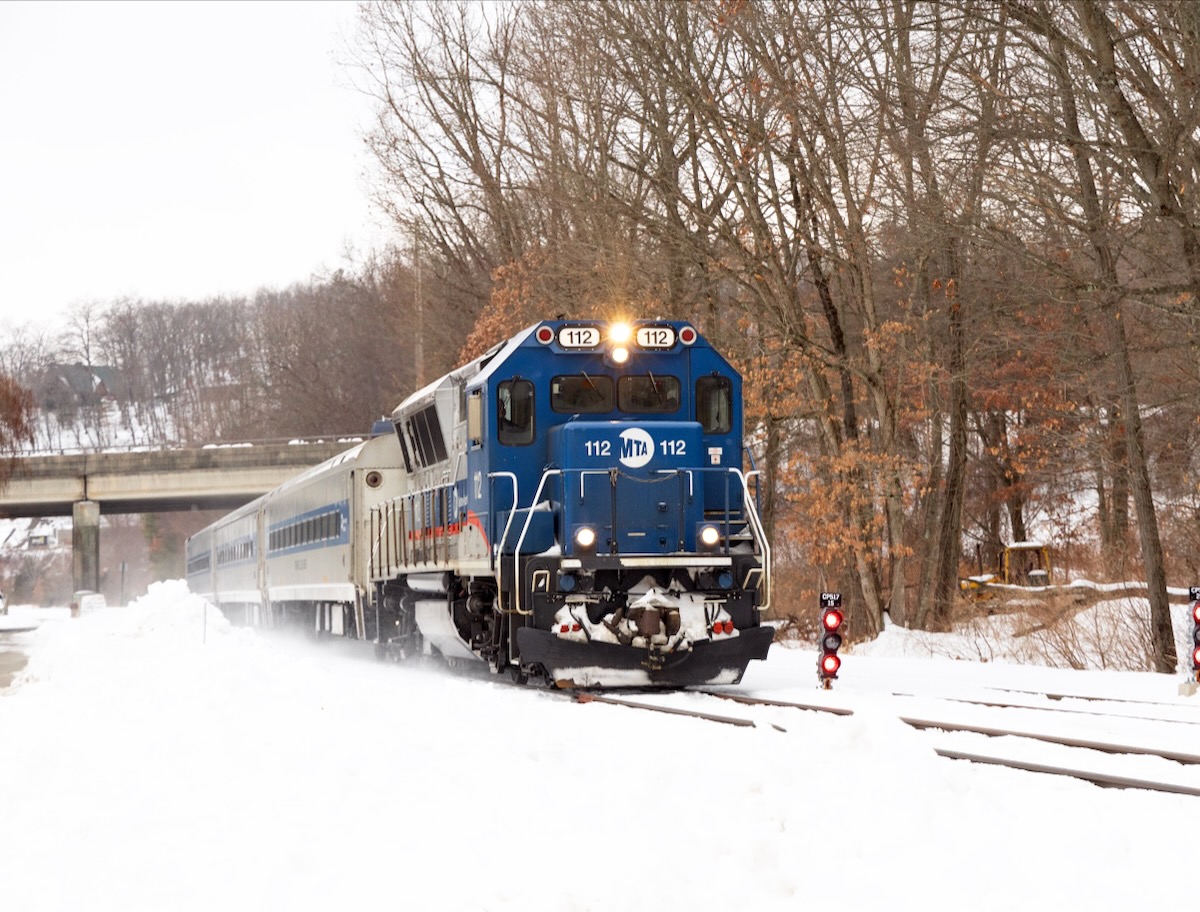
The move would reverse a 2022 switch from diesel-powered trains to the current Kawasaki M8 electric multiple-unit trainsets [see “Connecticut replaces diesel Shore Line East trains …,” Trains.com, May 24, 2022]. At the time, Gov. Ned Lamont highlighted the environmental benefits of the switch, as well as the improved amenities for riders.
The news site CT Insider reports in a paywalled article that Transportation Commissioner Garrett Eucalitto said the move could save $8.8 million annually. The state must pay Amtrak not only for the use of use of the Northeast Corridor on Shore Line East’s New Haven-New London route, but also for the electricity used to power its trains. Eucalitto said the move was considered the best option to save money without cutting service. The fiscal 2026-27 budget proposed by Lamont calls for spending an additional $19.7 million to maintain current service levels for the state’s commuter operations [see “Connecticut governor’s budget …,” Trains.com, Feb. 6, 2026].
Shore Line East service offers 10 round trips between New Haven and New London on weekdays, and eight on weekends, with seven intermediate stops, although not all trains stop at all stations. Currently, one weekday train in each direction continues to or from Stamford, Conn.
— To report news or errors, contact trainsnewswire@firecrown.com.



Their are NO more coal fired power plants left in New England. It’s Natural gas & renewable sources. Now that coal is gone, their is a push to get rid of the Natural gas plants. Big problem, they have taken more power generating capacity OFF LINE than bring NEW capacity on line.
Between All electric homes (heat, cool, cook, etc.) new electronics that weren’t thought of 5 years ago (much less than 50 years ago), charging stations for cars, and AI centers, we haven’t brought on the needed capacity. In fact New York & New England has to import electricity from around the country.
And you wonder why electric rates are through the roof.
I never supported Diesel to Electrification, especially on Metro-North’s Harlem Line between North White Plains & Southeast, despite being a service improvement. I’ve seen the former Brazilian built Virginia Railway Express (VRE) equipment operating somewhere in Connecticut on You Tube Channel. Diesel Fuel is quite expensive (I remember when it was cheaper in the late 1970s.) vs Electric use with rates going rising & dropping similar to The Stock market. The weather in any season is another factor.
Paying Amtrak for electricity was part of the reason Conrail pulled the plug on the electric locomotives back in 1980 and moved all through freight trains to the current ex RDG-LV route.
Reminds me of the recent halt of the UK’s mail train due to high electricity costs. Energy will have cost regardless of form.
Regardless of where the power is generated, Amtrak is still going to price in costs for the transmission and delivery (catenary).
All our lives we’ve been told that electricity is no way to heat a home b/c it’s inefficient compared to natural gas. But it’s required in some California cities in new construction. And don’t get me started on electric cars, about the worst way to screw the environment.
Electricity does have a role in passenger rail, b/c of quick acceleration and regenerative braking. Part of the reason it’s so expensive for the railroads is that the greenies require it for other uses where it is not efficient, like cars and space heating.
One hundred percent — all — of line losses from electrical transmission and distribution become heat cast out into the ecosphere.
My hunch is this is a symptom of how and why Amtrak says the NEC is profitable. They have to be marking up the cost of the electricity in order to collect more money from the states. In this case, they have gone too far. When will Amtrak undergo an audit?
How is it that AMTRAK owns the electricity? From New York Penn to Washington, the PRR owned the tracks — and bought the electricity from local providers.
There are examples where three parties are involved (and all three in on a deal with money exchanged in appropriate amounts), a local customer, a distant utility, and a local utility in between to carry the current. A distant utility with power to spare at one or another time (examples might include Ontario Hydro or TVA) might sell to a remote customer.
I can’t see Amtrak agreeing to such a deal with Shore Line East, given Amtrak’s expense in catenary and substations.
Actually a good chunk of power on the south end of the corridor comes from Amtrak owned turbines at the Safe Harbor reservoir. (85 MW I believe). Of the 12 turbines, two are Amtrak owned. Safe Harbor impounds water on the Susquehanna river creating Lake Clarke.
As I recall, MARC has also begun running diesels on the Penn Line, which uses the NEC from Washington DC to Baltimore and on to the north (I believe Perryville?). And the reasoning was the same; diesels were cheaper than paying Amtrak for electricity. They still have, or had, some electrics in the form of rebuilt HHP-8’s, but I don’t know how long those will last.
I too would be interested in knowing the cost difference between diesel fuel and Amtrak’s electricity. Caltrain seems to pay a lot less for their power than they did for fuel, so I wonder if Amtrak just has a serious markup?
It seems likely they aren’t avoiding the cost of electricity but the catenary costs to deliver it. presumably they feel it is worth underutilizing the owned equipment t avoid capital and operating payments on catenary and transmission lines. this is just my personal guess. the actual cost of electricity itself is probably straightforward.
Is the marginal cost to Amtrak of the additional electricity actually greater than the cost of diesel fuel?
So much for the proponents of electrification and/or environmentalists who don’t like diesel fumes. To extrapolate further east on Amtrak NEC, this could mean that MBTA’s Providence – Wickford Junction line will continue indefinitely running diesels under Amtrak wire.
How did this ever go so wrong, that Amtrak and the local people can’t work together.
In its awesome wisdom (to translate to English, glad I no longer live there) the Commonwealth of Massachusetts wants to string catenary all along MBTA’s hundreds of miles of commuter lines. Here we have two commuter line, Mass MBTA and Connecticut Shore Line East, that can’t run electrics where the wires already exist.
In my own personal view, the providence line makes sense not because it is cheaper but because it will speed up the trip thus enabling more trips per set and more ridership. I would also note that electric service makes the most sense where service is frequent and the capital cost of catenary can be spread over more trips. electrifying infrequent trips is expensive.
ANDRE — Couldn’t agree more. Bear in mind the “Providence” line when approaching Back Bay also includes trains off the Needham, Franklin and Stoughton branches. That’s a lot of traffic for a two-track railroad, some of which stops at Ruggles.
Mixing all the start-stop MBTA trains with the some of the fastest segments of Amtrak NEC is a challenge.