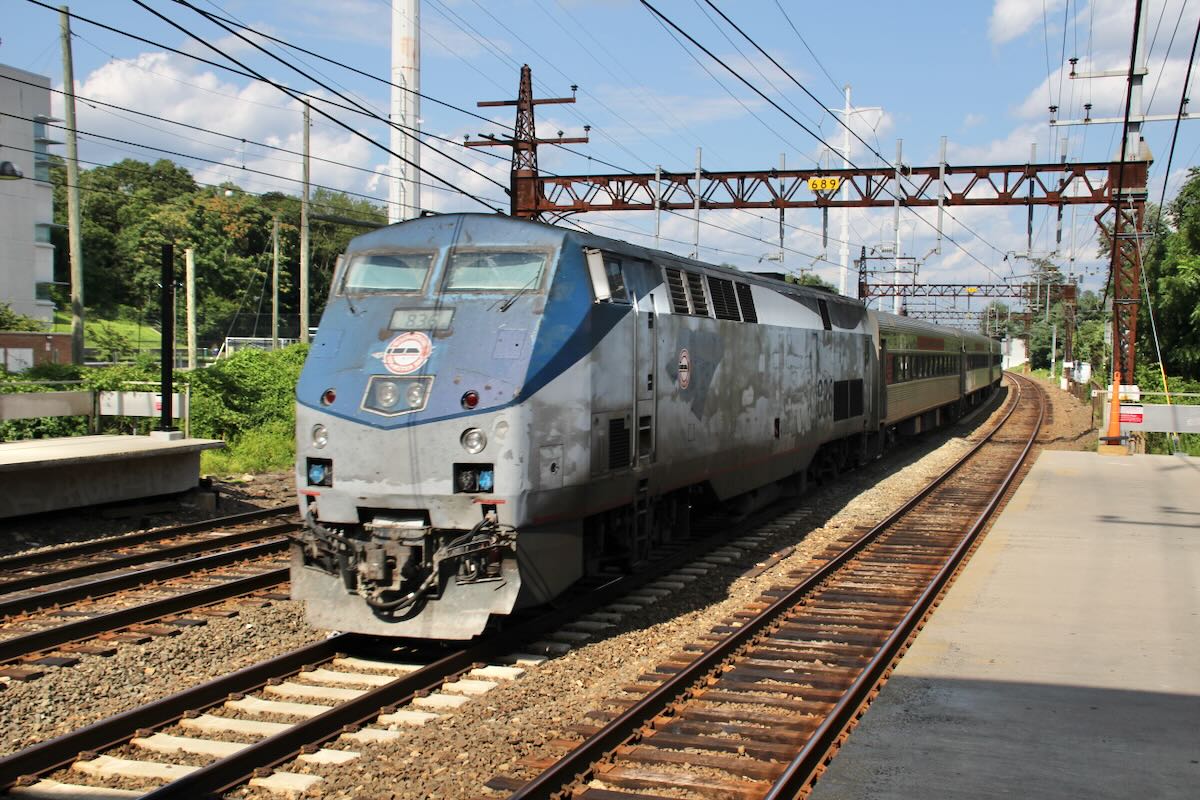
HARTFORD, Conn. — Connecticut’s Shore Line East commuter rail operation could revert to diesel-powered trains under a budget-saving move, the state’s transportation commissioner told a budget hearing last week.
The move would reverse a 2022 switch from diesel-powered trains to the current Kawasaki M8 electric multiple-unit trainsets [see “Connecticut replaces diesel Shore Line East trains …,” Trains.com, May 24, 2022]. At the time, Gov. Ned Lamont highlighted the environmental benefits of the switch, as well as the improved amenities for riders.
The news site CT Insider reports in a paywalled article that Transportation Commissioner Garrett Eucalitto said the move could save $8.8 million annually. The state must pay Amtrak not only for the use of use of the Northeast Corridor on Shore Line East’s New Haven-New London route, but also for the electricity used to power its trains. Eucalitto said the move was considered the best option to save money without cutting service. The fiscal 2026-27 budget proposed by Lamont calls for spending an additional $19.7 million to maintain current service levels for the state’s commuter operations [see “Connecticut governor’s budget …,” Trains.com, Feb. 6, 2026].
Shore Line East service offers 10 round trips between New Haven and New London on weekdays, and eight on weekends, with seven intermediate stops, although not all trains stop at all stations. Currently, one weekday train in each direction continues to or from Stamford, Conn.
— To report news or errors, contact trainsnewswire@firecrown.com.
Share this article