





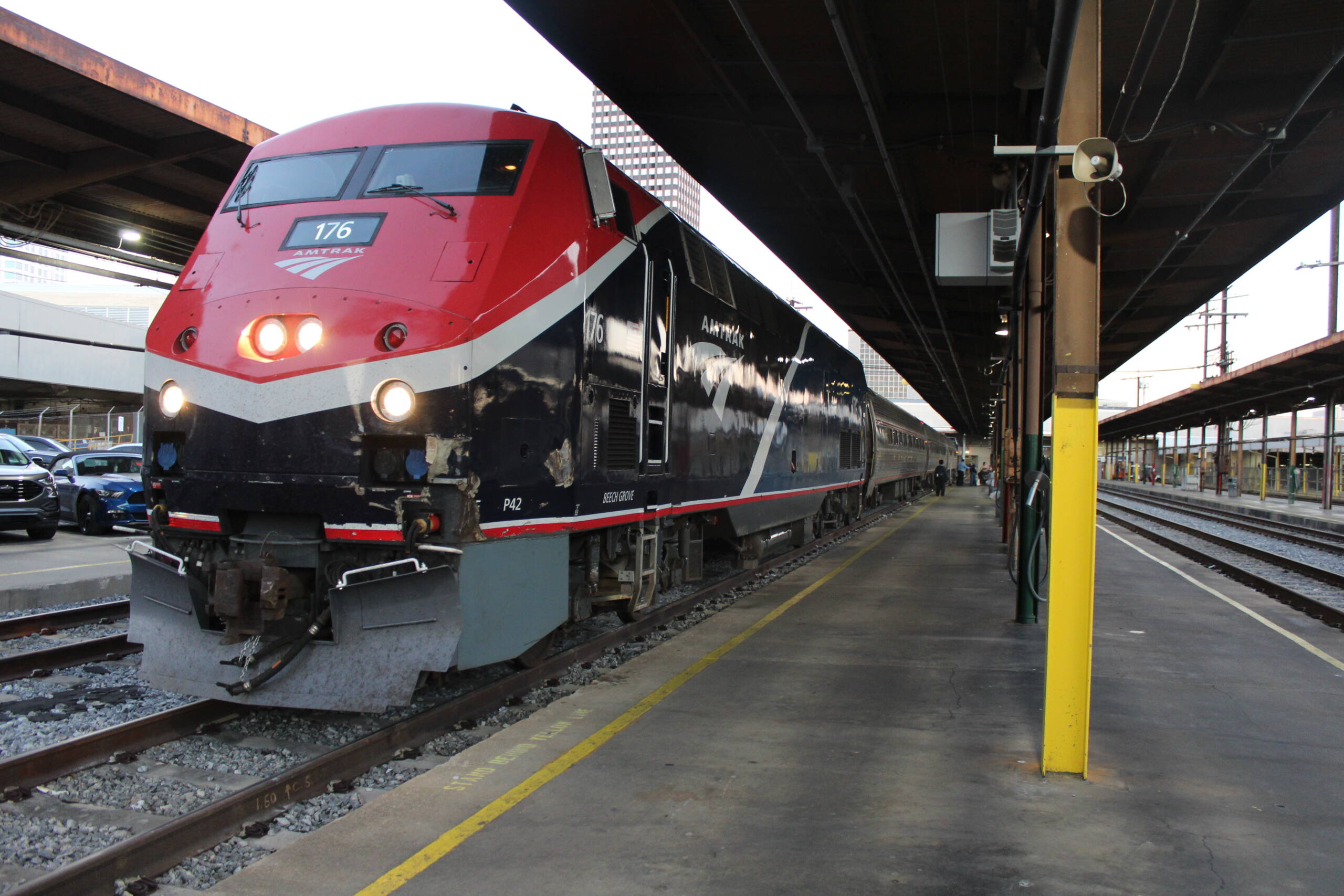
NEW ORLEANS — A full complement of Amtrak board members convened in the Crescent City on Thursday for the only yearly meeting where the railroad’s management and board take questions from the public.
As has been the case since the first mandatory annual public meeting held in St. Louis in 2022, many concerns affecting company operations were addressed in the in-person and online question-and-answer session that followed management presentations.
Debating capacity
Management reports largely covered Amtrak’s fiscal 2025 performance [See “Amtrak sets ridership record…,” Trains.com, Nov. 16, 2025]. But Chief Commercial Officer Eliot Hamlisch revealed that October 2025 ridership (in the 2026 fiscal year) dipped more than 1% as a result of the delayed NextGen Acela rollout. November patronage was stronger, driven in part by air travel disruptions.
Board Vice Chairman Joel Szabat pointed out that even after more NextGen Acelas and new Airo trainsets enter service next year, Amtrak still will have less capacity than it did at the beginning of last year. Later, when board member and former Federal Railroad Administration Administrator Ron Batory asked where the greatest near-term capacity challenges and risks were on the system, Hamlisch said they were on the Northeast Corridor.
No mention was made about the status of either single-level or bilevel long-distance procurement, initiatives that are currently stalled in the “Request for Information” or “Request for Proposal” stages.
Idaho-based board member Elaine Clegg asked what management plans to do about expanding long-distance train capacity.
“We are working to be extremely efficient in our deployment of capacity on the long-distance network to minimize the losses so we can have the high-producing other part of the business offset those losses [and] to become profitable,” Chief Financial Officer Costin Corneanu replied. This thinking reflects why the Coast Starlight has been turning away customers most of the year by operating with only two coaches.
Blue Sky CSI
Amtrak’s Hamlisch unveiled a new way the company plans on splitting Customer Satisfaction Index score goals into “Blue Sky” experiences — when trains aren’t delayed — and “Non-Blue Sky” instances, when delays occur. CSI scores are largely driven by delays. The overall CSI goal, currently a component of executive bonus compensation, has been set at 80, which the railroad has not been achieving.
“When trains are late, customers aren’t happy,” Hamlisch says, so “the intent is for us to see what we can take action on when the trains are on time in the most ideal operating conditions — cabin comfort, hospitality, and customer service.”
The presentation slides he displayed set an overall 2026 Blue Sky goal at 90.6 and 65.9 for Non-Blue Sky, with different goals for different services.
A potential drawback is that this dual-reporting protocol could mask the negative impact of mechanical delays that, unlike freight train interference, are entirely under Amtrak’s control. Not mentioned: Whether the new reporting system will alter executive compensation formulas.
Other Updates
Among the revelations in responses to attendees’ questions:
Loss of shunt issues: Operations Vice President Gery Williams says truck-mounted antennas, “have been designed, are being built, the states have agreed to fund five of them for the Midwest Chargers, and the notice to proceed was granted [by the FRA] in mid-October.” Once installed, as demanded by Canadian National, they would counteract CN’s requirement for seven Superliners on Chicago-Carbondale, Ill., state-sponsored trains. No timeline for installation was divulged.
Sidelined Horizon coaches: “Most of the fleet has been evaluated and we’ve found a certain number of coaches that can be repaired and repairs are underway on a small number at the moment,” Amtrak President Roger Harris said. He hopes to have the first few returned to service in early 2026. “But there are limitations to how long equipment can be maintained safely,” he said.
Wreck repair: Harris says all out-of-service equipment “that is viable is being worked on for a return to service.”
Printed timetables: Don’t expect Amtrak to again offer PDF schedules. Hamlisch cited constantly changing schedules as the reason Amtrak “has opted for more dynamic” online information and doesn’t produce PDF versions, essentially discounting their value for trip planning and showing passengers each train’s route. The Rail Passengers Association continues to offer PDF schedules on its website and some regional corridors offer them as well.
Elimination of “flex” meals on the Crescent, Texas Eagle, and City of New Orleans: Hamlisch says Amtrak is “actively contemplating potential expansion of traditional dining and/or different approaches to flex dining.” He did not reveal any specifics.
Charger locomotive reliability: Williams said the company is working with Siemens and state sponsors and “continues to see increased reliability — not as quick as we want it to but there are a lot of things that we’re working on with our partners.”
“On the other side of that,” he adds, “we are working with Siemens to improve our troubleshooting capability in the field and at the Consolidated National Operations Center. And we’re focused very much on our response time to make sure we are taking care of the customers.”
Daily Sunset Limited: Harris says Amtrak is deferring to the Federal Railroad Administration’s “long-distance study framework” on plans to convert the Sunset Limited to daily operation.
— To report news or errors, contact trainsnewswire@firecrown.com.


In FY24 the long-distance trains recorded an Adjusted Operating Loss of $621.8 million. For the four years ended FY24 the cumulative AOL was $2.416 billion. These losses are before amortization of capital expenditures. The long-distance trains have never come close to covering their operating costs let alone fully allocated costs.
Passenger trains make sense in 200 to 300 mile densely populated corridors where the cost to expand the highways and airways is prohibitive. The best outcome for the long-distance trains, which are used by less than two percent of intercity travelers, would be to terminate them and devote the resources to enhancing existing corridors or developing new ones.
More fuzzy Antrak Accounting where LD revenue has been used to subsidize Northeast Corridor Expense and has been for many years. The USDOT and Congress needs to mandate that the LD Trains, mandated by the Originating Organic Act that created Amtrak in the first place, be separated from Commuter Rail entirely and that each Company (Long Distance and NEC/State Commuter) be funded and accounted for independent of each other. Only then will the LD trains have a chance to be managed for the benefit of all riders and potential riders instead of being reduced to a minimalist program to produce funds to sustain (nee subsidize) low fares on the NEC. Then the fewer LD trains can be returned to the growth mode that they have proved they can support when run as they should have been for the last 20 years and not as point to point, no frill (frills that people are willing to pay for) busses that nearly amount to an uncomfortable chair to sleep in and a brown paper sack lunch to eat from.
Sorry Paul, but rail socialism will not help the commuter rail of the NEC or the Long distance rail mandated by Amtrak’s charter. If you terminate the LD trains then you should also terminate the TAX revenue from those now un served states to support commuter rail in states in which they they do not ride. That would be the only fair way to do that. You can’t have your cake and eat it too!
NRPC is still rolling in infrastructure costs as operating cost, but just for LD routes since they love them so much, as they always have and probably always will until threatened with the possibility of all the other states pulling out of funding NEC giga-capital.
If one were to say those relatively fixed costs, which are also approximately the same as the incremental highway fee-to-cost gap, were infrastructure to be federally funded then the financial equations work out to expand LD capacity so that fare revenue covers all the Above-the-Rail costs. See the link below for a lot of charts:
https://www.railwayage.com/news/renewed-consumer-relevance-of-the-general-railway-system/
What if NRPC actively considered updating their financial models…
Longer runs that are common with long distance trains mean the crew changes are farther apart. Therefore there are more miles between crew changes. Also the equipment is getting more miles per day compared to commuter service where shorter runs require the equipment to be parked between runs and the equipment generally sits overnight and pauses at endpoints between runs. Of course there are more personal on long distance runs but the demand is there for the more expensive services so there generally is more money coming in if the capacity is available. Also there needs to be more service on the long distance routes. Ideally a departure two or three times a day. Then if a train is cancelled or someone misses a departure they don’t have to wait 24 hours for the next departure. And all portions of the route will have scheduled service during daylight hours. There is plenty of scenery that is currently traversed during darkness.
What most folks forget is that the Federal Government created the current, unequal and financially unfair passenger transportation systems we now have in the United States. In the 1940’s, it was the Government that chose to fund/build the Interstate Highway network and fund/build all of the airports (and the FAA Flight Control System) that perpetuates our current dependance on highway and airline travel modes in this country. The Government’s focus on autos and airplanes, and the termination of U. S. Mail contracts with the railroads (that helped support the cost of operating passenger trains), are the reasons railroads were forced to abandon passenger service. Since the Government funded the infrastructure of competing systems, the railroads could not fairly compete for travelers.
.
Yes, highways and airlines now handle the bulk of travelers, because both are heavily subsidized by billions of dollars of federal funds annually. And there are far more autos and planes operating, by comparison to trains. With 5,000-5,700 passenger planes (FAA Statistic) over U. S. airspace daily, millions of people are going to fly. If we had 5,000-5,700 passenger TRAINS operating in the U. S. every day, millions more people would ride trains than currently do. To say MORE people fly and drive, is simply NOT comparing apples to apples, because highway, air and rail are not equal in availability throughout the country.
.
The private railroads have to pay for virtually everything related to their track, bridges, tunnels, signals, dispatching, terminals, buildings, equipment purchases and all other company operations. Let’s see how many airlines would survive if we make them build and maintain every airport all over the country, and, pay for the operation of the FAA Flight Control System. The result would be the cost of airline tickets in the thousands of dollars per passenger on every flight, just to break even. If every Interstate Highway was a toll-road, to pay for the construction and maintenance of every mile of highway, the cost of owning and operating an automobile would be beyond most people’s affordability.
.
The current U. S. transportation system is broken! We need to either make ALL passenger modes pay for their own, actual costs of all operations and financially survive on their own revenue, or, we need to subsidize ALL modes equally and give every mode a level playing-field in which to financially operate.
.
Since airlines and highways are not going away, the only real option is to increase and stabilize funding for rail passenger services to create equalized competition. Passengers will ride trains, if they are operated with the frequency and on-board amenities that make them attractive. It costs the same amount of money to pay a locomotive engineer to handle a 5-car passenger train as it does to handle a 20-car passenger train. The difference is you offer more capacity when you add more cars, carry more riders and earn more revenue. Trains are unique in that they are the ONLY mode of passenger transportation that can add more capacity per trip.
.
When Amtrak was created in 1971, it was never intended to survive beyond a couple of years and the creators never really focused on “fixing” the system. Amtrak needs to be re-invented. Corridor and Regional passenger trains need to operate under a separate entity from long-distance trains. Or, other railroads need to be allowed to operate long-distance passenger trains and compete with each other and in the marketplace, like airlines do. There are many possible scenarios that could be implemented to achieve this…..too numerous to outline here. But radical changes need to be made to bring the operation of passenger trains into the mainstream of travel mode options in the U. S. Doing any other cost comparisons is futile, when the current systems are not equal to begin with!
JEFF ASHENFELTER – Okay, well thought through post and well written. But let’s take it to the next level. What would a passenger train system look like that would substitute more passenger trains for less aviation? How many trains on what tracks going to what terminal? Create that system in your mind and get back to me.
My frequent car ride between the family home northeast of Denver, to/from DEN Denver International Airport, takes the highway that crosses the BNSF main Chicago to Denver. Can you imagine how many trains would be thrust onto that track if DEN had even a slight reduction in planes flying east. Compare DEN airport to Denver’s Amtrak station. Go to both and get back to me.
I tend to get to airports early, giving me plenty of time to walk around and see what’s happening. Years ago it was BNA Nashville International. The family moved so now it’s DEN Denver International. Likely the same story at ATL Hartsfield, ORD O’Hare, DFW Dallas – Fort Worth, LAX Los Angeles, etc. Look at those departure boards and tell me what a passenger rail system would look like if it bled off even five percent of that airline traffic. Last Friday, my seatmate was flying from Hobbes (or Hobbs, I don’t know) New Mexico, to Milwaukee with a change in Denver. (Never heard of Hobbs or Hobbes and didn’t know it had airline service). Last April, my seatmate was flying from Lubbock to Chicago with a change in Denver. Multiply that by millions of airline passengers that no rail system exists that could possibly accommodate them. To a large extent, there are no tracks, let alone capacity on those tracks.
Generally, air travel for sub-1000 mile trips isn’t incredibly dense besides a few major markets such as the LA-SF regions. For example Dallas/Ft. Worth, TX (DFW) to Denver, CO (DEN) is 3352 passenger a day at an $179 average airfare for the 651 air-miles/ 756 highway-miles in Q2/2025 per: https://data.transportation.gov/Aviation/Consumer-Airfare-Report-Table-6-Contiguous-State-C/yj5y-b2ir/data_preview . That price is just the average airfare, and excludes baggage, seat selection, parking, and any transportation downtown.
If an overnight intercity connection were offered, 20% of the airline traffic would be 335 people per direction, less than a 16-car trainload. Of course, highways typically have larger volumes, particularly for the smaller cities less than 600 miles apart or those where traveling to DFW/DEN is burdensome backtracking.
What is lacking is FRA/NRPC actively contemplating any type of representation that rail infrastructure for the rest of the USA is something of legitimate federal expenditure. If one were to have such covered by a grant then everything can be paid for from consumer funds for the example 16-car intercity train.
DEAR MR. LANDEY — Thanks for your response to my reply to Mr. Paul Smith’s post above and for your compliment on my “well thought through and well written” post. Here are my answers to the questions/comments YOU had with my reply to Mr. Smith —
(1) I never made any statement advocating for a ‘substitution of more passenger trains for less aviation’. Please re-read my paragraphs and you’ll not find any such wording or implications.
(2) My post was not intended to outline in detail ‘how many trains on how many tracks going to what terminal’. Those decisions would be made by the Department of Transportation or railroads and would be determined when creating the routes of an expanded passenger train network.
(3) You asked that ‘I create that system in (my) mind and get back to (you)’. The original passenger rail network, that existed in this country, offered hundreds of trains serving big cities and small towns, inter-connected with each other and NOT dependent on government subsidies to function. It helped build this nation! Since thousands of miles of railroad track have now been abandoned or torn up because of the Government’s foray into other transportation systems, it would not be possible to duplicate the original railroad network. But a basic replica of intercity, long-distance and short-distance passenger trains could be operated on existing tracks, serving hundreds of cities and towns throughout the U. S.
(4) The highway/railroad crossing you use to access the Denver International Airport would not be blocked by adding multiple trains on the BNSF line, because it could easily be converted into an Underpass or an Overpass, thereby eliminating any highway interference caused by more trains using those tracks.
(5) In your third paragraph, you reference various flights and seatmates, apparently to make a point about the variety of connecting passengers using various airports. I would point out that the original railroad network in the United States also had inter-connectivity and transfer terminals now found in the current airline system. Years ago, it was possible for folks to travel by train between thousands of cities and towns. But due to the Government’s imposed destruction of our rail network, not all original cities and towns remain connected by rail. However, this doesn’t prevent the creation of an expanded network of passenger trains from being operated. Not every location would get or need passenger rail service, but any expansion would serve millions more people than is now being done by Amtrak.
.
Sadly, it appears you completely missed the main point of my reply to Mr. Smith……that being that we have an unequal and lopsided transportation system in the United States. Dramatic changes need to be made to provide equal and fair competition for all modes of travel. Not everyone can go by auto, either due to not owning a car, or not being physically able to drive, or not wanting to face the hassle or dangers with highway travel or weather issues. And, not everyone can fly, either due to not having an airport nearby, or not being physically able to fly, or not wanting to face the hassles or dangers involved with air travel.
.
Since Mr. Smith is adept at calculating subsidies and losses for rail travel, it would be interesting for him to also calculate the subsidies and losses for airline travel and highway travel, to make a true comparison between modes. As you know, airlines and highways do not pay the actual costs of their construction, maintenance and support operations.
.
If you, and Mr. Smith, don’t think it’s fair to subsidize passenger trains, you are entitled to your opinion. I don’t think it’s fair to subsidize airlines and highways, that’s my opinion. But don’t base your opinion on subsidies being justified just because millions of people are forced to use those two modes. And don’t base your opinion that trains should not be subsidized because fewer people currently ride trains. All three modes are NOT EQUAL in their availability. So a true comparison and measurement cannot be calculated between the three modes.
.
We should restore a basic passenger train network, subsidize it like airlines and highways, and let the American people pick and chose which mode meets their needs for each particular journey. A network of connecting trains, with frequency of service and attractive on-board amenities will attract millions of riders. Autos and airplanes each have their own positive and negative attributes. So do trains. But to always blindly say that trains lose money, ignores the fact that Amtrak doesn’t operate sufficient cars on existing trains to meet demand and to make far more revenue, and ignores the fact that airlines and highways technically lose billions that users do not pay for with their tickets or their gas taxes.
.
Again, my point is we DO NOT have fair and equal transportation options. Both airline and highway systems would not, and could not, exist without billions of dollars in government subsidies. Let’s level the playing field and treat all modes the same!
Regarding the PDF schedules, please note I work with Rail Passengers Association but there can be delays in getting the timetables online due to limited resources. They are also available at juckins.net for download.
Christopher,
Keeping up with all the changes is a monumental task that we all appreciate!
My first choice for best evocation of corporate doublespeak goes to CFO Corneanu’s bleat about capacity deployment. Second place, but it was close, goes to CCO Hamlisch for his reassuring words that ATK is “actively contemplating” (that’s one notch better than merely “contemplating”) expansion of traditional dining. Excellent analysis, as usual, from correspondent Johnston.
I noticed “actively contemplating” as well. There is such a thing as “active contemplation,” but that involves rolling up one’s sleeves and getting one’s hands dirty, as unlikely an action of the Amtrak board as a quality meal on the long-distance network.
Agree whole heartedly George…
It would be interesting to know if ANY or ALL of the Amtrak Executive Team, attending the public Board of Directors meeting, actually rode from Washington, DC to New Orleans in the Amtrak Inspection Car and accompanying Amtrak Executive Team Sleeping Car(s) attached to the rear of the CRESCENT for the roundtrip journey. If they did, then there is some hope they are acting like true railroad corporation leaders. If they didn’t, and chose to FLY between Washington and New Orleans, then that tells you all you need to know about the mindset of the Amtrak Executive Team.
They probably flew…lol,
So the elephant in the room revolving around the very very sad procurement process is ignored.
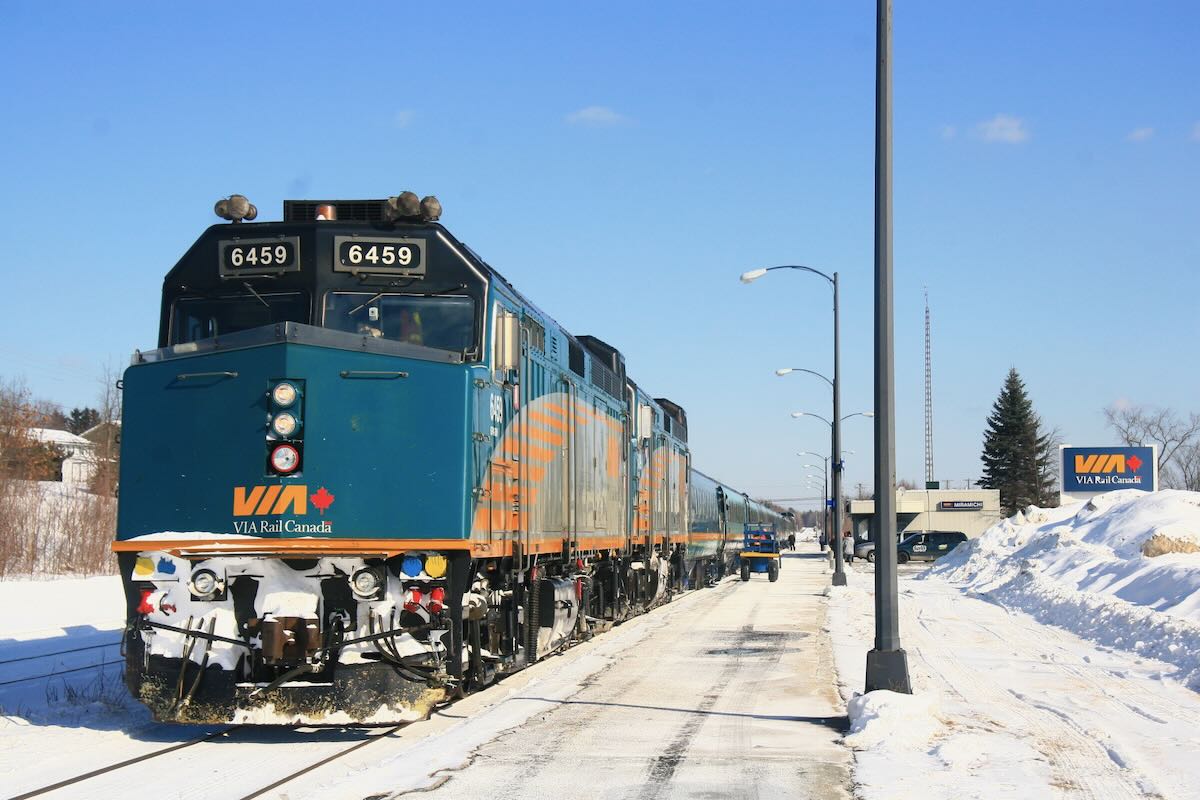
From the article, and other recent ‘inactions’ by the Amtrak Executive Team, Amtrak leadership is not interested in increasing long-distance capacity, let alone expanding long-distance service by adding increased frequencies on existing lines, nor adding long-distance routes. If so, they could have easily joined the long-distance equipment order being placed by VIA RAIL CANADA and jointly produced sufficient quantities of new coaches, sleepers, diners, lounges and domes to upgrade and replace current long-distance train sets. Amtrak Management is far more interested in modifying their Customer Satisfaction Index scores to bolster their own personal bonuses, than they are growing long-distance ridership and revenue. They are totally focused on Corridor and Regional gains to offset long-distance losses, as verified by CFO Corneanu’s statement, rather than grow the long-distance ridership. Over the past few years, it’s become clearly apparent that Amtrak Management has deliberately ‘starved’ long-distance capacities and has delayed/postponed any improvements to on-board amenities (diners, lounges and domes) to keep the long-haul routes stagnated. Actions, or in this case, inactions, speak far louder than words.