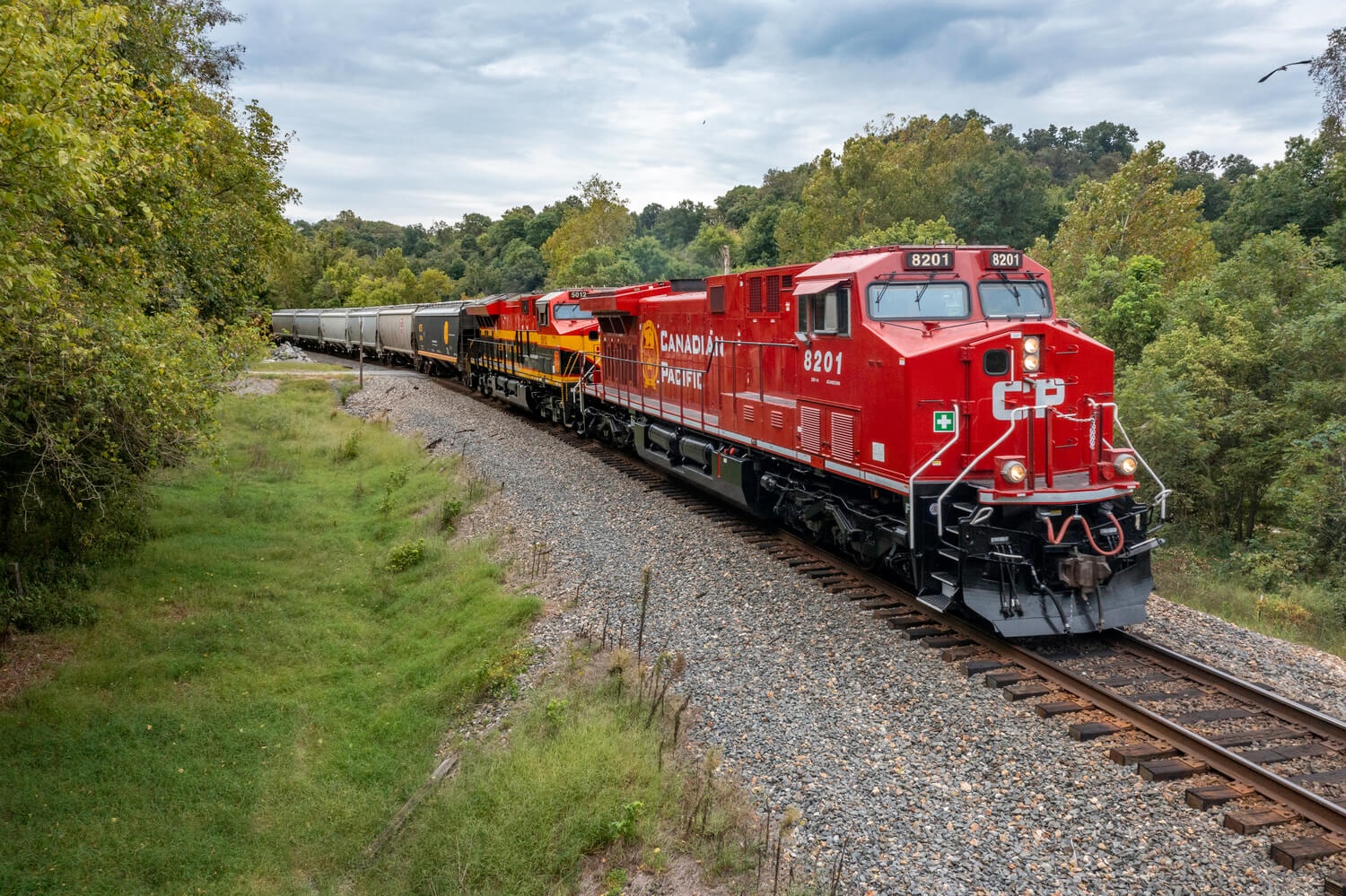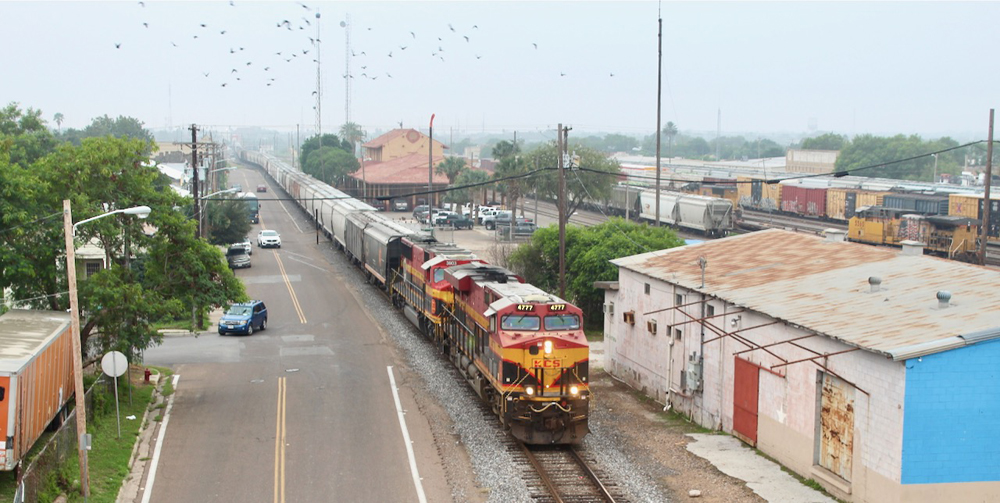
PALM BEACH, Fla. — Canadian Pacific Kansas City CEO Keith Creel disagrees with Union Pacific CEO Jim Vena’s contention that the UP-Norfolk Southern merger will be a slam dunk in Washington.
“I don’t think it’s a fait accompli. I do not,” Creel told an investor conference on Tuesday. “People are grossly underestimating the complexity of what UP and NS are attempting to do.”
The $85 billion deal to create the first transcontinental railroad in the U.S. will face a significantly higher regulatory burden than the 2023 Canadian Pacific-Kansas City Southern merger, Creel says, because it will face the Surface Transportation Board’s tougher and untested 2001 merger review rules.
If approved, the UP-NS combination likely would lead to another transcontinental merger, Creel says. “If you get to a place where there’s only two railroads, and one of them gets sick, this nation is going to be on its knees from a commerce standpoint,” Creel says, pointing to integration problems that melted down UP after its 1996 acquisition of Southern Pacific, and the trouble that CSX and NS had digesting their portions of Conrail in 1999.
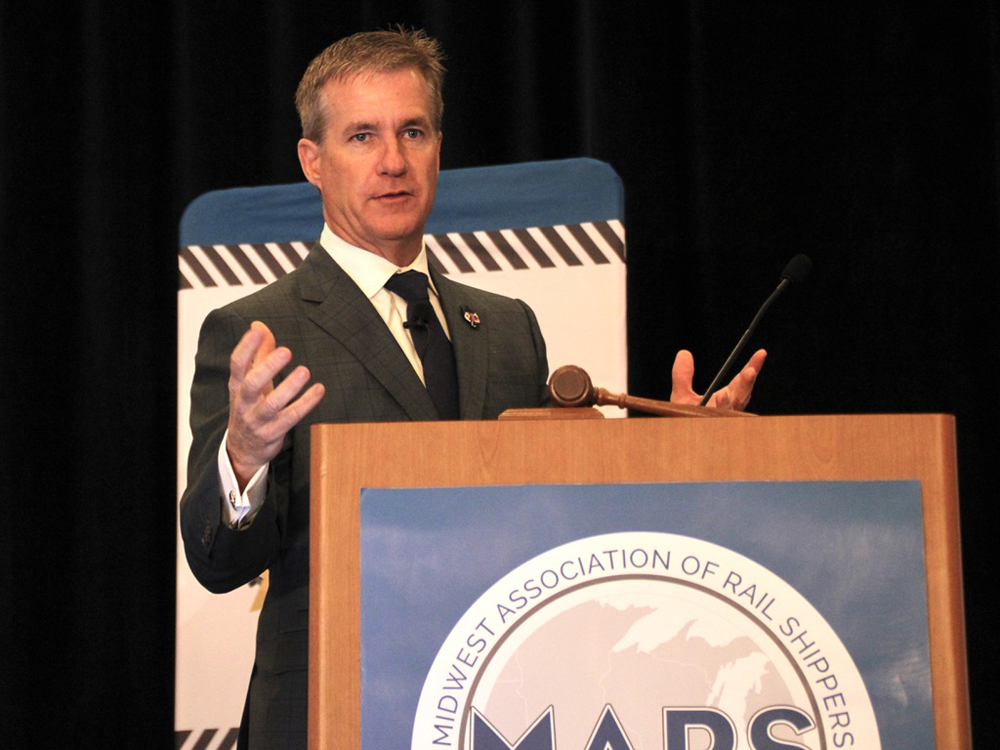
The CP-KCS merger was a straightforward combination of the two smallest Class I railroads, Creel says. The UP-NS combination is an entirely different matter, he says.
“We didn’t shift the balance, the scale, not even remotely close to the same complexity,” Creel says. “They’re going to take all that into account.”
The STB will take a fact-based approach to reviewing the UP-NS merger, Creel says. If the facts lead them to a “no” vote, Creel says the STB will have the courage to reject the merger. If they do approve the deal, the STB likely will seek to preserve competition by imposing significant conditions, he says.
Conditions could take many forms, he says, including line divestitures, the granting of trackage rights, and opening some customer locations to other railroads.
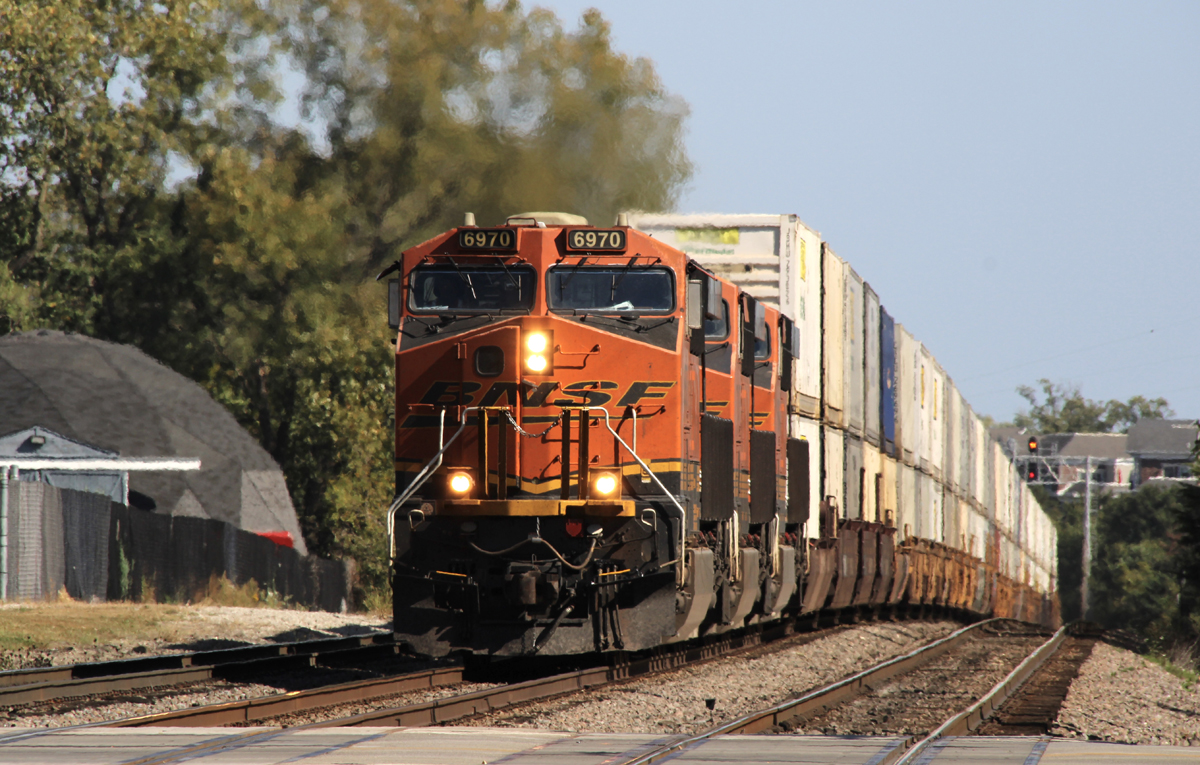
Creel also raised concerns about anti-competitive behavior from a transcontinental UP. “UP sometimes has a hard time seeing the regulatory requirements the same way the regulator might,” Creel says, noting that BNSF Railway this month asked the STB to scrutinize UP’s record of abiding by conditions imposed as part of the approval of the UP-SP merger.
CPKC will ask the board to ensure that any merger conditions have teeth, Creel says.
UP and NS have said that their end-to-end merger will boost competition and will not require any concessions to other railroads. Yet UP and NS have disclosed that potential concessions necessary for regulatory approval could reduce planned merger synergies by as much as $750 million, to a net of $2 billion.
Creel says CPKC alone will seek concessions that might approach the $750 million figure.
Speaking at the same conference, Vena said there was no reason why the STB would need to grant another railroad trackage rights over an expanded UP because it’s an end-to-end merger with very little overlap. Only about 10 customers are jointly served by UP and NS in the Midwest, and UP has said that its application will outline competitive remedies for them.
UP and NS, which have promised a smooth merger integration, expect to file their merger application with the STB the week of Dec. 16.
Creel and Vena spoke at the UBS Global Industrials and Transportation Conference.
— To report news or errors, contact trainsnewswire@firecrown.com.
Share this article