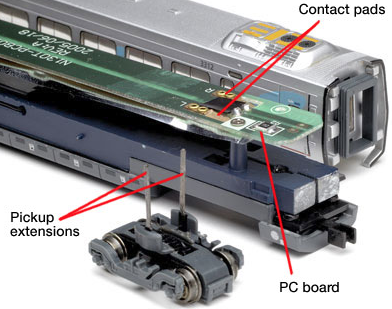
Bachmann N scale Acela Express passenger train A sharp-looking ready-to-run model of Amtrak’s Acela Express is the newest arrival in Bachmann’s Spectrum N scale line. The model is equipped with a dual-mode Digital Command Control (DCC) decoder and is usable on DC or DCC layouts. The powered café car and dummy locomotives and passenger cars […]
Read More…
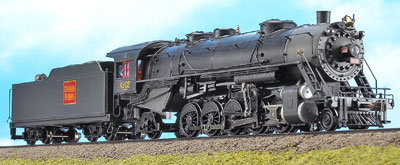
Bachmann’s HO USRA light 2-10-2 This powerful HO 2-10-2 may be called a “light” 2-10-2, but it’s still a big steam locomotive by most model railroad standards. For its size, this new Bachmann locomotive is surprisingly flexible and capable of negotiating 18″-radius curves. A factory installed automatic dual-mode decoder allows it to operate on either […]
Read More…
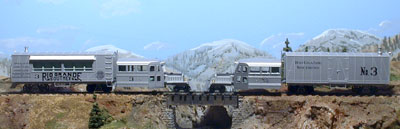
Precision Craft’s On3 and On2 1/2 narrow gauge Galloping Goose Ready-to-waddle narrow gauge plastic models of homemade motor cars are available with dual-mode Digital Command Control (DCC) sound decoders that will also operate on DC. These converted vehicles are offered in both freight and tourist versions, and in either On3 (scale 36″ gauge) or On2½ […]
Read More…
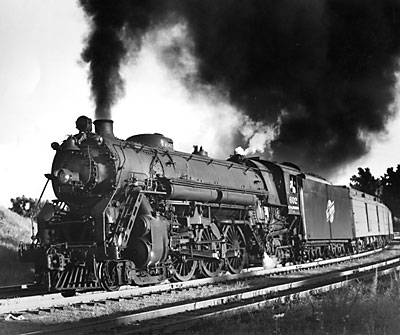
C&NW subsidiary Chicago, St. Paul, Minneapolis & Omaha owned the world’s heaviest and most powerful Pacifics. No. 602 – one of the road’s three giant 4-6-2s, built by Alco in 1930 – blasts through St. Paul, Minn., with train 514 on July 5, 1953. W. H. N. Rossiter The 4-6-2, or Pacific type, grew out […]
Read More…
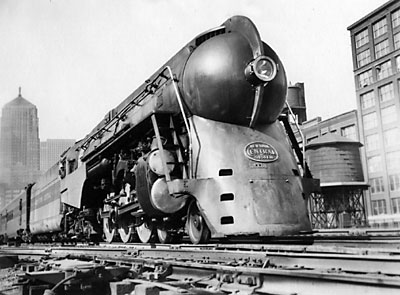
Henry Dreyfus created the timeless design worn by the streamlined 4-6-4s that pulled the Twentieth Century Limited. New York Central rostered North America’s largest fleet of Hudsons. In this photo, one of the speedsters prepares to depart LaSalle St. Station in Chicago. W.C. Merle, II In the early 1920s, as passenger train lengths grew and […]
Read More…
BY Neil Carlson The development of the 4-8-2 grew out of the need for a locomotive with greater power than the Pacific to handle heavy passenger trains in mountainous terrain. The first 4-8-2 in North America was built at Alco’s Richmond plant and delivered to the Chesapeake & Ohio in 1911. Chessie wanted an engine […]
Read More…
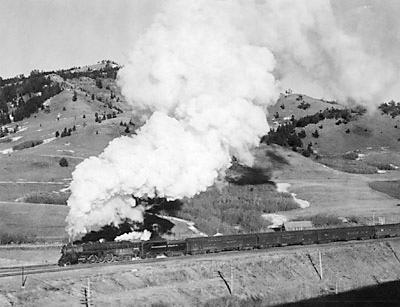
Northern Pacific 4-8-4 No. 2662 storms up the 1.8 percent grade at Muir, Mont., in 1947. Warren R. McGee With the general speed-up of passenger train schedules in the 1920s, the need arose for a more powerful version of the 4-8-2. Although it had adequate adhesion, the 4-8-2 lacked the raw horsepower to accelerate a […]
Read More…
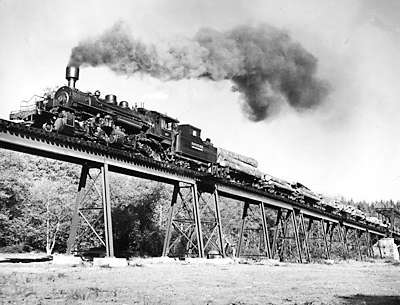
Rayonier was one of several logging companies that operated articulated 2-6-6-2 locomotives. No. 120, an oil-burning 2-6-6-2 built in 1936, hauls a trainload of freshly cut lumber near Humptulips, Wash., on September 28, 1960. Philip C. Johnson collection In the 1890s, the Gotthard Railway in Switzerland operated the first Mallet locomotives. They were compound articulated […]
Read More…
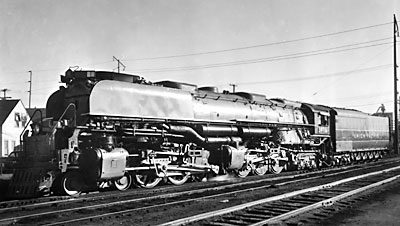
Better than most railroads, perhaps, the Union Pacific understood fast freight service. With an expansive network of lines spread across the western states, the railroad had to maintain fast schedules in order to remain competitive. Mindful of this, UP purchased the first heavy fast freight locomotives: unique three-cylinder 4-12-2s, built by Alco from 1926 to […]
Read More…
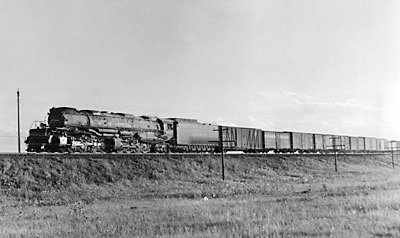
The proving ground for Union Pacific’s locomotives was a 75-mile portion of its busy main line between Ogden, Utah, and Evanston, Wyo. Eastward trains faced a climb through the Wasatch Mountains on grades of 1 percent or better. It was an expensive line to operate, particularly given UP’s practice of running big trains that typically […]
Read More…
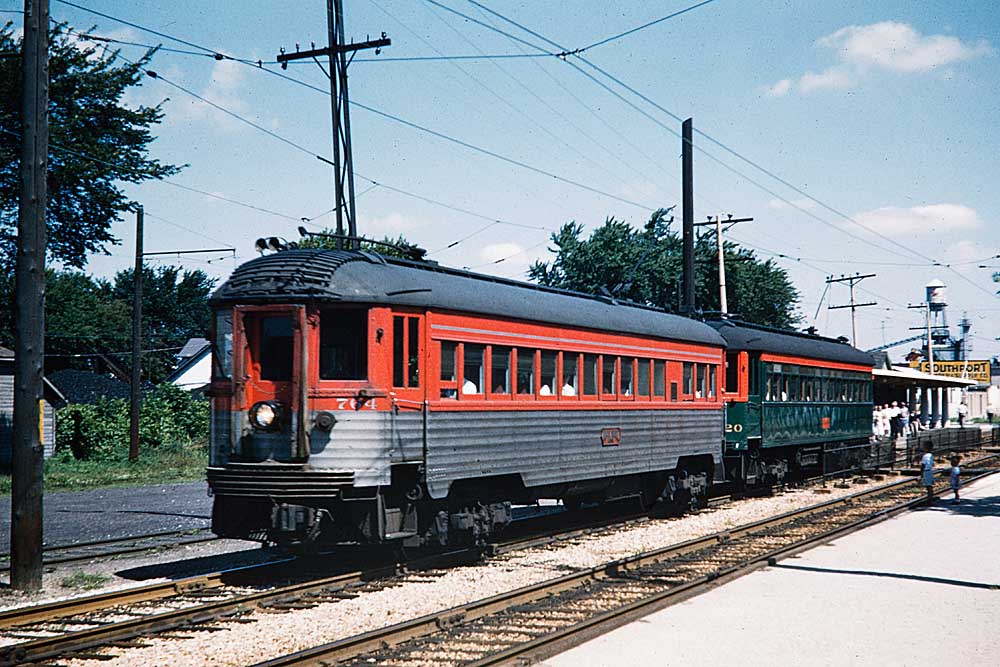
Interurbans Interurbans were electric railroads running between cities, often of lighter construction than “steam” railroads. They had their own rights of way through the countryside but usually ran in streets when in town, often sharing tracks with city streetcars. Trains consisted of one (sometimes more) cars. Passengers were their primary focus, though some lines came […]
Read More…
One enduring symbol of railroading’s past is the red-and-white diamond herald of the Railway Express Agency. Today one finds reminders of REA only at museums or old depots, but it once was a major element of the American scene – the FedEx of its day. Formation of the REA Express service is the prompt and […]
Read More…