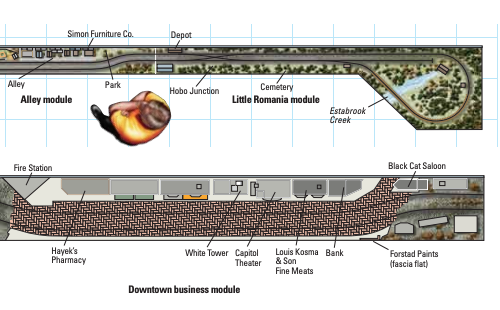
Name: The Gypsy Trolley Line Layout designer: John Kosma Scale: HO (1:87.1) Size: 2 x 34 feet Prototype: freelanced, inspired by the Chicago, North Shore & Milwaukee and The Milwaukee Electric Ry. & Light Co. Locale: Milwaukee Era: 1939 to 1941 Style: freestanding, modular display Mainline run: 68 feet Minimum radius: 7″ Minimum turnout: no. […]
Read More…
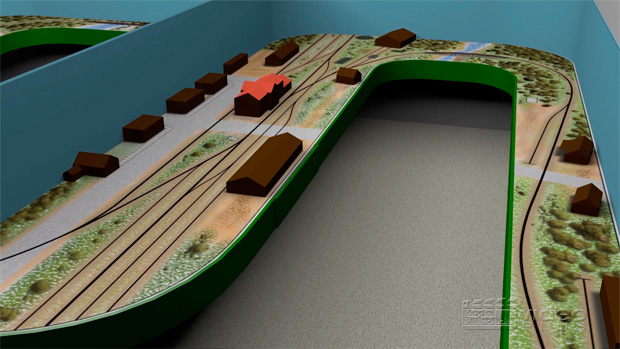
Having trouble viewing this video? Please visit our Video FAQ page The Central of Georgia Ry. Had a number of branch lines, and two of them connected to the main line in Wadley, Georgia. This HO scale track plan models the Lousiville & Wadley and the Wadley Southern Ry. In a 13 x 15 […]
Read More…
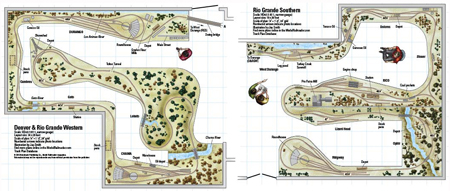
Name: Denver & Rio Grande, Western 4th Division and Rio Grande Southern Layout designer: Jim Hoffman Scale: HOn3 (1:87.1, narrow gauge) Size: D&RGW 24 x 28 feet, RGS 18 x 26 feet Prototype: D&RGW, RGS Locale: New Mexico/Colorado Era: late 1930s to early 1940s Style: walk-in Mainline run: 160 feet Minimum radius: 20″ Minimum turnout: […]
Read More…
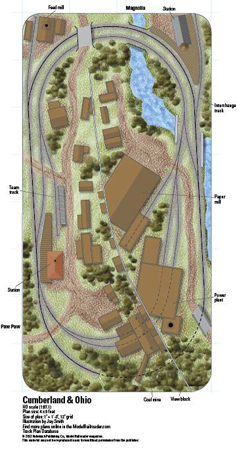
Name: Cumberland & Ohio Layout designer: Michael Tylick Scale: HO (1:87.1) Size: 4 x 8 feet Theme: coal mining Locale: Appalachian Mountains Era: variable (1900-1970) Style: island Mainline run: 20 feet Minimum radius: 15″ Minimum turnout: no. 4 Originally appeared in the January 2013 Model Railroader. Click on the link to download the PDF of […]
Read More…
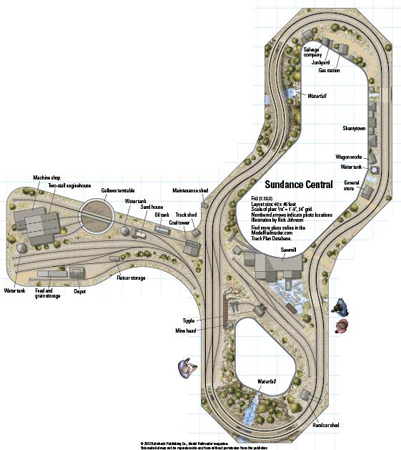
Name: Sundance Central Layout designer: Sundance Central modular railroad club Scale: 1:20.3-proportion, 3-foot gauge track Size: 40 x 45 feet Theme: none Locale: southwestern United States Era: late 1930s to early 1940s Style: open grid Mainline run: 115 feet Minimum radius: 5′-6″ Minimum turnout: no. 6 Maximum grade: none Originally appeared in the December 2012 […]
Read More…
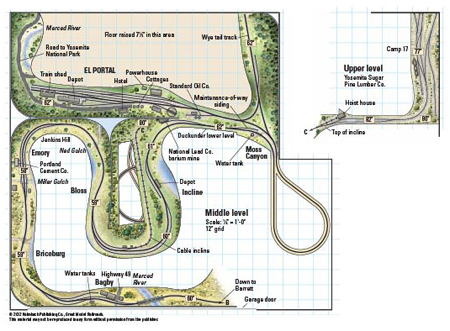
Name: Yosemite Valley RR Layout designer: Jack Burgess Scale: HO (1.87.1) Size: 20 x 20 feet Prototype: shortline railroad to Yosemite National Park Locale: San Joaquin Valley and Merced River Canyon in California Era: August 1939 Style: multi-level Mainline run: 112 feet Minimum radius: 22″ with spiral easements Minimum turnout: no. 5 Maximum grade: 2.3 […]
Read More…
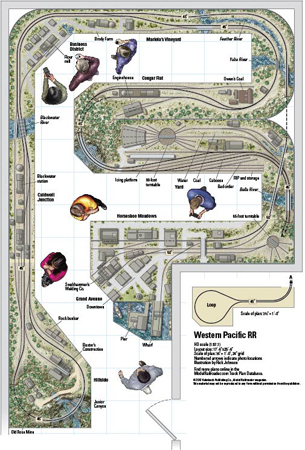
Name: Western Pacific RR Layout designer: Bob Grech Scale: HO (1:87.1) Size: 17′-6″ x 25′-6″ Prototype: freelanced Locale: freelanced Era: 1935 to mid-1940s Style: walk in Minimum radius: 26″ (main line), 24″ (hidden reverse loop) Minimum turnout: no. 6 Maximum grade: 2 percent Originally appeared in the October 2012 issue of Model Railroader. Click here […]
Read More…
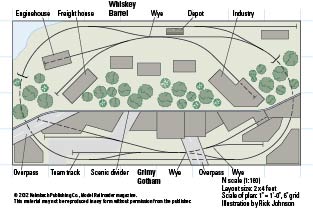
Name: Whiskey Barrel & Gotham Layout designer: M.C. Fujiwara Scale: N (1:160) Size: 2 x 4 feet Prototype: freelanced Locale: mountain railroading Era: 1900 to 1970s Style: island or shelf Mainline run: 9 feet Minimum radius: 9-3/4″ Minimum turnout: no. 4 Maximum grade: none Originally appeared in the September 2012 issue of Model Railroader. Click […]
Read More…
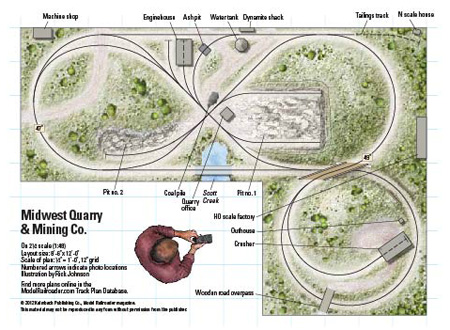
The layout at a glance Name: Midwest Quarry & Mining Co. Layout owner: Bob Genack Scale: On 2 1/2 (1:48, narrow gauge) Size: 8′-6″ x 12′-0″ Prototype: freelanced Locale: Midwest Era: 1930s Style: L-shaped Benchwork: L-girder and open grid Height: 46″ Roadbed: cork Track: Atlas code 100 Mainline run: 57 feet Minimum radius: 24″ Minimum […]
Read More…
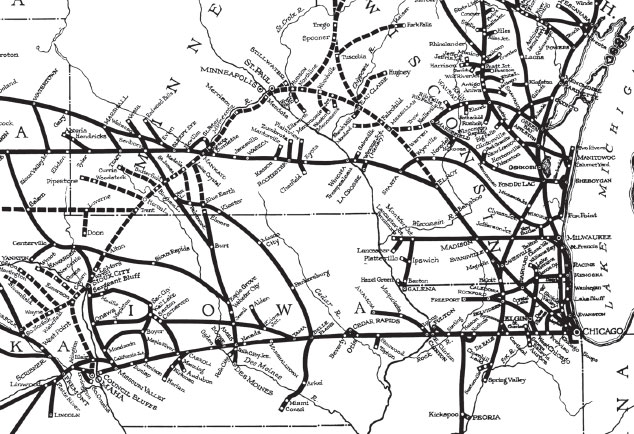
This Map of the Month was featured in the August 2002 issue of Trains magazine. If ever two railroads practiced seamless service decades before it became a railroad industry buzzword, it would be the Chicago & North Western and the Omaha Road. The Omaha Road, the usual shorthand for the Chicago, St. Paul, Minneapolis & […]
Read More…
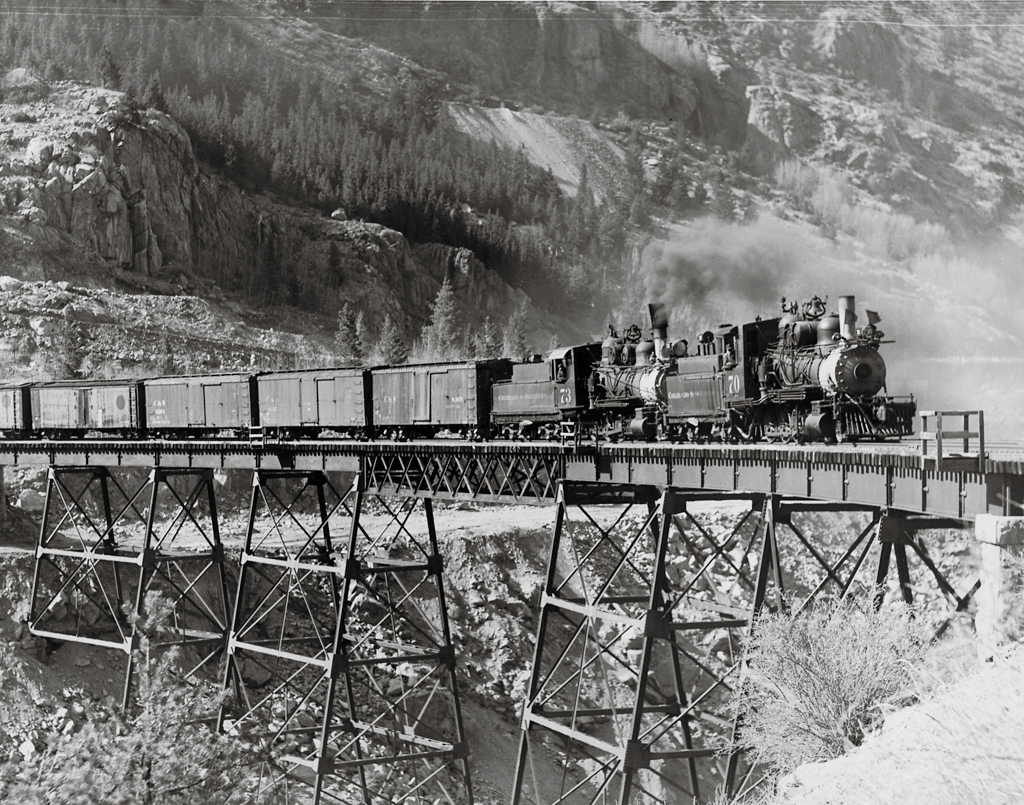
Colorado & Southern narrow gauge 2-8-0s Nos. 70 and 73 cross the high bridge on the Georgetown Loop with seven cars. The engines are moving at only 5 mph due to the frail nature of the bridge on May 14, 1938. Photo by R. H. Kindig […]
Read More…
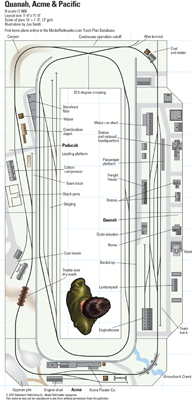
Name: Quanah, Acme & Pacific Layout designer: Steven Otte Scale: N (1:160) Size: 5′-9″ x 11′-0″ Prototype: Frisco subsidiary Locale: North Texas Era: early 1929 Style: donut with oNeTRAK modules Mainline run: 46 feet Minimum radius: 11″ Minimum turnout: no. 5 Maximum grade: none Originally appeared in the February 2012 issue of Model Railroader. Click […]
Read More…