
Rail comes in many different sizes and materials. Here’s a little background information to help you chose the one that’s right for you. Rail sizes The size of model-train rail in any scale is referred to by “code.” For instance, in large-scale railroading we commonly use code-332, code-250, or code-215 rail, although code 197 is […]
Read More…
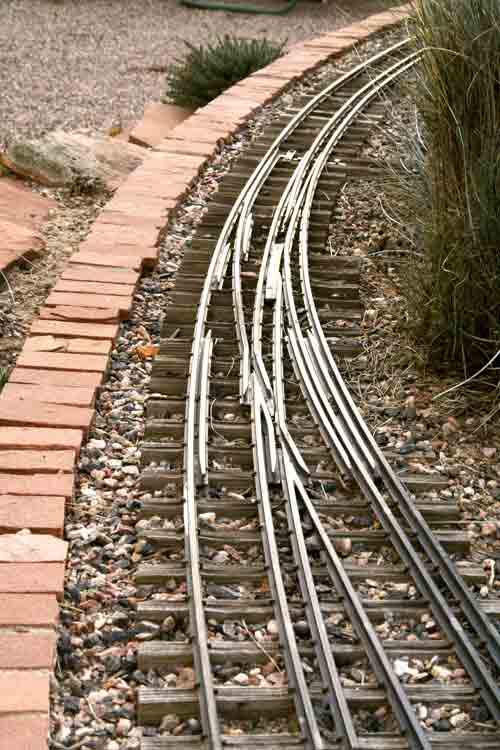
Marc Horovitz Marc Horovitz Marc Horovitz Marc Horovitz Marc Horovitz Keeping dirt and debris out of the moving points is imperative to proper operation. The author uses a stiff brush to keep things moving freely through an operating session. Kevin Strong The frog and guardrail flangeways—like the points—need to be kept clear. These areas aren’t […]
Read More…
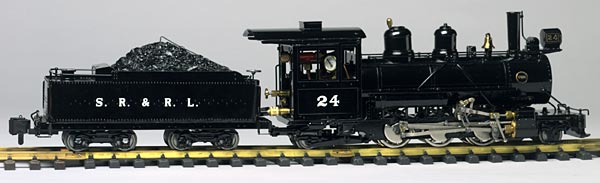
The No. 24 was the last locomotive supplied to the two-foot gauge Sandy River & Rangeley Lakes Railroad in Maine. This G scale live steam model was manufactured by Roundhouse Engineering of Doncaster, England. Kenneth Matticks Gas is added through the filler valve in the center of the tank. By watching the pressure gauge and […]
Read More…
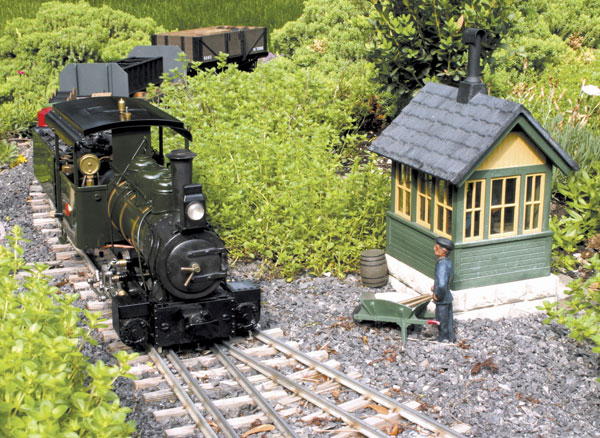
A Roundhouse “Fowler,” fitted with a coal-fired boiler by John Shawe, at work on the author’s garden railway near Toronto. Jeff Young When we acquire a small-scale live steamer, it is usually to run on an established garden railway. The selection of your live-steam locomotive was probably influenced by the physical characteristics of the existing […]
Read More…
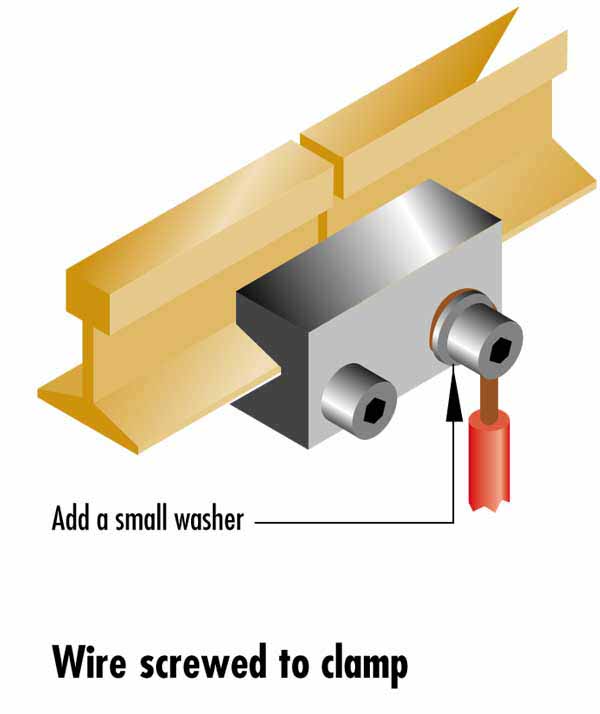
Marc Horovitz Marc Horovitz Marc Horovitz There are several ways of connecting a lead wire to the rail. Perhaps the most positive is soldering it. The wire can also be connected mechanically. Screw-on connectors are not too reliable outdoors. However, a wire can be screwed to a clamp-on rail joiner. Split Jaw Rail Clamps offers […]
Read More…
Marc Horovitz Marc Horovitz Marc Horovitz There are several ways of connecting a lead wire to the rail. Perhaps the most positive is soldering it. The wire can also be connected mechanically. Screw-on connectors are not too reliable outdoors. However, a wire can be screwed to a clamp-on rail joiner. Split Jaw Rail Clamps offers […]
Read More…
At the turn of the century even the smallest trains left little room for indoor model railroading Back before the “dawn of time,” say around 1860, the model train hobby was in its infancy, as was the full-size railroad industry. In fact, for decades, the development of model railways closely paralleled that of full-size railways. […]
Read More…
At the turn of the century even the smallest trains left little room for indoor model railroading Back before the “dawn of time,” say around 1860, the model train hobby was in its infancy, as was the full-size railroad industry. In fact, for decades, the development of model railways closely paralleled that of full-size railways. […]
Read More…