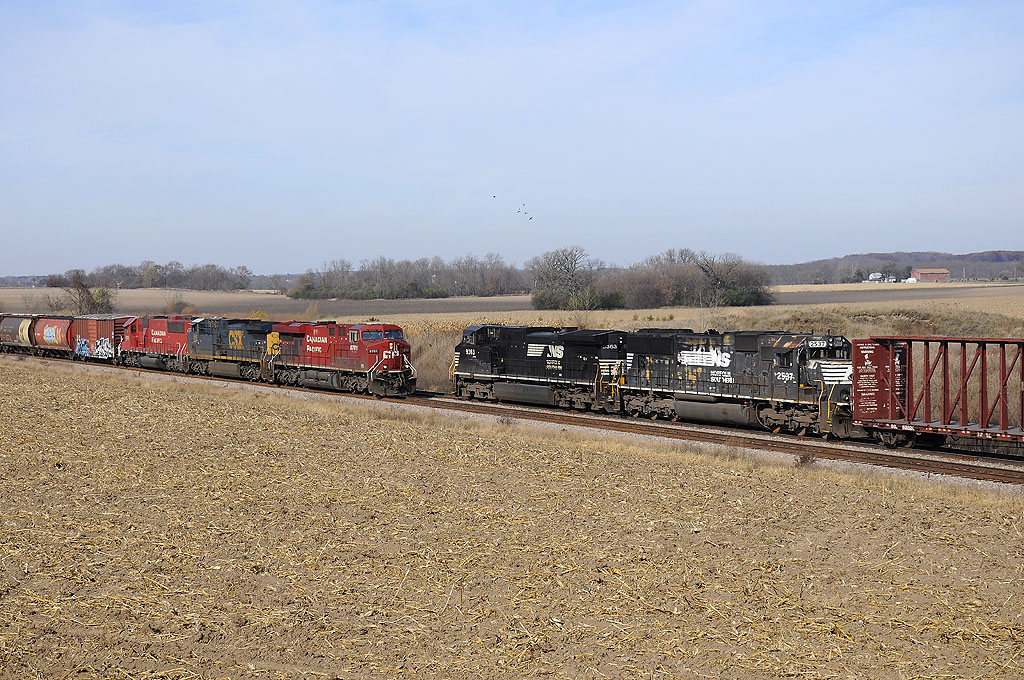
Two Canadian Pacific trains, with motive power from CP, CSX Transportation, and Norfolk Southern, meet near Oconomowoc, Wis., in November 2014. Brian Schmidt Q It is common to see a train from one railroad which is powered, partially or fully, by locomotives from another railroad. Why does this happen so frequently and how is the […]
Read More…
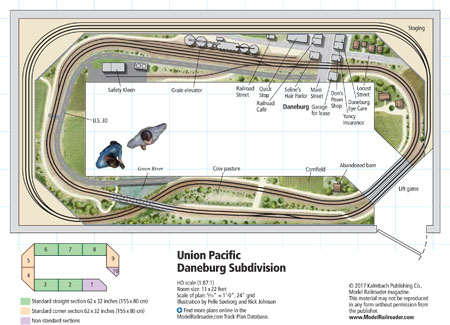
Name: Union Pacific Daneburg Subdivision Layout owner: Pelle Soeborg Scale: HO Size: 11 x 22 feet Prototype: Union Pacific Locale: Freelanced, based on eastern Nebraska and western Iowa Era: present-day Layout style: around the walls Mainline: 60 feet (excluding staging) Minimum radius: 33″ Track: flextrack: code 83 (main), 70 (sidings), and 55 (spurs) Turnouts: no. 6 […]
Read More…
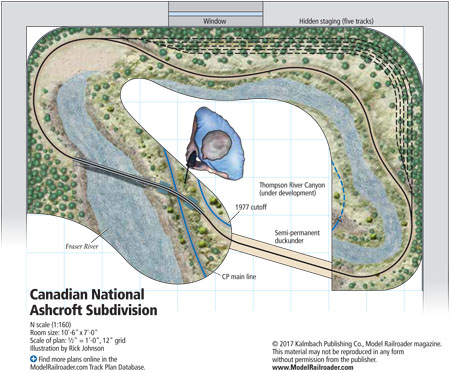
Name: Canadian National Ashcroft Subdivision Layout owner: Scott Lamoureux Scale: N (1:160) Size: 7 x 10 feet Prototype: Canadian National Locale: British Columbia Era: modern Style: around the walls Mainline run: 28 feet Minimum radius: 15″ Minimum turnout: none Maximum grade: none Benchwork: open grid Height: 46″ Roadbed: Woodland Scenics foam Track: code 55 Scenery: […]
Read More…
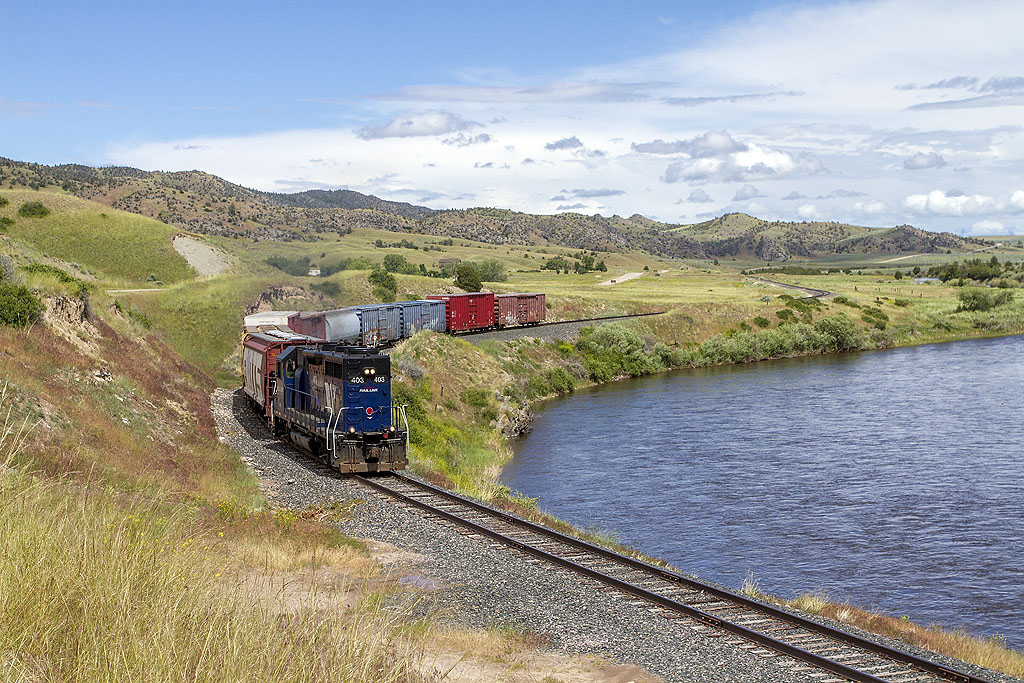
A Montana Rail Link local with a GP35 running backward (long hood forward) rolls along the Jefferson River west of Sappington, Mont. Tom Danneman Q In the 2010 movie, “Unstoppable,” movie makers create a lot of drama about running a locomotive backward at high speed. How capable are road and switch engines of operating in […]
Read More…
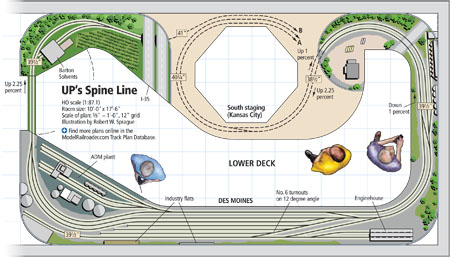
Name: UP’s Spine Line Layout owner: Bob Sprague Scale: HO (1:87.1) Size: 10 x 18 feet Prototype: Union Pacific Locale: Eastern Iowa Era: modern Style: double-deck around-the-walls Mainline run: 74 feet visible, plus helixes Minimum radius: 27″ (main), 24″ (industrial and wyes) Minimum turnout: no. 6 Maximum grade: 2.75 percent This track plan originally appeared […]
Read More…
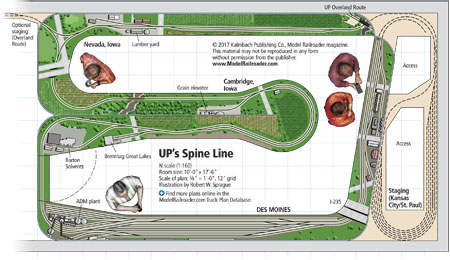
Click the image to download a copy of the track plan. Name: UP’s Spine Line Layout owner: Bob Sprague Scale: N (1:160) Size: 10′-0″ x 17′-6″ Prototype: Union Pacific Locale: Eastern Iowa Era: modern Style: walkaround Mainline run: 59 feet Minimum radius: 15″ (main), 12″ (industrial and wyes) Minimum turnout: no. 6 Maximum grade: none […]
Read More…
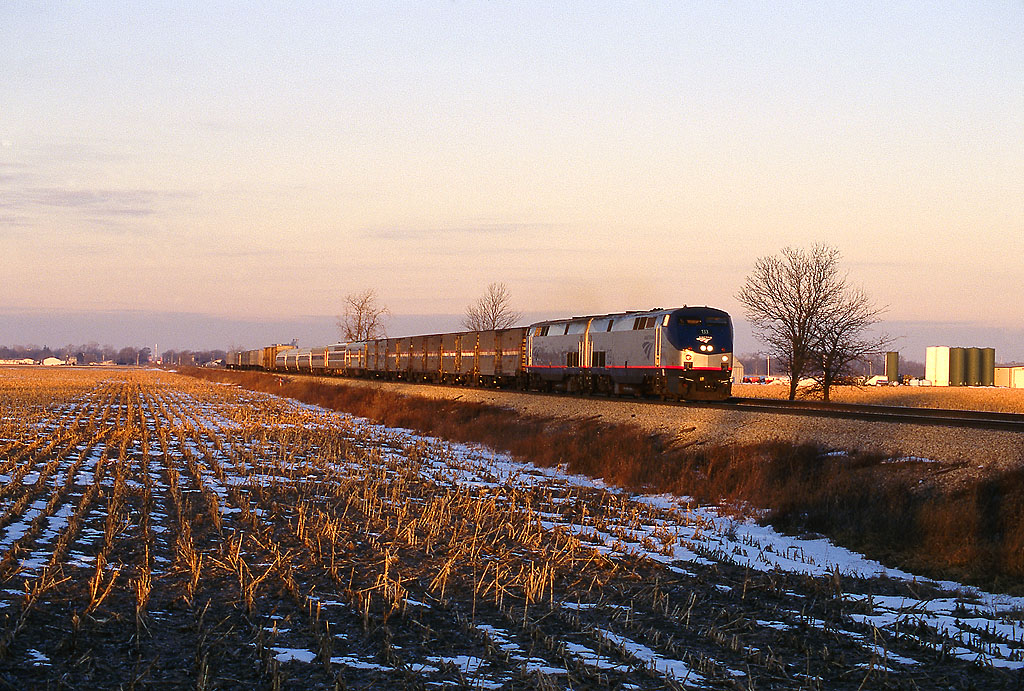
Amtrak’s ‘Three Rivers’ passes through Deshler, Ohio, in January 2003. Brian Schmidt Q While watching a DVD recently, I noticed an Amtrak train heading west through Deshler, Ohio. In what years did Amtrak go through that piece of Ohio? – David Harnisfeger, Findlay, Ohio A Amtrak operated on the former Baltimore & Ohio main line […]
Read More…
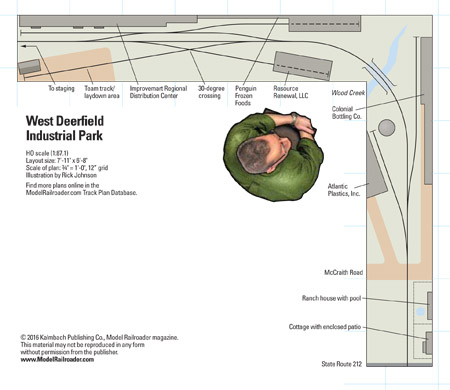
Name: West Deerfield Industrial Park Layout owner: Paul Boehlert Scale: HO (1:87.1) Size: 6′-8″ x 7′-11″ Theme: industrial switching Locale: northeastern United States (as shown) Era: modern Style: shelf Mainline run: not applicable Minimum radius: 24″ Minimum turnout: no. 5 Maximum grade: none This track plan originally appeared in the February 2017 Model Railroader. Click […]
Read More…
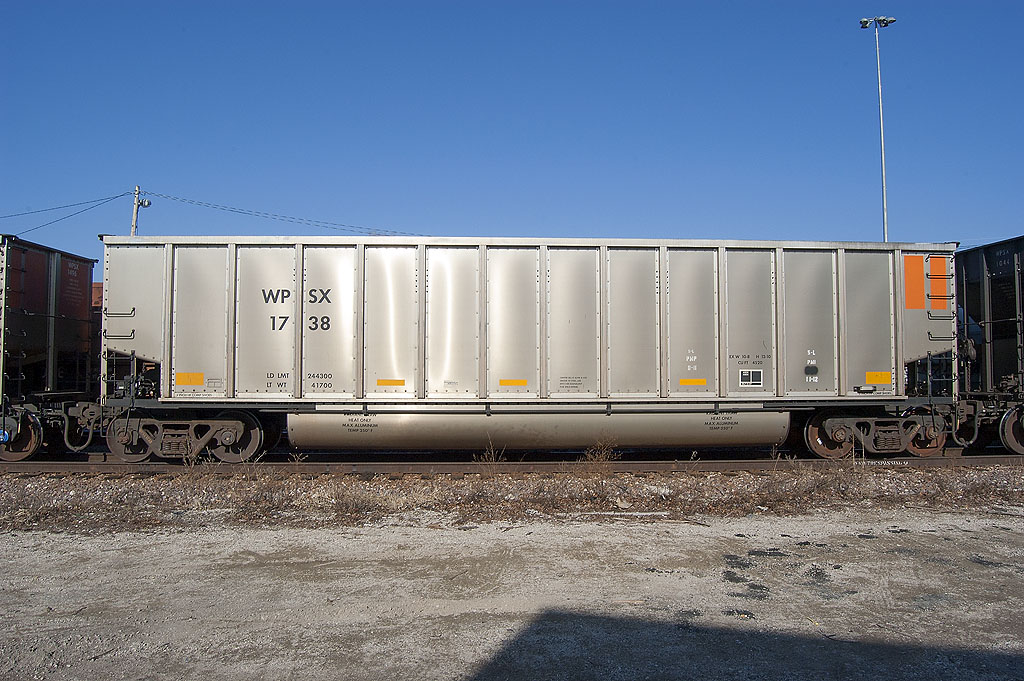
This coal hopper, seen in Butler, Wis., has a main body built from aluminum and a center sill made of steel. Freight-car makers use non-conductive materials to separate the metals and prevent galvanic corrosion. Steve Sweeney Q There are aluminum-body Talgos and aluminum-body coal cars, both with steel center sills. High school chemistry teaches that […]
Read More…
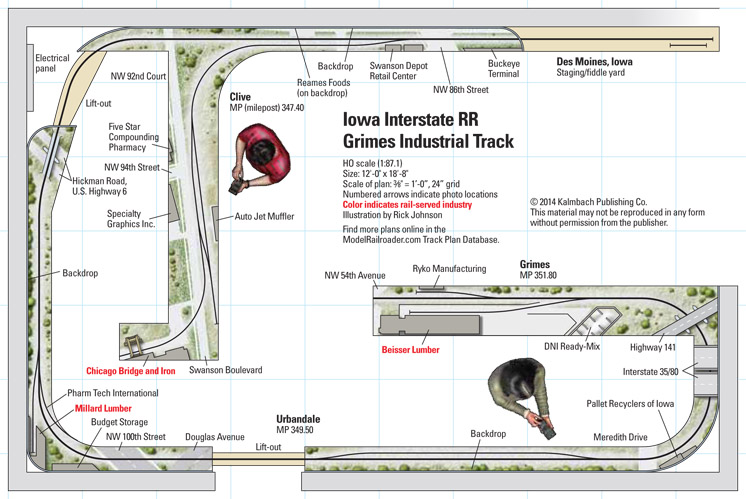
Name: Iowa Interstate RR Grimes Line Layout designer: James McNab Scale: HO (1:87.1) Size: 12′-0″ x 18′-8″ Prototype: IAIS Grimes Industrial Track Locale: Greater Des Moines, Iowa Period: September 2008 Style: linear walkaround Mainline run: 52 feet Minimum radius: 22″ Minimum turnout: no. 6 Maximum grade: none Originally appeared in Great Model Railroads 2015. Click […]
Read More…
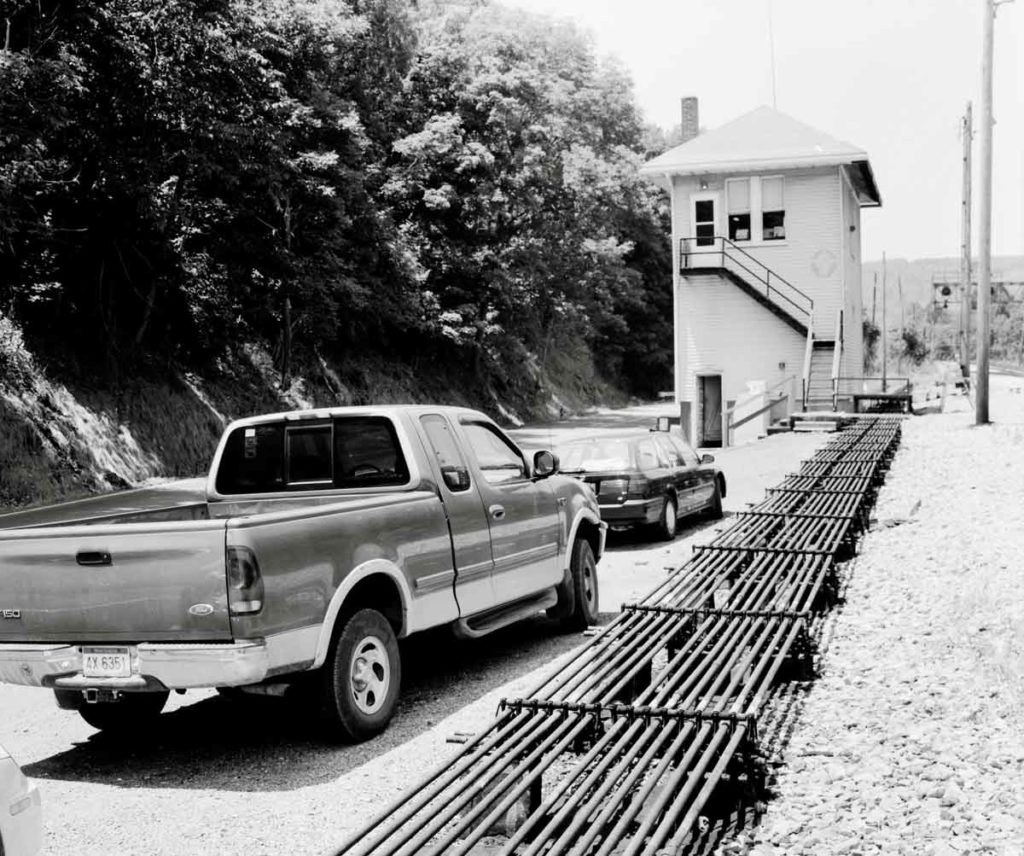
The former Baltimore & Ohio tower at Keyser, W.Va., seen here in 2004 under CSX ownership, was a classic “armstrong” mechanical interlocking plant. The pipes travel along the tracks, where levers and cranks transfer the motion to switches, locks, and derails. Concrete pedestals support the pipe lines and other hardware. Historic American Engineering Record photo […]
Read More…
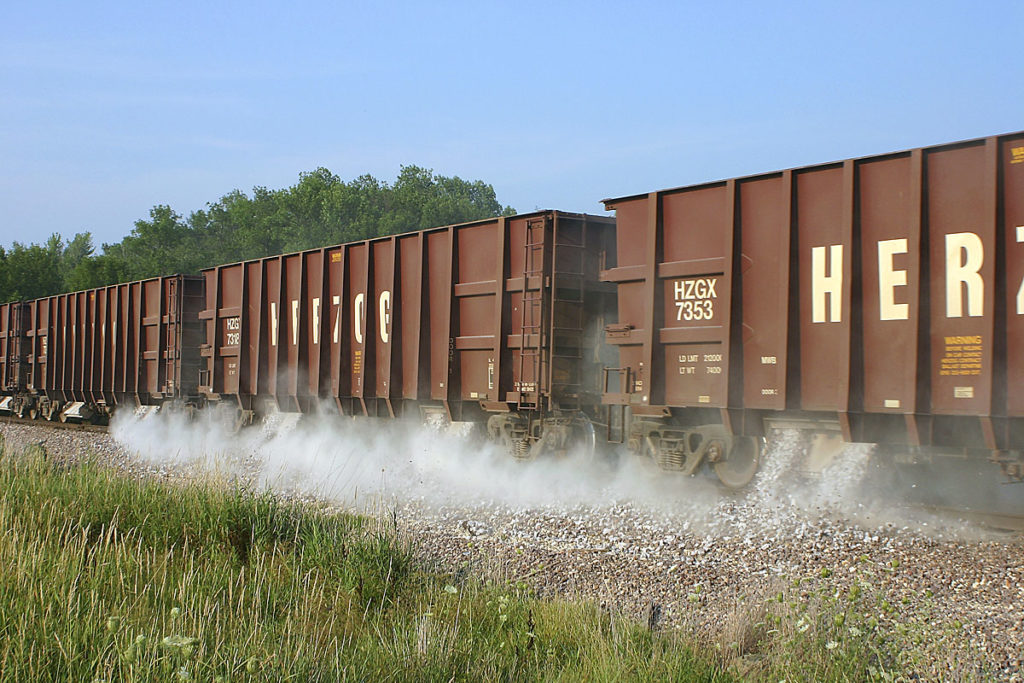
Herzog freight cars are often seen in track maintenance and repair projects, such as this ballast train. Mike Yuhas Q I have seen private freight cars on the major railroads carrying the logo and letters for “HERZOG.” Who owns them and what do they carry? – L. Frank Herman, Springfield, Ill. A You likely saw […]
Read More…