In a continued effort to improve our coverage, we’re introducing a weekly feature for TrainsPRO. It will be a weekly recap, highlighting our most popular stories of the week, and also occasionally shining a spotlight on stories that you might have missed, but that our editorial team believes might develop into the next big story in the rail industry. The following are the best-performing TrainsPRO stories for the week of Feb. 27, 2026.
Union Pacific releases full schedule for Big Boy’s western trip
Trip to California to begin March 29, conclude April 24
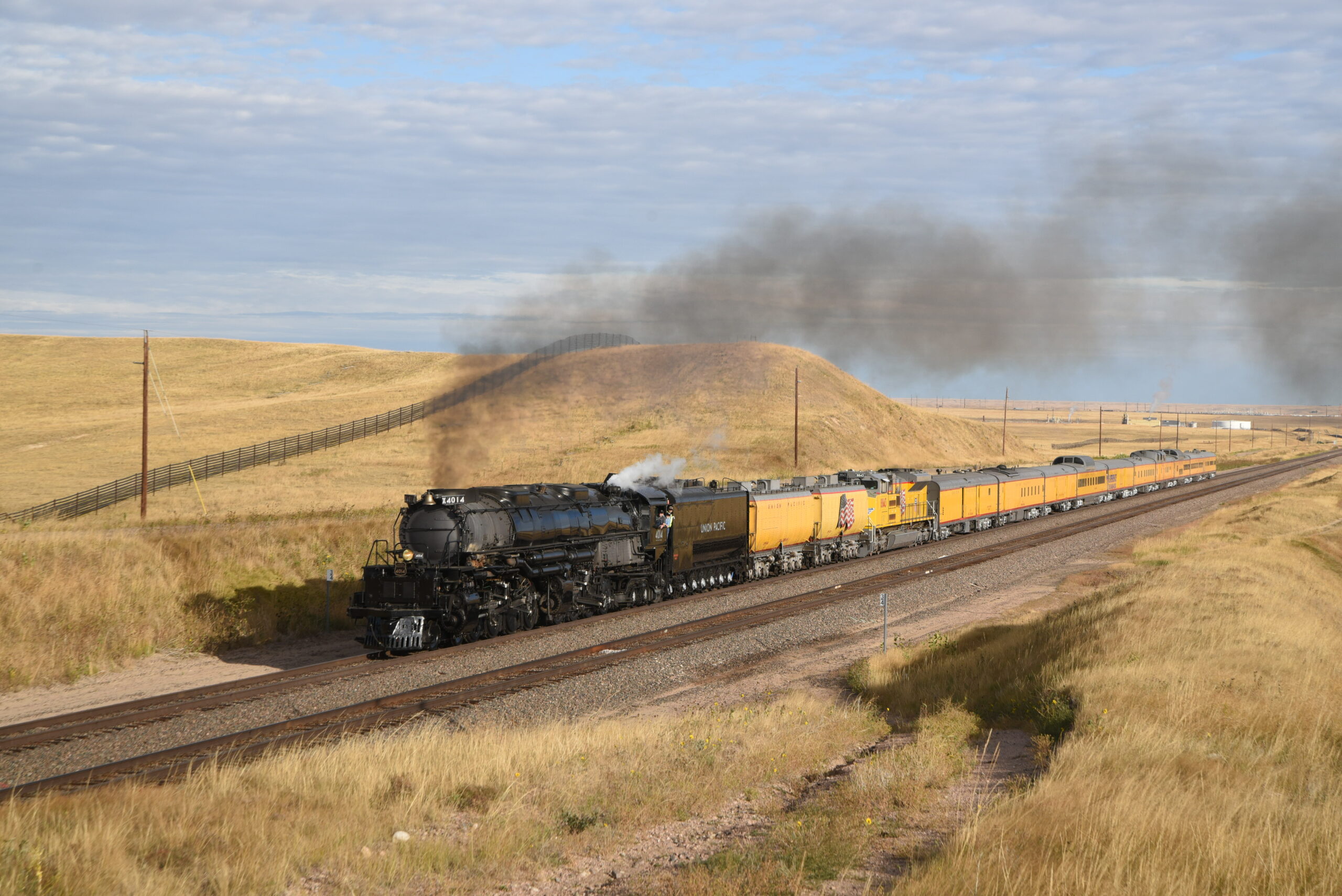
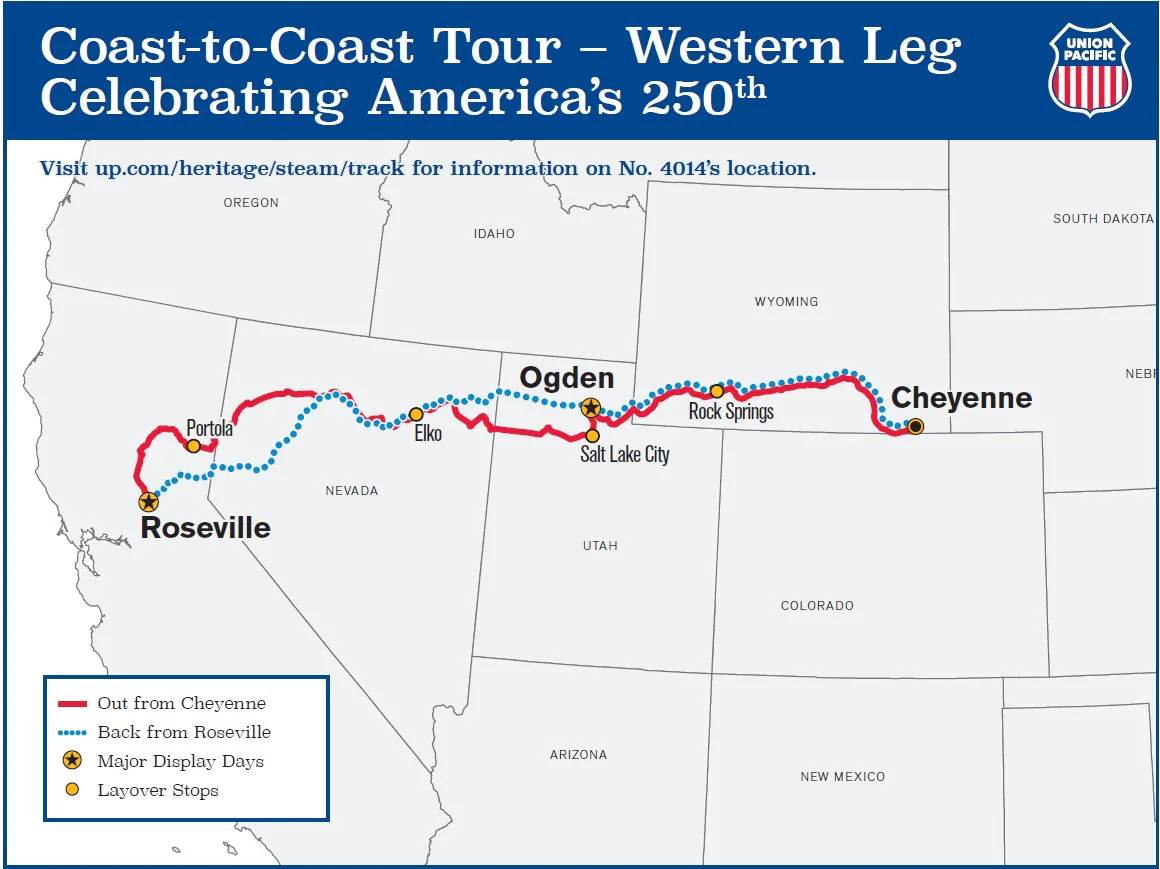
CHEYENNE, Wyo. — Some 27 whistle stops are planned along with four public display days on the western tour of Union Pacific Big Boy No. 4014, which begins March 29 with departure from Cheyenne.
UP today announced the full schedule for the western trip, the first part of a planned coast-to-coast journey, in an email today (Feb. 24) to its Steam Club members.
No excursions are planned as part of the trip that concludes on April 24 in Cheyenne. The railroad will be auctioning off two cab rides in the locomotive on April 17 in Utah, with proceeds going to the Union Pacific Railroad Museum in Council Bluffs, Iowa. The auction begins March 2 and ends March 19; information and registration is available here.
The whistle stops are generally 15 to 30 minutes long. They are planned in these communities; details on the specific locations are available on the full schedule linked above.
- March 29 – Laramie
- March 29 – Medicine Bow
- March 30 – Wamsutter
- March 31 – Rock Springs
- April 1 – Green River
- April 21 – Green River
- April 23 – Point of Rocks
- April 23 – Wamsutter
- April 24 – Medicine Bow
- April 24 – Laramie
Utah
- April 2 – Morgan
- April 2 – Salt Lake City
- April 20 – Morgan
Nevada
- April 4 – Wells
- April 6 – Carlin
- April 6 – Battle Mountain
- April 7 – Gerlach
- April 14 – Lovelock
- April 15 – Carlin
- April 15 – Elko
- April 17 – Wells
- April 17 – Montello
California
- April 9 – Oroville
- April 9 – Marysville
- April 9 – Lincoln
- April 12 – Colfax
- April 12 – Truckee
UP had previously announced display days in Roseville, Calif., on April 10-11, and Ogden, Utah, on April 18-19 [see “UP Big Boy 2026 tour …,” Trains.com, Jan. 26, 2026]. Those days also offer a chance to visit the “Experience the Union Pacific” railcar offering a walk-through exhibit on the railroad’s history.
Still to come are details for the locomotive’s trip to the East Coast later this year.
Amtrak ends plans for new bi-level cars
Company will seek to develop new single-level cars for long-distance operations
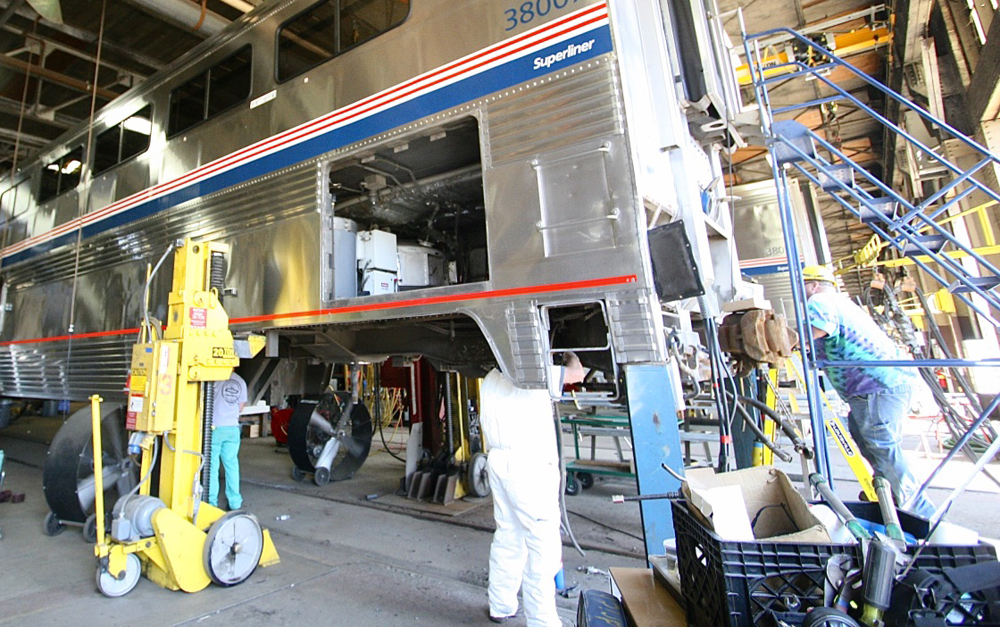
WASHINGTON — Amtrak is scrapping plans for a new generation of bi-level passenger equipment to replace its aging Superliner fleet, announcing that it will instead move ahead with developing a single-level fleet for use across its system.
The company said in a press release that the move reflects “extensive analysis of the challenges associated with operating a hybrid fleet;” industry feedback from its prior proposals on new bi-level cars; and findings from a joint review by Amtrak and the Federal Railroad Administration.
At its Jan. 28 meeting, the Amtrak board of directors ordered management to pursue single-level equipment for the long-distance network, based on a recommendation from the Department of Transportation, sources told Trains.
“This new approach will deliver a more consistent and accessible customer experience across the Amtrak network while maintaining our commitment to introduce the first new long-distance cars in the early 2030s,” Amtrak President Roger Harris said in a press release today (Feb. 26). “Thanks to support from FRA Administrator David Fink and the entire Federal Railroad Administration team, Amtrak’s long-distance fleet replacement is moving forward more effectively and efficiently than originally planned.”
Deputy Transportation Secretary Steve Bradbury said the new equipment means “Amtrak will finally replace its aging fleet and provide American travelers with the world-class rail service they deserve … These new cars won’t just benefit American train passengers, but workers, too, by support good paying domestic manufacturing jobs.”
The railroad said it will issue a formal request for bids on the new long-distance fleet in “the coming months” and cancel the bi-level procurement process. A delivery schedule will be determined once Amtrak chooses a builder.
Amtrak originally sought to buy both single- and bi-level equipment, issuing a request for information from potential builders in 2022 [see “Amtrak seeks carbuilder interest …,” Trains.com, Jan. 19, 2023]. Responses to that inquiry shaped preliminary plans for both types of equipment that were displayed as part of a public hearing on equipment accessibility held in August 2023 [see “Amtrak reveals new long-distance trainset concepts …,” Aug. 30, 2023].
A formal request for proposals came in December 2023; at the time, a railroad spokesman said it was “Amtrak’s highest priority to replace the oldest portion of the long-distance fleet.” [See “Amtrak issues Request for Proposals …,” Dec. 22, 2023]. The first of the Superliners, built by Pullman-Standard, entered service in 1979. A second generation of the cars, the Superliner II fleet built by Bombardier, was completed in 1996.
The procurement process stalled when Amtrak sought features that potential manufacturers had warned against and subsequently rejected, according to the independent Amtrak Office of Inspector General [see “Amtrak Inspector General report …,” Dec. 18, 2024]. Problematic aspects of the order included a request for elevators in the bi-level cars, as well as the desire to have builders deliver complete trainsets of multiple car types.
The bi-level request process has apparently not advanced since, although it originally carried a May 2024 deadline for responses.
Incomplete training of worker played part in CPKC derailment: TSB
Locomotive failure in February 2024 derailment in Alberta came after sensor was disabled
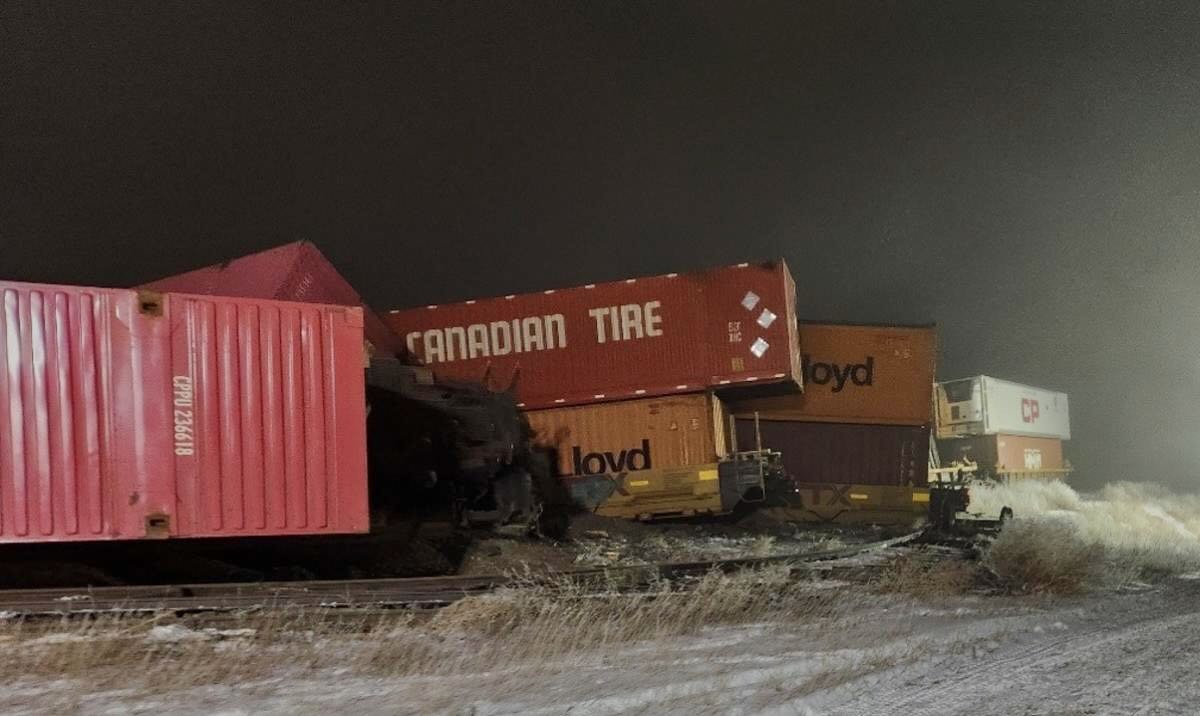
CALGARY, Alberta — Incomplete training of a maintenance supervisor played a part in the derailment of a CPKC intermodal train near Brooks, Alberta, the Transportation Safety Board of Canada said today in releasing its report on the Feb. 5, 2024, incident.
The derailment involved the trailing unit of two locomotives at the front of the train, as well as the first 17 intermodal cars (a total of 41 platforms) of the 97-car train. The train, traveling from Montreal to Edmonton, was traveling about 53 mph when the derailment occurred at 4:24 p.m. No one was injured; while some of the containers were carrying dangerous goods, none were breached or released their contents.
The TSB said its investigation determined that the train had stopped the day before in Ontario because of smoke coming from one of the traction motors of the locomotive that eventually derailed. After consulting with a mechanical supervisor, the engineer cut out the affected traction motors and their associated speed sensors. But in recording the issue, neither the engineer nor supervisor made note of the speed sensors being cut out. After several crew changes, the axle seized; the resulting damage caused a track failure and the derailment.
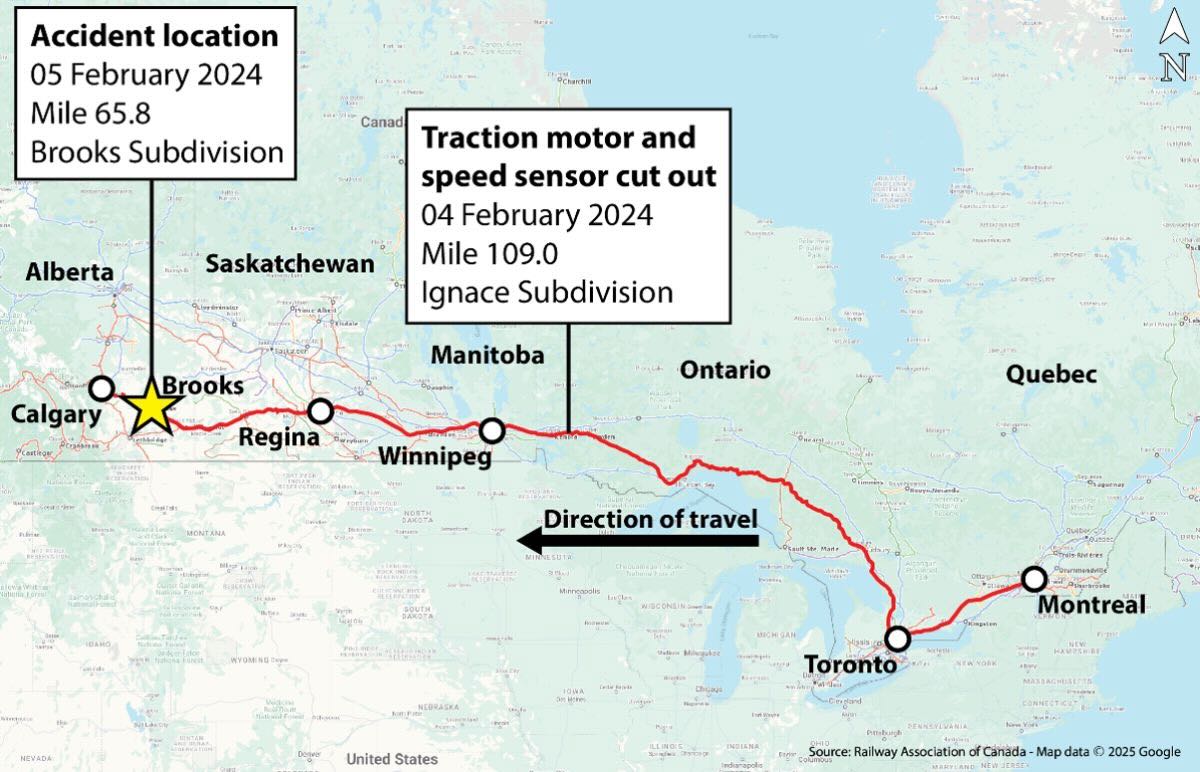
The TSB investigation found that cutting out the speed sensor removed a defense against a locked axle, but the engineer and supervisor did not fully understand this. The supervisor at the time was still completing training and had not yet covered the specific knowledge addressing this type of issue. The report also notes that CPKC had eliminated another position, the central locomotive specialist, which required in-depth knowledge of locomotive systems; the supervisor mechanical (locomotive), the position involved in this incident, has broader responsibilities.
“When specialist duties are transferred to a position occupied by an individual that is not specialized in those duties,” the TSB said in a press release, “unless technical training, mentoring, and operational experience are provided to bridge the gaps between the two positions, there is an increased risk that these duties will not be performed to meet safe railway operations.”
CPKC subsequently issued a bulletin to locomotive facilities addressing the importance of the traction motor speed sensor, and created a five-person Mechanical Locomotive Support desk which has taken over troubleshooting duties from the SML.
The full report is available here.
UP and NS ask regulators to waive cab-signal requirements for Big Boy trip in the east
Current plans call for 4-8-8-4 No. 4014 to operate over the former Pennsylvania Railroad main line from Harrisburg, Pa., to Cleveland as part of its coast-to-coast tour in celebration of America 250
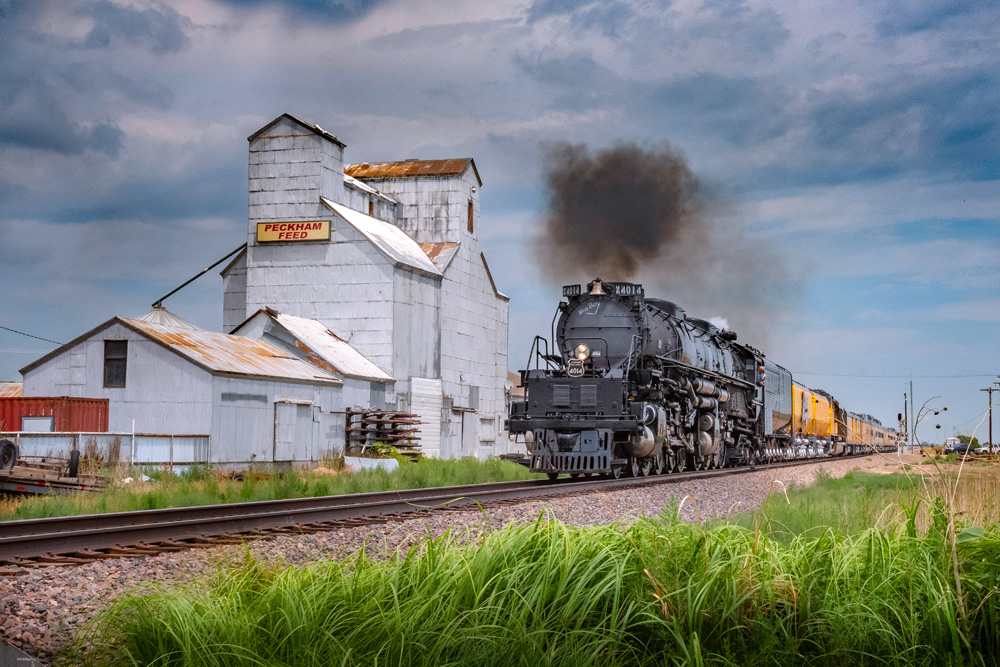
WASHINGTON — Union Pacific and Norfolk Southern have asked the Federal Railroad Administration to waive cab-signal requirements that otherwise would restrict where UP’s 4-8-8-4 Big Boy No. 4014 could operate on its historic eastern swing this summer.
In Feb. 10 letters to the FRA, the railroads sought permission to operate the Big Boy in cab-signal territory across Pennsylvania and Ohio as part of the locomotive’s planned coast-to-coast trip in celebration of America 250.
The waiver request from NS seeks permission for the locomotive to operate over cab-signal territory between Harrisburg, Pa., and Cleveland — a route over the former Pennsylvania Railroad main line that includes Horseshoe Curve.
The trip tentatively is set to run between May 25 and July 29 following No. 4014’s March and April foray from its home base at Cheyenne, Wyo., to California and return.
The Big Boy is equipped with positive train control, which the railroads say eliminates the need for cab signals.
“This waiver provides an equivalent or better level of safety as compared to the status quo for operations on this tour as Big Boy No. 4014 is fully equipped with PTC, PTC provides real-time enforcement of speed limits, movement authorities, and work-zone protections, delivering safety capabilities that significantly exceed those of traditional cab signal technology,” UP wrote to the FRA. “Additionally, Norfolk Southern maintains established and validated operating procedures, instructions, and rules. Big Boy will operate in full compliance with these requirements, together with any supplemental or special instructions that Norfolk Southern prescribes for the movement.”
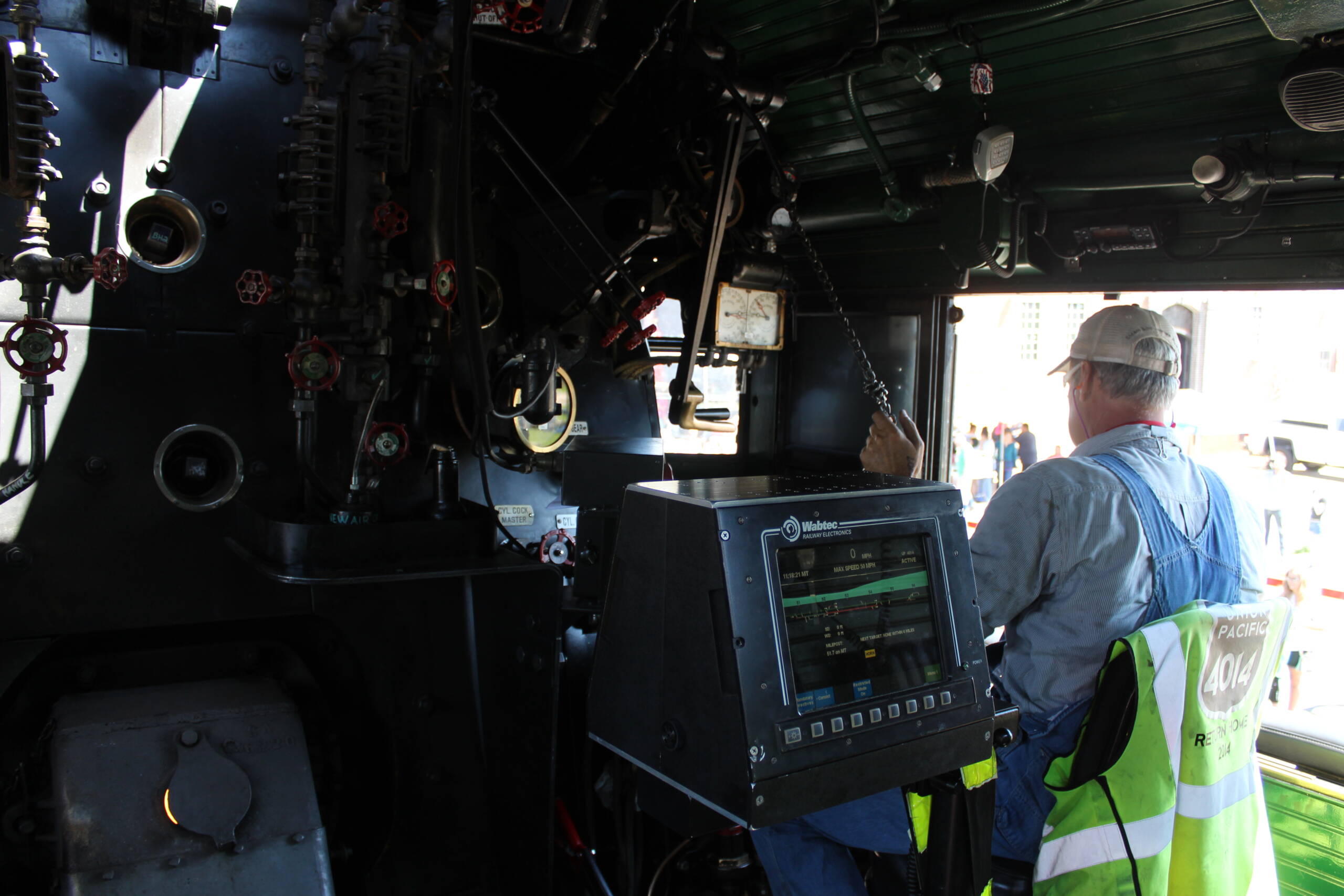
The trip to the east will be No. 4014’s first since leaving the Alco plant in Schenectady, N.Y., in December 1941.
“At its core, the purpose of this nationwide journey is to honor the nation’s 250 years of growth, innovation, and unity — values Big Boy itself symbolizes. As Union Pacific prepares to mark this milestone, the 2026 Heritage Excursion Tour is intended to showcase the engine as a moving ambassador of American engineering, heritage, and pride, traveling across multiple railroads and regions to unite communities in a once-in-a-generation celebration,” UP wrote.
In their merger application, UP and NS said they plan to remove the cab signals between Cleveland and Harrisburg in order to provide the combined railroad with more flexibility in locomotive assignments. Although 98% of the NS fleet is equipped with cab signals, UP locomotives are not.
The railroads said, in their Dec. 19 merger application, that a small pool of cab-signal equipped locomotives will remain in service to handle assignments in Pennsylvania and New Jersey on Conrail Shared Assets, Amtrak, and Southeastern Pennsylvania Transportation Authority corridors.
FRA proposes Amtrak become holding company, overseeing three divisions, passenger group says
Separate entities would handle operations, equipment, infrastructure
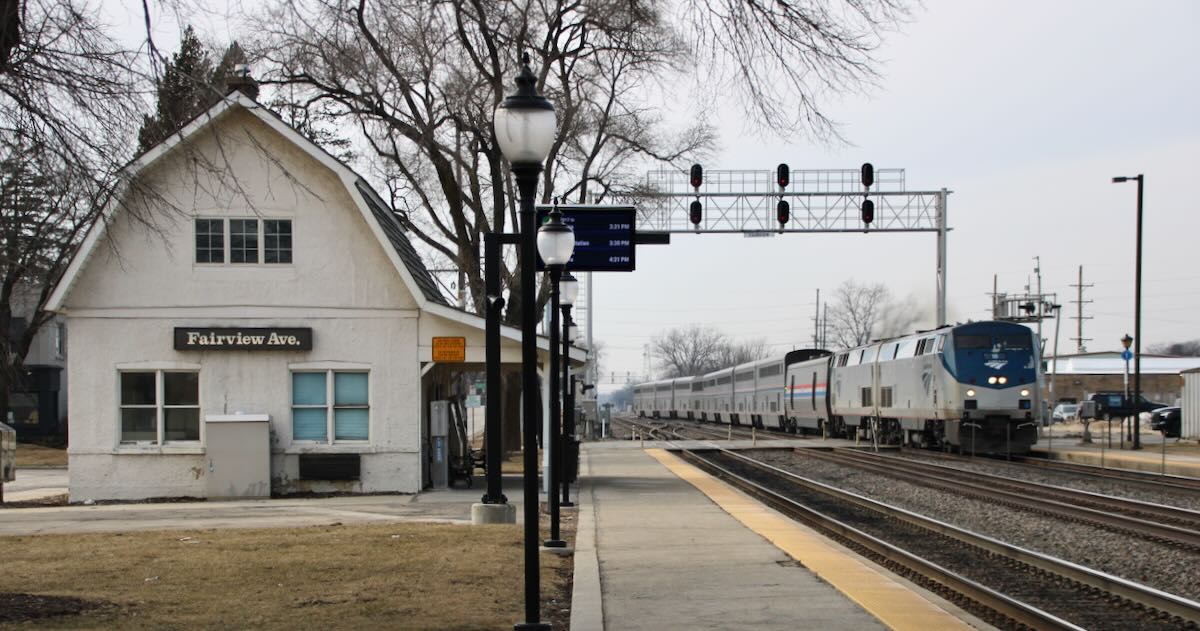
WASHINGTON — Federal Railroad Administration officials have briefed the Rail Passengers Association on a plan that would recast Amtrak as a holding company that would oversee separate entities responsible for operations, equipment management and leasing, and infrastructure and construction.
According to a statement on the RPA website, there are only cursory details of how the reorganized company would be structured, and no indication of how federal or state funding would be addressed. The proposal comes in a year when all current federal surface transportation authorizations expire.
A paywalled Bloomberg report quotes a Brotherhood of Locomotive Engineers and Trainmen official who warns restructuring will be a first step toward privatization. Officials at other unions have also speculated to their membership about that possibility.
However, U.S. Department of Transportation spokeswoman Danna Almeida told Bloomberg, “The Trump Administration is considering ways to strengthen and modernize Amtrak for the future, but privatization is not under consideration.”
Based on discussions with the FRA, the Rail Passengers Association document contains an overview of its “understanding of the USDOT restructuring proposal” as well as a list of the association’s proposed “metrics of success for any restructuring.” Among those is a call for an explicit rejection of profitability as a system-wide goal: “Instead, the primary object should be for services, construction projects, and rolling stock to be delivered quickly, on time, and on budget.”