





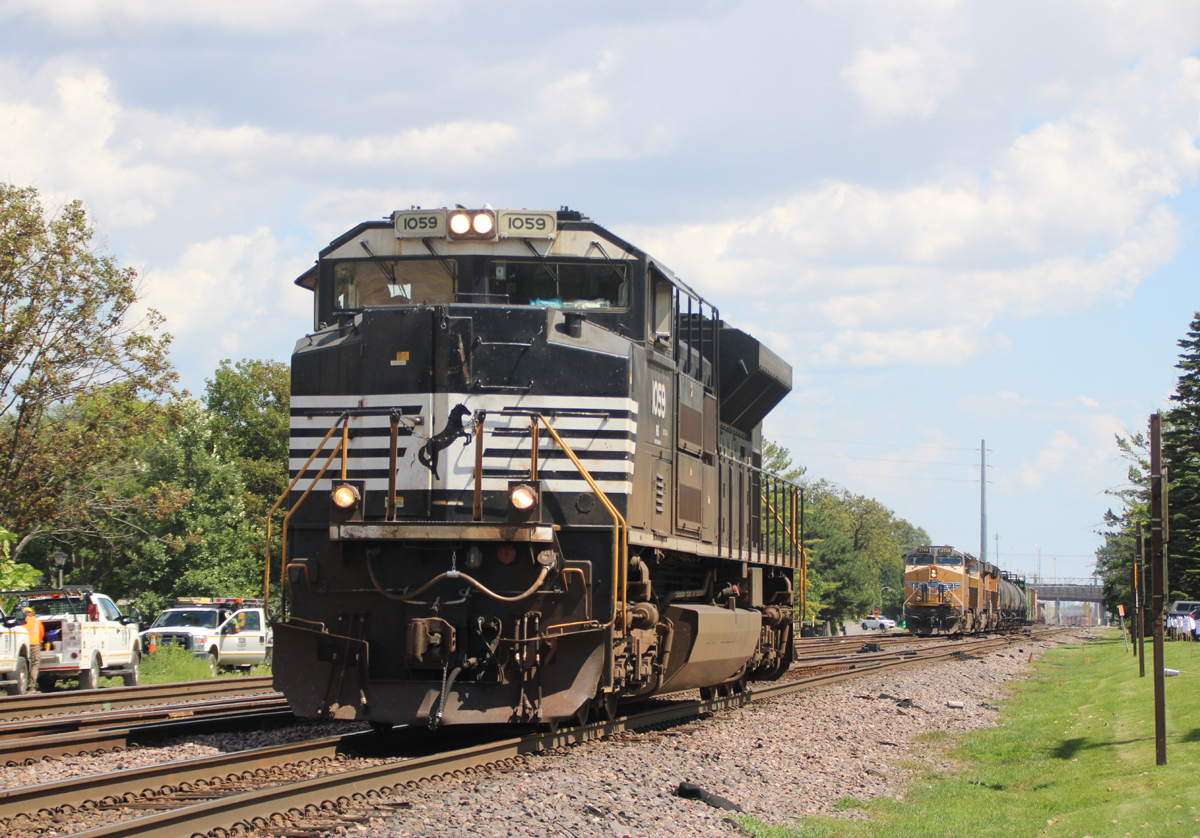
As 2026 begins, and with Trains’ top railroading story of 2025 announced on the final day of the just-completed year, we today a look back at the top stories in our previous annual countdowns. This year’s pick, the planned Union Pacific-Norfolk Southern merger, was a rare unanimous choice among our voters. And while it’s impossible to know what the year ahead has in store, it would be safe to say the merger stands a good chance of dominating rail news in 2026, as well.
To review our previous top stories:
2018: Amtrak CEO Richard Anderson
The choice for 2018 — the controversial three-year term of the former Delta Airlines CEO as head of Amtrak, then roughly at its midpoint — continues to leave its mark on the nation’s passenger operator. It opened the door for others with no rail background to head the company, triggered the elimination of traditional dining-car meals that is only slowly being reversed, and — through a proposal to substitute a bus bridge for part of the Southwest Chief route — led to the emergence of a group of members of Congress who were willing to stand up for the passenger operator and scrutinize its actions.
2019: Big Boy returns
The return to operation of Union Pacific 4-8-8-4 No. 4014 in time to mark the 150th anniversary of the Golden Spike ceremony remains the gold standard of preservation stories. It continues to show the value of steam as a promotional tool for the railroad, which sent the locomotive on two tours in 2024. What 2026 has in store for the big Alco remains to be determined, although CEO Jim Vena has said the Big Boy will run on an Eastern swing over Norfolk Southern to celebrate the 250th anniversary of American independence.
Having written so much about the locomotive in 2019, we marked its status as the No. 1 story with a video, rather than the usual article.
2020: Railroading and the pandemic
The impact of COVID-19 took so many forms that we addressed our No. 1 story this year with not one, but five articles, considering the impact on freight railroading, transit, passenger railroading, preservation, and international railroading. (Some of those stories, unfortunately, were lost when Trains.com moved to a new online platform.) The pandemic led to massive, and in some cases, permanent changes in society, and railroading certainly was not immune to its effects. Rail transit, for example, will likely never be the same, given the shift to work-from-home policies, although riders are slowly returning on most systems. Amtrak, also hit hard, finally edged back ahead of 2019 ridership in fiscal 2024, although long-distance capacity has yet to be fully restored.
2021: The battle for Kansas City Southern
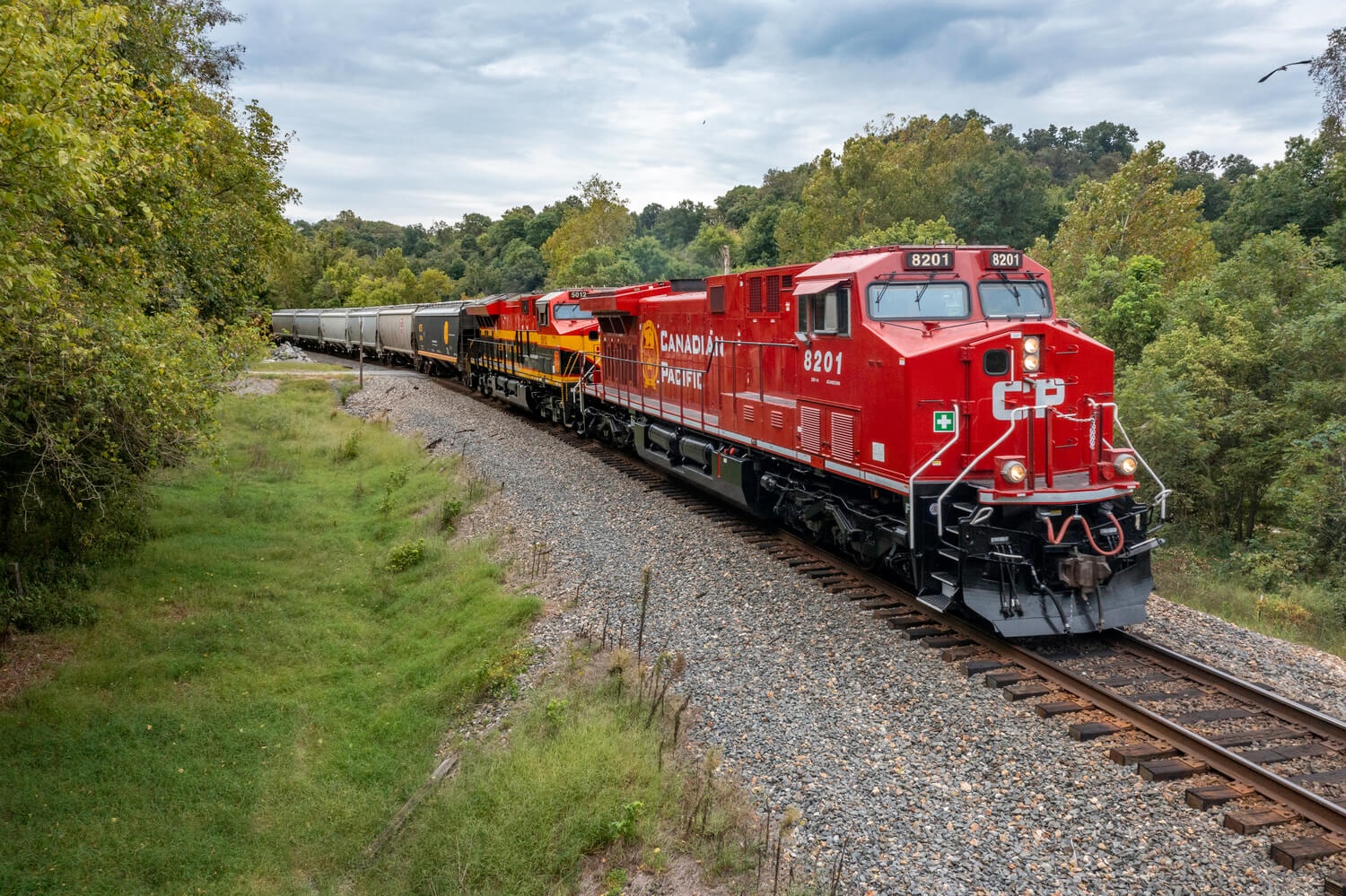
Railroading’s version of a soap opera began when Canadian Pacific announced plans to merge with KCS in March 2021, and Montreal-based CN said “au contraire” and launched its own bid a month later. As we recounted here, the resulting saga turned on a Surface Transportation Board decision rejecting a voting trust for a CN-KCS deal. That meant shareholders would have to wait much longer to cash in, and sent KCS back into the arms of CP; the union was finally consummated in April 2023, an event commemorated in 2024 with the three-nation barnstorming tour of CP 4-6-4 Hudson No. 2816.
2022: Rail labor and the near strike
The Byzantine negotiating process of the Railway Labor Act makes a national strike almost impossible, but ill will between railroads and their union workers brought the U.S. rail network closer to a work stoppage than it had been in decades before an 11th-hour settlement. It appears that the two sides are climbing away from that low point, however. First, they addressed the issue of paid sick leave in a series of agreements in 2023, then — led by CSX, with Norfolk Southern and BNSF close behind — began reaching new five-year agreements with many of their unions even before the official date to start the next round of negotiations. By the end of 2025, those agreements had largely been completed.
2023: East Palestine
The ugly plume of black smoke that marked the burn-off of toxic chemicals after the Feb. 3 derailment of a Norfolk Southern train is long gone, but the dark cloud of the derailment and hazardous-material event in the small eastern Ohio town still hangs over the entire rail industry. Federal legislation to address rail safety — some of which even actually addresses the events in East Palestine — stalled out in Washington; whether the 119th Congress, to be sworn in Jan. 3, will make another run at the issue is unknown. In the meantime, the incident spawned a wide range of state-level legislation, all of which will face court challenges based on the longstanding legal principle that regulation of interstate commerce is a matter to be addressed at the federal, not state, level.
2024: Turmoil at Norfolk Southern
A proxy fight for control of the board of directors, a federal lawsuit over passenger train delays, the firing of the CEO for a relationship with another executive — at times it seemed like Norfolk Southern was just a plague of locusts away from hitting for the bad-corporate-news cycle. In case all those things weren’t enough, there was also the National Transportation Safety Board taking the railroad to task for its decision to burn off those chemicals at East Palestine the prevous year, as well as the NTSB chair’s statement that the railroad’s conduct during the board’s investigation was “unprecedented and reprehensible.” Despite all of that, the railroad — which quickly named Chief Financial Officer Mark George as its new CEO, replacing the deposed Alan Shaw — reached the end of the year showing significant operational improvement. Not only did it improve its operating ratio — which had helped make it the target of that proxy fight — but it also showed an increase in traffic and made progress on key performance metrics. That improvement continued into 2025, setting the stage for the NS-UP merger plans.
2025: UP-NS announce merger plans
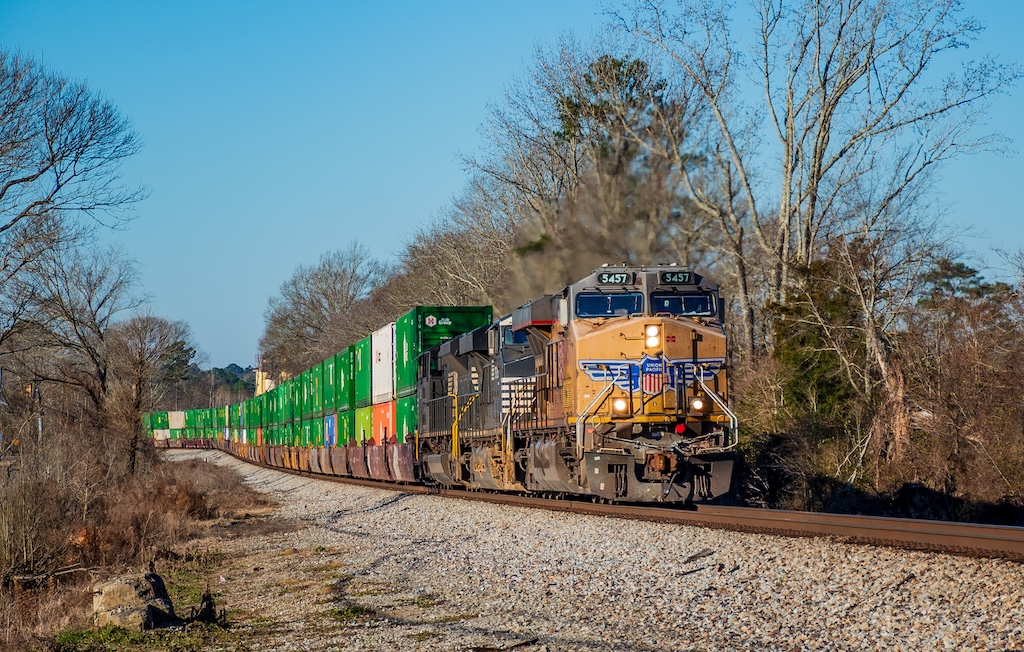
The $85 billion deal, announced in July, would dramatically remake the U.S. railroading map, creating the first true U.S. transcontinental railroad — a behemoth of more than 52,000 miles, reaching 43 states — and potentially triggering further consolidation among the nation’s remaining Class I railroads. Announcement of the deal was no surprise, given rumors that such a move was being considered in executive suites throughout the industry. But it does fly in the face of years of skepticism that such a merger would achieve regulatory approval, given the 2001 Surface Transportation Board rules governing such transactions. Most notably, they require such a transaction to actually increase competition. In its merger application, UP said the union with NS would do so by converting truck traffic to rail, but other railroads said the application fails to address competition among railroads. At least three of those railroads — BNSF, CPKC, and CN — say they oppose the merger, as do most shippers, which should make the regulatory review interesting.
— To report news or errors, contact <a href=”mailto:trainsnewswire@firecrown.com“>trainsnewswire@firecrown.com</a>.



Norfolk Southern has been at least a part of the top news story for the past 3 years straight. Whether that’s good or bad, I’ll let the reader decide.