





Rail transit had quite a year in the U.S. … and not in a particularly good way. Financial, equipment, and labor issues all played a part in making at a stressful year for transit operators. The combination of reduced ridership with the post-pandemic shift to more work-at-home opportunities, along with political divisions over funding, make it likely the financial strains won’t ease for most systems anytime soon.
Here’s a review of some of the year’s top stories.
The SEPTA saga
Hands down, the toughest year belonged to the Southeastern Pennsylvania Transportation Authority. It spent the year warning of service cuts for Philadelphia-area riders without additional funding from the state, and began enacting those cuts in August — only to have a judge order the reinstatement of all service. Gov. Josh Shapiro ultimately approved use of money from a capital-projects fund to pay for those operations.
Shortly after that, a series of fires involving half-century-old Silverliner IV electric multiple-unit equipment led the Federal Railroad Administration to issue a series of orders requiring inspections, repairs, and upgrades to the cars built by the Budd Co. That, in turn, led to significant disruption of Regional Rail service, as trains were shortened or cancelled to address the shortage of equipment during the inspection and repair process. SEPTA missed the initial deadline to complete inspections, met a FRA extension by hours, then found it was unable to complete the addition of heat sensors by another deadline because it was unable to obtain a sufficient amount of thermal wire for the work. Shapiro stepped in again by redirecting almost $220 million to help pay for that work, a lease of cars from Maryland to address the equipment shortage, and other projects — including addressing another emergency order, this one from the Federal Transit Administration, regarding problems with the catenary system for the SEPTA trolley network.
The agency did, at the last minute, avert a strike by the Transport Workers Union — thanks in part to Shapiro, who intervened to get the two sides back to the bargaining table to reach an agreement.
Chicago drama
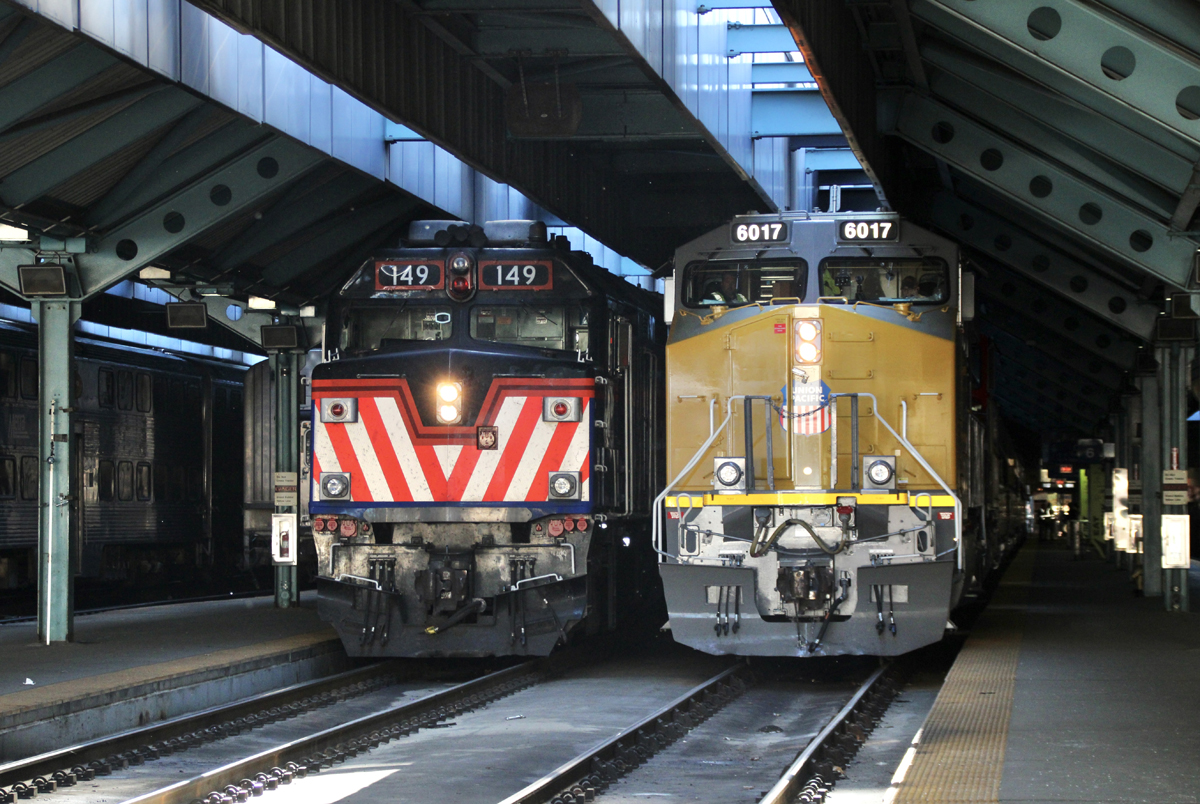
In the Chicago area, Metra, the Chicago Transit Authority, and bus operator Pace dodged service cuts projected for 2026 when the Illinois legislature, in the final hours of its end-of-year veto session, approved a package to provide $1.5 billion in funding through measures including increases to local sales taxes, a bump in fees on the Illinois Tollway, and redirecting money from tax on fuel and a roadway fund. The funding accompanied a restructuring of the Regional Transportation Authority, which will be renamed the Northern Illinois Transit Authority and gain more power over fares and scheduling.
Metra, meanwhile, remained in a long-running legal battle with Union Pacific over service on three routes. Operation of those lines was transferred from UP to Metra in May, but the sides were unable to agree on financial terms. Metra went to the Surface Transportation Board and gained trackage rights over the three UP lines to ensure service could continue, and later asked the STB to set the financial terms since the two sides were deadlocked. UP sued Metra over funds it said it was owed in the period before the trackage rights decision, and also went to court seeking to overturn that decision. Separately, Metra won $19 million from UP in a case over fares not collected during the pandemic, a decision UP was likely to appeal.
New and expanded
Despite the transit industry’s issues, some systems continue to grow.
In commuter rail, the Massachusetts Bay Transportation Authority opened its South Coast Rail extension to Fall River and New Bedford, Mass., on March 24. Those communities and Taunton, also on the extension, had been the three largest communities within 50 miles of Boston without commuter rail service. Initial operations were plagued by cancellations because of a shortage of qualified crews; that was gradually addressed.
Also new is Dallas Area Rapid Transit’s Silver Line, a 26-mile, 10-station line linking DFW Airport and Plano, Tex., mostly built on a former Cotton Belt branch line. The line using Stadler diesel multiple-unit trainsets opened Oct. 24.
A number of light rail lines also opened. The Seattle-area Sound Transit Link light-rail system launched a 3.4-mile, two-station addition to its east-west Line 2, reaching downtown Redmond, Wash., on May 10; added the 8.5-mile, four-station Lynnwood extension to its north-south Line 1 on Aug. 30, and opened the 7.8-mile, three-station Federal Way extension on Line 1 on Dec. 6. Line 1 is now the second-longest light rail line in the U.S. at 41 miles, with 26 stations.
In Canada, Montreal’s Réseau express métropolitain light rail opened its 33-kilometer (20.5-mile), 14-station Deux-Montagnes line on Nov. 17, roughly tripling the size of the REM network. Also, Toronto opened its 10.3-kilometer (6.4-mile), 18-station Finch West line in the northwest part of the city on Dec. 7.
Also notable
While there were more major stories than we can hit in a single article, here are a few other notable developments:
— NJ Transit commuter trains were shut down by a two-day strike in May before engineers agreed to a new contract. A longer strike halted the Santa Clara Valley Transportation Authority, serving the San Jose, Calif., area, in March; that one ended when a judge ordered the strikers back to work. Still looming: a potential strike by Long Island Rail Road unions.
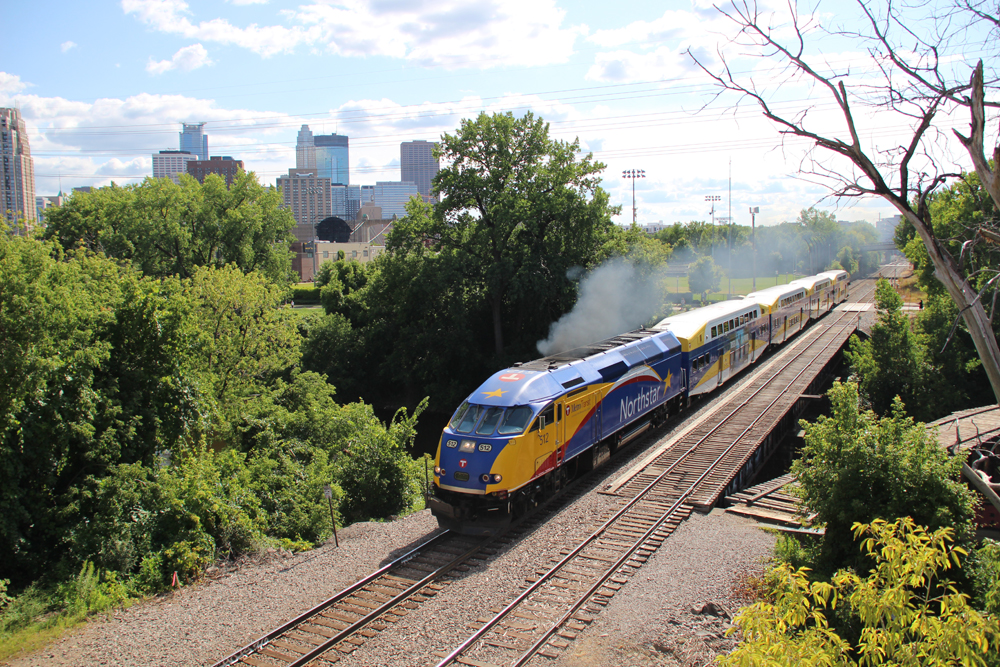
— The Twin Cities’ Metropolitan Council announced plans to shut down the Northstar commuter line between Minneapolis and Big Lake, Minn., in early January. Usage nosedived during the COVID pandemic and never recovered; with little fare recovery, the subsidy for the service had reached more than $230 per rider.
— Voters in the Charlotte, N.C., area approved a ballot initiative that will provide funding for a new commuter rail line to the Lake Norman area. Charlotte’s city council had previously approved purchase of Norfolk Southern’s O-Line for that project.
— To report news or errors, contact trainsnewswire@firecrown.com.
Previous Trains.com coverage
SEPTA
Fire engulfs SEPTA railcar; no injuries reported, Feb. 7, 2025
SEPTA service cuts begin, Aug. 25
Judge orders SEPTA to reinstate all service, Sept. 5
Pennsylvania governor approves use of capital funds for SEPTA operations, Sept. 8
FRA issues emergency order for SEPTA Silverliner IV equipment, Oct. 2
SEPTA faces new federal order on trolley safety, Nov. 4
SEPTA meets deadline for Silverliner IV inspections, Nov. 14
Governor’s move provides SEPTA with $219.9 million to address infrastructure, safety issues, Nov. 24
Chicago transit/Metra
Illinois legislature passes bill to fund Chicago-area transit, Oct. 31
Illinois transit bill could boost Quad Cities passenger rail project, Nov. 1
Metra assumes operations of trains on UP commuter lines, May 19
STB grants Metra requests for trackage rights on Union Pacific, Sept. 3
Union Pacific sues Metra over operating fees, Sept. 9
Metra awarded more than $19 million in suit against Union Pacific, Nov. 15
Metra asks STB to settle trackage rights dispute with Union Pacific, Dec. 3.
New routes
MBTA launches South Coast Rail service, March 24
MBTA holds meeting on South Coast Rail issues, June 6
Dallas area sets three days of ceremonies for launch of Silver Line, Oct. 22.
Sound Transit opens (Redmond) light rail extension, May 12.
Sound Transit opens latest light rail addition, Aug. 31
Sound Transit opens Federal Way extension, Dec. 7
Montreal opens second section of REM light rail system, Nov. 17
Toronto opens Finch West light rail line, Dec. 9.
Other stories
NJ Transit, engineers reach deal to end strike, May 18
Judge orders Santa Clara VTA workers to end strike, March 27
NYC commuters safe — for now: LIRR strike postponed, Sept. 15
Minneapolis to end Northstar commuter service in January, Aug. 7
Charlotte-area voters back sales tax increase for transportation plan, Nov. 6


UP and Metra point to a different issue. UP wants out of the commuter business and Metra still wants a handout. Sounds like the Chicago Mayor is running Metra… gimme, gimme, gimme. Oh and don’t tell me how to do it either… Sad situation for everyone in the great state of Illinois, The land of Lincoln who said you can’t spend your way to prosperity. The two most important leaders in the state and neither can find their butts with both hands and a flashlight…
As far as I am concerned, other than fiscal issues, safety is the biggest problem with public transit, particularly light rail and heavy rail systems in major cities. The safety issues seem to be less of a problem on commuter rail.
On another issue, the train above is departing Minneapolis, the city in the background. The Northstar never served Saint Paul.
It was reported that Milwaukee County Transit System (buses) drivers are instructed not to demand fare as it might endanger the driver’s safety to do so.
Earlier it has been reported that MCTS drivers are instructed not interfere with any sort of misconduct, crime or violence aboard the bus. Instead, the drivers are to pull to the curb, radio DS, and DS will contact the police.
My question is, as a Waukesha County resident, why should I pay taxes to subsidize that disgrace? And why should MCTS expect federal funding for bus routes where two passengers (in Milwaukee County suburbs like West Allis) is an unusually high load?
Obviously there are better run localities than Milwaukee City or County. (Like, as examples, just about anywhere else.) I never have hesitated to ride the Boston subway at any hour or in any neighborhood. That said, American people read the news. They know about the stabbing in Charlotte and the burning in Chicago. Transit is dying in this country.
I am in total agreement with you Charles, when the rule of law breaks down you have what we have on some transit systems, anarchy. Here in Seattle I would certainly not ride a Metro Transit bus especially in certain neighborhoods nor even the light rail. I do not hear of incidents on the commuter rail Sounder. I felt comfortable riding the NYC subway in September. You can’t have riders evading the fare, taking drugs, smoking and attacks at boarding areas and inspire confidence in the traveling public. A very sad state of affairs in our Cities nowadays.
A “year of turmoil” but a generation of fiscal cliff and doom loop. As a rider of transit myself, I have to say we’re facing a catastrophe. The patronage isn’t there and it isn’t coming back. Me riding METRA or MBTA or trains in Denver or Seattle several times each year doesn’t make up for the seemingly irreversible drop in daily ridership.
Pensions aren’t going away and even modest capital projects cost in multiples of a billion dollars. In college we’re taught that just to keep from falling further behind you need to replace about 3% to 5% of the capital plant each year. As we know, there’s a lot of deferred maintenance out there. New York’s IND subway system, the “newer” of the three, will soon be 90 years old.
On a related subject, the elephant in the room is CRIME. I’m sorry to have to say this, but when patrons are thrown onto the tracks in from of a moving train, or stabbed to death by a maniac, or set on fire by a career criminal, they aren’t coming back.
And to the above I could add, the days of the federal government backstopping generous pensions and fare jumping won’t go on indefinitely.