ALBANY, N.Y. — Amtrak’s Adirondack will be cancelled north of Saratoga Springs, N.Y. between May 20 and June 29, passengers already ticketed on the New York City-Montreal train were informed this week.
Anyone trying to book a reservation for those dates on Amtrak’s website receives the message, “We do not have any services between the cities entered on the date(s) you selected. Please try different date(s).” As of today (Thursday, May 9), the “Service Alerts and Notices” section of the website does not include an advisory with information on the cancellation or informing passengers when service will be available.
The Adirondack will continue to operate as a daily round trip on its existing schedule between New York City and Saratoga Springs, whose famed racing facility will serve as the substitute site of this year’s Belmont Stakes, part of horse racing’s Triple Crown, on June 8. The Ethan Allen Express also serves Saratoga and Fort Edward-Glens Falls, N.Y. on the Adirondack’s route, but six other New York stations on the remaining 184 miles north to Montreal are losing service.
The 41-day service disruption occurs just as summer travel demand heats up and Amtrak announces a summer fare sale promising reductions “up to 30% on coach and Acela business class travel.”
Early this week, Trains News Wire asked Amtrak and Canadian National for the specific reason for the cancellation and why no alternate transportation is being provided, followed by a similar request to the New York governor’s office. As of late this afternoon, only Amtrak had responded. Its statement: “Due to anticipated track work, Amtrak has modified Adirondack service on a short-term basis from May 20 to June 30 and will only operate between New York City and Saratoga Springs.”
Analysis: An ongoing lack of information, communication
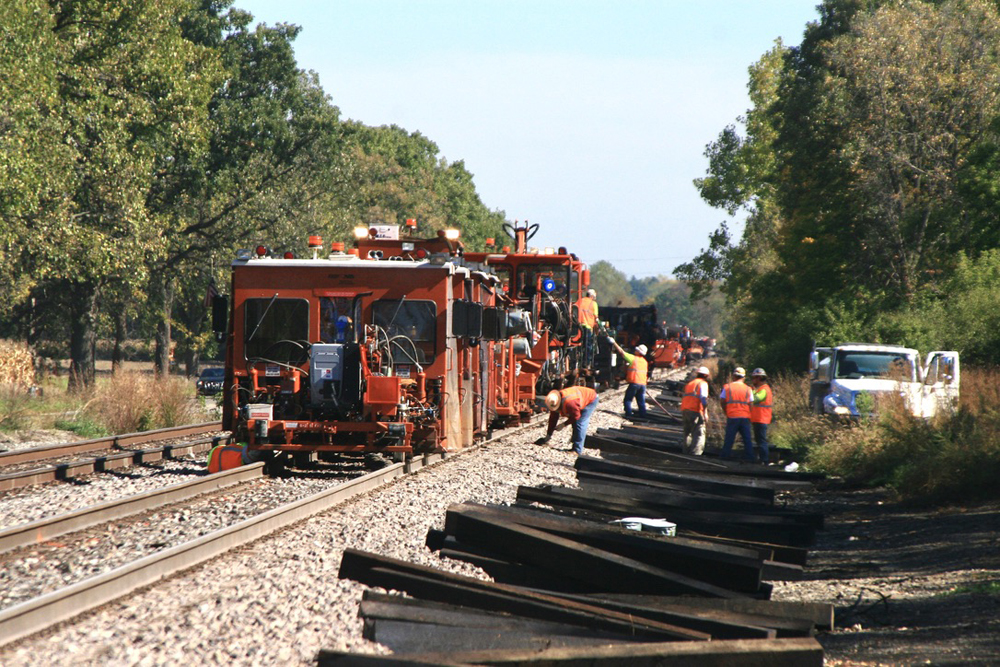
The reply is not surprising. Amtrak and its host railroads rarely divulge expenditure or infrastructure upgrade details between each other on grounds that this is “commercially sensitive information,” even though public mobility is involved and public funds may be. Track rehabilitation, like highway construction, can’t be completed under extreme weather conditions. That may be the reason it is happening through the end of June, though why it couldn’t have been scheduled to begin in April or limited to certain days each week is unknown.
The lengthy cancellation and corresponding lack of information reinforces historical evidence that Amtrak and the New York Department of Transportation’s Rail Division, which funds operating support, have little regard for the train’s intercity mobility value to its existing or potential customers.
Previously, stringent Canadian travel restrictions into 2022 and the lack of turning facilities at Rouses Point, N.Y., contributed to the train’s delayed post-COVID-19 reinstatement [see “Adirondack’s uncertain return attracts bipartisan lawmaker attention,” News Wire, July 21, 2022]. Cross-border rail service to Toronto and Vancouver, British Columbia, resumed more than six months before the Adirondack’s relaunch in April 2023 [see “Adirondack tickets now on sale …,” News Wire, March 21, 2023].
Canadian National and Amtrak failed to use the multi-year hiatus to resolve a dispute over who would pay for upgraded maintenance of tracks north of the Canadian-U.S. border to accommodate passenger train speeds. The inaction left the route subject to 40 miles of 10-mph, heat-related speed restrictions imposed by CN only a few months later. Rather than short turn the train at the border and provide a connecting bus into Canada, Amtrak then cancelled service north of Albany–Rensselaer, N.Y. [see “CN, Amtrak disagree on payments …,” News Wire, June 29, 2023].
Trains were extended to Saratoga for the start of last year’s racing season a month later [see “Adirondack round trips to be extended …,” News Wire July 17, 2023]. However, full-route service wasn’t restored until Sept. 11, when summer heat subsided [see “Amtrak tentatively sets Sept. 11 date …,” News Wire, Sept. 2, 2023].
It is unknown where the track work will be performed, how much is being invested, or who is paying for the work to increase speeds and reduce travel times on a beleaguered route that appears to be an afterthought to its overseers. But prolonged cancellations without provisions for alternate transportation certainly undermine any argument that the trains fill a vital transportation role for the local population that deserves continued financial support.
Share this article