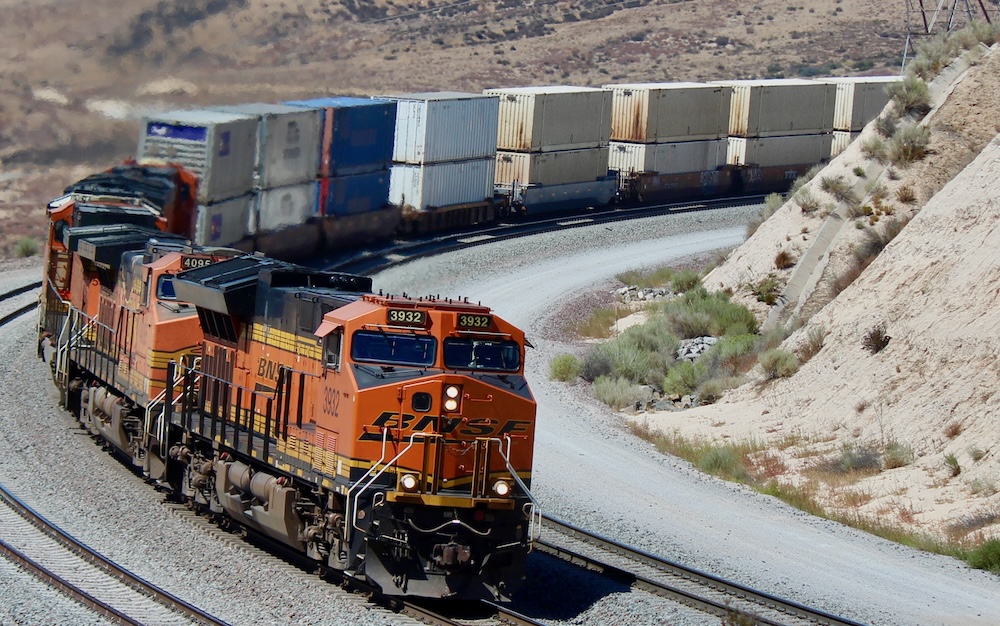
CHICAGO — BNSF Railway would have to reconsider its plans to build the $1.5 billion Barstow International Gateway if California’s zero-emissions locomotive mandate is allowed to move forward, CEO Katie Farmer says.
The California Air Resources Board’s in-use locomotive rule went into effect on Jan. 1. It bans the operation of any locomotive that is 23 years old or older from operating in the state. And it requires switching, industrial, and passenger locomotives to be zero-emissions by 2030 and freight line-haul locomotives to be emissions-free by 2035.
CARB has asked the U.S. Environmental Protection Agency for a waiver that would allow full implementation of the rule, including a provision that would require railroads to contribute to a spending account annually that would set aside money for the purchase of zero-emissions locomotives.

“We estimate that that payment for us, and I know that it would be similar for the Union Pacific, would be around $800 million a year,” Farmer told the North American Rail Shippers conference last week.
The rule has a number of problems, Farmer says. Chief among them: A commercially viable zero-emissions locomotive doesn’t yet exist. The rule, which initially would bar two-thirds of the locomotive fleet from operating in California, also doesn’t recognize the complexity of the interstate rail network. The spending account provision would drive up rail costs and ultimately push freight to trucks that emit far more greenhouse gas emissions.
“If CARB receives a waiver from the EPA to implement this in 2026, I promise you … 17 or 18 other states are going to follow suit and we are going to see a tax on movement of goods through the U.S. supply chain,” Farmer says. “That will have a devastating impact on the competitiveness of the U.S. supply chain.”
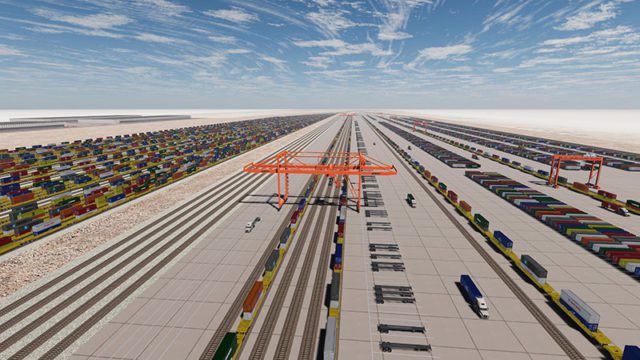
Because the rule would put railroads at a competitive disadvantage in California, BNSF would have to reconsider plans to build its massive terminal in Barstow, Farmer says.
The railroad has acquired all 4,500 acres of property for the terminal and is beginning the permitting process in Barstow, which backs the project that will create as many as 20,000 direct and indirect jobs in the longtime rail hub. BNSF’s main lines from the Los Angeles Basin and Northern California converge at Barstow, a key point on the railway’s Southern Transcon.
BIG will include a block-swap yard, support yard, and warehouses and transload centers where goods in international containers can be transferred to domestic containers for the eastbound trip to inland markets via rail. The idea behind BIG is that it will ease congestion at the ports of Los Angeles and Long Beach and eliminate the 80-mile dray moves for freight that’s currently trucked from the ports to the Inland Empire for transloading before being trucked to one of BNSF’s intermodal terminals for the trip east.
If CARB gets EPA’s blessing and survives a court challenge from railroads, BNSF would “absolutely re-evaluate our investment in California,” Farmer says.
Share this article