
Replacing roadbed on my garden railway
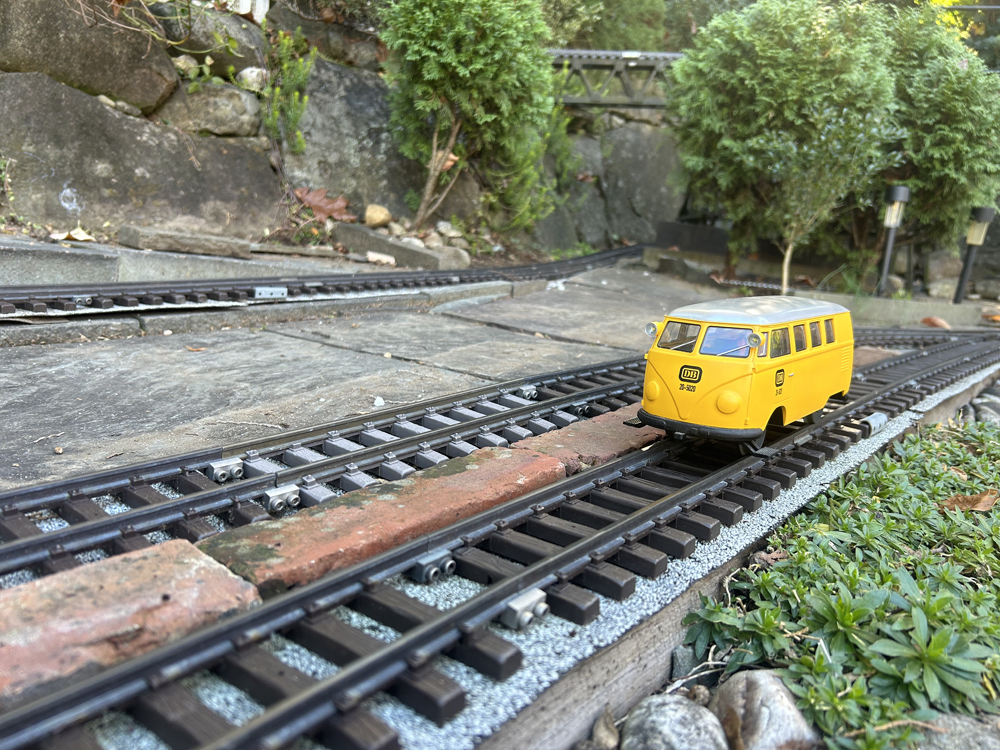
yellow vehicle on track

In my January 3, 2022, Garden Railways article, I detailed how I used landscaping timbers as the roadbed for my garden railway. The railway was built in the summer of 2013. Now, 11 years later, after successfully operating trains without any track or roadbed problems, I’m ready to do a much-needed maintenance service of this […]

Read More…

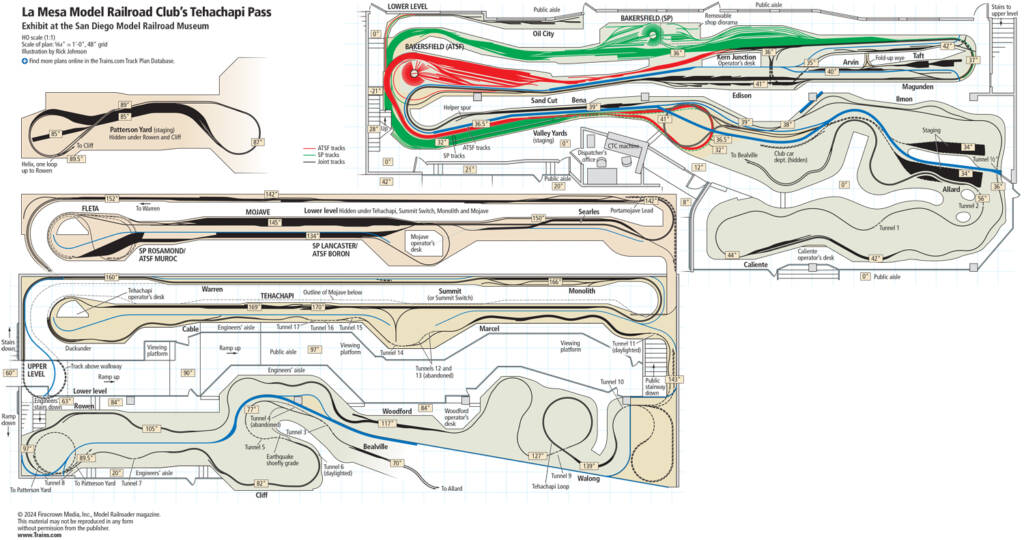
The HO scale Southern Pacific Tehachapi Subdivision layout

A model railroad track plan

Facts and features Name: Southern Pacific Tehachapi SubdivisionScale: HOSize: 72 x 128 feetPrototype: Southern Pacific Tehachapi SubdivisionLocale: Bakersfield to Mojave, CaliforniaEra: 1950s-1960sStyle: Multi-level walkaroundMainline run: Bakersfield to Mojave: 1,500 feet; between staging yards, Goshen Jct. to Lancaster: 1,800 feetMinimum radius: main tracks, sidings and yards: 48″; branch lines and industry tracks: 36″Minimum turnout: main tracks, […]

Read More…

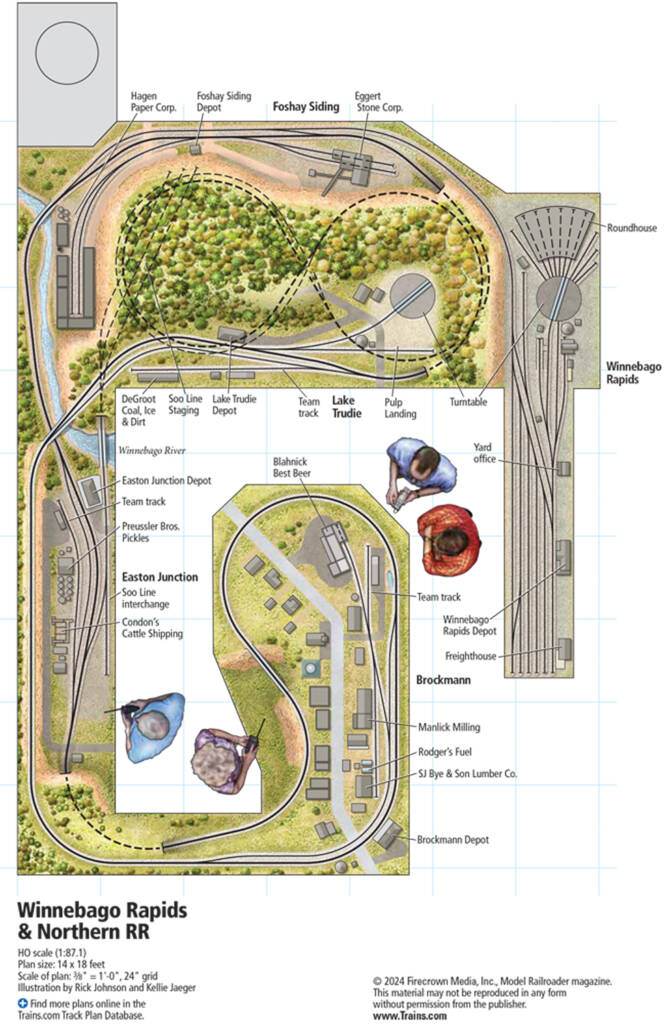
The HO scale Winnebago Rapids & Northern RR

A model railroad track plan

Facts and features Name: Winnebago Rapids & Northern RRScale: HO (1:87.1)Size: 14 x 18 feetPrototype: freelancedLocale: WisconsinEra: 1956Style: walk-inMainline run: 120 feetMinimum radius: 24″Minimum turnout: No. 6Maximum grade: 31⁄2%Benchwork: L-girderHeight: 41″ to 49″Roadbed: HomabedTrack: code 83 (handlaid in visible locations, extrack in hidden areas)Scenery: extruded-foam insulation board and clothshellBackdrop: painted drywallControl: NCE ProCab Click the […]

Read More…

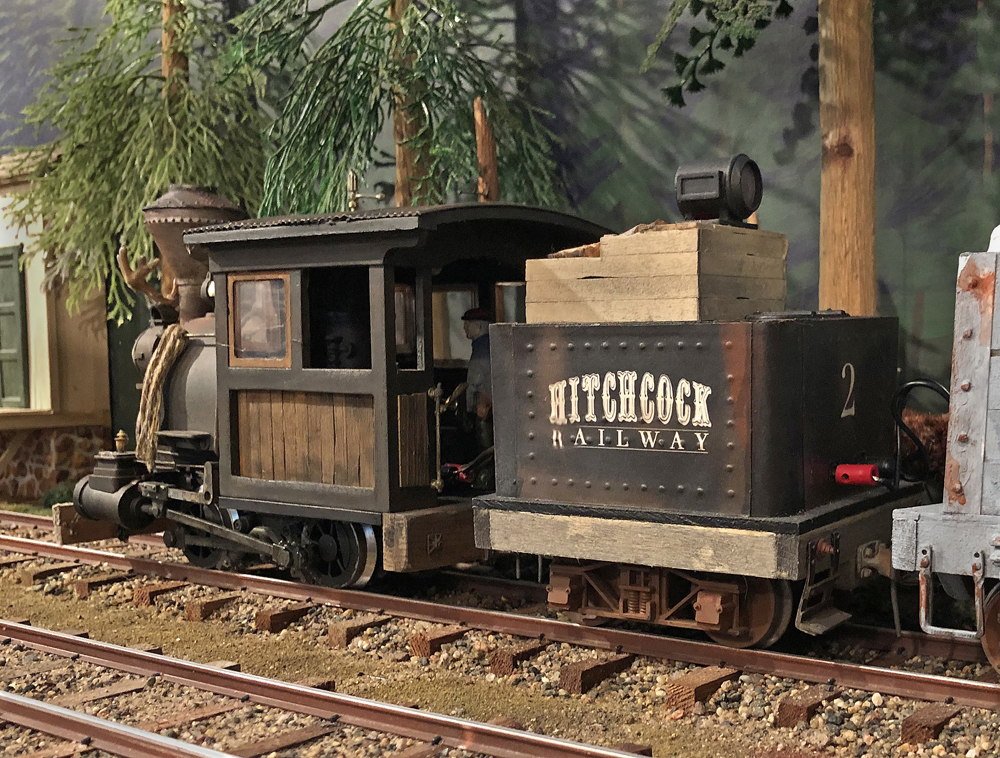
Porter upgrades using computerized and old-school techniques

model steam locomotive

Early model railroaders used wood, wire, and paper to create rolling stock. Today’s scratchbuilders can choose from myriad detail parts and use sophisticated laser cutters and 3-D printers. Sometimes it’s fun to explore old-school materials and techniques. To make this little G scale tender, I used a hybrid approach — mixing the old and the […]

Read More…

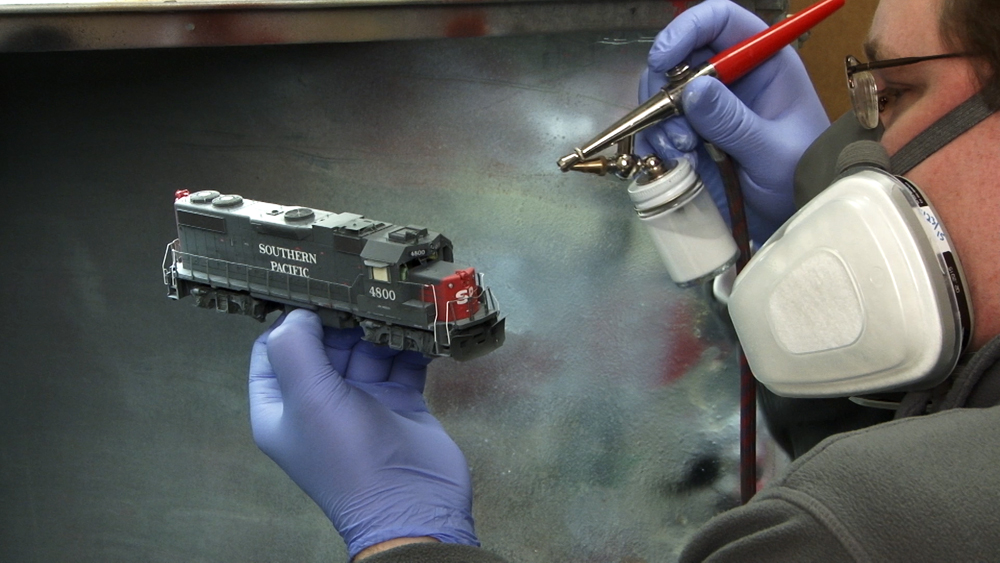
Beginner’s guide to airbrushing

Photo of man painting HO scale diesel locomotive in spray booth.

In my 20-plus years with Model Railroader magazine, I’ve written several how-to articles on airbrushing. Some have focused on using the tool to re-create models you can’t find on the shelf, such as “How to paint multi-color locomotives” in the September 2013 issue. Others, including “How to weather coal hoppers” in December 2012, have demonstrated […]

Read More…

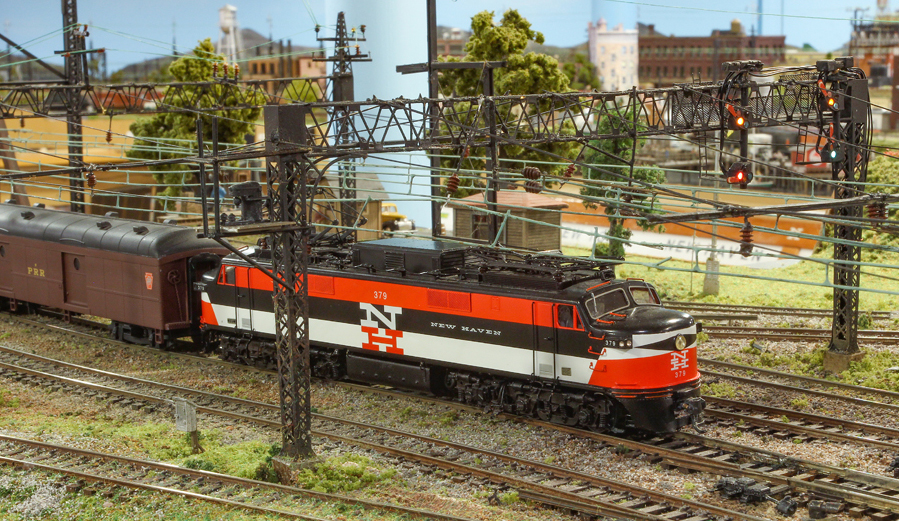
Why do railroads use catenary?

Orange, black, and white model electric locomotive running under catenary.

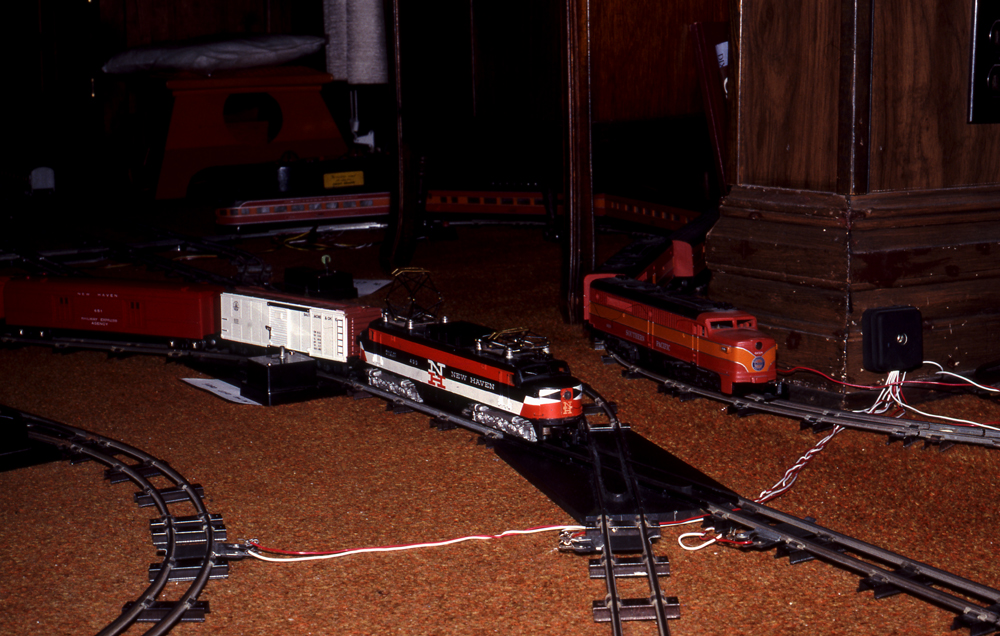
When you think about electrified rail lines today, the first thing that probably comes to mind is Amtrak’s Northeast Corridor. But in the first half of the 1900s, before the start of the diesel era, railroads used electrified lines to move freight and passengers. Examples in the east included the New York, New Haven & […]

Read More…

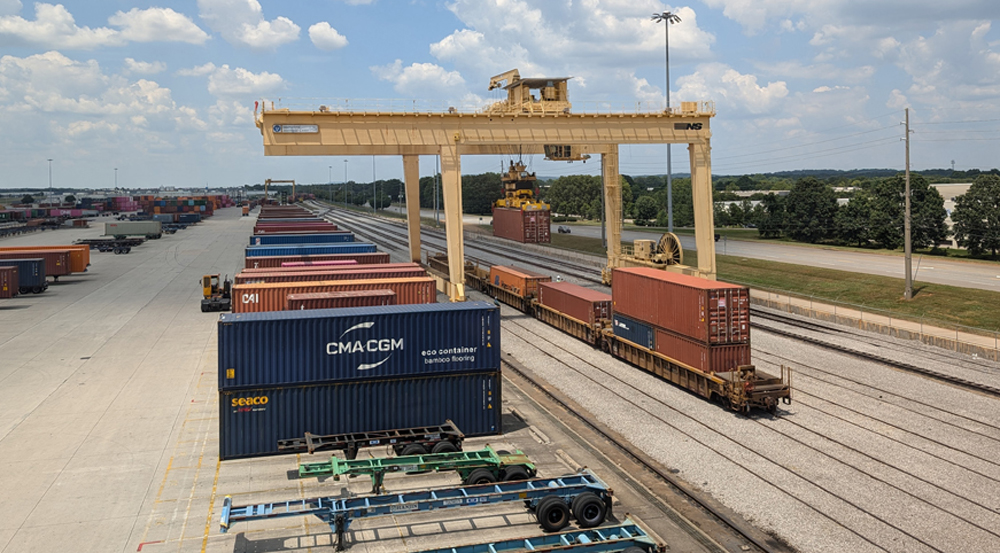
A real-world industry you can model

A freight crane is posed above multiple freight shipping containers in various colors

While on a recent trip to the National Model Railroad Association’s Southeast Regional Convention in Decatur, Ala., I was fortunate enough to go on a trip to Huntsville’s International Intermodal Center. Right when our van arrived in the parking lot, I knew that this would be a perfect real-world industry that anyone can model on […]

Read More…

Revisiting AI for model railroaders

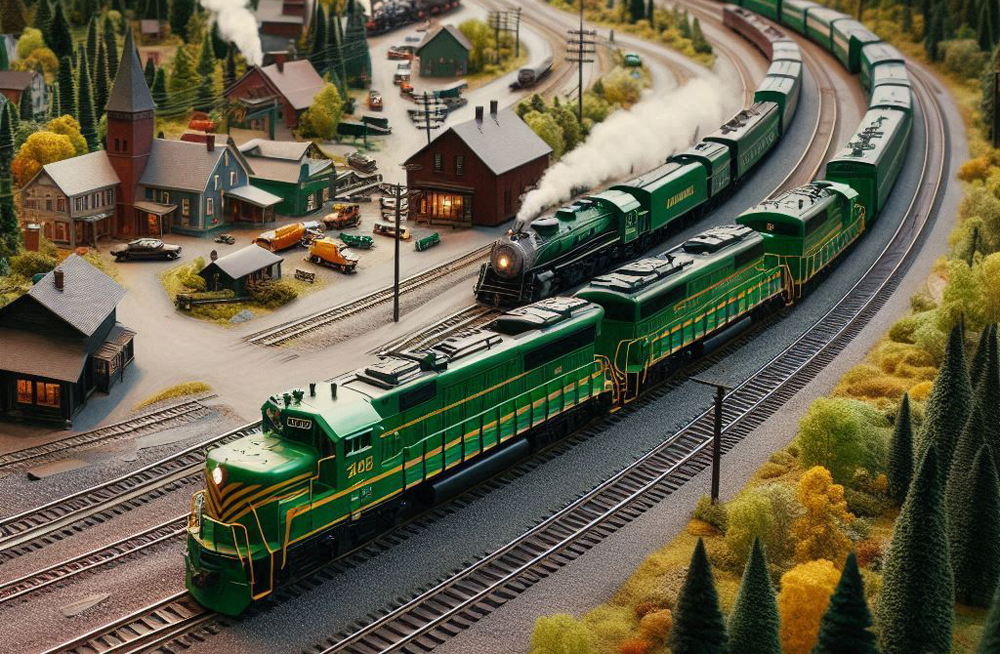
An AI generated image of a green and yellow model locomotive in a northeastern US setting

Large language models (LLMs) or as they are colloquially known, AI, have made impressive progress since I last explored possible use cases relating to model railroading last summer, in the form of both chat-based programs and image generation. With a year having passed between then and now, I thought it would be worth revisiting this […]

Read More…