
A friend in time: My railroad watch
ZTWSP04_06-sm

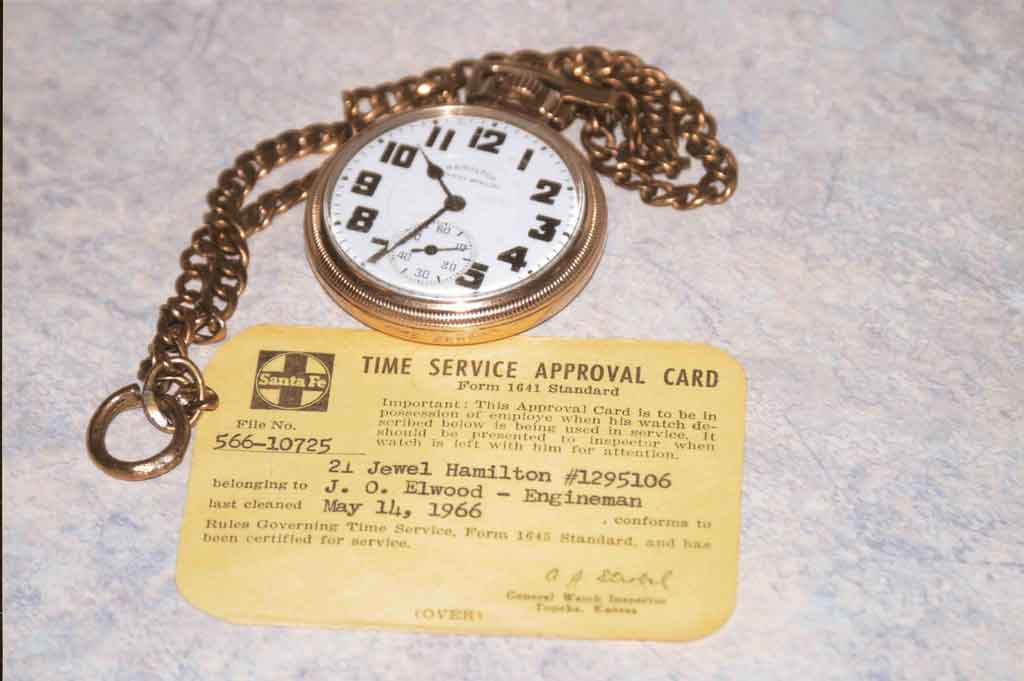
Bought from a pawnshop when the author was a boy, this Hamilton Railway Special 992 watch passed many an official time check during his 44 years on the railroad. Jack O. Elwood I knew I wanted to be a railroad man, specifically a locomotive engineer, when I was about six or seven years old. This […]

Read More…

Snow Train Parade

FULL SCREEN Trains Magazine Collection Skiers disembark Boston & Maine’s Snow Train at North Conway, N.H. FULL SCREEN Trains Magazine collection Passengers enjoy their ride aboard the Boston & Maine Snow Train. FULL SCREEN John Gruber collection The front cover of Boston & Maine’s 36-page booklet advertising its 1940 season. FULL SCREEN John Gruber collection […]

Read More…

Southern 4501’s first excursion

FULL SCREEN John Gruber Graham Claytor Jr. (left) appears apprehensive as he talks with D. W. Brosnan and Walter Dove on the platform at Asheville, N.C. But the conversation was friendly and the 4501 soon was on its way. FULL SCREEN John Gruber Locomotive 4501 proudly poses at Terminal Station, about ready to leave on […]

Read More…

Railroad from “Breakheart Pass”

Q On which railroad was the 1975 movie “Breakheart Pass” filmed? — Klaus Schmidt, Sleepy Hollow, N.Y. A “Breakheart Pass” was filmed on the Camas Prairie Railroad, a short line in Northern Idaho. Originally a cooperative building effort by predecessors of the Union Pacific and the BNSF in the early 20th century, as of 2004, […]

Read More…

Running long hood forward

TRN-AT1011_01

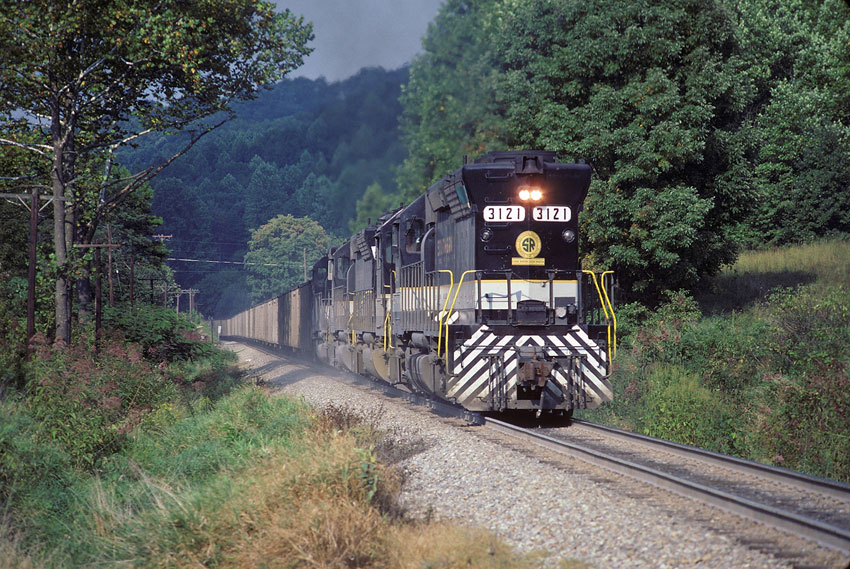
Southern Railway SD45 No. 3121 leads long hood forward on a unit coal train at Oreton, Va., in 1984. Such design enhanced bidirectional capability. Ron Flanary Q When did railroads such as the Norfolk & Western stop running their road engines “long hood first?” How effective was this practice for crew safety? Did it have […]

Read More…

Mountain railroad grade profiles

For railroad builders in North America, a 2.2 percent climb was considered the standard maximum grade for a well-engineered mountain railroad. But why this number? And how did its adoption become so widespread? Using modern-day analysis of some famous mountain railroad grades, Trains Magazine’s September 2011 issue explores the origins and adoption of 2.2 percent […]

Read More…