
Good wiring practices

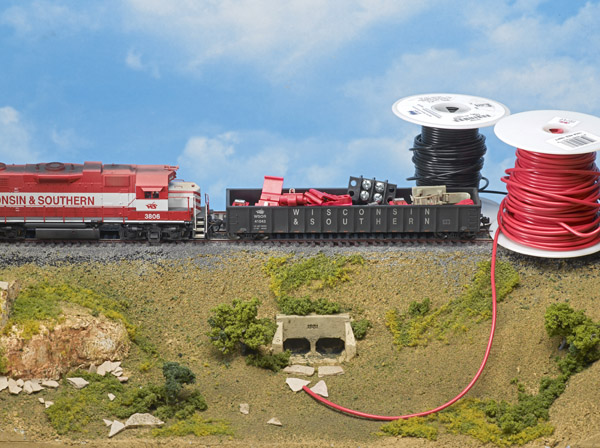
Running trains with Digital Com-mand Control (DCC) is a lot of fun, and it can make operating a model railroad an enjoyable experience. However, all those DCC elec­tronic components and sound decoders don’t mean much if you can’t get a reliable signal to the tracks. When it comes down to it, nickel-silver rail is a […]

Read More…

How to wire power-routing turnouts

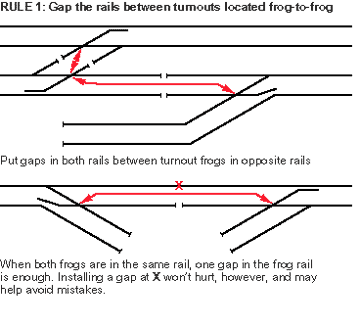
How to wire power-routing turnouts: While it may initially seem difficult, basic two-rail wiring for power-routing turnouts is easy if you understand and apply just two simple rules.  The diagrams below demonstrate these crucial wiring principles. Rule 1: Gap the rails between turnouts located frog-to-frog. Place gaps in both rails, between turnout frogs in opposite […]

Read More…

Stuff We Use: Work smarter with a self healing cutting mat

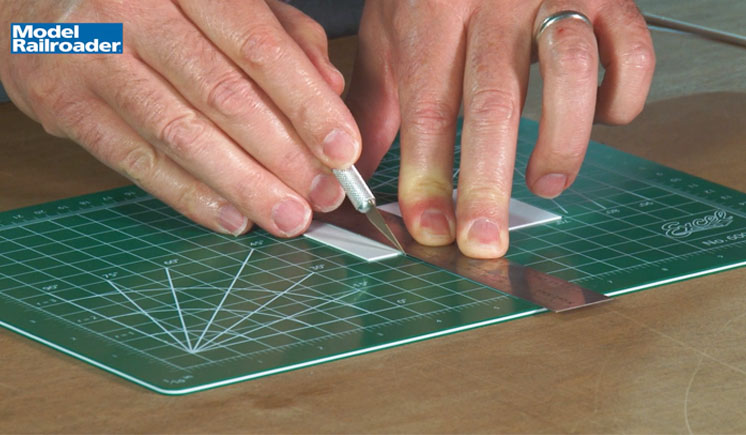
Hands cutting styrene on a cutting surface

Having trouble viewing this video?   Please visit our Video FAQ page A self-healing cutting mat is a useful addition to any model railroader’s workshop. Model Railroader associate editor Eric White shows some of his favorite features of this self-healing cutting mat from the Kalmbach Hobby Store. […]

Read More…

Stuff We Use: Work smarter with a self healing cutting mat

Hands cutting styrene on a cutting surface

Having trouble viewing this video?   Please visit our Video FAQ page A self-healing cutting mat is a useful addition to any model railroader’s workshop. Model Railroader associate editor Eric White shows some of his favorite features of this self-healing cutting mat from the Kalmbach Hobby Store. […]

Read More…

Ask Trains from September 2009

Q How do railroads figure how much power is necessary for a train?– Richard Panarese, Mesa, Ariz.A Railroads determine power needed for a train based on the route, and the train’s weight and priority. BNSF, for instance, considers the “horsepower per ton” required based on what officials call the train’s “transportation service plan.” The transportation […]

Read More…