





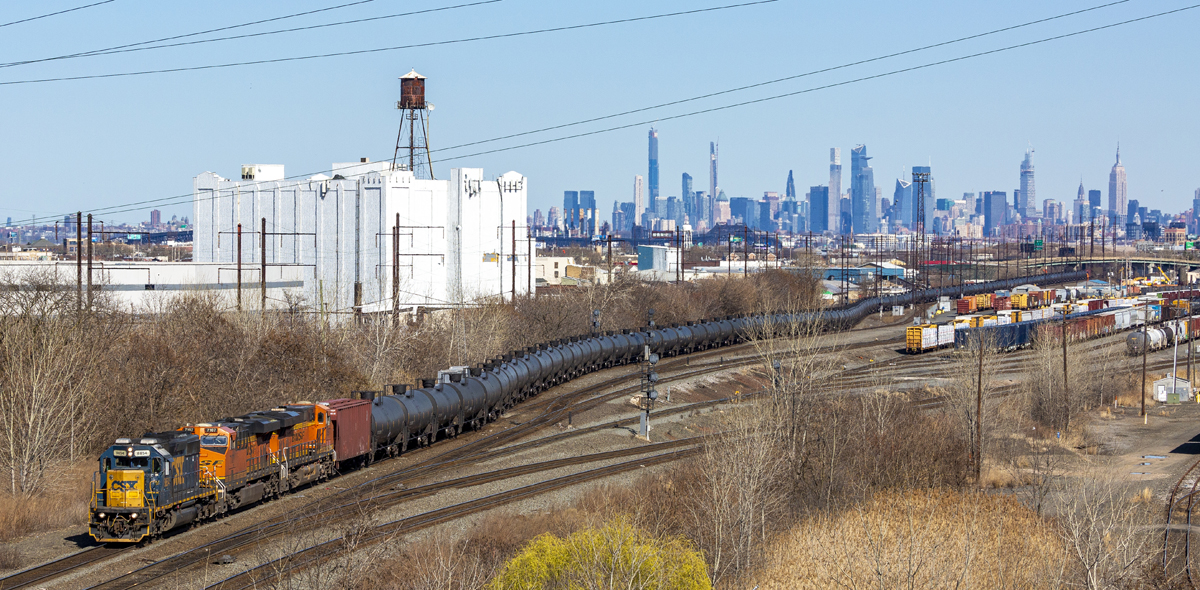
TRENTON, N.J. — Outgoing New Jersey Gov. Phil Murphy has signed into law a bill regulating hazardous-material trains in the state, one of more than 120 bills he approved on his final morning in office. Mikie Sherrill was sworn into office as the state’s new governor later in the day.
The bill (A4460/S3389) passed by large margins last month in the state Assembly and Senate. It requires two-person crews for trains carrying hazardous materials, and requires wayside detection devices, among other provisions [see “New Jersey passes bill …,” Trains.com, Dec. 24, 2025]. A section that would have set a maximum length of 8,500 feet for such trains was removed from the final version of the bill.
The International Association of Sheet Metal, Air, Rail, and Transportation Workers-Transportation Division heralded the signing of the bill, with Jared Cassity, SMART-TD’s national safety and legislative director, saying in a press release that it is “a historic step forward for rail safety.”
“By institutionalizing modern safety practices and empowering workers and communities with stronger protections, this legislation will save lives and set a powerful example for other states to follow,” he added.
A spokesman for the Association of American Railroads said the organization is “reviewing the legislation to fully understand its implications, as the bill is expansive and touches on a wide range of complex issues. As a general matter, rail policy works best when it is set at the federal level, where national uniformity helps ensure safe, efficient, and fluid operations across an interstate rail network that serves the entire economy.”
— Updated Jan. 21 at 7 a.m. CT with AAR comment; updated Jan. 22 at 8:20 a.m. to correct section regarding train length. To report news or errors, contact trainsnewswire@firecrown.com.


Have any part of these state railroad laws become effective or are all in limbo since only the Feds have jurisdiction over national commerce?
I can’t speak to some of the more high profile state laws, but there are several state level laws targeting that have been passed since the early days of railroading that remain in force. Federal pre-emption isn’t a given and needs to argued, often through litigation, by the railroad in order to overturn all or part of the state law. Sometimes the law is minor enough that it doesn’t raise the railroad’s ire, other times it is found not to interfere with interstate commerce and is allowed to stand, and sometime it is struck down. And yes, I suspect many are drafted with the expectation they will be struck down, but nonetheless raise public awareness of the need for federal action. One odd ball state law I recall coming across was the requirement that the boiler lagging in the cabs of steam locomotives rostered in northern Michigan be removed during the winter months to provide additional warmth to the crew.