WASHINGTON — The Federal Railroad Administration has clarified and stepped up enforcement of requirements that cross-border train crews demonstrate English proficiency, the Department of Transportation announced today (Dec. 19).
The actions come after inspectors encountered Mexican crews at Texas gateways who appeared to have difficulty interpreting track bulletins and communicating safety requirements in English.
In letters to Union Pacific and CPKC following those incidents, FRA Administrator David Fink said the agency was clarifying its approval of programs allowing certified crews from Mexico to operate no further than 10 miles into the U.S. from their port of entry. Fink wrote that the two railroads “must ensure these crews are capable of safe operations within the United States, which requires that crew members are capable of comprehending documents, instructions, and communications in English.”
Crews that do not meet FRA certification requirements or English proficiency requirements may not operate beyond crew-change points established by U.S. Customs and Border Protection.
Crews operating in the U.S. without a sufficient understanding of English could lead to enforcement actions against UP and CPKC, the letters warn. The clarified rules also say that if a foreign crew requires use of a translator or interpreter, that person is performing a safety-critical function and must also be FRA certified.
In a press release, Fink said crews who can’t speak English “pose a significant safety risk that should not be ignored. Dispatchers and first responders need to know that they can communicate with train crews, especially during times of emergency.” Transportation Secretary Sean Duffy called the actions “commonsense steps [that] will ensure every train crew operator can communicate with inspectors and understand basic operational bulletins.”
The enforcement actions drew praise from the U.S. unions representing operating crews.
“The Administration should be commended for standing up for border security, public safety and American jobs by creating stronger safety standards for crews that bring trains from Mexico to the United States,” said Mark Wallace, national president of the Brotherhood of Locomotive Engineers and Trainmen. “It’s critical that locomotive engineers are able to speak to dispatchers and first responders in English when trains are moving on U.S. soil and trains moving beyond the border area should be controlled by American train crews.”
Jeremy Ferguson, president of SMART-TD, said in a statement, “These actions by the FRA and DOT reaffirm a fundamental principle of rail safety in this country: trains operating in the United States must be operated by crews who are fully qualified under U.S. law and able to communicate clearly in safety-critical situations. We thank Secretary Duffy, the FRA, and Administrator David Fink for listening to working railroaders and taking meaningful steps to protect our members, our communities, and the American public.”
CPKC says it complies with all regulations regarding its border crossings, which include Laredo-Nuevo Laredo, the busiest U.S.-Mexico gateway.
“Safety is foundational to everything we do. We have received the FRA letter,” a railway spokesman said in an email. “CPKC complies with the applicable requirements for the international train crews. These crews do not travel more than 10 miles into the United States.”
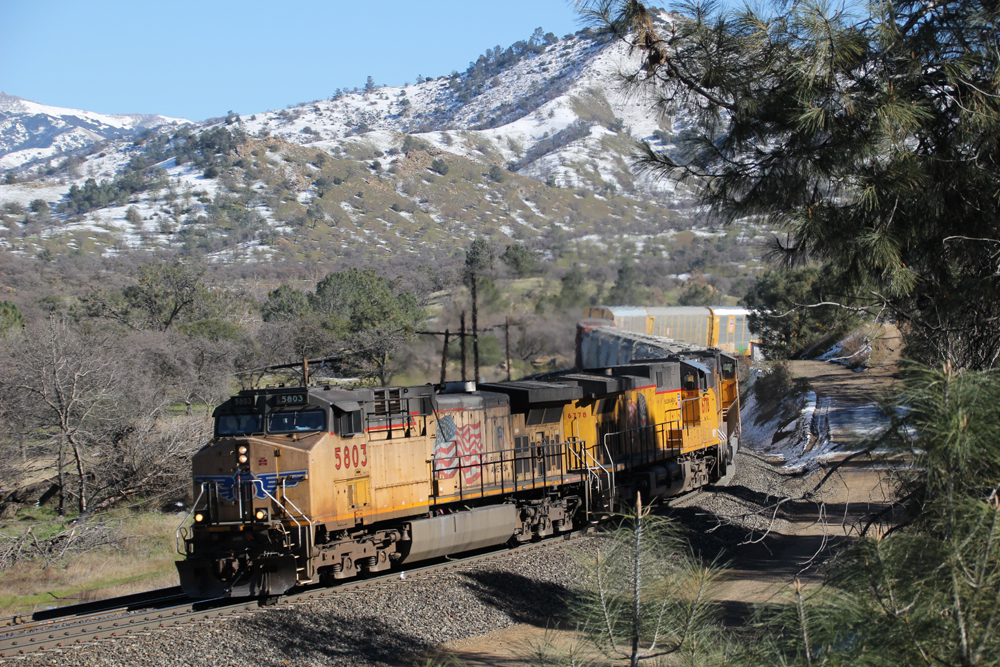
UP relies on Mexican crews from partner Ferromex at the Eagle Pass, Texas, gateway, the No. 2 rail border crossing. The railroad also has plans to use Ferromex crews at the El Paso, Texas, gateway.
“We have the same goals – a safe, secure border that keeps the supply chain fluid. Part of ensuring safe operations is good communication. We will continue to work with our federal partners to enhance the process, which has worked at both borders for many years,” a UP spokeswoman said in an email.
— Updated Dec. 22 at 7:20 a.m. to correct name of federal agency to Customs and Border Protection. To report news or errors, contact trainsnewswire@firecrown.com.
Share this article