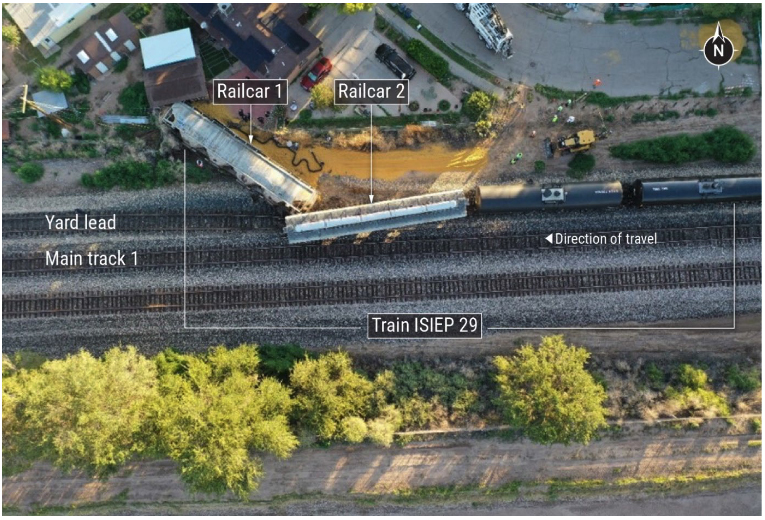
WASHINGTON — A communication breakdown over granting permission for a train movement into the yard, as well as regarding placement of a portable derail device, was the probable cause of the August 2022 fatality of a Union Pacific conductor at a yard in El Paso, Texas, the National Transportation Safety Board determined in its final investigation report issued today (Thursday, May 16).
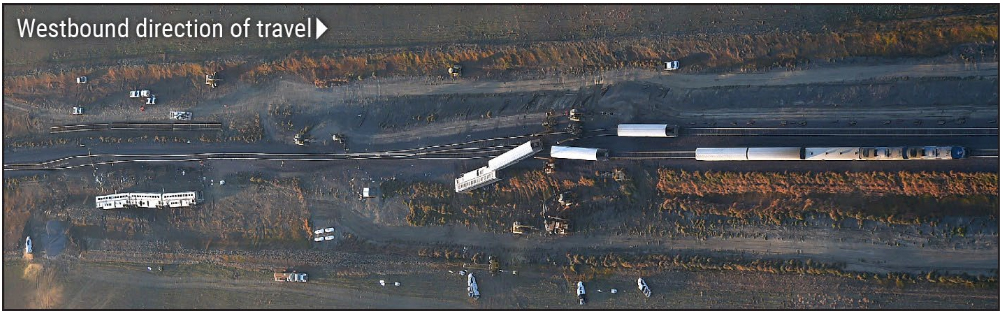
The incident occurred Aug. 29, 2022, at about 9:14 p.m. near UP’s Alfalfa Yard, and derailed two cars into the back yard of residence, where one struck a natural gas line [see “Crew member dies in Union Pacific derailment …,” Trains News Wire, Aug. 30, 2022]. Train ISIEP 29 was conducting a shoving move into the yard, with the train’s conductor riding the first rail car, when it struck the derail, overturning the two cars. The train was moving about 8 mph at the time.
Emergency responders found the conductor and pronounced him dead at the scene; they also reported the strike of the gas line, which led to an evacuation of residents for about 90 minutes before Texas Gas Service determined there was no leak.
The derail had been place to protect a maintenance-of-way crew installing a switch. But the work, which had been intended to be completed during daylight hours, had been delayed by about 5 hours, and the flags marking the derail’s location were no longer visible at night. The dispatcher and manager of terminal operations (MTO)— who controlled train movements within the yard — were aware the work was still going on, and granted the train permission to make the shoving move into the yard. But they failed to communicate with the Employee In Charge of the maintenance crew before doing so.
“This denied the EIC an opportunity to remind the MTO and third-shift dispatcher of the portable derail rendering the yard lead inaccessible,” the NTSB says in its report. “If the MTO or third-shift dispatcher had contacted the EIC about train ISIEP 29’s planned movement into the yard lead, the accident likely would have been prevented, either by withholding permission to proceed or by removal of the portable derail.”
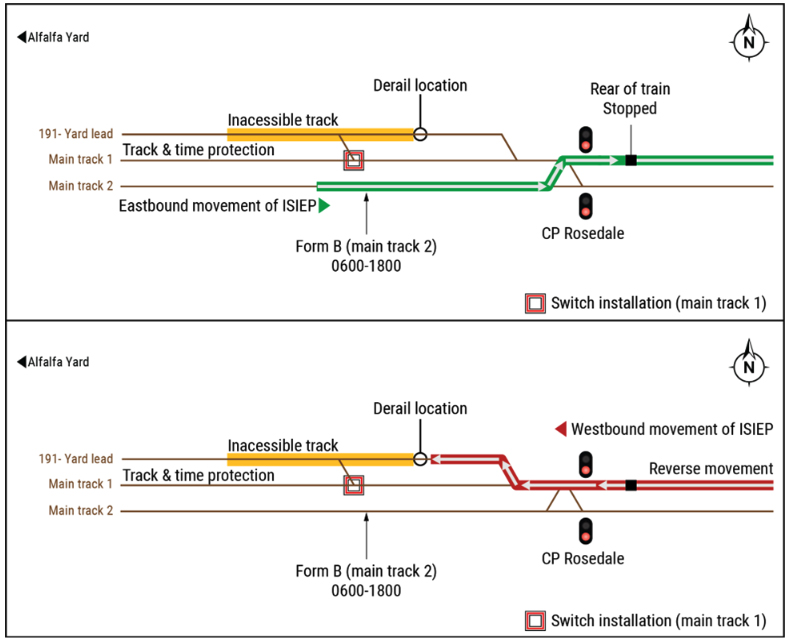
The report also notes an illuminated derail likely would have allowed the conductor to see it and call for the train to stop before derailing.
As a result of the incident, the Federal Railroad Administration issued a safety advisory on the importance of ensuring portable derails are clearly visible, and that procedures are in place to ensure they are removed when not needed. Union Pacific updated its rules on the use of derails to require a red reflectorized flag 150 feet away from the placement of a derail, and placement of a red light at night; introduced a form to improve information sharing on track maintenance in yard facilities; and conducted safety and training sessions with dispatchers on the importance of clear communication.
Share this article