





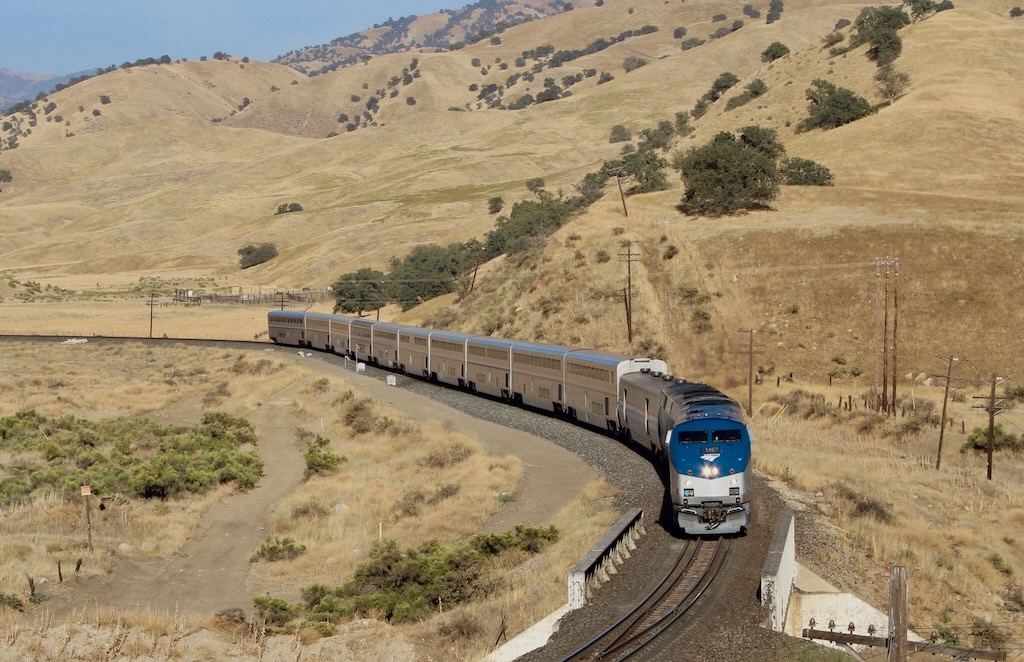
Amtrak should be asking itself a $7 billion question about the future of its long-distance trains. Should it spend that Bipartisan Infrastructure Law windfall on nearly 600 new bilevel cars that would replace aging Superliner equipment — and continue with a problematic procurement process? Or would that money be better spent on a national single-level fleet?
There’s a strong case to be made for a systemwide equipment standard.
Make a reservation for a Southwest flight and you know you’ll be taking off in a Boeing 737. It’s the only aircraft Southwest flies, and with good reason: The simplification and savings that comes from standardization.
Railroads have long embraced standardization, going back to the days of E.H. Harriman, who insisted that Union Pacific and Southern Pacific settle on standard designs for locomotives and rolling stock, as well as their operating practices.
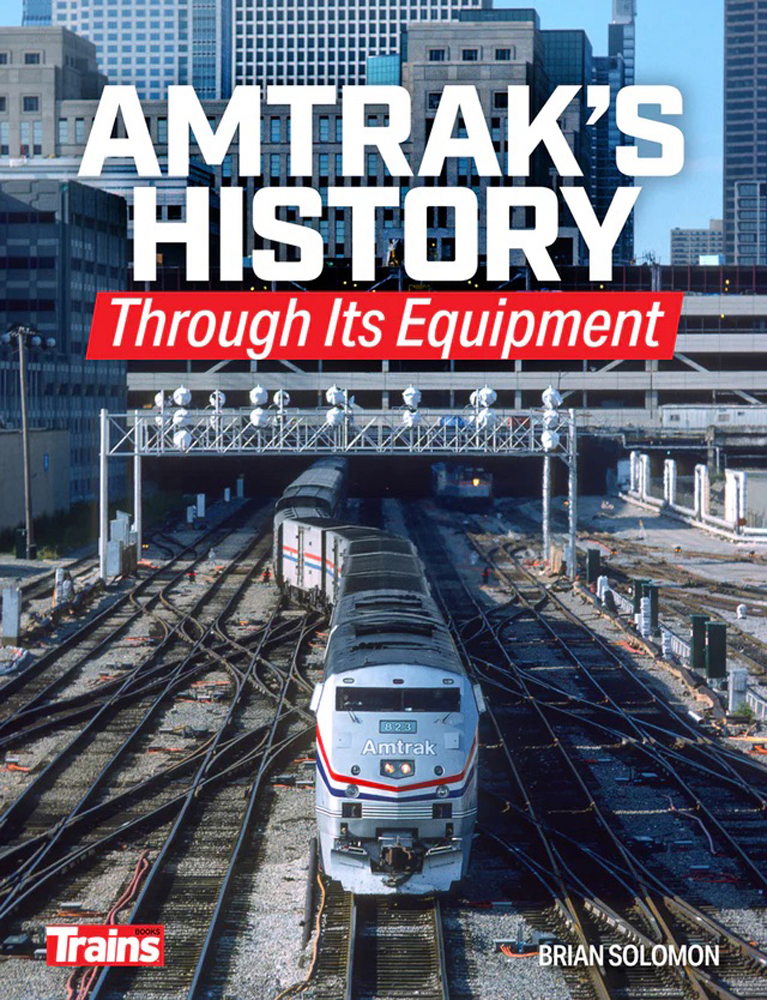
Amtrak, in contrast, runs an alphabet soup of equipment — Acela, Amfleet, Horizon, Superliner, Venture, Viewliner — each requiring its own parts inventory, maintenance skills, and training for onboard personnel. Plus, Superliners can’t roam the entire network because of tight clearances in the Northeast.
The NextGen Acela has begun to replace the original fast fleet. Airo trainsets are due to start taking over state-supported routes next year. And Amtrak is seeking proposals for successors to Superliners and some of its single-level equipment.
Settling on a common long-distance and corridor train would streamline parts inventories and simplify maintenance and training. It would save a bundle in maintenance-related costs, too, which is no small thing for a railroad facing intensifying political pressure to turn an operational profit.
Operationally, a single fleet would give Amtrak the ability to easily substitute equipment on any conventional speed train in the network, potentially putting an end to equipment shortages.
There’s no indication Amtrak is rethinking its plan to replace Superliners on its six Western long-distance trains plus the Auto Train, Capitol Limited, and City of New Orleans. The process has stalled, however, partly because carbuilders have balked at Amtrak’s request to equip the cars with elevators that would make them compliant with the Americans with Disabilities Act.
An Amtrak Inspector General report also points out that by seeking an all-new bilevel design, Amtrak risks spiraling cost increases and lengthy delivery delays that could affect its ability to maintain Superliner-equipped long-distance service.
The Superliner pause offers Amtrak the opportunity to rethink its approach.
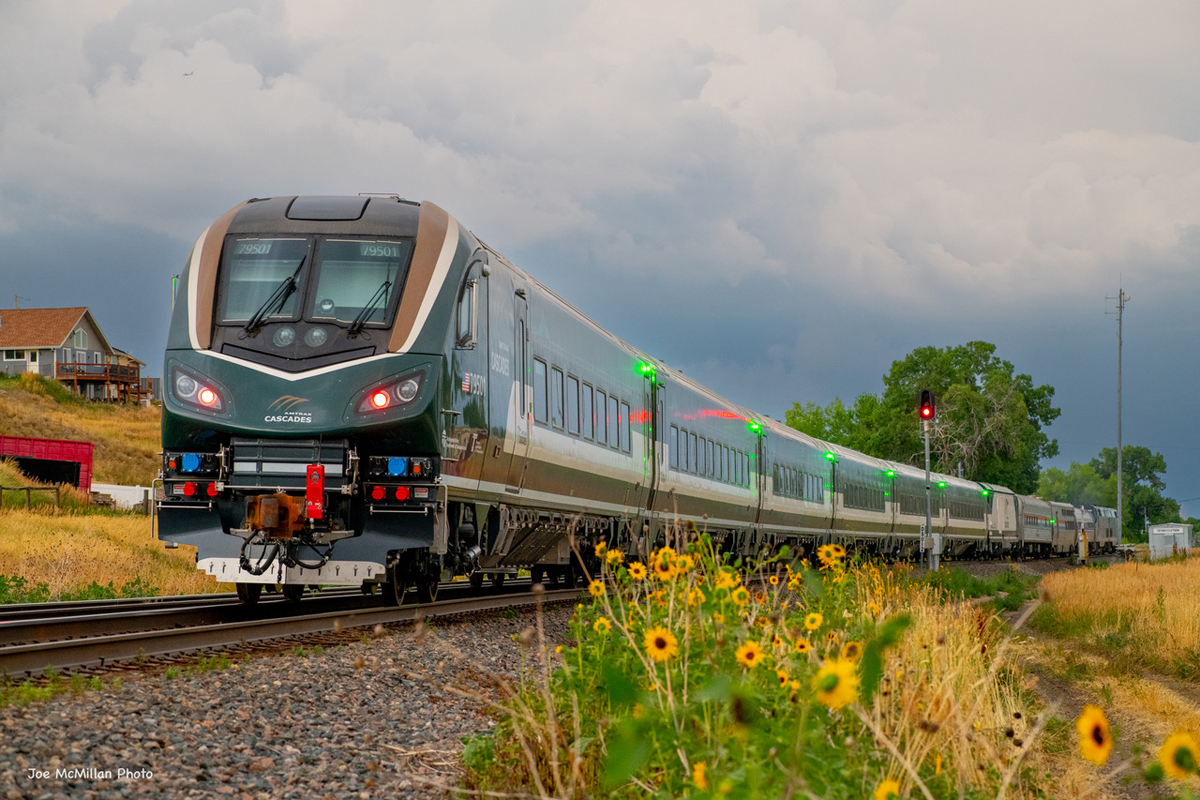
Right now Siemens Mobility seems to be the only manufacturer ready to deliver conventional, diesel-hauled single-level equipment that meets U.S. safety standards and can use high and low platforms. Its Venture/Airo shells are modular, allowing interiors to be configured as sleepers, diners, or lounges — all designs that Siemens has produced for European operators.
The lone supplier situation would complicate the bidding process. But let’s face it. The North American passenger market is too small to be truly competitive. One by one the historic big three passenger car manufacturers — Budd, Pullman Standard, and American Car & Foundry — exited the market. Among the reasons they couldn’t survive: Because Amtrak has no steady, predictable source funding for equipment purchases, orders come along only once every few decades.
An Amtrak bilevel order would be another one-off. And that means higher engineering, tooling, and production costs. After delivery winds down, there would be no incentive for the manufacturer to maintain a production line or keep making parts.
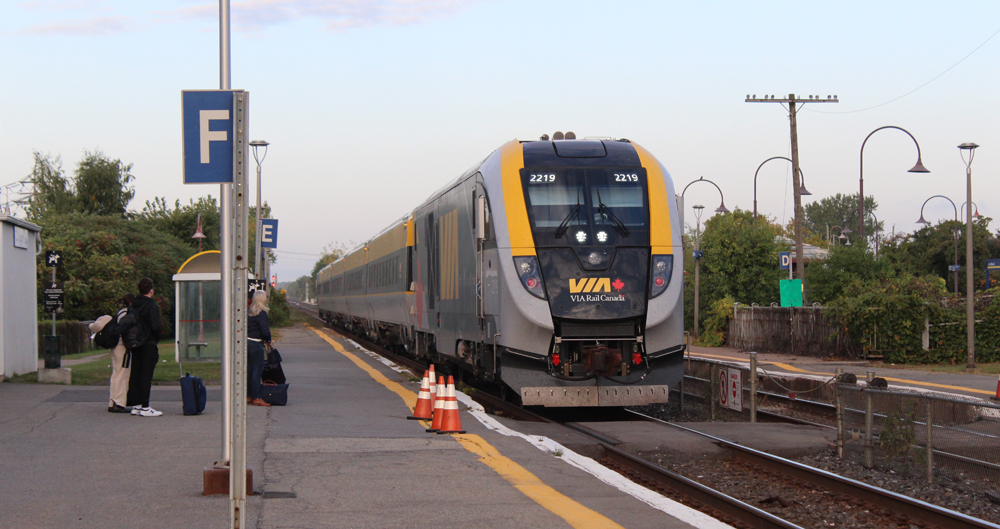
Tacking single-level long-distance equipment on to current and future Airo and Venture orders for state-supported service — and linking up with VIA Rail Canada for single-level long-distance equipment — would boost production volumes and provide Amtrak with more bargaining power. It also would sidestep bilevel accessibility headaches.
While boarding the Borealis in Milwaukee last month I was reminded how tricky it can be to lug a just carry-on bag and a small backpack up a Superliner’s narrow, twisting stairway. Fortunately, I’m nimble. I could only imagine how formidable the challenge would be for a senior citizen or someone with mobility issues. Single-level equipment wins a practicality contest, hands down.

Adopting a systemwide single-level fleet would not be without its drawbacks. Western trains would have to be longer to accommodate the same number of passengers that Superliners carry. This would complicate some station stops, perhaps enough to require longer schedules.
Superliners offer passengers a unique vantage point. I still remember my first trip on the Southwest Chief out of Chicago and how the Superliner perspective high above the Santa Fe rails gave me the sensation of flying across the Prairie State. You don’t get that on single-level equipment.
But the advantages of a common fleet would almost certainly outweigh these tradeoffs, particularly since it would make Amtrak operations more flexible, efficient, and resilient.
You can reach Bill Stephens at bill.stephens@firecrown.com and follow him on LinkedIn and X @bybillstephens
— To report news or errors, contact trainsnewswire@firecrown.com.

It seems as though we’re the American driver stuck in the roundabout like we watched in “European Vacation.” The same thing over-and-over. I’m reminded of New Zealand Railways. Postwar they decided on self-propelled cars and built a fleet, believing they would save money. Then, when a new fleet was needed, they decided to rebuild those cars as locomotive-hauled equipment, believing it would save money. Years later, needing to renew, they contemplated rebuilding the same cars as self-propelled equipment, believing it would save money.
On the positive side, they were all the same cars…
Reference: Jeff Ashenfelter says:
December 11, 2025 at 7:28 pm
“Let’s level the playing-field and treat all private transportation companies equally!”
Jeff’s description of the situation, to me, IMHO, SAYS it all. I have long felt this way. Stick airlines, barge operators with the cost of their support structure. Rates surely will go up in both industries if they had to pay for “their ROW” upkeep.
Long ago, Ma Bell had a monolopy, THAT WORKED. They took care of ALL. Grandma 20 miles out in the hills paid a fair monthly bill. She did NOT pay for the actual cost of her service. BUT when grandkids from New York City called LONG DISTANCE to chat w/grandma, THEY paid for the 20 mile extention of the system. After all if Granny didn’t have a phone, there would be no one to call via high cost of long distance. endmrw1216251905
It’s “back to the future” time at Amtrak. Having inherited a montage of equipment from the carriers in 1971, Amtrak over time created its own non-standard fleet. Just another lesson to relearn.
I think the Borealis offers a solution to the length problem if going single level. Build out the corridors within the L.D routes . The Borealis , plus Seattle / Portland to Spokane corridors would probably take care of 1/2 the Builders PEAK passenger count. Add frequencies , not length , but probably not over the whole route. ( keep the full length service though) .
All I have to say, as a retired Amtrak station agent, an awful lot of people don’t want to deal with the staircases, especially when the bathrooms are downstairs. Just look at about every passenger train station platform in this country. Most of them you can still see where they used to be a lot longer! So what if there is reduced capacity in a single level design, and the trains are longer. I don’t think it matters “that” much in the overall cost structure. The main point being, as Mr. Stephens alludes to, WE DON’T HAVE THE LUXURY OF TIME FOR A NEW BI-LEVEL DESIGN! Have Siemens pump out some LD coaches, sleepers, lounge, and diners QT!
As one who has ridden around in some private rail cars with domes, the superliners do not provide a forward view which you get with a classic dome car and I think equipping a single level fleet with domes would add significantly to the passenger experience. Most domes can travel the northeast routes. As I recall B&O had some slightly less tall domes which could go everywhere on their dimension restricted routes.
A single level fleet makes sense overall if AMTRAK long distance trains have any chance of survival. Expensive high level cars will do little to reduce long distance train losses and only add more ammunition to AMTRK critics calling for regional and corridor trains only.
Bi-level cars carry more passengers and therefore produce more revenue passengers per car-mile. The same length train would be more remunerative, which is the whole point of this discussion. A case could therefore be made that bi-level cars should be deployed throughout the system wherever it is practical. The question is how to minimize the purchase price per car, especially if the expectation is that anything new should come with all the latest gadgets.
There is one point that I forgot to mention. The cost of maintaining and upgrading the NEC has nothing to do with buying new equipment for the long-distance trains or terminating them. Nothing!
In FY24 the NEC had an Adjusted Operating Profit of $352.2 million. For the four years ended FY24 it was $823 million. This is the operating profit; it is not recovery of the fully allocated cost.
Under current procedures and practices, the operating profit is invested in the maintenance and enhancement of the NEC. Whether it covers normal maintenance is unknown.
The major issue for the NEC is the replacement and upgrading of the infrastructure. There are three important points to keep in mind when evaluating the cost estimates. A substantial portion of the cost will be borne by the commuter railroads. In addition, Amtrak will collect rents from the freight users to recover a portion of its costs. Most importantly, however, is the estimated billions supposedly required to update the NEC’s infrastructure will not be required in one fell swoop. The schedule for repairs, replacements, new infrastructure will be spread out over many years, thereby softening the annual financial impacts.
I think the first step toward solving this mess is to stop over-thinking it.
For those of you with access to TRAINS magazine archive online (or if you have a magazine collection as many of us 70+ folks do) is to look up the August 1974 issue and near the back is an opinion piece written by B. L. Bulgrin titled “Won’t They Ever Learn?” The opinion piece deals with equipment procurement for Amtrak. Seems like what is old is new again and human nature hasn’t changed in the last 51 years.
My comments: (1) We do NOT need a one single universal car type for the entire Amtrak system any more than we need one universal automobile model for our driving needs. Commenter Charles Landey is right in his observation that Amtrak is big enough to have different fleets for different needs.
(2) The bi-level/hi-level car design from 1955 (commuter cars) 1956 (Santa Fe hi-levels) and HEP for through trains (my home railroad C&NW 1958) are great steps forward and permanent changes in how we do things (like digital replacing analog systems, color TV replacing black and white. etc.) Let’s look forward, not back. Can the designs be improved? Certainly, like anything else over time (Live and Learn).
The Superliners and California car coaches provide a good design platform for a future long-distance bi-level order. California car stairways are straight, not spiral. Replace the doors on one end with a Superliner-type hinge door for cold winter operations, insulate the cars for colder weather and you have ready design for a long-distance coach. I believe Alstom holds all the designs, patents , etc. for Superliners and California cars. Perhaps Stadler could work with them in a collaborative effort.
(3) If you want to use low-level cars in areas with substantial foliage (like Wisconsin) you may as well call them “Brushliners” because once you leave the city, trackside brush is all you will see until the next town. Railroads don’t keep R-O-W’s clear of brush like years ago. Wisconsin has lots of good scenery-it would be nice to see it and not get carsick looking out the window at the green blur.
The NEC is not profitable when you factor in upkeep of its antique over a century old infrastructure.
I have to agree with Galen, but I’d go even further than he has. It’s more than “upkeep” — NEC’s Gateway and Frederick Douglass Tunnels would be entire new alignments costing, in rough terms, billions of dollars per mile.
Even on a purely O+M basis, disregarding capital amortization, day-to-day operating profit is very hard to find on Amtrak, in any part of the country.
People such as Galen who defend the national system (as opposed to the supposedly profitable NEC) have a point.
Amtrak has TWO profitable businesses. The NEC, and AUTOTRAIN. Double deck auto haulers and double deck passenger cars would be a gold mine if Amtrak did an east-west AutoTrain (LA — Jacksonville). AutoTrain DC – Orlando is 18 hours, non-stop. Doing 18 hours non-stop for each of two days would be perfect.
So it appears Mr. Smith’s (?) Comments are purely political.
The Amtrak naysayers always take the bait regardless if they’re off topic or not! If you think the states that would loose passenger rail service are going to continue to subsidize your NEC money pit you’re sadly mistaken! Give the NEC states the full financial burden of their “commuter” corridor.
The long-distance trains are the biggest single factor in Amtrak’s losses. Buying equipment to continue the losses is very much part of the issue of whether the company should even be in the market to buy new long-distance equipment.
Require the states to foot the entire bill for the state supported trains. Dump the long-distance trains. Privatize the NEC!. Whether Congress continues to bleed money it does not have to support little used trains will become a non-issue.
The notion that Amtrak would fold if the long-distance trains were eliminated has never been tested. Politicians being what they are, they probably could cut a deal to keep those whose once a day late running trains are eliminated happy.
Amtrak should focus on a single nationwide system. It’s too small to allow for multiple platforms. One for all and all for one.
100% correct. Too much of Amtrak’s equipment procurement troubles are self inflicted.
Just buy off the shelf stuff with bare minimum of “Amtrak peculiarities”.
A long-distance version of the Bombardier/Alstom Multi-Level (similar to what NJT used on the Atlantic City Express services) is probably the way to go to get full-train ADA access and maximum route availability.
Terminate the long-distance trains and focus limited resources where passenger trains make sense: 250 to 300 mile corridors where the cost to expand highways and airway is prohibitive.
Single level cars with coach and business class, as well as light food service, would do well for corridor service.
In FY24 the long-distance trains had an Adjusted Operating Loss of $628.1 million. For the four years ended FY24 the loss was $2.4 billion rounded. Add another 20 to 30 percent for full costing and the loses are more than $3 billion.
The consistently late running long-distance trains carry less than two percent of intercity travelers. They have never come close to covering their operating costs and never will. It is time to focus Amtrak’s limited financial resources on services that make sense.
Paul, yours is the only comment in this thread that makes a lick of sense.
If eliminating the long-distance network makes sense, why is the long-distance network still running? There have been programs of long-distance route abandonments in the past, for example in 1979. What were the financial results for Amtrak overall in subsequent years? Please extrapolate those data to estimate the financial effects of eliminating the entire long-distance network. Thank you.
Since folks are advocating for the elimination of long-distance trains, it’s time to consider this —
.
The Federal Government created the current, unequal and financially unfair passenger transportation systems we now have in this country, by funding/building the Interstate Highway System and by funding/building all of the airports (and Air Traffic Control Network). The Government’s focus on subsidizing travel by autos and airplanes, and the termination of the U. S. Mail Contracts with the railroads, are the reasons the private railroads were FORCED to abandon short-haul and long-distance passenger trains, since they could not financially compete for travelers.
.
As a result, the current U. S. transportation system is broken! Airlines and railroads (with exception of Amtrak) are private, for-profit companies. Yet, private railroads have to pay for virtually everything related to their tracks, bridges, tunnels, traffic control systems, dispatching, terminals, buildings, trains and all other company operations. Airlines DO NOT PAY the billions of dollars needed to construct or maintain ANY of the hundreds of airports across the country, nor do they pay for the operation and maintenance of the FAA Flight Control System! This makes competing in the passenger transportation marketplace unequal and unfair for railroads.
.
We need to either make ALL passenger modes pay for their own, actual costs of all operations and financially survive on their own revenues, or, we need to subsidize ALL modes and give every mode a level playing-field in which to financially function. Since railroads must pay for ALL of their infrastructure, it’s time for airlines to take over the operation and maintenance of EVERY airport and the U. S. Air Traffic Control System. This takes the burden of subsidizing the airlines off the backs of the American taxpayers. Once this is done, it becomes financially viable for existing railroads, or new private passenger train carriers, to compete in the private-carrier travel market with a newly designed network of short-haul and long-distance passenger trains.
.
Amtrak needs to be re-invented! When Amtrak was created in 1971, it was never intended to survive beyond a couple of years and the creators never focused on “fixing” the broken system. Amtrak doesn’t have the institutional knowledge, doesn’t have the corporate innovation and doesn’t have the financial resources to adequately create, operate and market long-distance passenger trains! The current long-distance routes are losing money because Amtrak doesn’t have enough cars, to sell enough seats/rooms to the millions of passengers who would ride if more frequency, more space and more on-board amenities were available, to make trains a viable, competitive travel alternative. Trains are unique in that they are the ONLY mode of travel that can add more capacity per departure! The existing Amtrak System doesn’t have the capacity to meet current demand, let alone add millions more riders. Thousands of potential customers are turned away daily because there is either no service at all, there is no multiple frequency of departures, or the existing trains are sold out because of lack of additional cars.
.
Radical changes need to be made to bring the operation of passenger trains into the modern-day mainstream of travel options in the United States. Airlines and highways are here to stay and each have their own positive and negative attributes. The difference between these two, is that airlines are private, for-profit, stock-issuing companies, just like private railroads. It’s time airlines are FORCED to take over and pay for ALL portions of their company operations, just like railroads must pay for all of their own infrastructure and dispatching systems! Then it will be possible for passenger trains to offer an alternative to airline and highway options without having to be subsidized.
.
Let’s level the playing-field and treat all private transportation companies equally!
My idea would be to have one specific ADA car per train. So daft to require all cars to be ADA compliant.
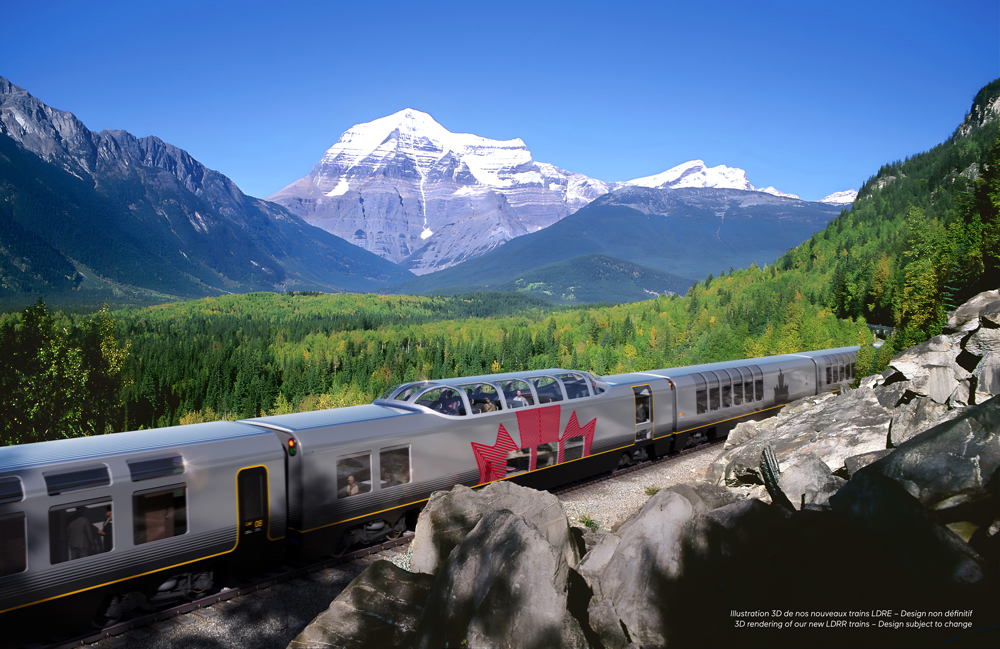
And make it a “glass top” unit like the Canadian Rockies special trains that allow economy passengers to see as much as their “full cost passengers see from their high perches. It can be done and is being done of the Rocky Mountaineer “Red Rock” trains between Denver and Southwest Utah, all single level but with glass top sightseer luxury coaches that allow an expansive view of all the sites to see, not just the ones whizzing by the windows. ( rockymountaineer.com/find-package )
Staedler has build brand new bilevel cars for Rockymountaineer service. I assume the design could be adopted to Amtrk’s needs?
The ride far better than Superliner II. I’m not sure but I belive they are also equiped with wheelchair lifts
That is true…
If they do go single level, I hope they include domes!
I do say yes to a nationalized fleet that gives you flexibility. Maybe even a one-seat ride from California to New York.
1. Love the layout and comfort of the super liners. I’ve done both the Southwest Chief and also the California Zephyr. I’ve gotten cross country multiple times on them. That said, they have very little technology in modern comforts. They don’t even have the same technology that they had 20 years ago when they used to play movies at night in the observation car.
2. I would say try to still accomplish a bi-level but lower profile car that can fit through stations like New York and the Eastern corridor but still accommodate bi-level or even one and a half. I know it’s a bit difficult to do with Ada accessibility and stuff but I think you can still get something that’s akin to buy level because they do it on NJ Transit and they do it on Long Island railroad which compromise on the ability for someone in a wheelchair to navigate from car to car like you need to on Amtrak. There’s got to be some novel solutions to solve the problem though.
3. Again, for those super long hauls we’re probably not going for the high-speed market because then you’re probably better off flying. But it’s more like a experience that we should make more like cruising. So emphasize the views, emphasize good food, bring in some technology so you don’t have to leave all the creature comforts behind. Heck, maybe even put a gym on the train. Just when everyone thought ocean liners were going obsolete, they totally leaned into the luxury and comfort version of shipping that made cruising so popular.
4. Also, something that trains could add that flights probably never will or at least not anytime soon is the ability to add cars. So consider adding the benefits of Auto train Service to more routes across the country, not just the New Jersey to Florida or whatever that route is.
Europe uses a mix of double and single level cars. Going to all single level equipment is a solution for a problem that doesn’t exist.
I agree with many of Mr. Andre’s points I too believe the Superliner cars are the best fit for the western routes. Regarding ADA requirements throughout the entire train whether single or double level will require wider isles meaning narrower seats in coaches this will for those who spent the night in the coach be very uncomfortable compared to the fairly “roomy” seats now on Superliners & Amfleet cars. Passenger rail is already the most handicap accessible form of transportation available. A lot of coach & sleeper space will be taken up by restrooms/shower in single level equipment which is currently primarily on the lower level of Splnrs with 5-6 on the lower level & one addtl upstairs in the sleepers. Also space saving on Sprlnrs the diner kitchen is downstairs opening nearly the entire length of the car for serving. A single level car will not have this option unless you have a separate kitchen car as some RR’s did. As for the fixed consists that was tried by the RR’s too & was promptly discontinued due to if one car had an issue it sidelined the whole set. Also as Mr. Andre stated there is no single level lounge/observation car in production on the western routes this is one of the main drawing points of these trains. Single level equipment will require longer trains which both Amtrak & the RR’s would probably take issue with. This would leave either very short trains with minimal capacity or you would have to operate a second section of each like the GN’s Empire Builder & Western Star, etc. this is not likely to happen either.
If single level cars are the panacea, where is the VIA order? Seems to be in the same netherworld as the Amtrak procurement.
The current mechanical incapability is more a function of the different eras that the cars were built and not a function of one car being taller than another. Order cars from the same era and Amtrak can specify the same seat recline systems, the same toilet systems, the same HVAC systems, the same electronic control systems, door opening systems, etc. and associated parts.
Elevators – There are elevators in the California Car cafe cars, elevators in the Rocky Mountaineer cars built by Stadler, elevators in Alaska Railroad Gold Class and in Wilderness Express in Alaska. The Lockheed L-1011 had elevators for flight attendants and food carts and from the downstairs galley to the passenger cabin.
Alstrom is building bilevels for Meta and has just invested in a new shop to weld stainless steel car bodies so Siemens, with its full order book, is not the only game in town.
If Amtrak waived the stainless-steel requirement Stadler could be a potential builder. And they have built bilevel cars with elevators. This would bring more competition into the mix. Stainless steel may be optimum, but what is the value of having a car body that lasts longer (100 years) than all the subsystems that last 50 – 60-years. Non-stainless steel just requires an ongoing anti-corrosion program.
Amtrak has to order bilevels for Autotrain or it runs into train length issues. If you are buying bi-levels for Autotrain why not buy 400+.
Amtrak is asking the equipment manufacturers for far less than Juan Trippe President Pan Am) asked of Boeing in the design of the 747.
As rail advocates, we need to lobby for can do manufacturers not resign ourselves to “order out of our catalog, take it or leave it” manufacturers.
Great post Steve Roberts. First (and maybe last) time I disagree with Bill Stephens, but I’m not sure Bill got this right.
Amtrak is big enuff for both bi-levels and single levels. Even in the east, Autotrain and the Capitol Limited have run with bilevels.
ATSF was big enuff for both bilevels and single levels. Heck, they ran on the same train!
Mechanical components (or windows, trim, seats, etc.), as Steve Roberts points out, are more a function of the equipment’s decade of introduction, than whether or not is bilevel.
As for going in with VIA RAIL’s single level order, I’d not stand on one leg.
I agree with what Charles and Steve have both said. And take it one step more by separating the NEC and State owned commuter trains from the Long Distance Trains into two separate companies under Amtrak and then let the chips fall where they may. And to anti pleasure traveler Paul Smith, I can only say one thing. If this should happen and I think it must, don’t be surprised when your commuter ticker all of sudden increases in price once the LD subsidy of commuter rail is discontinued…and you then have to pay the full burdened price of your ride.
Yeah, I thought that is what you would say…
Well said, Editor Bill Stephens. A systemwide roster of single-level passenger cars for regional and long distance intercity trains is economical and flexible to meet fluctuations in ridership especially ,during Christmas season, Summer, and Spring break.
Amtrak should pool their resources with VIA Rail Canada in procurement of new passenger cars. This would benefit future international train operations with standardized equipment.
As the saying goes, ‘Too many chefs spoils the broth. I would choose Siemens Mobility as the primary supplier of passenger cars. The company has expanded beyond Sacramento with new factories in North Carolina and New York.
You are only saying that Penelope because you like the, as you have said her before, the roof lines of a congruous single level passenger train! (just kidding of course…)
Hate to be a “Grinch” at Christmas, but I have no hope that Amtrak will make a good decision on this issue… no more than its takeover of the PennNY “renovation.” Have recently been to both Penn. and GCT, both packed, but guess which one worked flawlessly?
I get your argument for a standardized fleet. It makes a lot of sense. However, the Superliners are special and the experience of riding up high in one of those beautiful cars is truly “experiential”. They are extremely impressive rolling stock. I would say their major drawback is the claustrophobic upper bunks which could be helped a lot with upper level windows or even more dramatically by a wrap-over dome window. The Viewliner bedrooms are actually much more comfortable.
I must add that if Amtrak was to go with single-level equipment, a new version of the Viewliner sleeper would be fine although they are much less efficient than a Superliner sleeper. Getting back to baggage/dorm cars would help by getting the attendants out of the car freeing up one roomette. Also going back to having a separate bathroom for the ADA room would allow selling them to non-ADA passengers who don’t want a toilet in the middle of the room. Both ideas would open up revenue space.
Coaches are coaches although Amtrak seems to have lost their way here. We need very comfortable coaches with actual reclining seats, all facing forward and all having windows! This used to the the norm but now Amtrak seems to not care about the passenger experience. These recent dumb design decisions are very upsetting.
Now consider this. Amtrak could use a Bombardier or Kawasaki double-decker style car for the diner and lounge. At 14′ 6″ tall they of course can travel the entire system. They would be a semi-permanently coupled pair with a wide passageway between them on the upper level and low-level passageways at the outer ends to match up with new single-level coaches and sleepers. These lower level “mezzanines” would have table seating for ADA passengers.
The diner can have a full width kitchen on the lower level and upper level dome table seating. The lounge could have upper level dome seating, lower level additional seating, and a cafe.
Since these cars would not need luggage racks there should be ample headroom for their use as described and they would be very exciting environments especially if dome windows are incorporated.
This design would maximize capacity. Existing Viewliner diners are nice cars but lack the necessary capacity for a full train. Amlounges need rethinking to make them more comfortable. And in both cases, you got to end the annoyance of crews taking up space but that’s another issue!
This double-decker diner/lounge pair would bring as close to a Superliner experience as possible and be capable of traveling through the entire Amtrak system.
So although I think the Superliner is a wonderful car and offers a great travel experience, and I would like to see them duplicated but if going single level makes more sense, I could accept that if a real Dome Dining Car and Dome Sightseer Lounge were in the plan.
Food for thought anyways 🙂
Besides Siemens, is CAF in a position to fill any Amtrak orders, or is its name mud so far as Amtrak is concerned? Would Stadler be in a position to build passenger cars for Amtrak? While I feel that one type of car should be standard, Auto Train seems to be an exception that stands out since CSX has a 50-car limit imposed for its consist, since the bilevels carry more people on average than single level equipment.
Fully ADA compliant bi- levels will be a nightmare for maintenance. Guarantee half the elevators would be out of service within a year. Single level is only way to go to meet ADA and budget and maintenance constraints.
I agree with you Bill, standardization is much more efficient even though you lose the uniqueness of different equipment. From a cost and maintenance perspective, one type of equipment is far superior.