





Nine years after Amtrak inked a $2.45 billion contract with Alstom, builder of France’s TGV, to build 28 trainsets in the U.S., the new equipment debuted on Aug. 27 with a media trip from Washington Union Station to Boston’s South Station. Beginning the next day, the five Next Generation trainsets that had been accepted began appearing on two Acela Sunday-through-Friday schedules each way and one Saturday round trip.
As 2025 ends, Amtrak’s ticketing website shows that only one more NextGen round trip had been added. At least initially in 2026, the third round trip of new equipment has been shelved.
The long gestation
Trains first observed construction and assembly in June 2019 at Alstom’s Hornell, N.Y., facility, part of the same ex-Erie Railroad factory where Morrison-Knudsen and successor Amerail built 50 Viewliner I sleeping cars in the mid-1990s. Carolyn Decker, then the project manager, said the next-generation trains would be known as “Acela 21,” for the year of their expected debut. That was later changed to “Acela 2” and finally NextGen. In 2024, Amtrak officials suggested the new trainsets’ first revenue runs would occur in spring 2025, which came and went.
Why the successive delays?
The Acela replacements’ top operating speed of 160 mph is faster on straightaways than the legacy equipment’s 150 mph, although they have few opportunities to achieve that velocity, aside from short stretches in Massachusetts and Rhode Island, as well as the “New Jersey Raceway” between Trenton and New Brunswick. Each generation of equipment utilizes different active-tilt mechanisms designed to counteract centrifugal forces when entering and leaving curves as fast as possible.
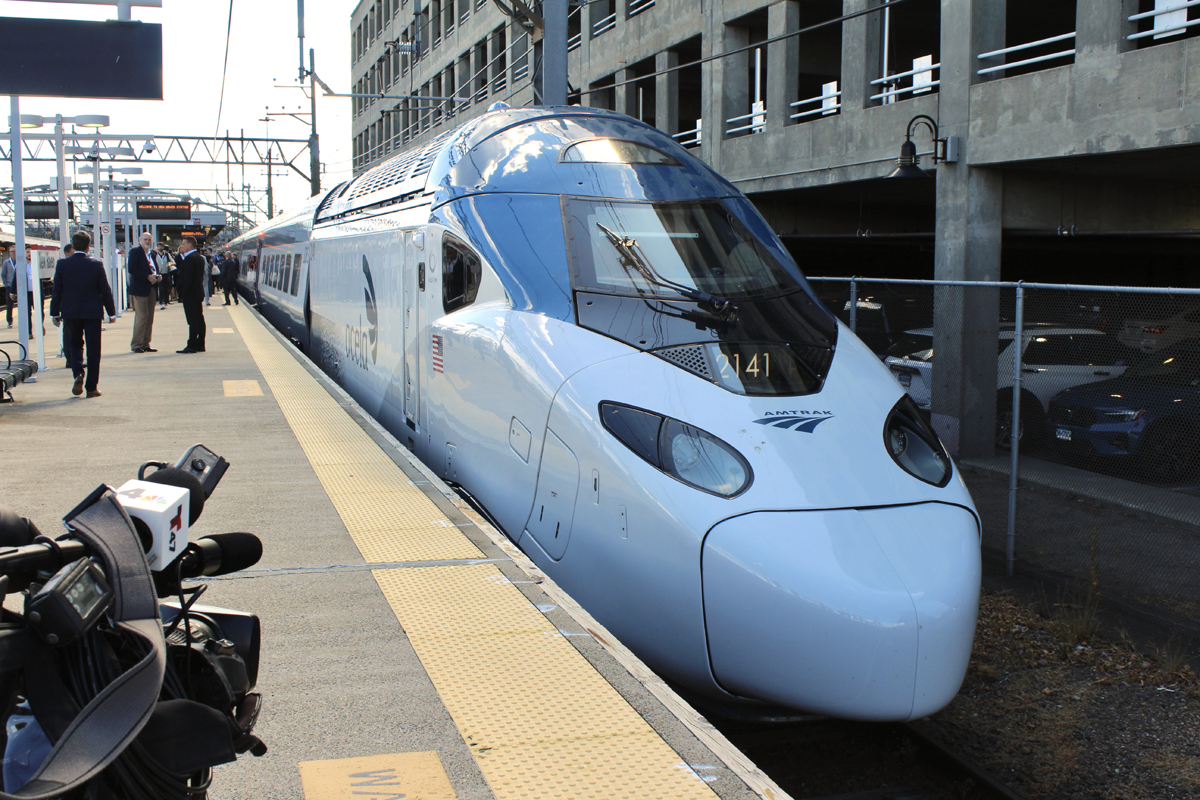
Sources not connected with Amtrak or Alstom tell Trains that contractually, the specifications called for a trainset that would deliver shorter trip times by taking curves at up to 9 inches of underbalance, or tilt. The idea was to round the Northeast Corridor’s serpentine tracks faster than legacy Acelas, whose current certified maximum is 4.5 inches of tilt.
Amtrak has reported that various NextGen trainsets have undergone more than 1,000 tests. This presumably includes runs at the Transportation Technology Center in Pueblo, Colo., dating from 2019, and years of subsequent performance and crew qualification trips on the Northeast Corridor. This testing was necessary because under actual NEC operating conditions, the trainsets did not replicate what Alstom’s dynamic computer modeling had shown. Federal Railroad Administration regulations require that actual performance must come within 10% of what the model predicts, and that wasn’t happening.
When tests revealed that the NextGens’ rear power car was not performing to stability specifications, various adjustments to dampers, couplers, and braking software were attempted, followed by retesting. This process, as well as correcting engineering and manufacturing component defects, is what delayed initial implementation for so long. It is also why their debut continued to be pushed back until the right combination of fixes enabled the trainsets to reliably achieve 5 inches of underbalance, and why Acela schedules were not altered when the new trains entered service.
Rolling out additional trainsets requires extensive retrofitting to incorporate power car modifications as well as addressing issues discovered once revenue service began. Among these were station dwell delays caused by malfunctioning door mechanisms and inoperative onboard information displays. There was also one instance in October where a power car fault at New Haven resulted in a speed reduction to 50 mph until technicians were able to correct it.
Chris Jagodzinski, Amtrak vice president of customer and coach operations, said at a Massachusetts Bay Railroad Enthusiasts webinar in November that the NextGens “will be able to go faster eventually but we slow them down on some of the curves until we finish some paperwork for the FRA.” He says 7 inches of underbalance is being targeted.
NextGen’s features
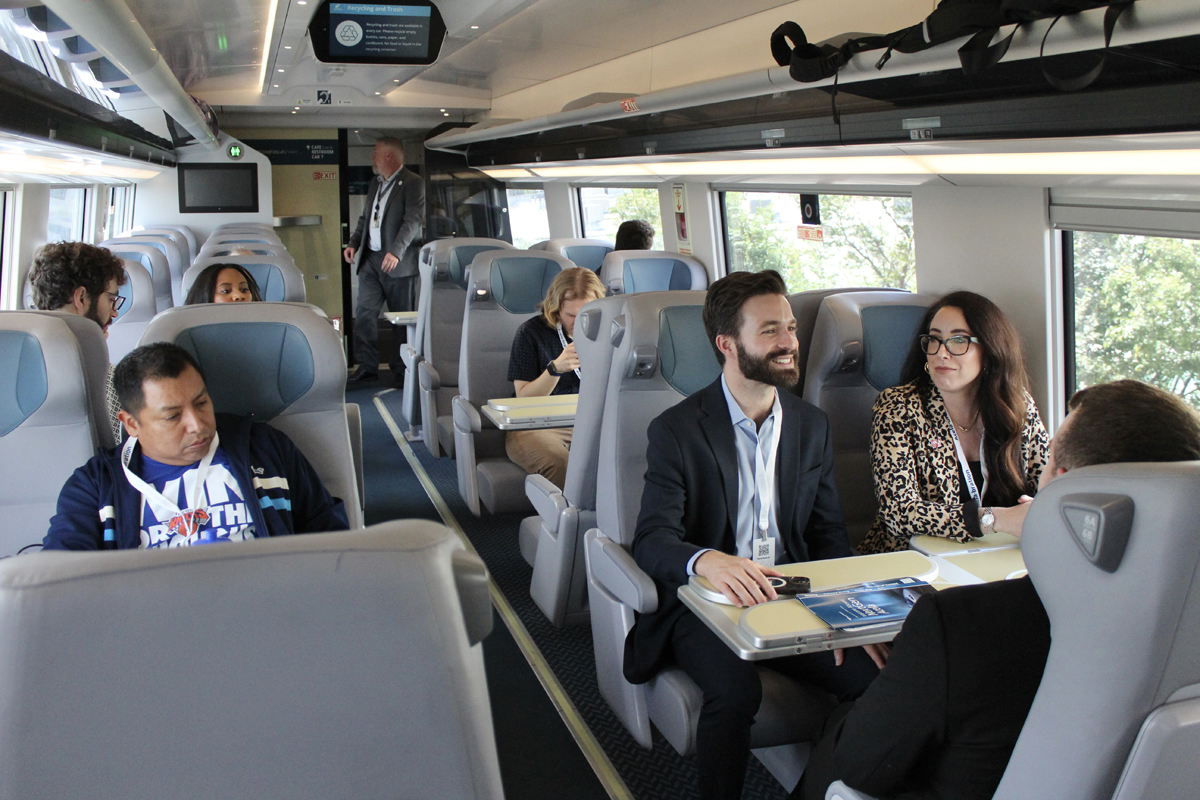
Every new vehicle, most much less complicated than the Acelas, goes through a shakedown period. But now Northeast Corridor travelers can finally experience modern replacements for the 20 legacy trainsets that initiated Amtrak’s premium high-speed brand in 2000.
The nine-car articulated trainsets can accommodate 386 passengers, compared with 304 on the original Acelas. Revised FRA crashworthiness standards oriented to protecting passenger compartment occupants permits a lighter-weight design, though the Alstom’s Avelia Liberty configuration is still bracketed by power cars at each end rather than employing an electric multiple-unit design.
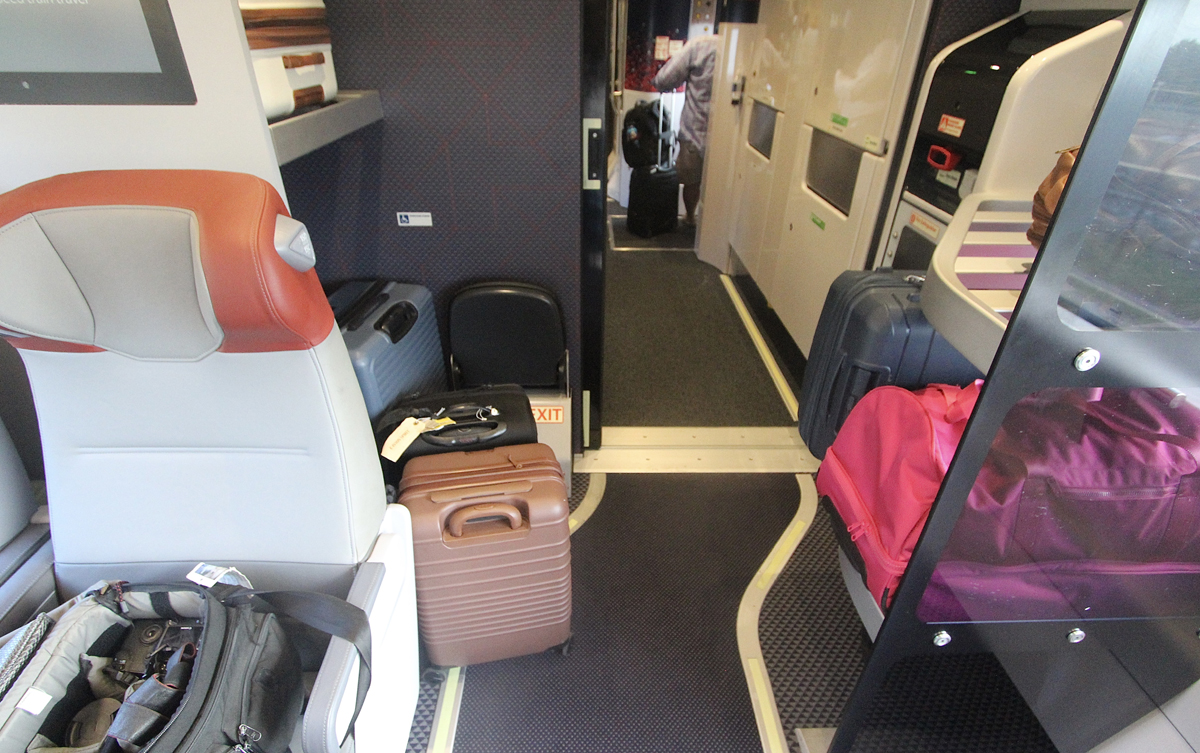
The NextGens have slightly firmer seats with built-in reading lights, headrest “wings” to permit more privacy, and power and USB ports between them. Cup holders and sturdier tray tables make juggling beverages and laptops easier, but seatbacks don’t recline; instead, lower cushions slide forward. Eliminating overhead bins in favor of traditional racks creates a more spacious interior than legacy Acelas provide, although their shallower depth can’t accommodate bulky luggage and end-aisle baggage towers are also relatively skimpy.
A mid-train cafe offers self-service “grab and go” items along with counter service, but there is no seating in the car. Rolling carts also deliver fresh snacks and beverages to Business-class passengers, while complimentary at-seat meals and drinks are served in First Class.
Amtrak’s Jagodzinski says post-launch improvements on the way include P.A. system upgrades and retrofitting USB-C and -D ports in place of the type-A ports which were state-of-the-art when construction began. Because complaints have surfaced that some seats aren’t adjacent to windows, there are plans to show where this occurs on Amtrak’s ticketing website. As for the door malfunctions that have largely subsided, he says software changes are eliminating those problems and it will be easier for crews to troubleshoot any issues.
Amtrak plans to decommission the original Acelas as their four-year brake rebuild dates come due. The company now has a fleet of worthy successors ready to take their place.
— To report news or errors, contact trainsnewswire@firecrown.com.
Previous Trains.com coverage:
A first look at the next generation Acelas, June 13, 2019
Amtrak invites press to inspect new-generation Acela, May 24, 2022
Amtrak NextGen Acela debut set for Aug. 28, Aug 7, 2025
Amtrak’s NextGen Acelas make debut, Aug. 27, 2025
NextGen Acela expands capacity and comfort but doesn’t shrink travel times for now, Aug. 28, 2025
NextGen Acelas’ first week a mixed bag, Sept. 4, 2025
Shortage of maintenance facilities could limit Amtrak use of new equipment, report says, Dec. 22, 2025


How Amtrak’s top officers and especially its Board members missed that the cars were being built with seat rows with no windows is beyond me. Aren’t these people paying attention? A legit question, I think. The only thing Amtrak has to sell beyond convenience (multiple departures in a given market) and inviting on-board service, is scenery you can enjoy that you can’t at 30,000 feet or when at the wheel of your car. And along theShore Line Route and over Hell Gate Bridge with its magnificent if short-time span view of the Manhattan skyline is denied to unsuspecting passengers in both Coach and Business Classes from what I have read. SMH.