CHICAGO — As Trains News Wire has been reporting, a dearth of serviceable Superliners on Amtrak’s long-distance trains has limited mobility options in a year that has seen a significant surge in travel demand. Sellouts in coaches and sleeping cars for at least one segment of a route have been the rule, not the exception.
A significant factor affecting the quality of a recent journey on the Southwest Chief and Texas Eagle was the ability to deliver a passenger train’s inherent advantage over air and auto travel: space that doesn’t confine travelers to scrunched, seat-belted purgatory. Here’s a look at some of the contrasts.
Southwest Chief
Sightseer Lounge invaluable; dining car open to all
From a logistical standpoint, riding from Chicago to a rendezvous with an overnight bus at Newton, Kan., [see “Heartland Flyer’s challenging connections …,” News Wire, July 31, 2023] is logical in coach, even when $492 roomettes are available (which they weren’t on July 19, 2023).
Two transition sleepers with lower vestibules, coupled back to back, subbed for a second standard sleeping car at the end of the train, symptomatic of Amtrak’s equipment shortage. This Chief also featured a Superliner dining car, Sightseer Lounge, and three coaches.
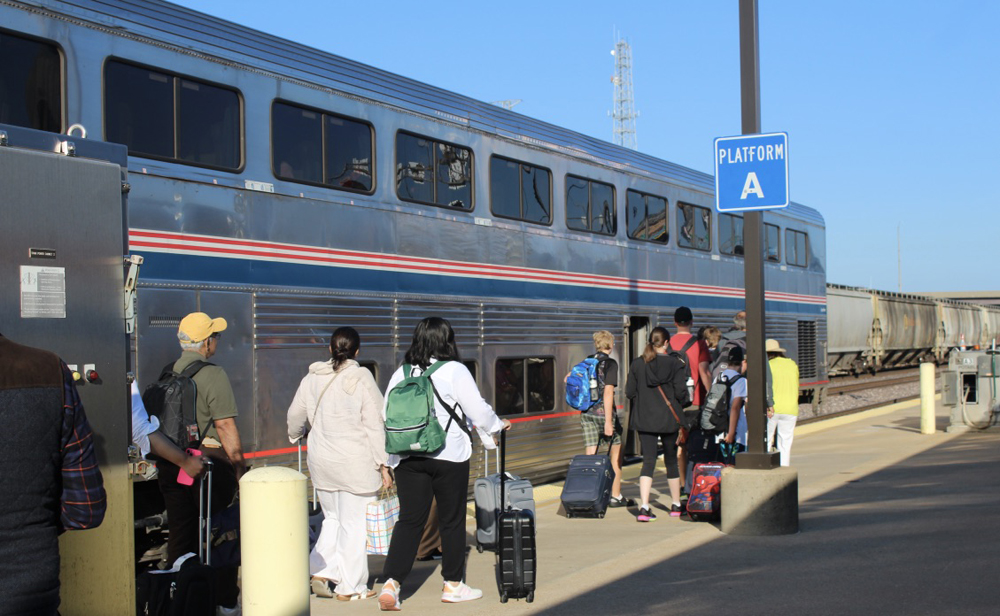
“We have a sold-out train, so if you are traveling together, please sit together,” announced a conductor, but Los Angeles-based coach attendants Amanda and Calli had already grouped single travelers with each other and families together at boarding by assigning seats in the destination-appropriate car. Groups included three scout troops headed to Raton, N.M., for the Philmont Scout Ranch and nine members of an Amish family traveling from upstate New York to Topeka, Kan. Seat checks displayed in the third, “shorts” coach out of Chicago showed passengers destined for Newton, Topeka, Lawrence, and Hutchinson in Kansas; Kingman, Ariz.; La Plata, Mo.; and Raton (one of the scout troops). Passengers for Albuquerque, Los Angeles, and Kansas City, Mo., were given space in the other two cars.
A Superliner coach seat’s pitch of about 50 inches (airlines typically average 32 inches) provides legroom to stretch out compared to state-supported or Northeast Corridor trains or even single-level Amfleet II long-distance coaches in the East. At night, this allows enough room to pull out a folding leg rest from under the seat. Packing a pillow increases overnight comfort.
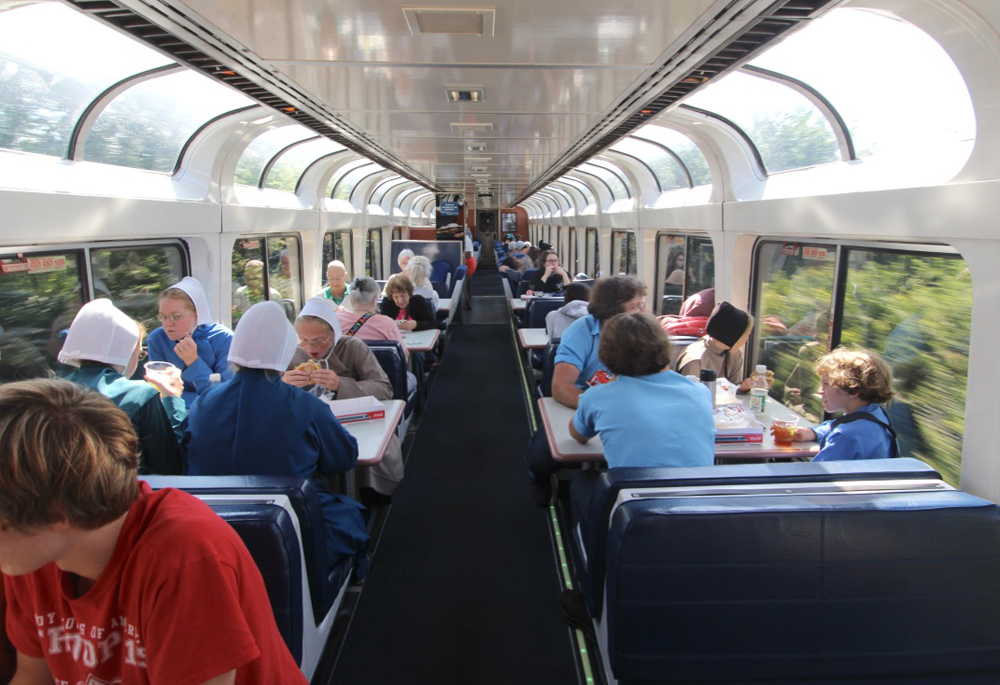
Though Superliner coaches are comparatively roomy, there is no substitute for spaciousness in the Sightseer Lounge that invites camaraderie not possible anywhere else on the train or other travel modes. With sun streaming overhead as trees and landscape rush by ceiling-to-table windows, the car acts as a welcome gathering place away from the regimentation of seats.
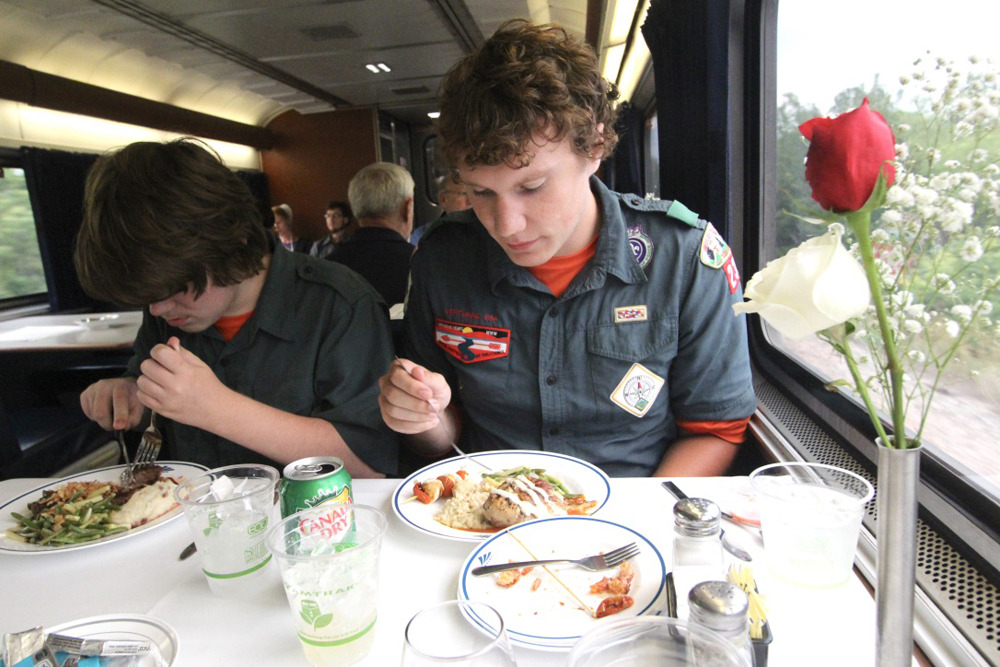
The same can be said for the Chief’s dining car. Coach customers are invited to walk there after meals-included sleeper passengers are given their choice of seatings. The flat $45 pay-in-advance pricing at dinner may be steep by historical standards, but Alexis, the lead service attendant, is quick to note while taking payment that the cost with alcoholic beverage included is on par with Los Angeles and Chicago restaurants (breakfast is $20, lunch $25, and all kids’ meals are $20). The tab didn’t deter two scouts from an Indianapolis suburb. Though not joined at dinner by their compatriots, they devoured the flat iron steak and pan-roasted chicken breast entrees and lauded the cocoanut shrimp appetizer.
Texas Eagle
Overcrowded without an escape
Four other Superliner-equipped long-distance trains operating west of Chicago that offer traditional dining car meals, the California Zephyr, Empire Builder, Sunset Limited, and Coast Starlight, also have Sightseer Lounges. The City of New Orleans usually sports a Sightseer but sleeping car passengers are served “flexible” meals; coach passengers are kept out of the diner, if the train has one.
The Texas Eagle used to offer a separate dining car and lounge, two sleeping cars, and a transition sleeper. Amtrak management, however, reduced it three years ago (the pandemic, you know) to one sleeping car, one standard coach and one baggage coach between San Antonio and St. Louis, along with a “Cross Country Cafe” combination diner-lounge. A third coach operates between Chicago and St. Louis, since the Eagle augments Lincoln Service offerings.
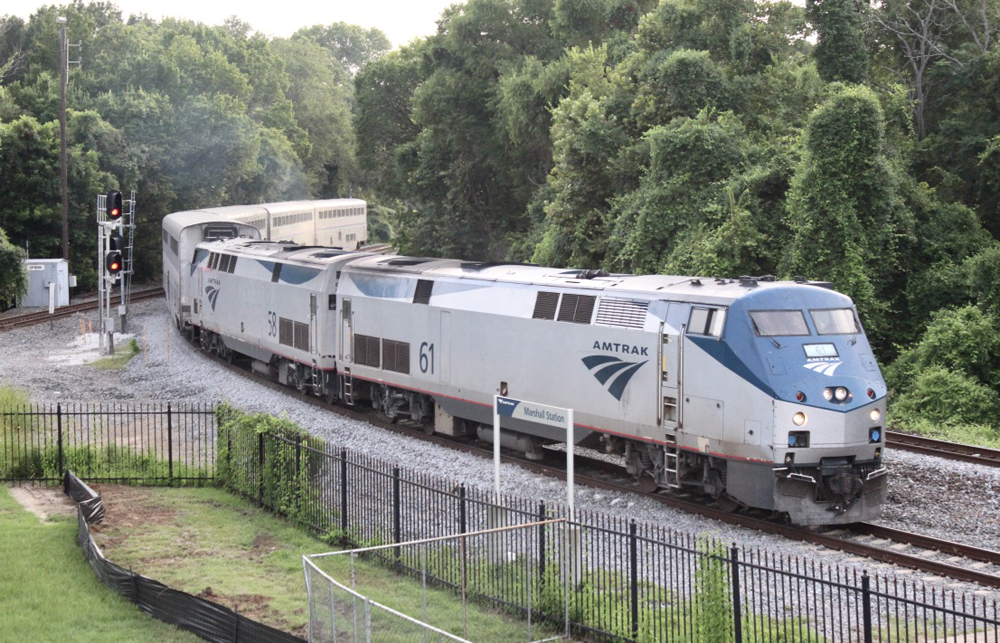
The current arrangement is completely inadequate. Even with the extra St. Louis-Chicago coach, Trains News Wire observed that the train leaving Marshall, Texas, on July 21 had been sold out for more than a week in advance on the Bloomington-Normal, Ill.-Chicago segment, choking off potential demand for many long-distance trips. This is not unusual. There were enough Chicago-bound passengers at St. Louis to completely fill the extra coach.
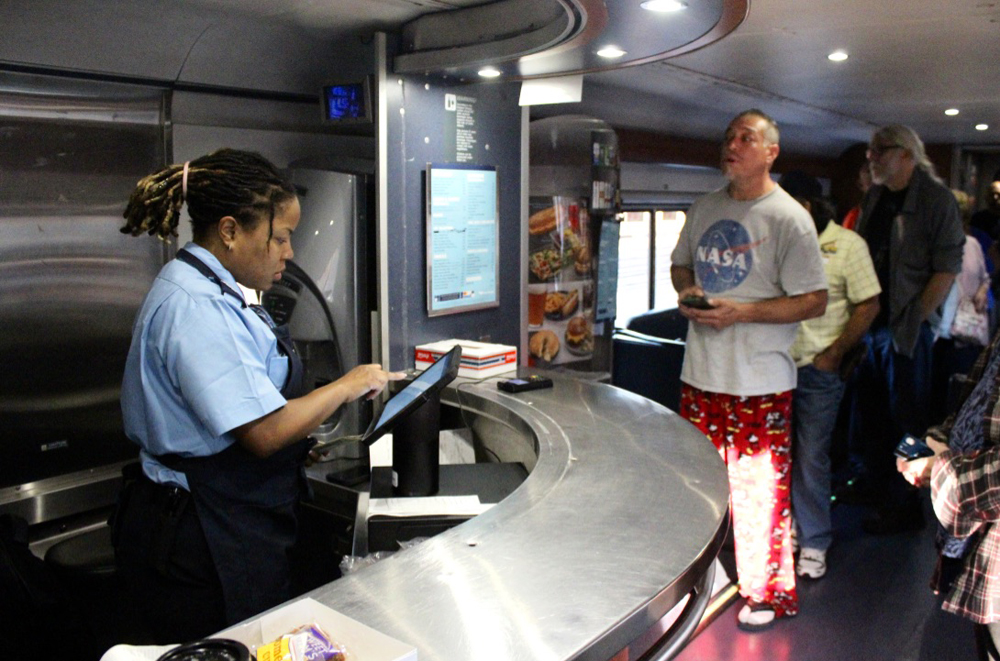
But the biggest drawback is the constant crush of passengers attempting to frequent the cafe car. For more than an hour both at dinner and breakfast, the line stretched most of the way through the adjacent coach while Megan, the lead service attendant, completed transactions and secured the food. She did get some preparation assistance from the diner’s “chef,” who otherwise solely served sleeper passengers meals in a bowl. Despite the never-ending crush, Megan maintained a patient, unflappable demeanor and passengers in the line respected the challenge she faced. Approaching Chicago, a fellow crew member announced that this was Megan’s first solo trip following training. Bravo!
Space was available for seating in the “diner” section of the Cross Country Cafe, but people purchasing meals and drinks after standing in line were not allowed to sit there, and passengers were warned that they had to return to coach seats after eating if they did manage to find space in the small cafe section.
This Texas Eagle downgrading is reversible if management has the will to devote enough resources to restore a Sightseer lounge and more capacity to the train. It serves more large intermediate population centers than the Southwest Chief or any other western overnighter except perhaps the Coast Starlight. Until that happens, Amtrak is leaving revenue and passenger comfort on the table.
Share this article