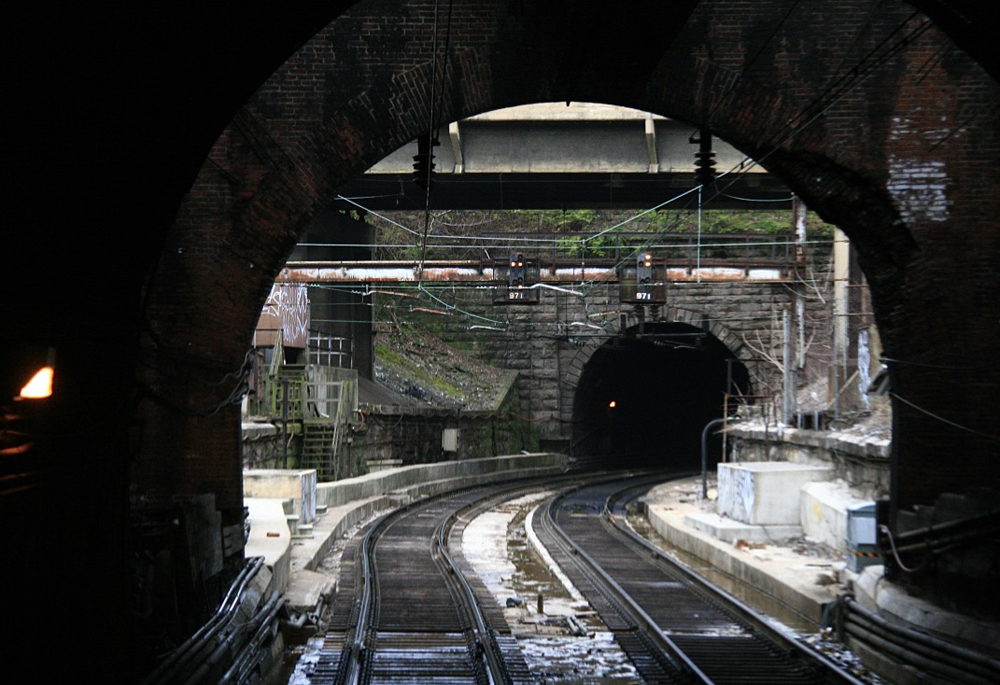
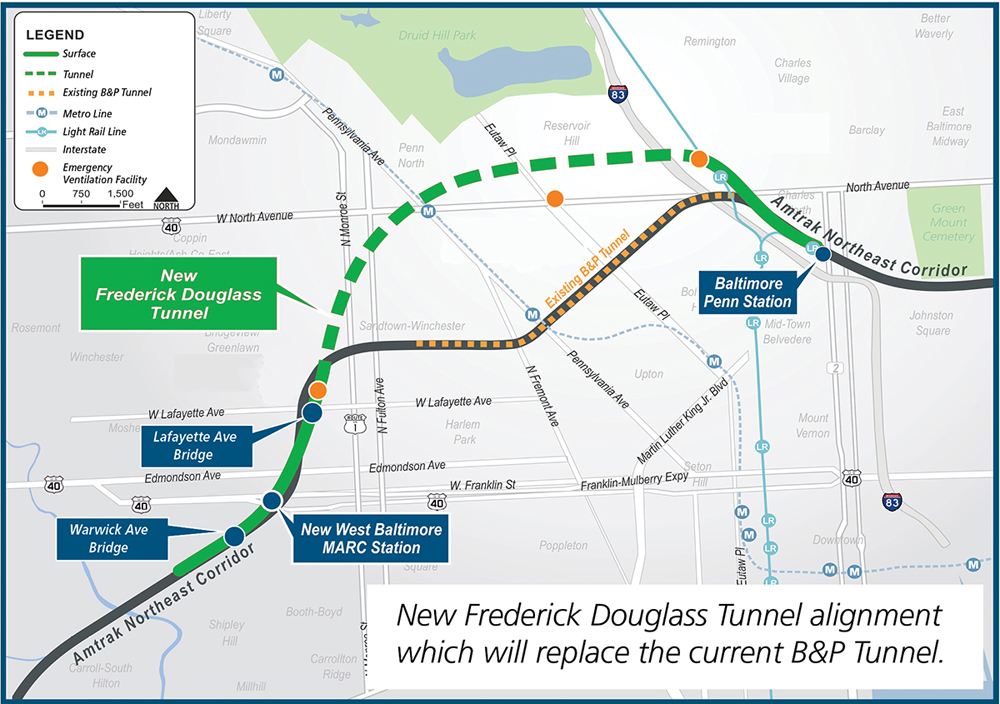
WASHINGTON — The Federal Railroad Administration is seeking input from tunneling firm Boring Co., founded and controlled by Elon Musk, regarding construction of a new Northeast Corridor rail tunnel in Baltimore for which Amtrak has already begun construction activities.
The news comes shortly after Amtrak’s decision to eliminate or not fill 450 managerial positions.
Earlier this week, the New York Times reported FRA officials were told Boring Co. representatives said the company could build the $8.5 billion Frederick Douglass Tunnel more cheaply and efficiently than what Amtrak has planned. The passenger operator had selected contractors more than a year ago through competitive bidding.
Replacement of the existing low-speed tunnel, dating from 1873, has been contemplated for decades, but finally moved forward with funding from 2021’s Infrastructure Investment and Jobs Act. With that money secured, Amtrak last year awarded a contract to the Kiewet and J.F. Shea construction consortium [see, “Amtrak selects builder …,” Trains News Wire Feb. 6, 2024]. Undertaking such a project in an urban area requires years of environmental assessment and community outreach, as described on an Amtrak website dedicated to major capital projects.
It is not known whether the existing construction or planning efforts will be impacted by the new FRA outreach to Boring — or by Amtrak’s announcement last week that it is eliminating of 450 managerial positions, 200 of which had been unfilled [see “Amtrak trims management workforce,” News Wire, May 7, 2025].
As the Times report notes, Boring’s involvement raise questions about conflict of interest, given Musk’s involvement in the Trump administration’s cost-cutting effort dubbed the Department of Government Efficiency, as well as his corporate roles including leadership of auto company Tesla. The tech billionaire has also been critical of Amtrak and called for its privatization [see “Musk puts privatization target on Amtrak,” News Wire, March 6, 2025].
News Wire asked Amtrak to confirm details of the Times report, but was directed to the press offices of the Federal Railroad Administration and U.S. Department of Transportation. Neither agency acknowledged receipt of the inquiry or responded as of today (May 15, 2025).
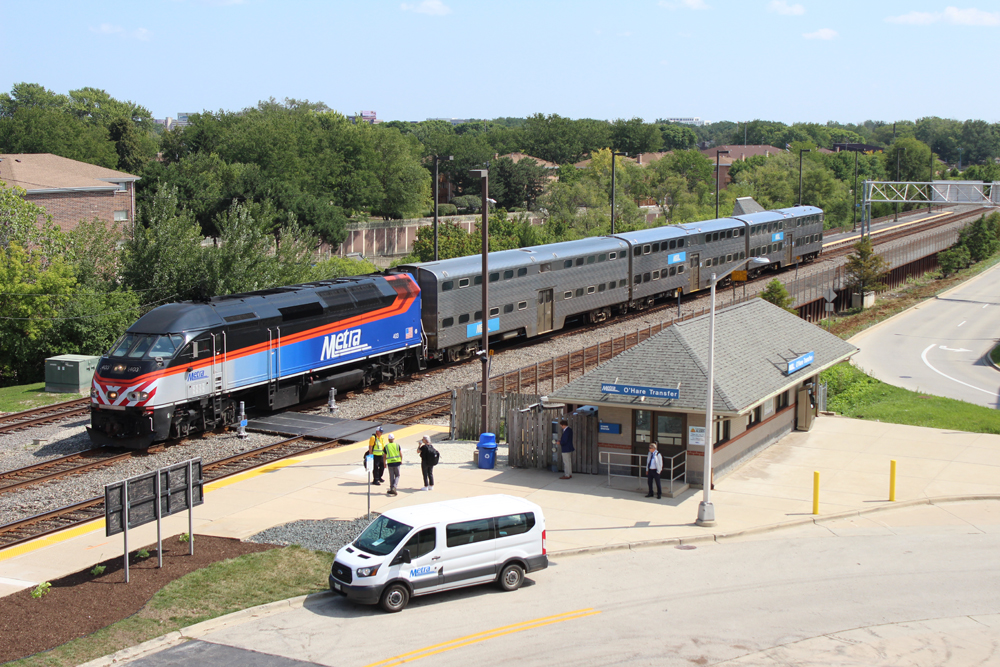
Few projects proposed by the Boring Co. have moved beyond the theoretical stage, and the firm’s involvement — then abandonment — of proposals has precluded other investment options. In 2018, then-Chicago Mayor Rahm Emanuel said the city had reached a deal with Boring to build underground twin tunnels between downtown and O’Hare International Airport at the company’s expense. How the tunneling would be accomplished was never specified, but Boring claimed electric vehicles would whisk passengers to their destinations in 12 minutes.
The announcement effectively eliminated discussions of two conventional-rail alternatives: capacity upgrades to existing Metra trackage out of Chicago Union Station, and a proposal for frequent diesel multiple-unit or battery-operated vehicles on a different route. The tunnel project — questioned from the beginning for its $1 billion price tag considered unrealistically low — faded away after Emanuel left office.
Between 2017 and 2019, Boring proposed utilizing its tunneling technology between New York, Philadelphia, Baltimore, and Washington, D.C., but those plans never advanced. Boring also abandoned a proposal it made in 2020 for a 4-mile tunnel connecting the community of Rancho Cucamonga, Calif., to Ontario International Airport.
Boring’s plan to build an underground Las Vegas network for Tesla electric vehicles garnered local funding and approval for 68 stations and 104 miles of tunnels in 2023. An initial 0.8-mile “people mover” serving the Las Vegas Convention Center was approved in 2019 [see “Musk’s company receives contract …,” News Wire, May 23, 2019] and opened in 2021. But less than 2 miles have been built since, and the news organization ProPublica reported earlier this year on concerns over a lack of regulatory oversight for the project.
— Trains Senior Editor David Lassen contributed to this report.
Share this article