





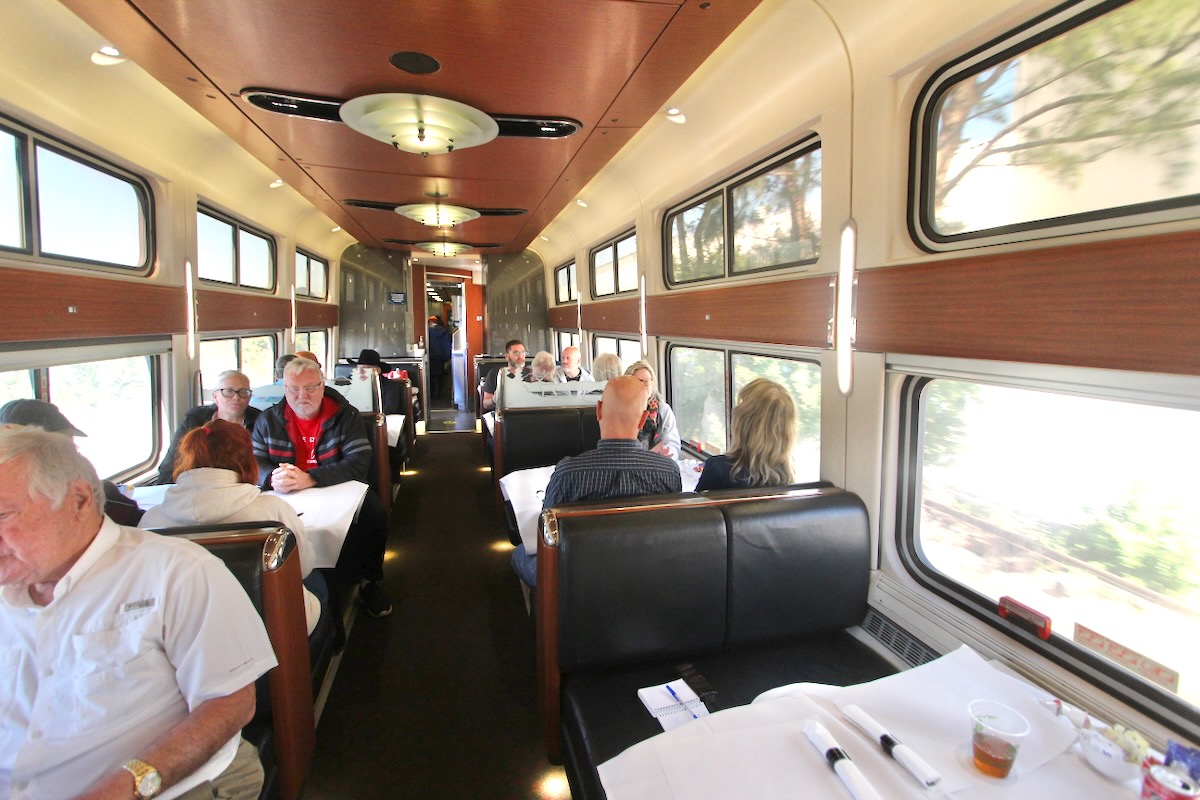
WASHINGTON — Amtrak announced last week that new lunch options have been introduced on five overnight trains offering so-called flex meals — the premade dishes reheated on board rather than prepared in the dining car. That’s good news for sleeping car passengers who have been offered the same entrees for both lunch and dinner since the flex concept replaced traditional dining as a cost-cutting measure beginning in 2018.
However, it also signals management’s intention to only marginally improve an inferior status quo rather than embrace hospitality strengths that set passenger trains apart from “stay-in-your-seat” travel options. Not growing revenue by enticing coach patrons to purchase meals in a dining car’s welcoming and unique environment continues to be a missed opportunity.
Lunch additions
Travelers in sleeping cars aboard the Chicago-New York Lake Shore Limited and Cardinal; New York-New Orleans Crescent; Chicago-San Antonio Texas Eagle; and City of New Orleans to and from Chicago have been offered the same “flex” meals-in-a-bowl choices up to three times during a trip, depending on the duration of their journey.
The new flex menu adds a ham sandwich, turkey sub, Greek salad, hot dogs, and an Angus cheeseburger. Previously confronted with an identical selection at lunch and dinner, many sleeping car passengers chose to flee to the train’s café car for some of these items. The variety of café offerings has improved lately, though individual pizzas have been dropped.
The press release announcing the menu change says, “Flex Dining offers guests the flexibility to eat at a time that suits them, whether that’s in the dining car or by having their meal delivered to their room by an attendant.”
That flexibility rarely occurs, because thinly staffed trains can serve meals only at set times. For instance, half of the Cardinal’s Amfleet II café has been closed to coach passengers when flex meals are offered to sleeping car passengers — the train runs without a diner — while Amtrak employees exclusively occupy the other half of the car all day.
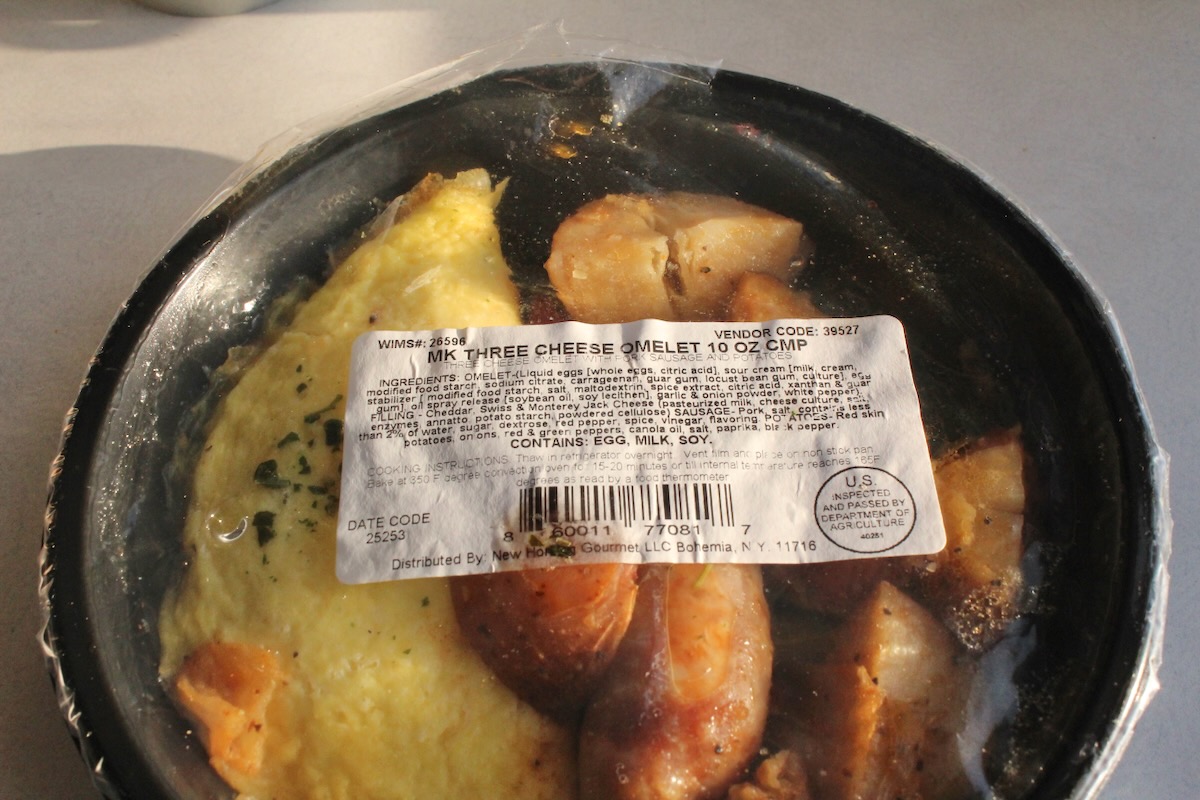
The City of New Orleans’ lone dining car attendant heats food, delivers meals, and cleans tables; no one assists. On a recent trip into Chicago with a limited serving window before arrival, she took breakfast reservations the previous evening. If you didn’t show up at the prescribed time, someone came looking for you.
It’s understandable that under these staffing conditions, presentation suffers. Food is usually delivered in the container it is heated in, often with finger-burning wrapping intact. The exception is on the Lake Shore, where flex food has been plated separately for the past year. Though a worthy enhancement, there has been no indication that this common-sense upgrade will be extended to other flex meal trains, perhaps because it would require adding another employee.
Better options
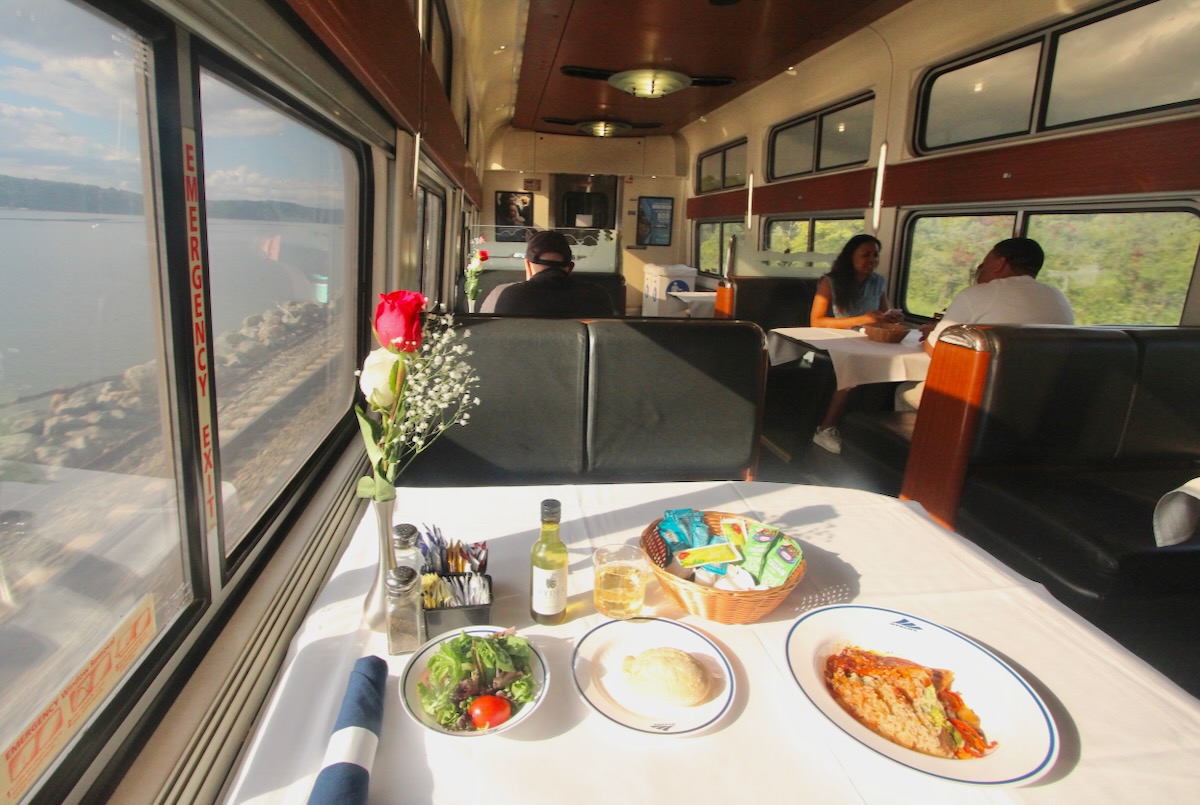
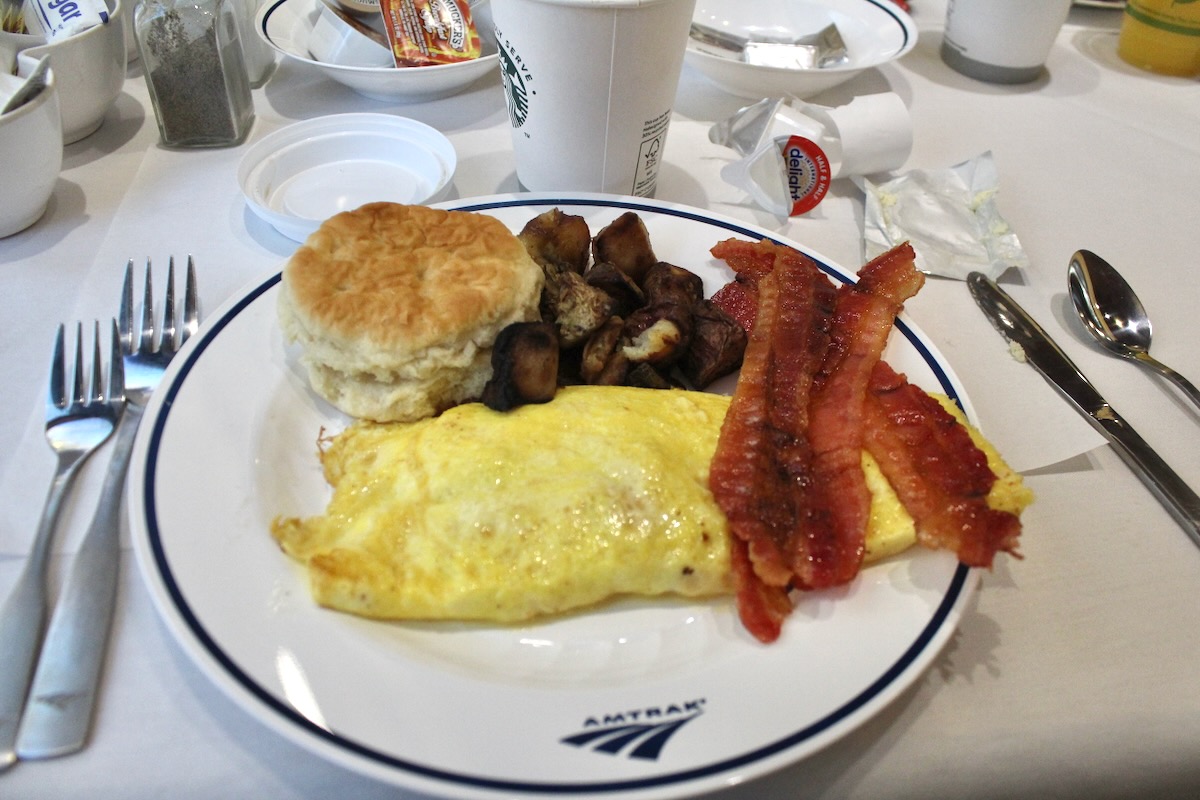
Expanding the traditional dining model would allow superior menu choices: freshly prepared French toast and omelets at breakfast; grilled patty melt and grilled cheese sandwiches, chili, and loaded baked potatoes at lunch; and attractively presented steak, seafood, and chicken dishes at dinner. You know, meals anyone would expect to order at a local restaurant instead of a grocery store.
A recent trip on the Floridian was instructive. Staffed with only a chef in the kitchen and one lead service attendant, the very busy train with three sleeping cars and four coaches was able to offer a full menu in its Viewliner dining car. Even with only these two dining room employees, the hard-working LSAs out of both Miami and Washington, D.C. (where onboard crews change) invited coach passengers to purchase $20 breakfasts, $25 lunches, and $45 dinners after sleeping car occupants’ meal reservations were taken.
Admittedly, not every dining car captain feels the need to go to all this trouble. And on higher-capacity, Superliner-equipped trains, reduced staffing means there is often simply not enough time to feed coach customers during certain meal periods, so they get shut out.
The universal lack of servers dramatically slows dining car throughput for both flex and traditional dining. On the Chicago-bound Floridian, it often led to 45-minute delays between order taking and food delivery at lunch and dinner.
Out of Washington, though probably not authorized by existing union contracts, both a sleeping car attendant and conductor helped to clear tables. Except for President W. Graham Claytor Jr.’s insistence that Auto Train employees work multiple jobs, for more than 50 years Amtrak management has never seriously pursued solving restrictions on onboard division of labor.
Increased staffing to accommodate traditional dining expansion would clearly cost more than continuing the flex offerings. The company’s stated goal of breaking even by 2028 [See “Amtrak grant request touts ‘operating profitability’ …,” Trains.com June 16, 2025] could be a deterrent or rationale for delaying significant onboard service upgrades.
Other initiatives could also include adding a Viewliner diner and a second full sleeping car to the Cardinal’s two trainsets. Presently 16 of 25 diners and 50 of about 70 Viewliner sleepers are regularly assigned to eastern single-level trains so the cars are on the property, if not currently operational. As long as the equipment doesn’t remain mothballed, there is an adequate margin allowing for standby Viewliners distributed around the system.
Boldly addressing such opportunities could potentially deliver positive bottom-line financial outcomes while having a dynamic impact on customer satisfaction. Adding lunch items to flex menus is a start.
— To report news or errors, contact trainsnewswire@firecrown.com.

Flex-dinng just sounds like a different rehash of airline and chain restaurant food. Saves money and annoys customers. If you’re preparing meals offline it wouldn’t seem to be that much money or effort to at least do route or region specific menus. The pre-packagedbdining choices for sleeper passengers on the Cardinal’s Amfleet lounge/diner in 2002 or so sucked and seems worse now. I used to work for a sketchy psuedo airline in the 90’s that took everything but the coffee makers out of the galleys and even some our outsourced crap was more original.
I would have preferred the flex salmon meal instead if the fresh meal of bacon and eggs in the pictures.
Gross.
Nobody wants to eat some food that’s been reheated in a plastic container. An advantage of passenger rail is fresh food that’s not been reheated in plastic. Amtrak has to do better if they want people to care.
Must say in respect for Mr. Johnston’s very capable reporting and other readers’ opinions: My two or three annual NY-Chicago Lake Shore Ltd. sleeping car round trips have proved to change my negative outlook in regard to “flex dining.” Since the early 1970’s I’ve enjoyed sleeping car accommodations and “traditional dining” across America in all their aspects. On western transcons, I find it perfect and indispensable. Will also point out that those trains largely retain the longtime schedules that afford such an experience.
However, this no longer applies to some eastern ‘overnighters,’ most notably the eastbound Lake Shore schedule. Back in the day, traditional NY-Chicago overnight schedules understandably and prominently featured full dining car service. With ‘Flex’ service, sleeping car passengers — now importantly, increasingly and wonderfully of a younger demographic — are offered just that: a flexibility that seems to accord with their individual preferences. This is the ‘digital’ era, not that of the long gone Broadway Limited. Additionally, the Viewliner dining room also serves as an all-day refuge, lookout lounge, and bar lounge; not bad to this 70 year old’s outlook. Give it a chance — it’s not perfect and it’s certainly not traditional, AND the [first class fare paying] ‘kids’ enjoy it!
Until Long Distance trains are separated from the NEC and state supported commuter service, with their own Management and not the NEC Hacks that could care less about the travel component of Amtrak, food service and just service in general. LD service will continue to suffer at the hand of managers who have no clue of what it means to grow the customer base, only what it means to purchase cars with windows you can’t see out of because they are blocked and filling the same stuffed to the gunnels. Amtrak LD service is a relaxing way to travel and see this great country which you can’t do from 36,000 feet or on a bus. With good food and a nice place to sleep, people will pay for the opportunity yet Amtrak makes no attempt or a half-hearted one to keep the LD trains rolling and why? Because it might cut into their NE centric bonuses. Separate the two service now and let them grow based on the needs and wants of the respective passenger bases. My wife and I are planning to take the Rocky Mountaineer service from Vancouver to Calgary and from Denver to Albuquerque. Why? Because Amtrak doesn’t offer anything as good with their myopic view of what customers want: Cheap, low cost food and an expensive bed because they don’t allow more people to ride. Maybe the Long Distance Service should be bid out to someone who knows what to do because Amtrak management has proven they don’t.
Enjoy your trips but do you really mean Denver to Albuquerque?
My bad… it i’s the new Rocky Mountaineer “Red Rocks” train Denver to Moab and SLC. Eventually they would like to route it to Santa Fe but that is down the road a bit… but in the works.
VINCENT — Have you and yours ridden the Canyon Train out of Canon City Colorado? Best meal ever. Have to admit was an indulgence to drive 150 miles or so from Denver NE suburbs to Canon City for a ten-mile train ride.
Which brings up the question … if a tourist train can serve a gourmet meal and drinks on a ten-mile ride, there’s lots of airlines and railroads that don’t feed you anything on much longer trips.
I just spoke to the Rocky Mountaineer marketing department. They are working with Union Pacific and BNSF to utilize the UP (nee D&RGW) BNSF Joint Line from Denver south through Colorado Springs to La Junta, CO, over Raton Pass southwest on BNSF/Amtrak (Southwest Chief Line with bus to Santa Fe) and thru to Albuquerque, NM. They said it would only be two trains a week and that it should be very doable. They hope to begin the combined trip from Denver to Santa Fe (& Albuquerque?) within two years.
I guess anything is “doable” for a price.
Yes, but it only goes as far as Parkdale. It is a slow starting ride but once you get to the beginning of the Royal Gorge, it s quite breath taking. They serve dinner which was very good and you can get out at the “Hanging Bridge.” The UP line over Tennessee Pass from Parkdale on is still in place but out of service and “railbanked” although their has been talk of commjter service. It has been a target of copper thieves as nearly all of the signaling has been ripped out and much of the signals themselves stolen. There is a You Tube Series made by “Speeder” type vehicles (homemade hot rod types) that begin near Minturn and go through the tunnel which is nearly under a foot of water, all the way through to Parkdale, passing old gold, silver and lead mines along the way, some that were quite extensive as well as some fairly large semi abandoned towns like Red Cliff which are undergoing somewhat of a revival as a tourist towns. The video has 32 different segments in order and takes quite a bit of time to watch…
I’ve been sidetracked by this discussion of Rocky Mountaineer (now “Canyon Spirit” in the US per their website) operating down to Albuquerque. I wonder how much they’re paying for the operating slots on the heavily-trafficked Joint Line and the barely-trafficked Raton Pass line? I also wonder if there’s an opportunity for Sky Railway (formerly Santa Fe Southern) to provide a rail connection with the train at Lamy instead of a bus. Plus all the lesser questions, like where they plan to layover/service the train, mid-trip stops, new equipment, clearances for Goldstar cars, etc. I have to wonder if this new route is partly motivated by CN declaring its intent to mothball the former BC Rail line that one of their routes uses.
If you don’t mind, do you have some sort of print or online source for the new route being planned? I know some other people who would be interested in learning more about this venture. If not then I guess I could try emailing their marketing department myself.
Just received my Burlington Bulletin from the BRHS. It featured dining car me us from the beginning of dining car service to the BN merger.
The variety of menu selections back then puts Amtrak to shame.
Even the food in the Auto Train dining car, the closest thing to traditional dining that Amtrak offers, is not that good. The staff tries hard to please, but they are not given much to work with. Amtrak’s food service, for the most part, is a forced, stingy, grudging, decidedly ungenerous affair.
There is absolutely no reason for Amtrak to improve its meal service. The capacity constrained trains cannot get more passengers that would be attracted by better meals. So why spend the money to improve the meals?
Because they could sell it, that’s why. By keeping trains small, the managers of Amtrak lose the one item of purchasing power they have: VOLUME. When you buy more you pay less. And it doesn’t take a mathematical genius in calculus to understand it either. And if you can sell the space but don’t because of the “we don’t have capacity” excuse, then you are missing out on more volume, especially when you have the cars to provide it if you would only repair them.
Counterpoint: Try not embedding the cost of meals into Amtrak tickets. I personally find Amtrak food disgusting and would much rather bring my own. It’s really not hard to bring along decent food for an overnight trip, with or without a small soft-sided cooler. Drives me crazy that I’m forced to pay for overpriced food I don’t want. And making it optional to reserve/order food would give the dining cars a better sense of how much they should actually have on hand, along with putting pressure to actually improve the offering instead of abusing their captive audience.
Especially if you have access to a microwave!
Send Amtrak senior management then on board employees for meal preparation and customer service training with Qatar Airways, Cathay Pacific or Singapore Airlines. They need it desperately.
Can’t say about now. Years ago Amtrak chefs (then on-board) were trained at a culinary institute in the Hudson Valley, New York State. This according to an article in TRAINS MAG at the time.
Cathay Pacific is a fine airline, having flown it many times between Taipei and the mainland…