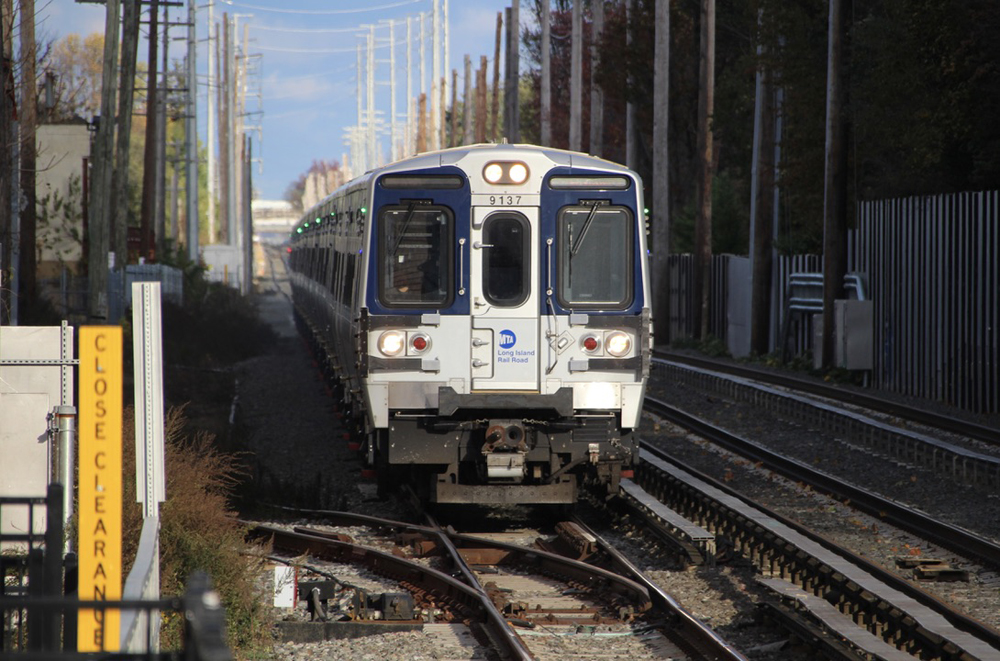
WASHINGTON — A second Presidential Emergency Board has sided with a coalition of unions in their ongoing contract dispute with the Long Island Rail Road — but the LIRR rejected the board’s recommendation, setting the stage for a strike or lockout in May.
The board was, under the rules of the Railway Labor Act, required to select either the unions’ last offer or that of the LIRR as the most reasonable. On Monday, March 16, it chose the unions’ offer, the Brotherhood of Locomotive Engineers and Trainmen said. The PEB also turned down the LIRR’s request for major changes to work rules, saying LIRR’s “insistence of all its work rule changes, in our view, makes its Final Offer the less reasonable of the two, regardless of the respective GWIs [general wage increases].”
The unions have reportedly sought raises of 16% over four years, while the LIRR has offered 9.5% over three years, a deal accepted by its other unions. The five unions in the coalition, the BLET, Brotherhood of Railroad Signalmen, International Association of Machinists and Aerospace Workers, International Brotherhood of Electrical Workers, and Transportation Communications Union, represent about 7,000 workers, a majority of the LIRR’s unionized employees.
The first Presidential Emergency Board to address the dispute recommended raises of 14% (uncompounded) over four years, retroactive to 2023, as well as a $3,000 lump-sum payment [see “MTA rejects Presidential Emergency Board recommendations …,” Trains.com, Oct. 18, 2025].
In a press release, BLET Vice President Kevin Sexton called for a resumption of bargaining to “agree to a fair settlement that takes away the threat of a disruption in service,” while Jeffrey Klein, general chairman of the IBEW, said the PEB report “confirms that labor acted responsibly during this process and deserves a fair contract.”
The MTA had a starkly contrasting view. Anita Miller, MTA chief of labor and employee relations, said in a statement reported by WPIX-TV that the MTA has made a “common sense” offer.
“These unions have hidden from the normal give and take of collective bargaining,” Miller said. “They are the highest-paid railroad workers in the nation but have refused the same significant wage increases the vast majority of their colleagues accepted — and repeatedly refused to negotiate.”
The release of the Presidential Emergency Board’s report triggers a 60-day cooling off period for further negotiations. If there is no agreement by May 16, the end of that period, the unions are free to strike or the MTA could lock them out.
— To report news or errors, contact trainsnewswire@firecrown.com.
Share this article