NEW YORK — Traffic in Manhattan’s Central Business District was down 7.5% in the first week of congestion tolling compared to the same week a year ago, the Metropolitan Transportation Authority said today (Monday, Jan. 13), while transit ridership was up.
MTA preliminary data shows approximately 273,000 cars entered the tolling area, with a 39% reduction on travel times into the zone on all Hudson River and East River crossings and reduced travel times of 6% to 36% on trips within the tolling zone. Some bus routes saw reductions of up to 7 minutes in travel time.
“The early data backs up what New Yorkers have been telling us all week – traffic is down, the streets feel safer, and buses are moving faster,” MTA CEO Janno Lieber said in a press release. “Positive change wasn’t guaranteed, and it’s exciting to hear commuters – including drivers – talking about how much time they are saving since the program kicked off a week ago.”
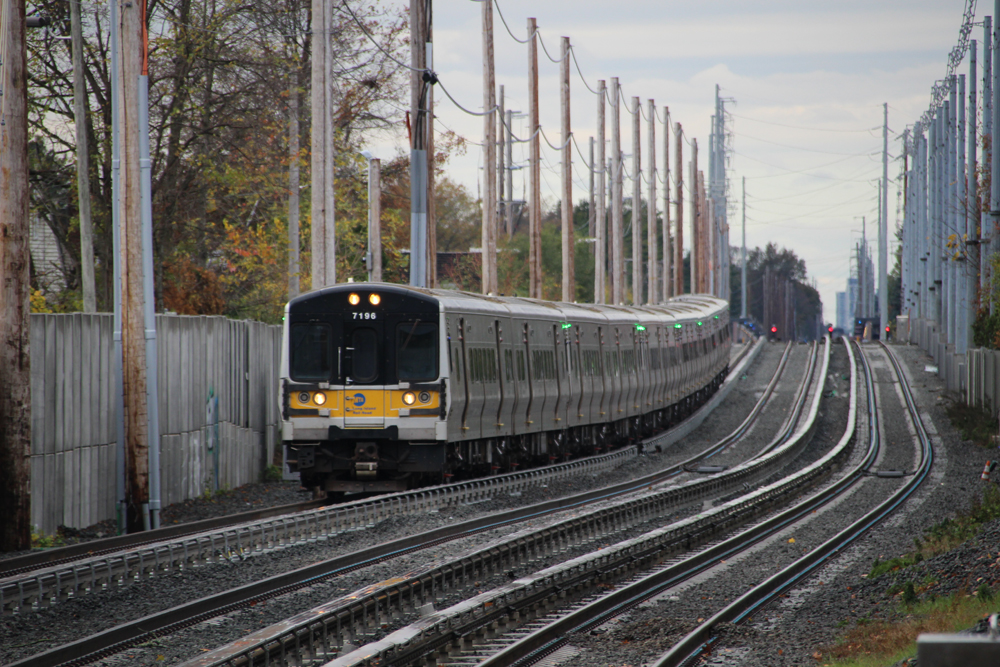
The MTA did not offer any initial information on transit ridership, saying any trend “is difficult to detect because the MTA system is so large and already carries the vast majority of those who travel to Manhattan.” However, the news site amNY.com offered some figures suggesting an increase in ridership on the Long Island Rail Road, Metro-North Railroad, and New York subways.
The news site found that on Jan. 8-9 — the first two dates offering a weekday-to-weekday comparison of ridership since tolling began — data from New York state’s open portal indicates that on the LIRR, ridership was 239,444 on Wednesday, Jan. 8 of this year, compared to 208,960 on Monday, Jan. 8, 2024. That represents a 14.6% increase. The next day, Jan. 9, saw 229,804 riders, a 7.5% increase compared to 213,699 on Tuesday, Jan. 9, 2024.
On Metro-North, increases were 13.8% on Jan. 8 (209,550 this year vs. 184,150 in 2024) and 5.3% on Jan. 9 (198,894 this year vs. 188,888 in 2024).
The site had previously compared initial New York subway ridership, finding figures for Jan. 5-7 of this year were up more than 34% from the same period in 2024, although weekend-to-weekday comparisons complicate the data. It did note that the first day of congestion pricing, Jan. 5, saw 318,460 more riders than the first Sunday of 2024, a 21.65 increase.
On NJ Transit, anecdoctal evidence reported by several sites, among them NJ Spotlight News, is that trains into New York were more crowded during the first days of congestion pricing, although the agency said its ridership had not notably increased. Spokesman Jim Smith told NJ Spotlight that NJ Transit will continue to monitor the figures. He also said “it is important to note that prior to congestion pricing, many NJ Transit trains and buses during peak periods were already at or above pre-pandemic levels.”
The much-debated start of congestion pricing, which charges a $9 toll for most vehicles entering lower Manhattan during peak periods, will generate funding for Metropolitan Transportation Authority capital projects. Officials have estimated the program could raise $500 million to $800 million annually.
— Updated at 7:05 p.m. CT with MTA information on traffic in tolling zone.
Share this article