





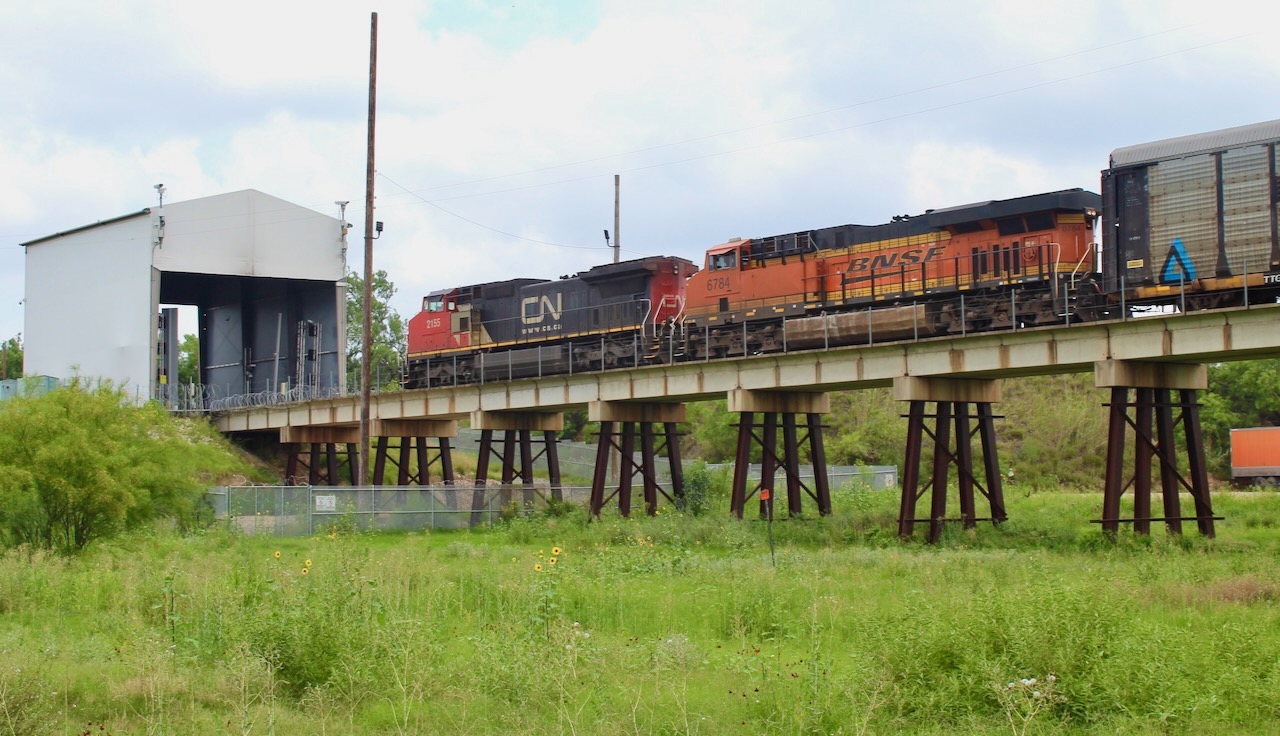
WASHINGTON — BNSF Railway’s bid to have federal regulators review Union Pacific’s compliance with conditions imposed as part of the 1996 UP-Southern Pacific merger is nothing more than a publicity stunt, UP told the Surface Transportation Board last week.
On Nov. 28 — three weeks before UP and Norfolk Southern submitted their merger application — BNSF encouraged the STB to take a look at what it claimed were UP’s longstanding efforts to skirt conditions that were designed to preserve rail competition in the West.
But UP says BNSF’s complaints have no merit.
“As part of a public relations campaign against the transformative potential of the UP/NS merger, BNSF chose this moment to ask the Board to reopen the three-decade-old settlement agreement the Board imposed as a condition on its approval of the UP/SP merger,” UP told the STB in a Jan. 7 filing. “Whatever its merits as a PR stunt, BNSF’s Petition provides no basis for the Board to revisit the terms of the Restated and Amended Settlement Agreement (RASA).”
Prior to UP’s acquisition of the ailing Southern Pacific, BNSF and UP negotiated a settlement agreement that granted BNSF trackage rights over UP and SP routes in order to provide shippers with competitive options, particularly at locations that were served by both UP and SP.
The settlement agreement was made a condition of the STB’s approval of the UP-SP merger.
BNSF argues that UP has systematically sought to obstruct and diminish competitive options [see “BNSF asks STB to review…,” Trains.com, Dec. 1, 2025].
UP told the STB that the agreement is working as intended. “BNSF enjoys unprecedented access to customers on Union Pacific lines and handles substantial amounts of traffic under merger-related access rights. BNSF provides no basis for the Board to reopen the conditions imposed on the UP/SP merger,” UP said.
The settlement agreement has successfully preserved competition, UP argues, citing 80%-plus approval rates for BNSF customer access requests since 2009, along with evidence that most disputes are resolved quickly and privately.
UP contends that occasional disagreements are normal between competitors and were anticipated by the board when it approved the merger conditions. And the railroad told the STB that there were instances where it denied BNSF access requests in good faith because UP did not believe they applied under the terms of the settlement agreement.
The board has previously set a high bar for any request to modify the merger conditions, UP says, noting that they require evidence of merger-related harm, specific remedies, and an explanation of why remedies are necessary.
“But BNSF’s Petition meets none of these requirements,” UP told the board.
— To report news or errors, contact trainsnewswire@firecrown.com.


I’m still waiting to see the UP/SP merger benefits. Most of the ones mentioned were never met. The merger should be revoked and UP forced to sell SP.
I bet TRAINS is fuming.. because their precious UP is getting push back. We already know TRAINS, your disgustingly bias and in love with UP along with an increasingly shi++y magazine.
The SP merger into UP should never have been allowed in the first place. It should have had a Chrysler-like bailout and been kept as a competitor. This is a clear illustration of how attaching conditions to a merger just doesn’t work: they are not self-enforcing, and become scofflaws. “Trust Buster” Theodore Roosevelt would be appalled at what has become of the antitrust laws.
Absolutely Dale! Competition is king!