





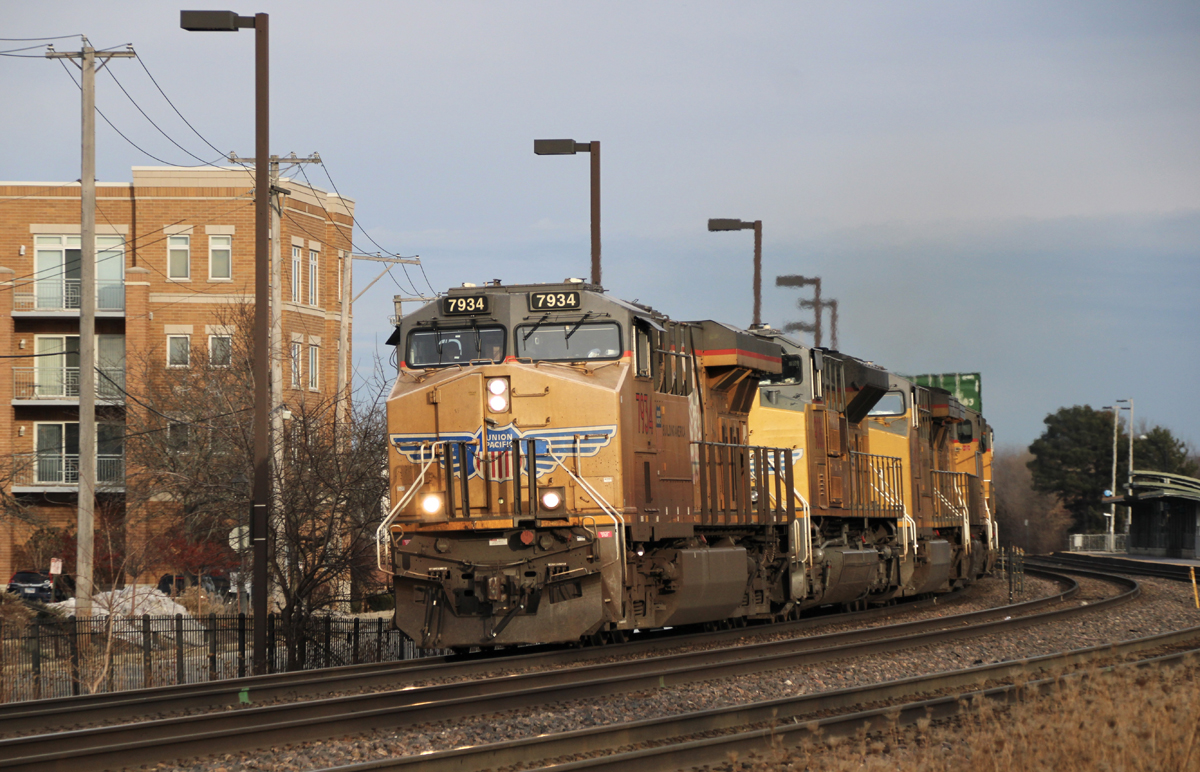
OMAHA, Neb. — The 6,692-page merger application that Union Pacific and Norfolk Southern submitted to federal regulators last week underscores the benefits of the first U.S. transcontinental merger, UP CEO Jim Vena says.
Vena came to Union Pacific as CEO in August 2023 with a transcon merger on his to-do list — and has touted the UP-NS combination as a win for customers, employees, the nation, and the economy.
The reams of data in the merger application back up those claims, Vena told Trains on Friday.
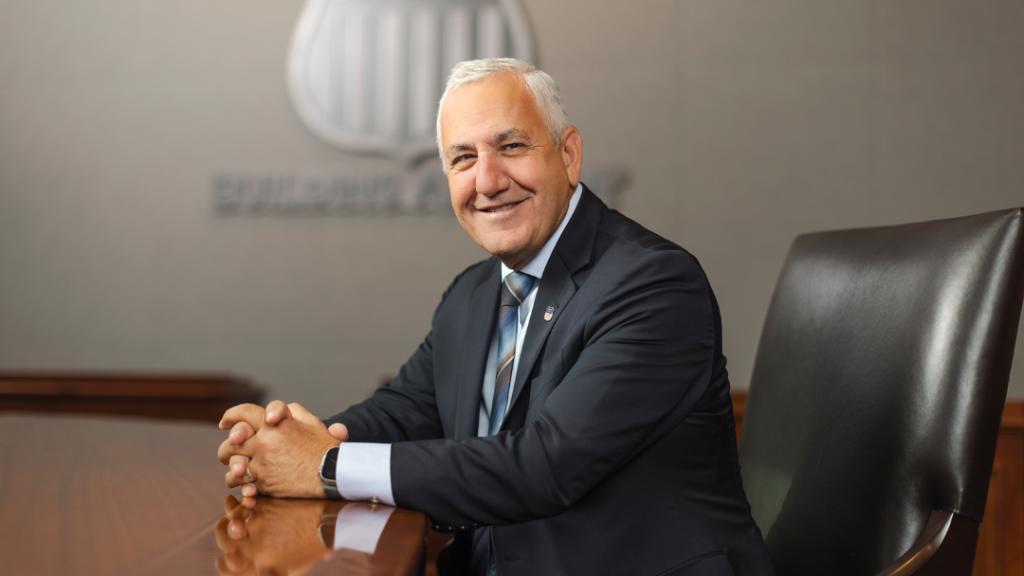
Vena read every page of the application. “What popped out was actually the strength of what’s possible for customers … with this combined railroad,” he says. “It really popped out.”
The experts UP and NS hired to delve into the growth potential of a railroad that can provide seamless, coast-to-coast service projected that within three years the combined system will take 2 million trucks off the highway annually and, in the process, bring 1.4 new million intermodal loads and 425,000 carloads to the expanded Union Pacific.
Those figures, Vena says, exceed the expectations that UP and NS had while in merger talks earlier this year. “When the experts looked at it … they showed us how it’s even better than what we thought,” he says.
Overall, the railroads are projecting 11% growth by year three of the merger, compared to the combined UP-NS traffic from the base year of 2023.
The application points out that interline merchandise traffic moving between 1,000 and 1,500 miles costs customers an average of 35% more than a comparable move involving just one railroad.
“What people miss is those handoffs — those times that you move traffic from one railroad to the other — cost you time and money,” Vena says.
The merger application includes 2,000 letters of support, some 500 of them from railroad customers. But BNSF Railway, Canadian National, and Canadian Pacific Kansas City oppose the UP-NS combo, saying it’s not necessary, will hurt rail competition, and runs the risk of widespread integration-related service failures.
BNSF last month asked the Surface Transportation Board to review Union Pacific’s compliance with conditions that the board imposed to preserve competition after UP’s 1996 acquisition of Southern Pacific. BNSF argues that UP has sought to block its right to access customers who were once served by both UP and SP. [See “BNSF asks STB to review…,” Trains.com, Dec. 1, 2025]
If the STB were to take up the case, it would put UP in the awkward position of simultaneously arguing that the UP-NS merger enhances competition while also having to defend itself against allegations that it has engaged in anticompetitive behavior related to its last big merger.
Vena finds it hard to believe that the STB would opt to reopen a deal that was decided nearly three decades ago. “It’s just not gonna happen,” he says.
“I think it’s a tactic that they’re using,” Vena says of BNSF. “The facts aren’t there.”
Any railroad, Vena says, can go to the STB and say UP is not living up to its promises to maintain competition.
“And people have done that,” he says, noting that BNSF failed to convince the STB that it should be able to access a pair of UP-served quarries. BNSF has asked the board to reconsider in light of additional information it dug up related to the quarries it wants to serve in Texas and Arkansas. [See “BNSF questions Union Pacific’s compliance…,” Trains.com, Nov. 25, 2025.]
By and large, UP and BNSF get along well, Vena says. “Most things we agree on. We operate railroads together. We operate terminals together … And we do that every day,” he says. “And then, once in a while, we disagree with what some agreement said.”
Vena expected that other Class I railroads would oppose the UP-NS merger. “They know competitively they have a competitor that’s going to be able to provide a high level of service at a better price,” he says.
Rival railroads will have to drop their rates in order to compete with UP, Vena contends. “I feel sorry for them — and not,” he says.
Other railroads are free to seek their own mergers, Vena says. “They can afford it, especially Berkshire,” he says of BNSF owner Berkshire Hathaway, which has a cash stockpile of around $350 billion.
But Berkshire Hathaway Chairman Warren Buffett has said the company is not interested in pursuing a rail merger.
The STB is reviewing the UP-NS merger to ensure that it satisfies regulatory requirements. Once the application is accepted, the board will review the $85 billion deal under tougher rules adopted in 2001, which require mergers to enhance competition and be in the public interest.
— To report news or errors, contact trainsnewswire@firecrown.com.



Vena’s “strong case” is exclusively the amount of stock a completed acquisition dumps into his pockets. Got to be in the 9 figure range. This has nothing to do with public interest, only private greed.
The public interest is irrelevant. We all know that the decision comes down to how it benefits the con-man-in-chief.
Exactly, and Vena visited him to fawn all over him.
Forget the big intermodal shipments, it’s easy enough to pass whole trains at an interchange point (which I always assumed is what they did). What about the guy who only ships a few cars a week? How will this improve his service and contain his costs?
Very true Mr. Findlay👍👍👍