Freight Class I STB proposal would make it easier for shippers to reach a second railroad

STB proposal would make it easier for shippers to reach a second railroad

By Bill Stephens | January 7, 2026

The board wants to repeal 1985 regulations it says have stifled competition by making it harder for shippers to obtain reciprocal switching, through routes, and through rates

Email Newsletter

Get the newest photos, videos, stories, and more from Trains.com brands. Sign-up for email today!

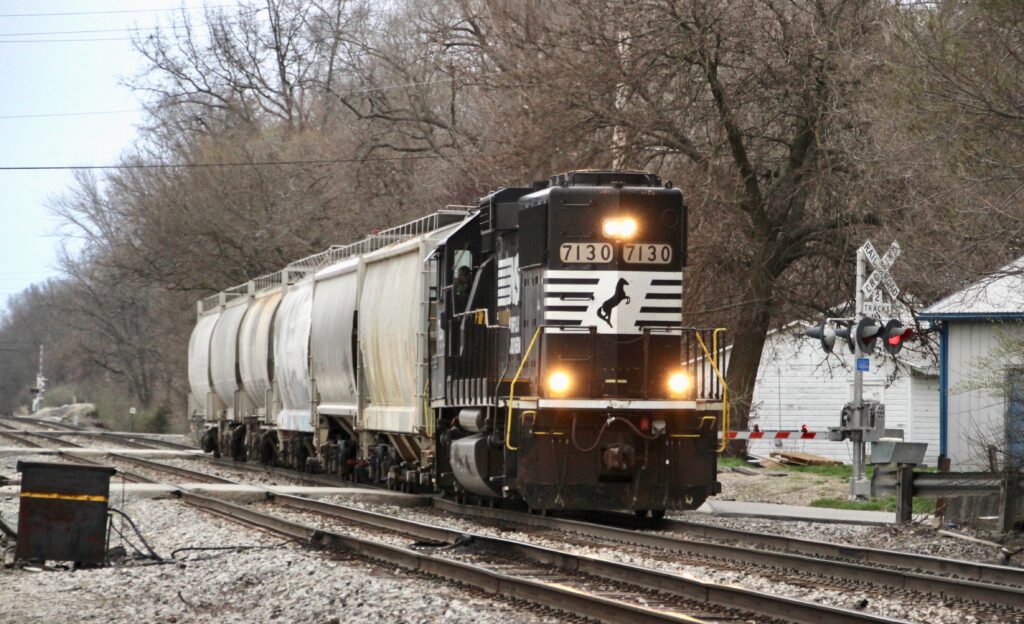
A Norfolk Southern local approaches the diamond with CSX Transportation in Danville, Ill., on April 11, 2022. David Lassen

WASHINGTON — The Surface Transportation Board today said it aims to repeal regulations that have effectively prevented sole-served carload and bulk shippers from seeking access to a second railroad.

The regulations cover reciprocal switching, through routes, and through rates. The STB’s Notice of Proposed Rulemaking would jettison Part 1144 of the federal code of regulations, which currently require shippers to demonstrate “anticompetitive conduct” and meet other requirements to obtain relief from the board.

The current regulations go beyond what Congress intended when it passed the Staggers Act of 1980, which partially deregulated the railroad industry, the board said in its unanimous decision.

“This proposal would embrace market forces, enable meaningful choice for American businesses as provided under the statutes, and eliminate regulatory barriers unnecessarily stifling rail competition,” STB Chairman Patrick J. Fuchs said in a statement. “By proposing to remove these regulations, the Board would return to the text of statutes that advance excellence, entrepreneurship, and innovation to support economic growth and supply chain resilience.”

Part 1144 governs three related tools the STB can use to inject competition into otherwise captive rail situations.

First, under reciprocal switching, a shipper served by only one railroad can ask the STB to require that railroad to hand the traffic over to another carrier at a nearby interchange — effectively giving the shipper a competitive option without building a second rail line.

Second, the STB has the power to require carriers to cooperate to create through routes involving two or more railroads when doing so is in the public interest.

Third, the board can require railroads to set through rates for multi-carrier routings.

Congress explicitly gave the board this authority in the Staggers Act, with a broad policy goal: Deregulate where markets work, and create tools to promote competition where they don’t.

But when Part 1144 was written in 1985, the board — which was then the Interstate Commerce Commission — layered on extra hurdles that Congress did not require. Most importantly, to get relief, shippers have had to show evidence of anticompetitive conduct by the incumbent railroad, satisfy multiple technical thresholds, and clear high burdens of proof.

No shipper has ever won access to a second railroad under these rules. The STB is effectively saying that the regulation boxed the agency in more tightly than Congress intended.

“Since the adoption of these regulations, the statutory framework has changed, the rail industry and its traffic portfolio have evolved significantly, and the regulations no longer have broad support across rail transportation stakeholders,” the board said. “Despite the authority granted in the Staggers Rail Act over 40 years ago, the agency has never issued a prescription under part 1144.”

The board’s proposal would repeal Part 1144 entirely, return to the statutory language of the Staggers Act, no longer require proof of anticompetitive conduct, and evaluate each shipper request on a case-by-case basis.

The board said the proposal would streamline the process for shippers and allow the board to consider the merits of each case. “The statutes recognize that competitive access issues do not have a one-size-fits-all solution and allow the Board to consider these cases in the full context of a carrier’s operations, competitive situation, and other considerations,” the board explained.

The proposal also would remove barriers that limit options for American businesses — such as manufacturers, utilities, and agricultural companies — and “railroads seeking to innovate and compete,” the board said.

The board said the Notice of Proposed Rulemaking action follows the March 2025 launch of the Justice Department’s Anticompetitive Regulations Task Force in response to Executive Order 14192, which declares a policy that federal agencies “alleviate unnecessary regulatory burdens placed on the American people.”

Responding to the task force’s request for comments, many rail shipper groups submitted comments seeking action on part 1144, the STB said.

Shipper groups have long sought broader access to reciprocal switching, both for rate relief and to improve service at locations served by just one railroad.

In July 2011, the National Industrial Transportation League filed a rulemaking petition requesting that the STB revise its reciprocal switching rules to be more aligned with the statutory standards Congress wrote, including removing or relaxing the barriers that had made the rules ineffective.

In July 2016, the board issued a Notice of Proposed Rulemaking that attempted to craft new reciprocal switching regulations based on the more flexible statutory standards. The proposal would have allowed shippers to seek a reciprocal switch if it was “practicable and in the public interest” or “necessary to provide competitive rail service.”

The Class I railroads opposed the proposed rule on legal and operational grounds. They argued it could disrupt rail operations, undermine network efficiency, and impose costly administrative burdens. This opposition, combined with the complexity of defining workable standards and procedural safeguards, slowed the effort and ultimately led the STB to narrow its approach.

After the widespread service problems related to crew shortages on the Big Four U.S. systems in 2022, the STB in April 2024 adopted a rule that would allow shippers to access a second railroad when the incumbent railroad’s service falls below specified levels.

Shippers said the rule didn’t go far enough. And railroads, which opposed the rule, sought a judicial review of the STB decision. In July 2025 the U.S. Court of Appeals for the Seventh Circuit tossed the rule covering reciprocal switching for inadequate service. The court said the rule exceeded the board’s authority.

Independent analyst Anthony B. Hatch suggests that the railroads could have avoided the regulatory revamp.

“My initial thoughts are this is what happens to the rails when they foolishly fought and won a legal action against the service-oriented reciprocal switching rules as offered by the [Martin J.] Oberman board,” Hatch says.

He also was surprised that the STB, with a major merger application on its hands, has time to be dealing with the long-simmering reciprocal switching issue.

The National Industrial Transportation League welcomed the STB’s proposal but said the devil will be in the details.

“The STB’s proposal to repeal Part 1144 is a positive step in that it removes an outdated and overly restrictive regulatory framework that has limited the Board’s ability to respond to competitive failures in the rail network,” Nancy O’Liddy, the group’s executive director, said in an email. “That said, repeal alone will not automatically translate into meaningful competitive relief for captive shippers. Whether this action goes far enough will depend on how the Board uses its restored authority and how clearly it articulates standards, timelines, and enforcement mechanisms for competitive access remedies. Shippers have consistently emphasized that relief must be practical, timely, and predictable to influence real-world outcomes.”

Competition issues take on increased importance in light of the Union Pacific-Norfolk Southern merger proposal, she adds.

“Any consolidation among large Class I railroads heightens concerns about market power, service reliability, and pricing leverage. The Board’s willingness to modernize its approach to competition tools, including those previously constrained by Part 1144, should be viewed as a necessary baseline — not a substitute — or rigorous scrutiny of mergers and enforceable, shipper-protective conditions,” O’Liddy said.

The STB’s proposal could reshape the competitive backdrop for the UP–NS transcontinental merger, giving regulators stronger post-merger tools while also underscoring the board’s focus on concentrated rail markets.

The American Chemistry Council, which represents chemical manufacturers, said the proposal was the STB’s most significant pro-competitive reform ever.

“America needs more freight rail competition. While the proposed Union Pacific–Norfolk Southern merger threatens to expand monopoly power, today’s proposal moves freight rail in the right direction,” ACC spokesman Scott Jensen said in an email.

“ACC welcomes the Surface Transportation Board’s proposed rule to unlock competitive freight rail service by eliminating regulatory restrictions that limit options for freight rail shippers. This commonsense, pro-competition action aligns squarely with President Trump’s economic and deregulatory agenda by unleashing market forces to help put freight rail back to work for U.S. manufacturers, farmers, and energy producers,” he added.

Lifting the regulatory restrictions will help counter the negative effects of consolidation in the rail industry, he said, which has reduced competition, driven rates up, and contributed to chronic service failures.

Comments on the rulemaking are due to the STB by March 10. Reply comments are due by April 24.

Trains has sought comment the Association of American Railroads, as well as Union Pacific and Norfolk Southern. AAR said it is reviewing the STB proposal. Union Pacific referred questions to AAR.

— Note: Story updated at 10:25 a.m. Central with comment from analyst Anthony B. Hatch, at 11:45 a.m. Central with comment from the National Industrial Transportation League, and at 12:35 p.m. Central will comment from the American Chemistry Council. To report news or errors, contact trainsnewswire@firecrown.com.

You must login to submit a comment