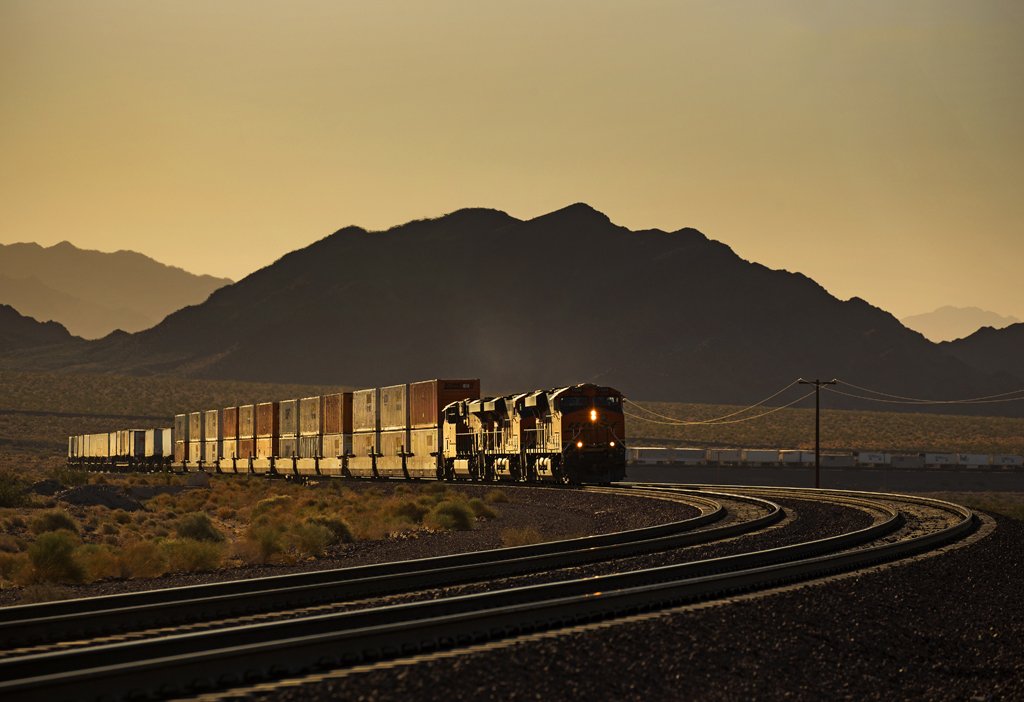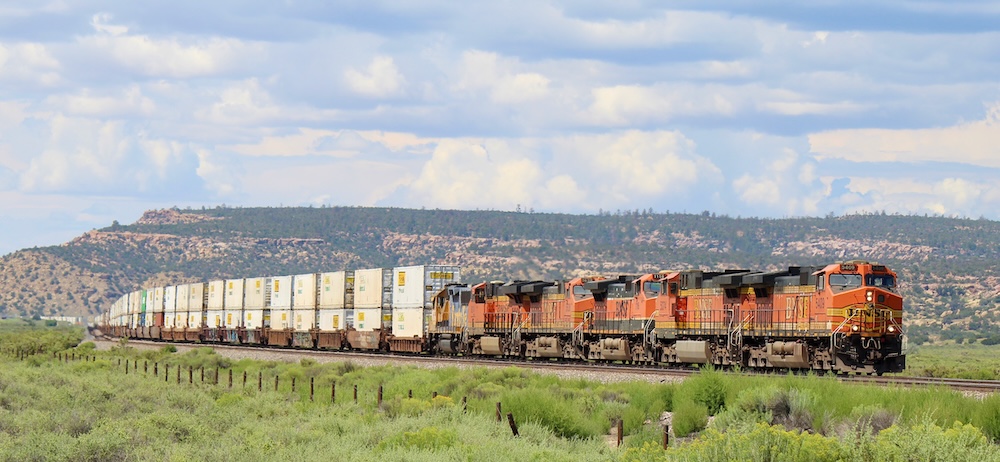
QUINCY, Mass. – RailState, which monitors rail traffic using a network of sensors placed on public property along main lines, has provided a snapshot of long trains rolling along BNSF Railway and Union Pacific main lines in the Southwest during December.
Although only 1% of freight trains in the U.S. exceed 14,000 feet, RailState data shows that BNSF and UP operate a significantly higher percentage of long trains in and out of Southern California, the company said today. All of the long trains were intermodal trains, some of which exceeded 16,500 feet.
On UP’s Sunset Route between Los Angeles and El Paso, Texas, the railroad in December operated three or four trains per day that were over 2.5 miles long, which translates into 10% of the traffic on the route.
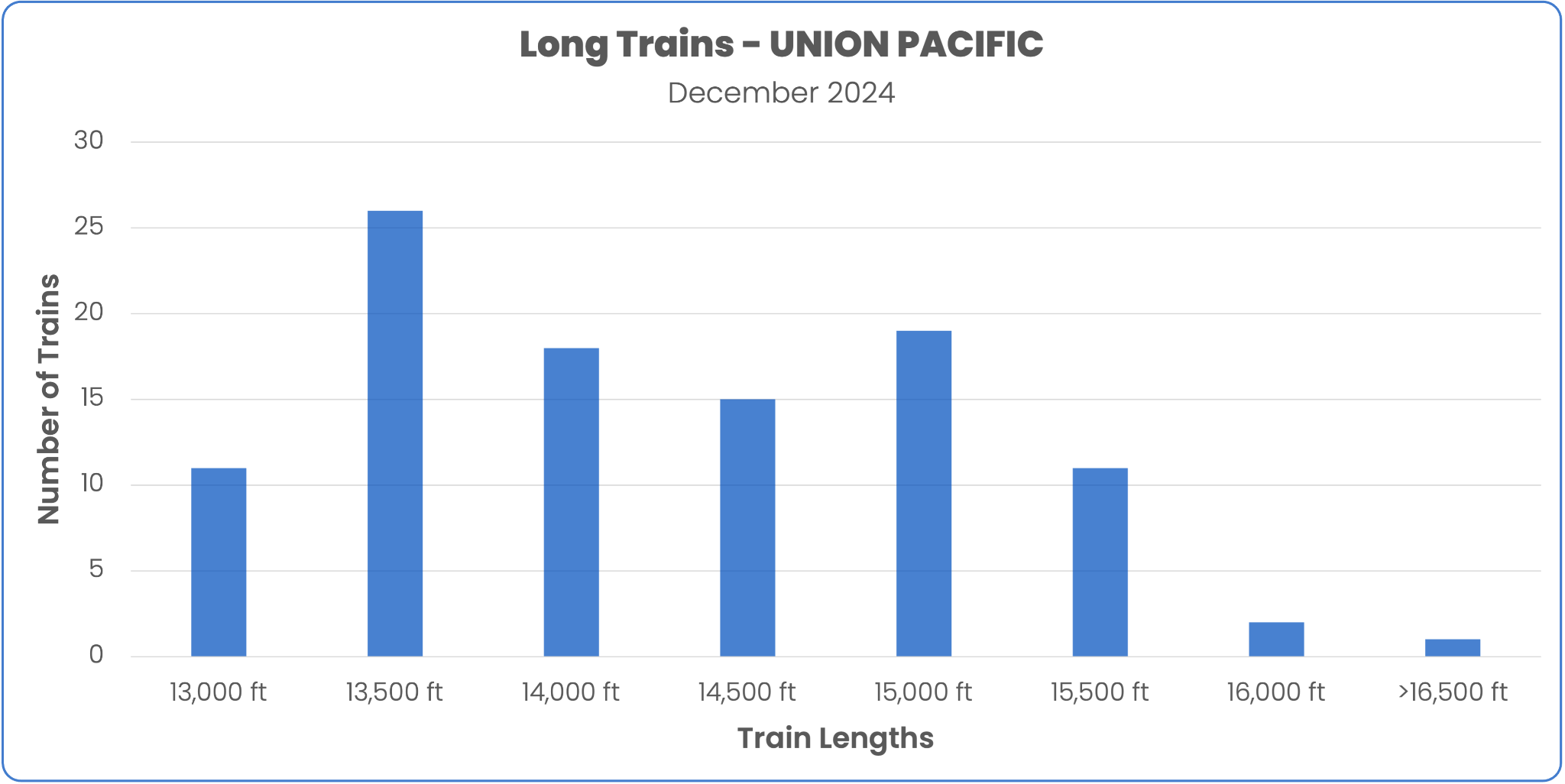
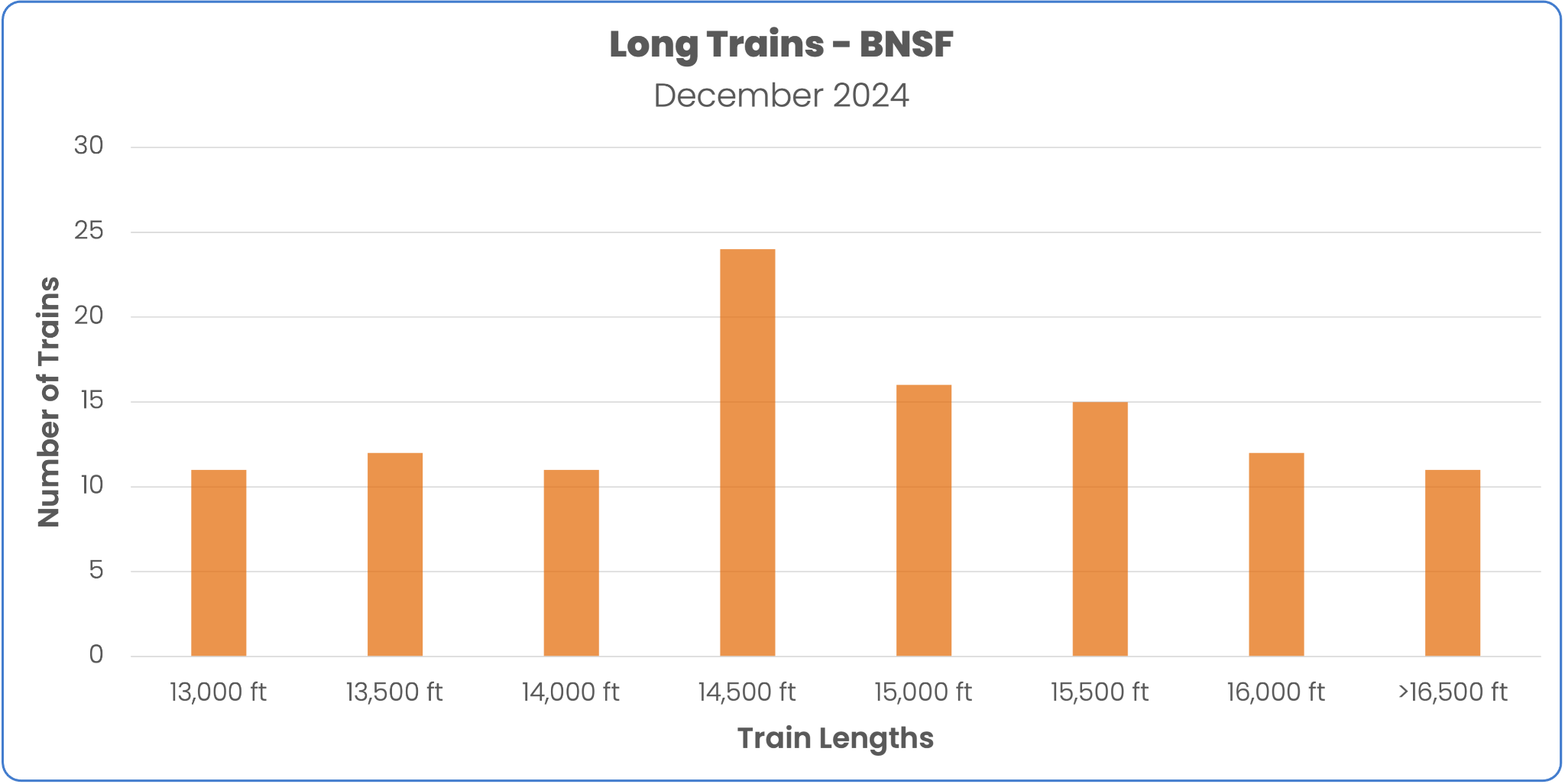
On BNSF’s Southern Transcon between Southern California and Texas, the railway ran three to four trains per day that were over 2.5 miles long. Because of BNSF’s higher volume, that translates into 6% of the trains on the Southern Transcon.
“In December, BNSF ran more trains at the higher end of train lengths than UP. RailState identified 23 trains longer than 3 miles,” the company said.
Class I railroads say the use of longer freight trains increases main line capacity by reducing the number of trains in operation at any one time. Rail labor leaders have been critical of the practice, which has allowed railroads to reduce the ranks of engineers and conductors because traffic is moved on fewer but longer trains.
The train length data can be useful for transportation officials who are seeking to minimize the impact of long wait times at grade crossings, RailState says.
RailState sensors captured an intermodal train traveling from Los Angeles to Texas on Union Pacific on Dec. 20 and 21. “With five locomotives and 260 well car platforms, the train clocked in at just over 3 miles long,” RailState said.
Along the journey, RailState captured the train at La Puente, Calif., traveling at 52.3 mph; Mecca, Calif., 41.8 mph; Wellton, Ariz., 30.8 mph; Tucson, 13.6 mph; El Paso, 14.7 mph; and Buford, Texas, 43.1 mph.
“Traveling at 52 mph, the train takes 3.5 minutes to pass by,” RailState notes. “At other locations, the time it takes for this train to pass was significantly longer. At its recorded speed in Tucson (13.6 mph), this train would take nearly 14 minutes to pass.”
Communities experience these kinds of long delays at road crossings on a regular basis but until recently access to information about long trains has been nearly unavailable, RailState says.
Road crossings blocked by long trains are an increasing source of delays and frustration for commuters and can impair quick emergency responses. With comprehensive train length data, RailState says traffic engineers can estimate blockage times more accurately, improve management of road congestion, deploy signals to suggest alternate routes when a crossing is likely to be blocked for an extended period, and notify and reroute first responders to avoid delays during emergencies.
Accurate train length data also can give transportation officials the information they need to identify problem grade crossings and prioritize remediation investments, RailState says.
Share this article