





The Trump Administration has rolled out a variety of proposed ideas to address the ever-present “affordability” issue. President Trump’s Dec. 17 speech on the topic proposed a number of potential changes — including efforts to reduce drug prices and mortgage payments as well as a tariff dividend — in an attempt to help consumers. However, most of these ideas are costly palliatives that will accomplish little.
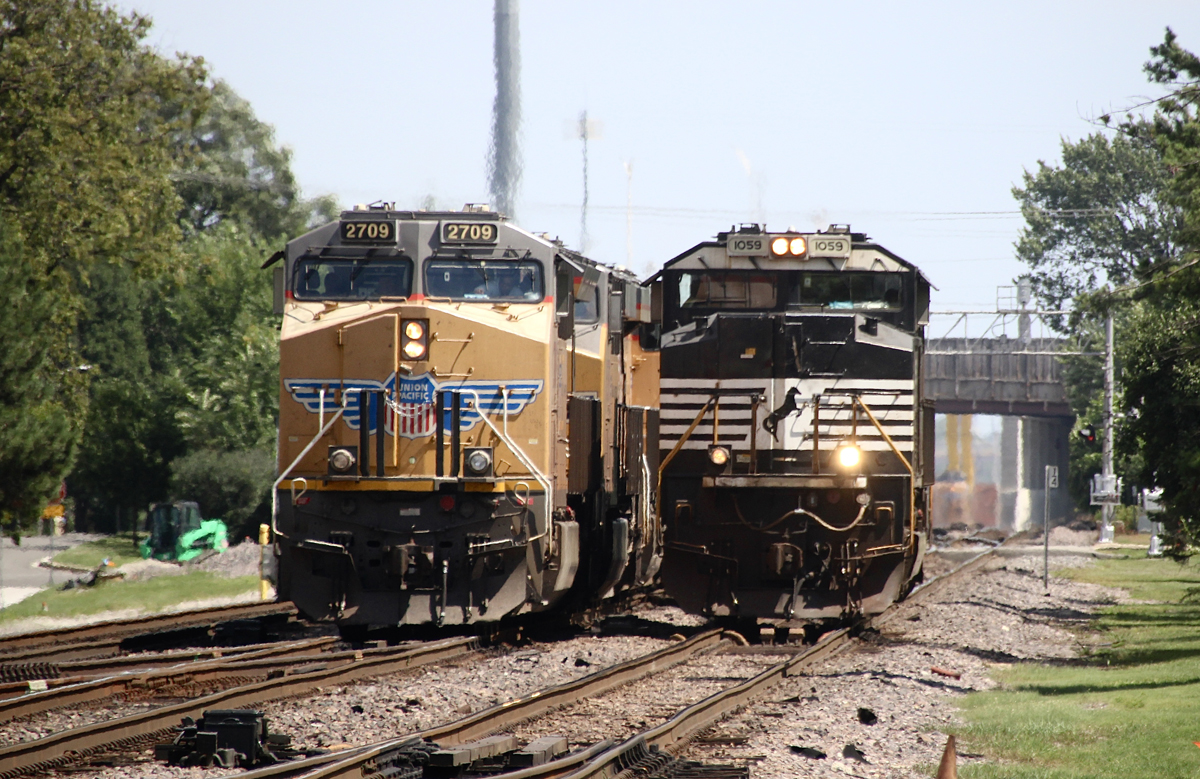
But a simpler, long-term solution is hiding under Washington’s nose that comes at no cost to taxpayers. On Dec. 19, Union Pacific and Norfolk Southern filed a merger application with the Surface Transportation Board [see “UP and NS say their merger …,” Trains.com, Dec. 19, 2025]. The agreement, which will require approval from regulators, presents a once-in-a-lifetime opportunity to strengthen and expand the country’s transportation infrastructure and bring down costs.
Railroads are a vital, but often overlooked, component of our infrastructure. Every day more than $50 billion worth of goods are transported via rail. The national rail network not only provides a safe alternative to freight trucks — train accident rates have fallen by 33% since 2005 to record lows — but they also help alleviate congestion on our highways. A single mile-long train can remove as many as 800 trucks from the road, reducing congestion, reducing greenhouse gases, and improving road safety. About 5,000 people die each year from accidents caused by trucks, most of them are passenger vehicle fatalities. Rail is far safer for motorists, despite 262 grade-crossing fatalities per year.
Yet, for all the advantages, the current railroad network has room to improve. One big problem is that it is segmented into eastern and western railroads, which creates headaches for shippers. Cross-country shipments must be transferred from one carrier to another, which can create days-long delays that add time and costs to shipping goods. Reducing the need for interchanges would save time, reduce shipping costs, and ultimately produce savings for consumers.

Improving the efficiency of the U.S. rail network would create an alternative that would boost competition in the shipping market, thus driving down freight transportation costs and reducing inflation.
Trucks move about 28% of the nation’s freight, and freight transportation constitutes 10% of private-sector GDP. Rail rates are remarkably lower than truck rates. With a more truck-competitive product, lower transportation costs would translate into lower point of sale costs, especially for things like homes and cars.
Unlike trucking firms, Class I railroads receive no subsidies from the government to maintain and improve their infrastructure, and they invest almost $25 billion a year on their tracks. U.S. taxpayers subsidize the trucking industry at about $40 billion per year through ongoing general fund transfers to the Highway Trust Fund. Ultimately, a more efficient rail network would save that money, plus reduce the cost of shipping — a double win.
Some have raised objections to a merger that reduces the number of long-haul railroads in the U.S., but such objections fail to acknowledge that the real market is not the freight rail transportation industry but the freight transportation industry at large, since goods can travel by truck as well. What’s more, the geographic segmentation of the freight industry means that Union Pacific and Norfolk Southern don’t actually compete with one another, since they service different regions of the country. The vast majority of shippers today have the option of using two or three railroads or a variety of trucking companies to ship their goods; the proposed merger will not change that calculus.
President Trump understands the forces that are driving up the costs of basic goods and his administration has made affordability a priority. Given our $2 trillion annual deficit, the administration and Congress may be hard-pressed to pass legislation that would allocate much money to address the problem, but approving a merger that would serve to reduce freight transport costs would be a costless way to reduce inflationary pressures in the U.S.
— Michael F. Gorman holds the Niehaus Chair of Operations and Analytics at the University of Dayton department of MIS, OPS, and Analytics


I agree with Mr. Gorman’s premise and arguments, But what does it matter? With so many people not being able to see the trees because of the forest what chance does a perfectly good argument have with so many afraid of change and what “might” happen. Maybe we should quit promoting anything that might be better because it might not, irregardless of the potential. That is not the attitude that has made America the greatest civilization in world history. America was risk taken by people who wanted something better. They had no guarantees, just a hope and that hope almost failed. But it didn’t because people persevered and eventually overcame the inherent problems that usually pop up with any risk, The question to ask is, “Was the risk worth it.” The answer, a resounding YES. It could have ended all gone wrong and in which in that case, we would all be still taking with an English or Spanish accent and the land we love would be that far off place that we see on a globe but have no idea what it is all about. No risks, pending mediocrity and mundane lives. When we quit risking all for the opportunity to grow because we might fail, then we should pack up shop and quit living. As one piece of missing scripture says, ” …for gold is tested in the fire and acceptable men in the furnace of humiliation…” No one gains when no one risks. and if fear is all we have, that something bad might happen, (even when something good could happen) then we are finished as a growing civilization… Standing still is not an option for” acceptable men.”
I haven’t seen a proposal for some type of metric to address how competition in ratemaking would be encouraged absent the ability Class-I end-to-end interchange partners to shift over time. Think about it, the STB has been pretty lazy as they simply say that the remedy is private negotiation to create competition between groups of railroads and against leveraged highway infrastructure consuming trucks. And this has been true, though less economically efficient, as ever half-decade it seems, the interchange partners shift, and the motive always seems to be a better cost-structure offered by the new partner. If the east-west interchange is locked up, then right away there will be a duopoly as there are literally no other options for the remaining lines, hence they will form an alliance. It would seem some type of guarantee that intermodal trains could operate onto any physically connecting railroad as a through train is needed in this merger along with delay performance metrics to keep those trains and all traffic moving.
According to a reputable business journal, NS corporate staff won’t have a role(s) in the new UP headquarters organization. How’s that for being “thrown under the bus.”
Remember what Southern Pacific executives said at the time of the Union Pacific merger. “Their first name, our last name.”
Sir, put down the Cool-Aid. Trump stated that affordability is a scam, or something to that effect. While I agree that a coast-to-coast railroad should be more efficient and less costly, I have a hard time believing that any costs are coming down, especially for consumers. That’s not how late-stage capitalism works, bro
History has shown that as the big railroads have consolidated, rail rates have increased faster than inflation or any proclaimed increase in demand. That is not going to bring prices down for the average consumer.
Yes, the rail network has room to improve, but the big railroads don’t want to spend the money and put in the hard work to get customers back to rail to truly grow volume and market share. Merging is the lazy way to grow and doesn’t solve the root of the problem for rail’s declining market share.
Mr. Gorman’s last paragraph is worrisome for its fawning tone.
While I would like it to be true and hope for the best, I seriously doubt that this proposed merger will help in any meaningful way with the “affordability” issue in this country or be good for the majority of the rail customers involved. While it’s likely a combined UP/NS railroad will put a lot more money in its officers and shareholders bank accounts, which is the goal of most businesses today, the average consumer or customer probably won’t see much of any benefit. There’s not a lot that these two connecting railroads can do merged that they can’t do separately as far as efficiency. But that would take cooperation, something the class ones of today are rarely willing to do at least in the long term.
Lots of folks, including myself, would love to see fewer trucks on the roads. But based on the past 40 years of mergers with the combined systems still bleeding market share, I wouldn’t expect to see fewer big rigs on the highway anytime soon with or without this merger.
Your last statement seems to contradict your first statement. Efficient hand-offs are only theoretical and not obtainable if managers are inherently causing obstacles.
Yes, cross-country shipments must be transferred from one railroad to another, but the days-long delays that result are the preference of railroad managers, jealously guarding inherent advantages and creating obstacles to thwart competitors. Efficient connections and hand-offs, beneficial to all, do not require unitary ownership.
I’ve always seen both sides of this issue. It’s irritating that railroads interline so poorly, and it’s irritating that railroads don’t want two short hauls, one short haul to either side of Chicago or KCMO. Yes it’s easy for us to say these should be solved without a merger, as Dan Findlay says above, echoing many of us including me … but if it takes a merger to fix these, then maybe we should stop opposing the merger.
Here are some of the airlines I have flown: Delta, Northwest, Republic, North Central, Northeast. What do they have in common? Well, obviously, they’re all now Delta. Is there any real data that we’d be better served at lower air fares if these mergers hadn’t happened? Maybe, and a whole lot of people thinks so. But it’s speculation. If you live in SE Michigan, the two biggest airlines at DTW, or same thing in Minnesota at MSP, which were Republic and Northwest, merged. Then Delta picked up the whole lot. Suppose it never had happened. Would we be better off? Who can say for certain. Anyway, it’s done, it won’t change, and Michigan and Minnesota haven’t disintegrated.
To Mr. Landey: Airline mergers may not have hurt Michigan and Minnesota, but that was not the case in my home town. Delta and Northwest each had their destination, but when Delta merged with Northwest, only Northwest’s destination survived and now Delta has dropped out entirely.