WASHINGTON — The spike in energy prices since the start of the Iran conflict could be a blessing or a curse, Norfolk Southern executives say.
It’s clear that the dramatic increase in fuel prices will increase the railroad’s first-quarter costs by $20 million to $30 million — and that the NS fuel surcharge program will eventually offset those costs.
What’s less clear is how rising natural gas and diesel fuel prices ultimately will affect freight volume.
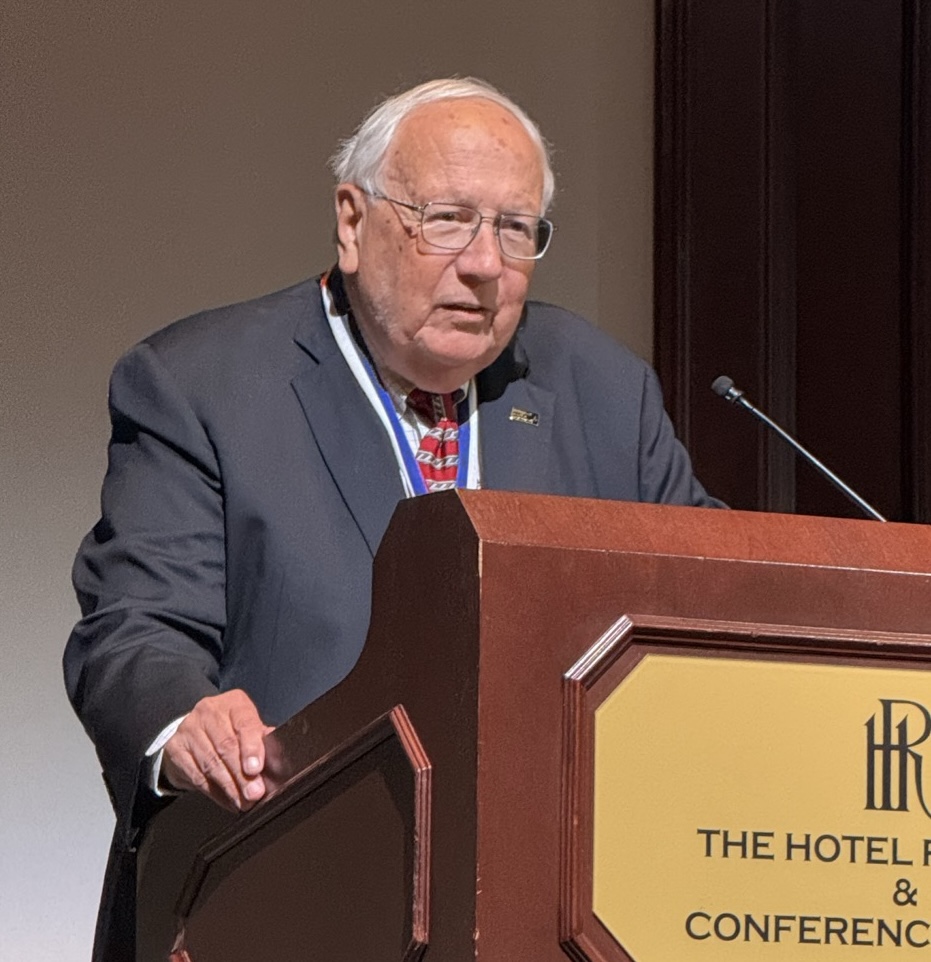
“You’ll see the utilities burn more coal, so that’s not a bad thing for the business volumes,” CEO Mark George told an investor conference on Tuesday. And if diesel prices remain elevated for long, it will put pressure on trucking rates, which could help boost Norfolk Southern’s intermodal traffic.
“You can see a lot of good. But depending on how long this lasts, obviously, fuel prices can have an adverse impact on the consumer,” George says. “Ultimately, it’ll lead to inflation. We don’t know what it does to demand. And if there’s demand destruction, that ultimately impacts … our volumes in the future.”
The steps NS has taken to save fuel — including modernizing its locomotive fleet and operating with energy management systems — are paying off with record fuel efficiency, George says.
The operating department is carefully managing horsepower-per-ton ratios “and trying to drive every last drop of fuel productivity without compromising speed,” he says.
The railroad’s volumes this year have seesawed with the weather: Strong in January, down in February due to a series of winter storms and deep freezes that slowed the railroad, and back up during a milder March.
“We’re in a good spot right now. I’m really happy with the resiliency that we’re demonstrating on the network,” George says.
Utility coal traffic has been strong amid high natural gas prices and demand for electricity, which has been partly driven by data centers, George says.
“In addition to electricity demand and the high natural gas prices, you also have … a little bit more favorable regulatory environment,” Chief Financial Officer Jason Zampi says, adding that no major NS-served coal-fired power plant closures are scheduled in the near future.
Industrial products volume has continued growing, as it did last year, George notes.
But intermodal volume is down 6% this year through March 14 as NS lost share to rival CSX, whose intermodal volume is up 5% this year. Last summer CSX and BNSF launched an interline alliance that has shifted domestic traffic, including some J.B. Hunt business, off NS and on to CSX. International volume has been soft, too, as imports have fallen.
Over the longer term, George says the proposed Union Pacific-Norfolk Southern transcontinental merger, if approved, will help jumpstart volume growth.
Rail freight volume is down in the U.S. over the past two decades. Rail’s growth problem is not primarily service-related but structural, George says.
While improving reliability has helped win back some business, he says it has not produced significant volume gains because shippers still prefer trucking’s convenience, speed, and shipment visibility.
George contends the biggest obstacle is the artificial east-west divide that forces railroads to interchange traffic at gateways from Chicago to New Orleans. The interchanges add time, cost, and complexity, making rail uncompetitive trucks, particularly for short-haul moves on one or both sides of the Mississippi River watershed.
He contrasts this with Canada, where Canadian National and CPKC span the country. They’ve seen volume growth because they can offer single-line service, George says.
George says eliminating U.S. interchange barriers through a transcontinental merger will make rail more competitive. Customers are two to three times more likely to choose single-line rail service over traditional multi-carrier moves, he notes.
UP and NS say their merger can attract 2 million truckloads to rail annually. The STB rejected their merger application as incomplete on Jan. 16. The railroads plan to file an updated application on April 30.
George and Zampi spoke at the J.P. Morgan Industrials Conference.
— To report news or errors, contact trainsnewswire@firecrown.com.
Share this article