





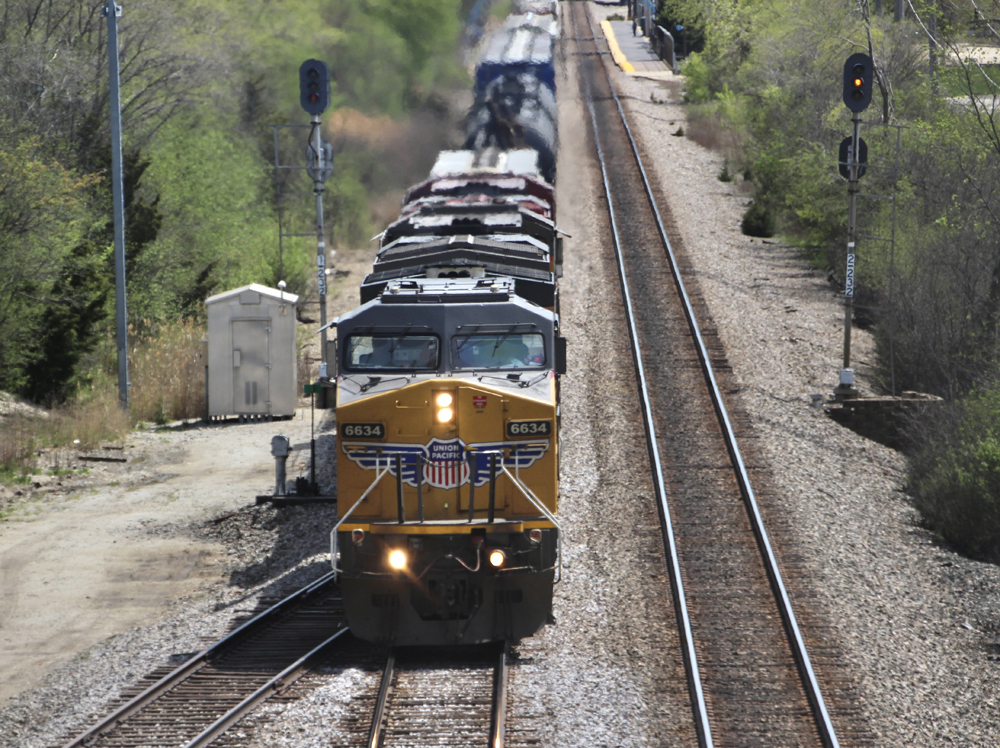
WASHINGTON — Other Class I railroads have found no shortage of deficiencies in the Union Pacific-Norfolk Southern merger application and are urging the Surface Transportation Board to reject the document for its failure to address key aspects of the transcontinental combination.
Comments from interested parties on the completeness of the application were due on Monday, Dec. 29. They do not address the merger itself, but whether the board should send the 6,692-page application back to UP and NS for more information. UP and NS filed the application on Dec. 19.
The other railroads were particularly critical that the application does not include the full UP-NS merger agreement. They also criticize its analysis of potential mergers that could follow the UP-NS transaction, and what they say is incomplete analysis of the merger’s effects on competition.
Canadian Pacific Kansas City’s filing says the two railroads “brazenly” have withheld key aspects of their merger agreement, including conditions NS can sue to require UP to accept or that can allow UP to walk away from the merger. That information, CPKC contends, “likely reflects the best glimpse that the Board and interested parties will get of Applicants’ own assessment of the scope of the anticompetitive harms their proposed merger would cause and the kinds of conditions that may be sought — but resisted by UP — to address those harms.”
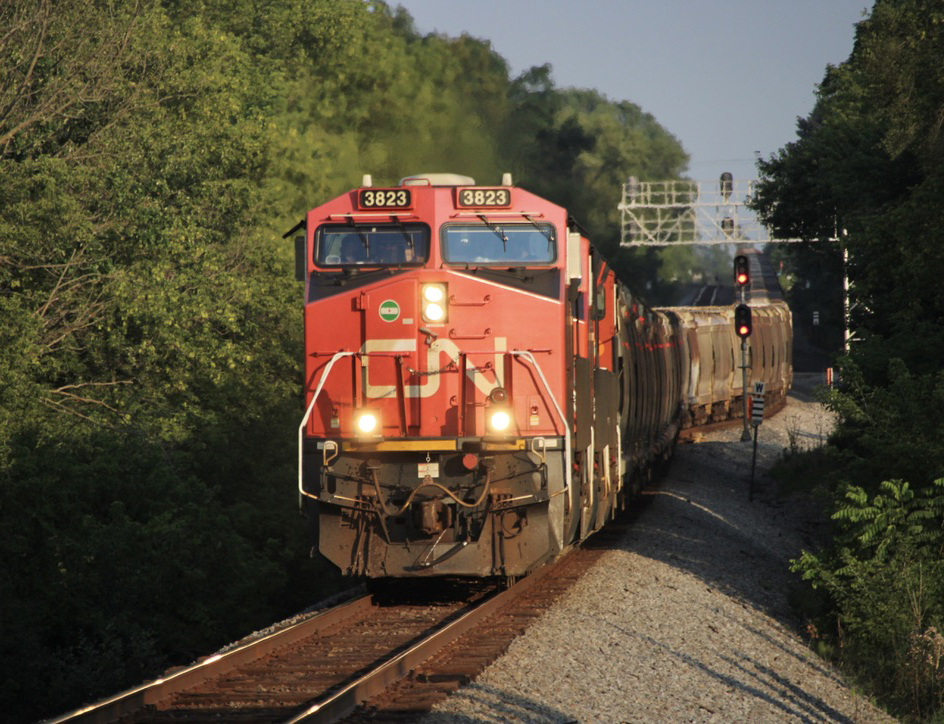
Canadian National, in its filing, says, “Selective disclosure undermines the regulatory process and impedes … assessment of the merger’s true character and public interest impact.” Board precedent, it says, makes the application deficient without the complete merger agreement.
CPKC also criticizes the application’s dismissal of potential downstream impacts of a UP-NS merger. UP and NS said that they could not predict whether other railroads will choose to merge as a result. The application says it would be too “speculative” to evaluate the future structure of the industry.
“It strains credulity to even suggest UP and NS have not both considered this issue in depth when evaluating their future business prospects as a merged enterprise,” the CPKC filing contends. “… If Ebenezer Scrooge was able to spend quality time with the Ghost of Christmas Future reviewing the grim consequences of his behavior, surely on the eve of Christmas 2025 Applicants could have offered a more thorough analysis of the Transcontinental Rail Duopoly their proposed merger portends.”
CPKC is also highly critical that the application does not include the data underlying what it calls the application’s “extraordinary claims.” Among them is the contention the merger will convert more than 2 million truckloads to rail traffic. It notes that projection was made by analysts relying on S&P Global Markets Transearch data, but that data is not included; interested parties would have to obtain that information from S&P at their own expense. In a footnote, CPKC says it was quoted a price of $399,000 for that data.
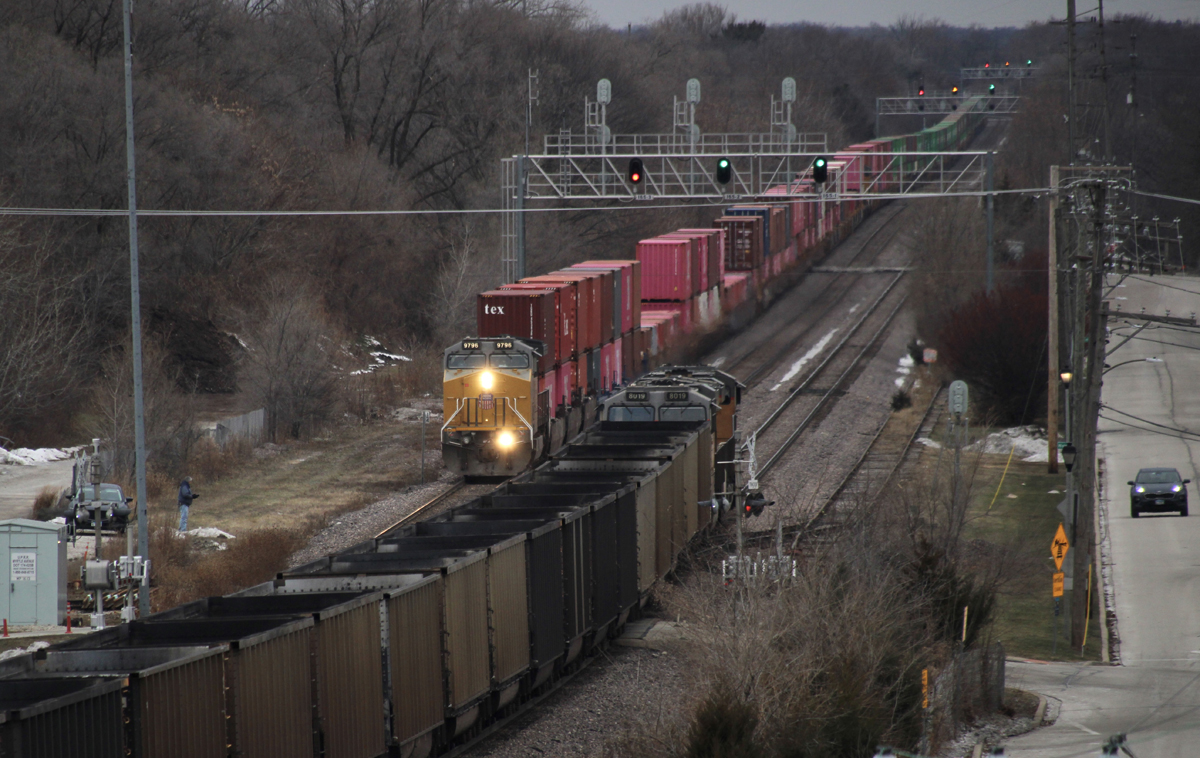
The CSX filing notes that the application does not explain how the merger’s single-line service would enhance rail-to-rail competition. “The competitive assessment required by the statute is of ‘competition among rail carriers’ — rail-to-rail competition — and this analysis cannot be supplanted by truck-to-rail competitive analysis,” CSX contends.
CN — which submitted the longest comments filing at 91 pages, including exhibits — says the application fails to identify all shippers that will go from being served by two railroads to one, and from three railroads to two. It also says the application omits information on overlapping lines in the watershed area within 250 miles of the Mississippi River. That omission, CN says, “reflects yet another attempt by Applicants to incorrectly portray their proposed transaction as end-to-end.”
BNSF, in its comments, says that UP and NS do not provide information on projected market shares, as required by the STB’s 2001 merger rules. It says the economist cited in the application defines the projected market shares as the total of NS and UP’s market shares in 2023, “which does not incorporate the over 2 million new units that UP and NS project they will attract elsewhere. … These figures are thus not ‘projected market shares;’ they do not ‘reflect the consolidated company’s marketing plan;’ and they do not ‘demonstrate the impacts of the transaction … on competition within regions of the United States.”
CSX’s comments also note that the application fails to address control of the Norfolk & Portsmouth Belt Line Railroad, which is the subject of an ongoing dispute between CSX and NS already before the STB. “To the extent UP responds that its Application did not seek affirmative control of NPBL because it intends to abide by the Board’s resolution of NS’ separate application, that would not suffice to cure the Application’s deficiencies,” CSX contends. It asks the board to require a separate significant transaction application for the NPBL — and another for control of the Terminal Railroad Association of St. Louis, which the UP-NS application treats as a minor transaction.
UP CEO Jim Vena, in a Dec. 19 interview, told Trains that he expects the STB to ask UP and NS for additional information. “There’s probably something we missed or something they need a little more information on,” he said.
UP will provide whatever data the STB requests, Vena says, adding that the railroad wants to provide the information as soon as possible so that it does not slow the board’s review process.
“I’m absolutely sure they’re going to come back with something,” Vena said.
UP and NS have until Jan. 2 to respond; the board will decide whether to accept the application later in January.
— Trains Editor Bill Stephens contributed to this report. To report news or errors, contact trainsnewswire@firecrown.com.


6692 pages? I wonder how much was generated by AI. The STB will really have to be alert to separate fact from propaganda.
Irrespective of how the proposed merger plays out, it is a bonanza for lawyers, accountants, consultants, etc. They must be licking their chops at the fees they are likely to earn.
FWIW one has to admire the old CNW infrastructure in the pix.
FWIW in Wisconsin, you have to admire ex-CNW construction standards. At the levels of branches or secondaries, CNW built to higher standards than MILW. Milwaukee area and Madison area both.
These other railroads want UP and NS to spell out how they can compete with the combined transactive UP. That is not UP’s problem to tell themm how to compete, that is ofr them to determine for themselves. In the case of CPkc, they only wish to be like remora on a sharks belly, hanging on hoping to get scraps from the kill at no cost to them when in actuality, if they really want to compete they might need to build new lines into areas to offer options for customers, much as UP is doing in Texas to compete for customers currently being served by BNSF. Of course that would mean that Keith Creel would actually have to put a crow bar into an edge of his purse to pry it open and spend some money, something he has been able to avoid thus far. Additionally, UP is not going to give up anything it doesn’t have to, just as none of these “concerned” competitors would do were the shoe on the other foot. As for the need to predict how this transaction will affect the other railroad companies, how is that to happen? UP could only guess at that,, just as the SCOTUS pointed out when they ruled that a federal appeals court erred when they mandated that a new line in northeast Utah consider the down stream affects of oil production before they could build their line… No one knows the future, they can only guess at what that would be… These arguments are the weakest of the weak and if it is the best the competition can come up with then this purchase transaction should be granted without delay as they have offered nothing but fane whining. Basically, all they are saying is we don’t like it and are sticking out their tongues. Maybe they should prove with facts how they will be harmed. That I would like to see, especially in the case of the Canadian roads who have their government to hide behind… Tell how you will be hurt IN FACT and then the STB will have something to think about but painting everything in broad strokes doesn’t say anything except in protecting what they have already. This merger is really up to how shippers respond to it. They will decide if they want to use it or not and those that do will prove the worth of it or the fallacy of it for all to see. For years they have complained about the delays in getting from East to West and vice versa. Well those delays are about to be eliminated, in theory, so is it really a problem or just another excuse to bitch about something they don’t control. Now is the time to see.
Did anyone expect CSX and BNSF to applaud it? In your dreams!
Is history going to repeat itself? It seems the plan is to bury the merger application with paperwork and drag it out like the ICC did with the UP/Rock Island merger.
There are big differences between this transaction and the UP/RI deal. In this case both railroads are solidly profitable and can survive without a merger. Also, this one won’t drag on for a decade. It may or may not be approved, but the STB will make a decision.
There may be parallels with the SPSF merger attempt if UP/NS don’t agree to sufficient conditions to preserve competition.