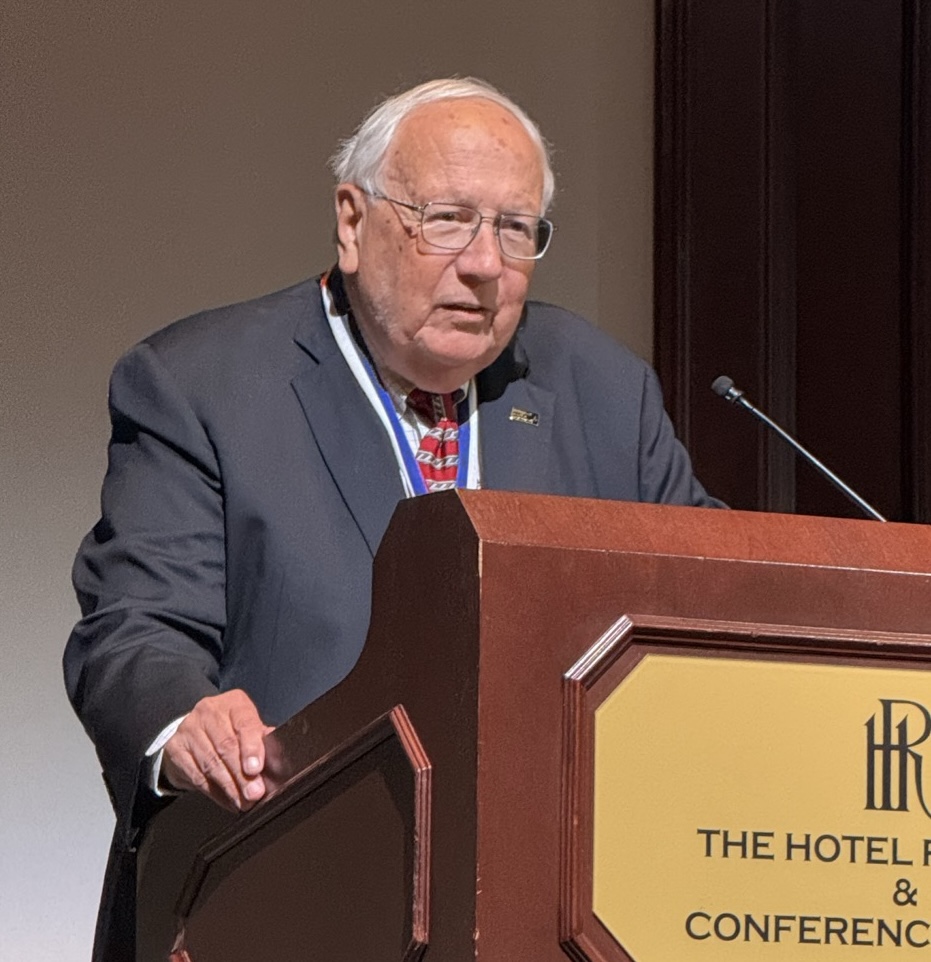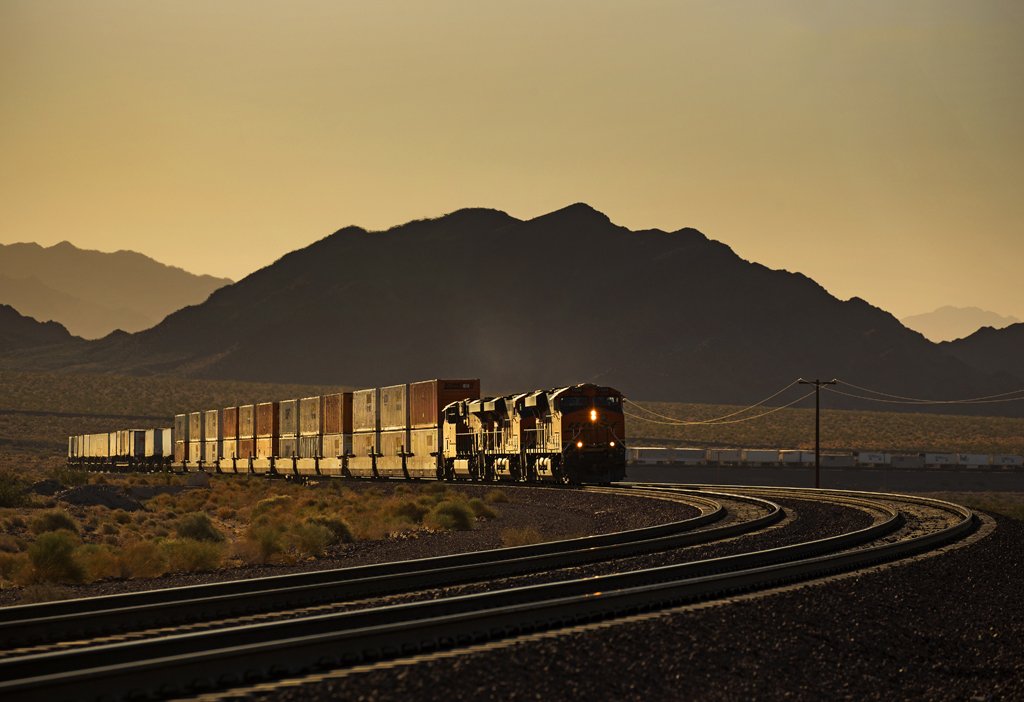
WASHINGTON — Canadian National’s volume is running slightly ahead of expectations so far this year as operations held up well during winter, Chief Operating Officer Patrick Whitehead says.
Car velocity is up 10% compared with last year, while train speed is up 6% and terminal dwell is down 6%, he told an investor conference on Tuesday.
“These are not isolated data points. They are very clear proof that our operating model is working for us here at CN,” Whitehead says. “Now I want to talk about how strong operations are translating directly into commercial momentum. Volumes based on RTMs [revenue ton-miles] are up 3% so far this year, slightly ahead of where we expected we were going to be at this point. The fluidity of our network is the major enabler of that performance.”
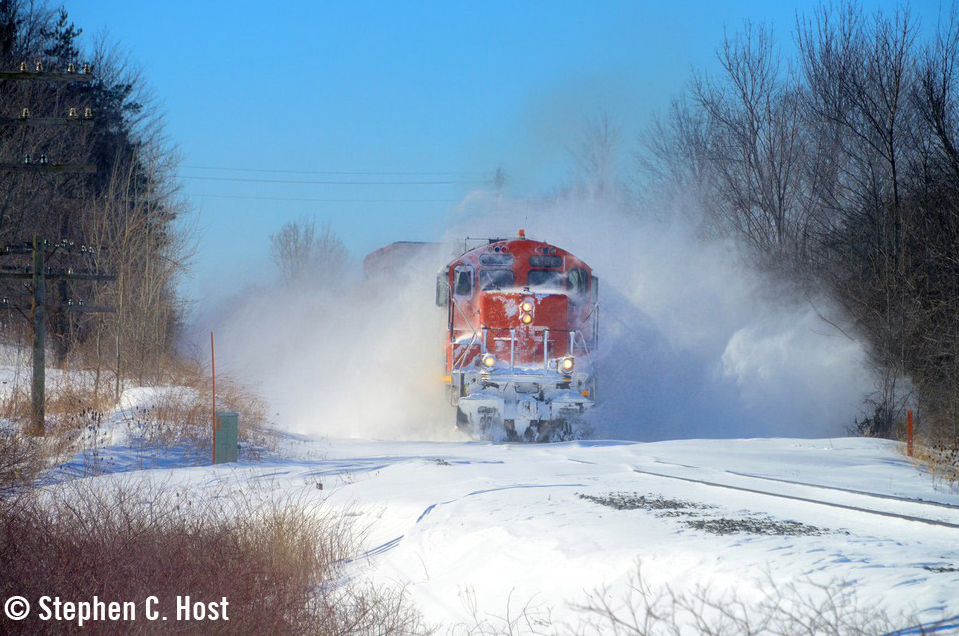
CN had to restrict train length in Canada on multiple days during extreme cold snaps in January and February. Heavy snowfall also blanketed the parts of the railway in Ontario and the U.S., which has been a $10 million to $20 million cost headwind in the first quarter.

“And through all of it, the network held up,” Whitehead says. “Every time the weather tested us, we bounced back quickly and decisively.”
CN handled record volumes of Canadian grain in the final four months of 2025, and kept up the pace this year with record tonnage in February. The fluid network also has helped boost the railway’s international and domestic intermodal and potash volumes.
But Chief Financial Officer Ghislain Houle noted that 45% U.S. tariffs on forest products and 50% tariffs on aluminum and steel have put a dent in volume. CN handles more forest products traffic than any other railroad.
“We all know that we are in highly uncertain times,” Houle says, noting that economic and geopolitical uncertainty has risen since the railway’s fourth quarter earnings call in January.
With about 800 train and engine crew members furloughed, CN is well positioned to handle more volume, Whitehead says. When called back to work, more than 90% of conductors and engineers return to the railway, which is higher than the usual rate that can be as low as 70%.
“As the Railroad of the North, we sit atop an incredible natural resource base. We are bullish on agriculture and energy, and we have an unparalleled port network that provides access to every global market,” he says. “This uniquely positions us to support customers in both our current markets and as trade flows continue to evolve.”
CN continues to believe that Class I railroad mergers are not necessary — and that interline partnerships can lead to volume growth without the integration risks that mergers pose.
Whitehead began his railroad career at Conrail, where he was an operations manager when CSX and Norfolk Southern split the railroad in 1999. Meshing the railroads’ computer systems and operations was more difficult than anticipated and led to widespread service problems.
“I’m a Conrail survivor,” he says. A Union Pacific-Norfolk Southern merger poses similar risks for the industry, Whitehead says.
“The IT systems do not integrate well and that’s probably a bit of an understatement for those that are familiar with that transaction,” he says. If the merger is approved, UP also will face the challenge of integrating two corporate cultures and developing a workable operating plan.
Another risk, Whitehead says, is the potential for reregulation of the rail industry if the UP-NS merger produces service problems.
UP and NS have promised a smooth integration and note that information technology systems have advanced significantly since the troubled megamergers of the 1990s.
CN sees greater potential in partnerships, like its Falcon Premium service with Union Pacific and Ferromex, which offers truck-competitive service from Mexico to Toronto in five days.
That’s a significant improvement from CN’s prior interline service to Mexico via Kansas City Southern interchange in Jackson, Miss., which had transit times of anywhere from 15 to 30 days, Houle says.
“So you might as well say I don’t have a service,” he says. The 2,000-mile haul from Mexico to Toronto means freight should be on the railroad, not in a truck, he says.
The executives spoke at the J.P. Morgan Industrials Conference.
— To report news or errors, contact trainsnewswire@firecrown.com.
Share this article