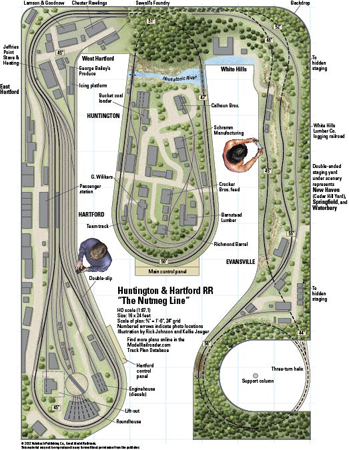
Name: Huntington & Hartford RR Layout designer: Bob Collett Scale: HO (1:87.1) Size: 16 x 24 feet Prototype: freelanced and New York, New Haven & Hartford Locale: central Connecticut’s Naugatuck Valley Era: mid-1950s Style: walk-in Mainline run: 230 feet Minimum radius: 30″ (main), 20″ (sidings) Minimum turnout: no. 6 (main), no. 4 (some sidings) Maximum […]
Read More…
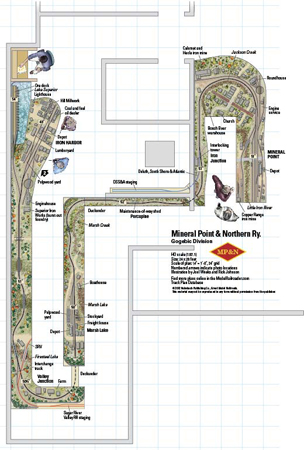
Name: Mineral Point & Northern Layout designer: Gregg Condon Scale: HO (1:87.1) Size: 24 x 28 feet Prototype: freelance, connecting with the Duluth, South Shore & Atlantic Locale: Michigan’s Upper Peninsula Era: September 1956 Style: linear walkaround with Mainline run: 100 feet Minimum radius: 18″ Minimum turnout: no. 4 Maximum grade: 2.5 percent Originally appeared […]
Read More…
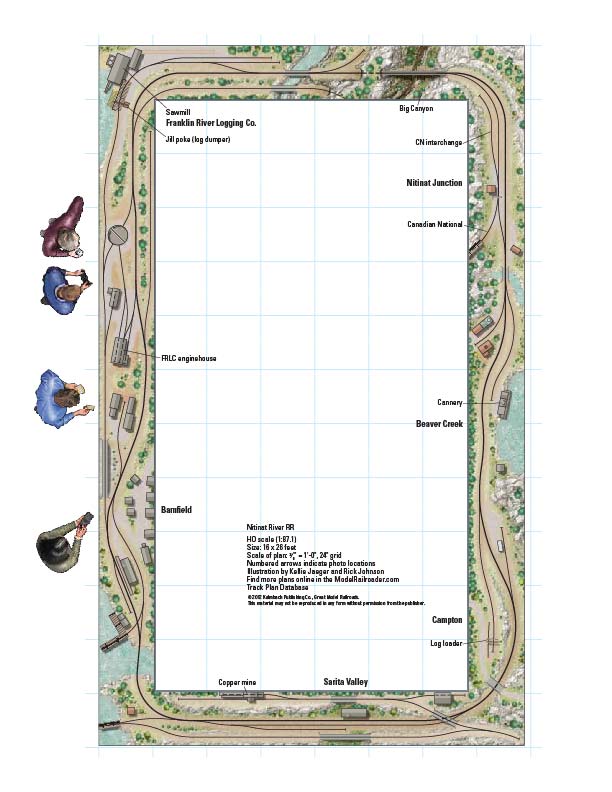
Name: Nitinat River RRLayout designer: The Branch Lines & Backwoods ClubScale: HO (1:87.1)Size: approx. 16 x 26 feet (5 x 8m)Prototype: Canadian National and freelancedLocale: Vancouver Island, B.C., CanadaEra: late 1940sStyle: sectional donutMainline run: 95 feetMinimum radius: 19″Minimum turnout: no. 5 (main), no. 4 (branch)Maximum grade: 3 percent Originally appeared in the Great Model Railroads […]
Read More…
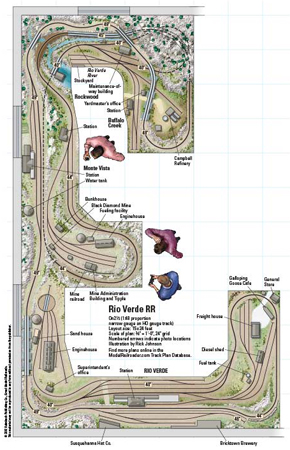
Name: Rio Verde RR Layout designer: Ted Brandon Scale: On21⁄2 (1:48 narrow gauge on HO gauge track) Size: 15 x 24 feet Prototype: freelanced Locale: Rocky Mountains Era: 1890 to 1930 Style: walk-in Mainline run: 150 feet Minimum radius: 16″ Minimum turnout: no. 4 Maximum grade: 3 percent Originally appeared in the Great Model Railroads […]
Read More…
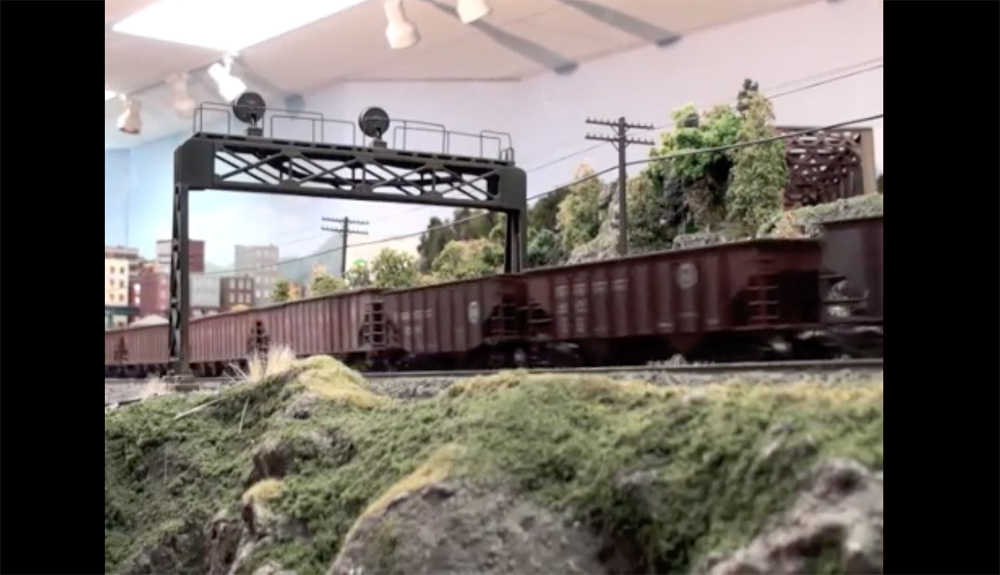
Rich’s layout, sprawling over four levels of rugged mountain scenery, revitalized his family’s love affair with toy trains. Watch the video below to tour the Black Diamond Ry. […]
Read More…
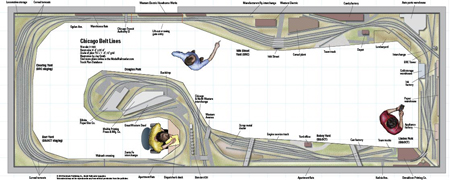
Name: Chicago Belt Lines Layout designer: Clifton Linton and Steven Cox Scale: N scale Size: 8′-6″ x 23′-6″ Prototypes: Baltimore & Ohio Chicago Terminal, Belt Railway Co. of Chicago Locale: Chicago Era: 1970s Style: around the walls Mainline run: 44 feet (B&OCT), 21 feet (BRC) Minimum radius: 11″ Minimum turnout: Peco short Turnout control: Manual […]
Read More…
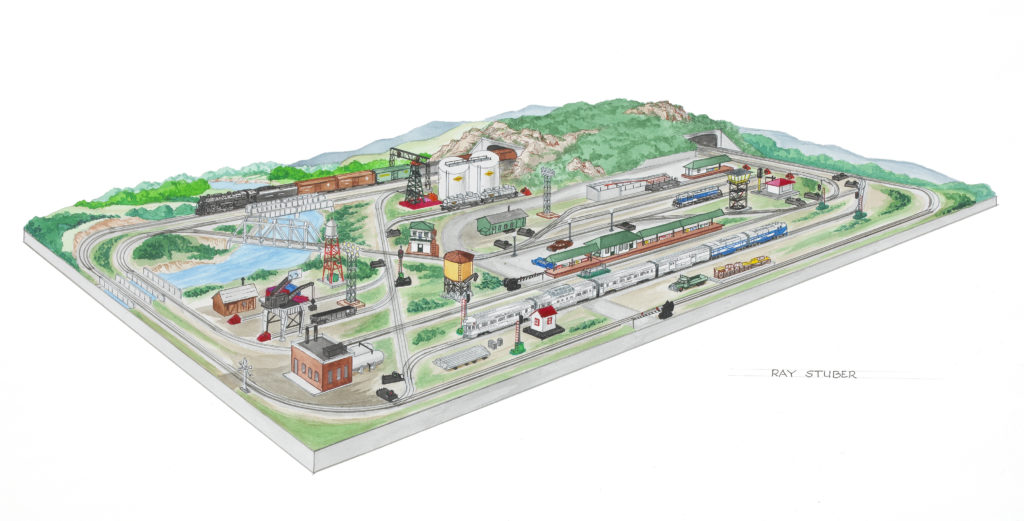
Layout designer: Ray Stuber Scale: O Layout size: 7 x 16 feet Track type: Lionel O Minimum curve: O-31 Originally appeared in the November 2012 issue of Classic Toy Trains. Workin’ the Wabash in 7 x 16 feet track plan Workin’ the Wabash in 7 x 16 feet schematics Workin’ the Wabash in 7 x […]
Read More…
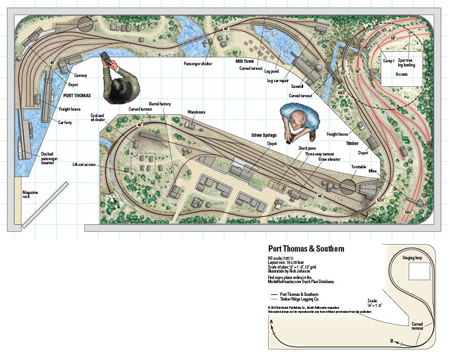
Name: Port Thomas & Southern and Timber Ridge Logging Co. Layout designer: Tom Hawkins Scale: HO (1:87.1) Size: 10 x 20 feet Prototype: freelanced, based on the Port Townsend & Southern RR Locale: Pacific Northwest Era: early 1900s Style: walk-in Minimum radius: 24″ Minimum turnout: no. 6 (main), no. 4 (yards and sidings) Maximum grade: […]
Read More…
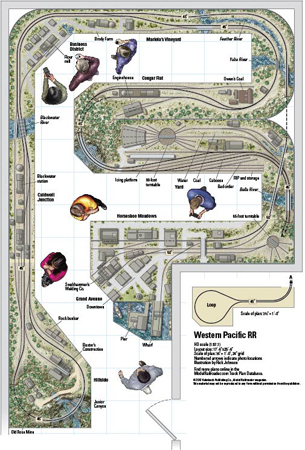
Name: Western Pacific RR Layout designer: Bob Grech Scale: HO (1:87.1) Size: 17′-6″ x 25′-6″ Prototype: freelanced Locale: freelanced Era: 1935 to mid-1940s Style: walk in Minimum radius: 26″ (main line), 24″ (hidden reverse loop) Minimum turnout: no. 6 Maximum grade: 2 percent Originally appeared in the October 2012 issue of Model Railroader. Click here […]
Read More…
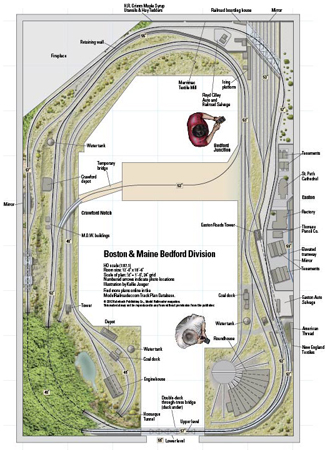
Name: Boston & Maine Bedford Division Layout designer: Bill Moore Scale: HO (1:87.1) Size: 12′-0″ x 18′-6″ Prototype: freelanced, inspired by the Boston & Maine Locale: west-central New England Era: late 1940s to early 1950s Style: multilevel walk-in Mainline run: 174 feet Minimum radius: 36″ (upper level), 28″ (middle level), 21″ (lower level) Minimum turnout: […]
Read More…
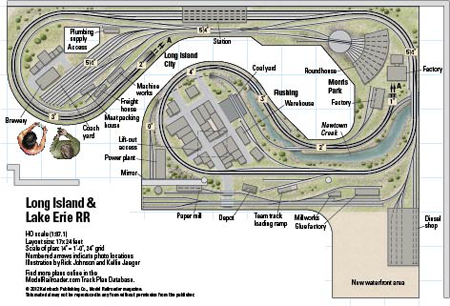
Name: Long Island & Lake Erie RR Layout designer: Charlie Weinhofer Scale: HO (1:87.1) Size: 17 x 24 feet Prototype: Pennsylvania RR and Long Island RR Locale: New York Era: 1950s Style: walk-in Mainline run: 60 feet Minimum radius: 36″ Minimum turnout: no. 8 (main), no. 6 (yards), no. 4 (spurs) Maximum grade: 2 percent […]
Read More…
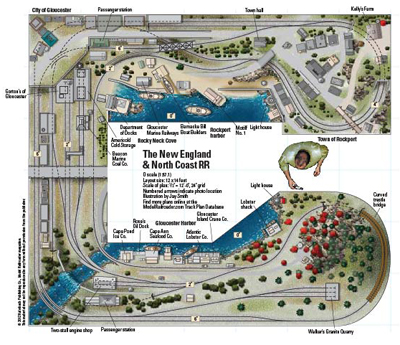
Name: New England & North Coast Layout designer: Sam Novello Scale: HO (1:87.1) Room size: 12 x 14 feet Prototype: freelanced Locale: New England seacoast Era: 1955 to 1965 Style: walkaround Minimum radius: 22″ Mainline run: 100 feet Minimum turnout: no. 6 Maximum grade: 3 percent Originally appeared in the July 2012 issue of Model […]
Read More…