





WASHINGTON — Devices that ensure a passenger train always activates signal and highway warning devices — regardless of track conditions or a train’s car type, speed, or length — will be installed on some Amtrak trains “this calendar year,” according to the Federal Railroad Administration.
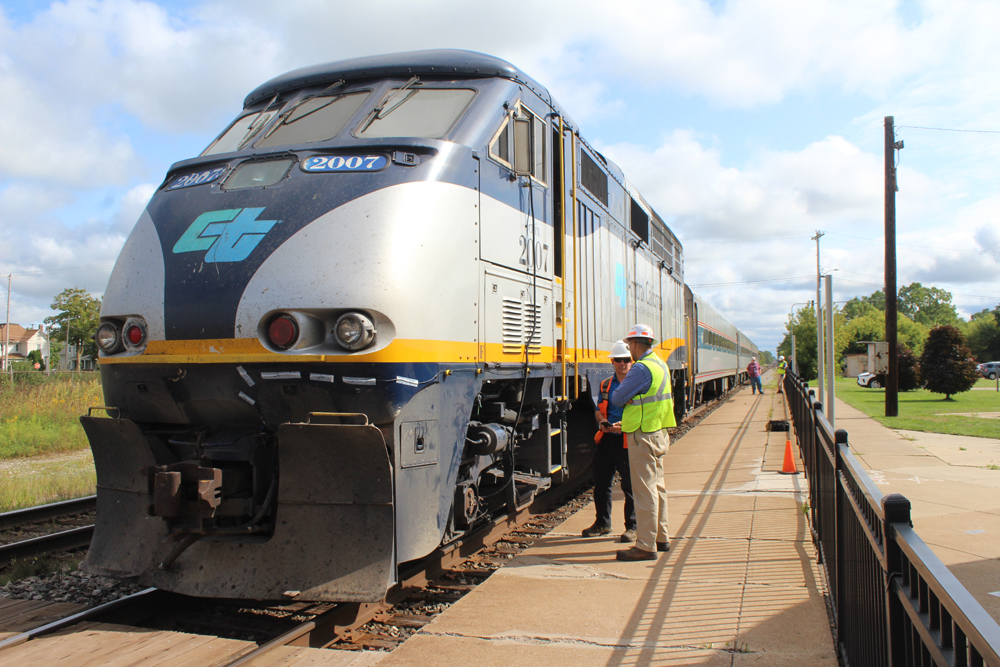
Responding to a Trains information request, the FRA said the mounting of shunt-enhancing antennas on trucks of state-owned Charger locomotives and California Venture cab cars is expected to be completed by the end of December 2026. Amtrak Cascades Airo trainsets entering service in late summer or fall will be delivered with the antennas.
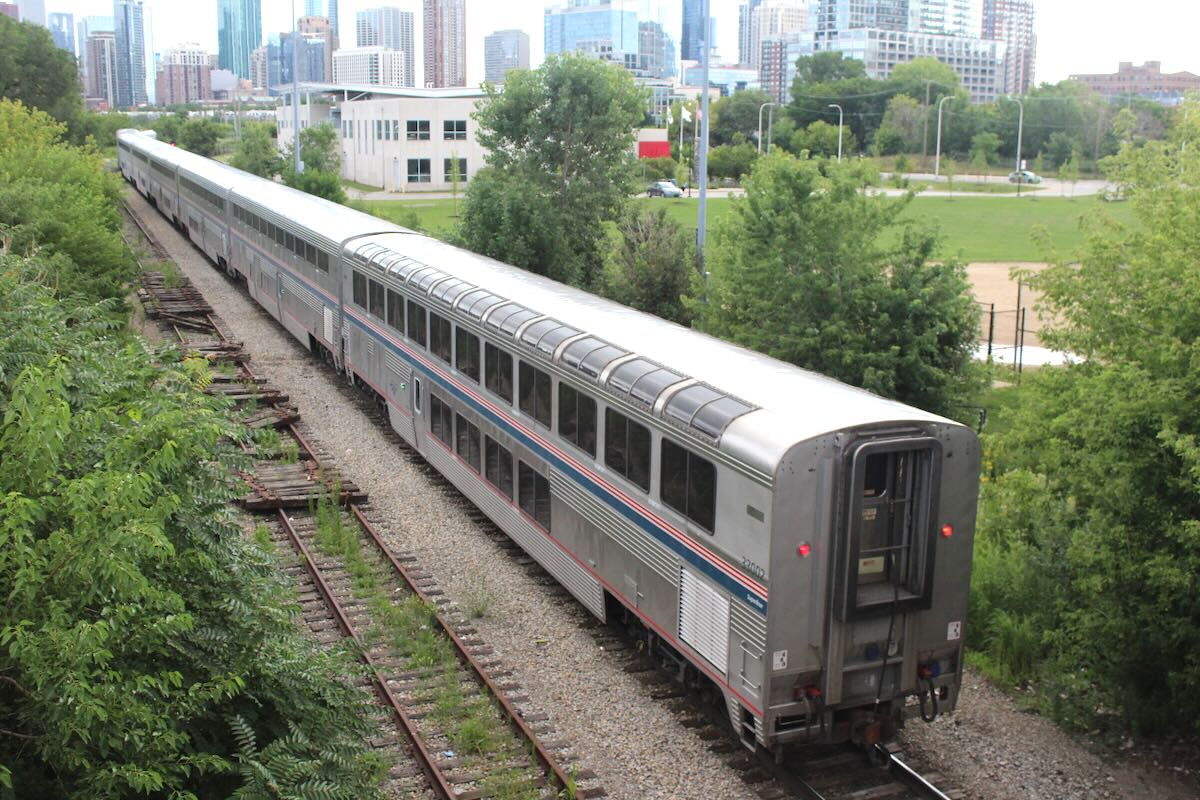
The implementation delay means that 14 Superliner cars will remain assigned to two daily Illinois-sponsored round trips between Chicago and Carbondale, Ill., for the foreseeable future. That will prevent Amtrak from moving those cars elsewhere to alleviate a capacity shortage on long-distance trains and the Chicago-St. Paul, Minn., Borealis [see “Amtrak adds train capacity …,” Trains.com, March 6, 2026]. Those cars would have been useful this week for the Borealis, which has been sold out while the Empire Builder was canceled for nearly a week, a move attributed to avalanche danger in Montana [see “Mudslide halts ‘Cascades’ …,” March 14, 2026].
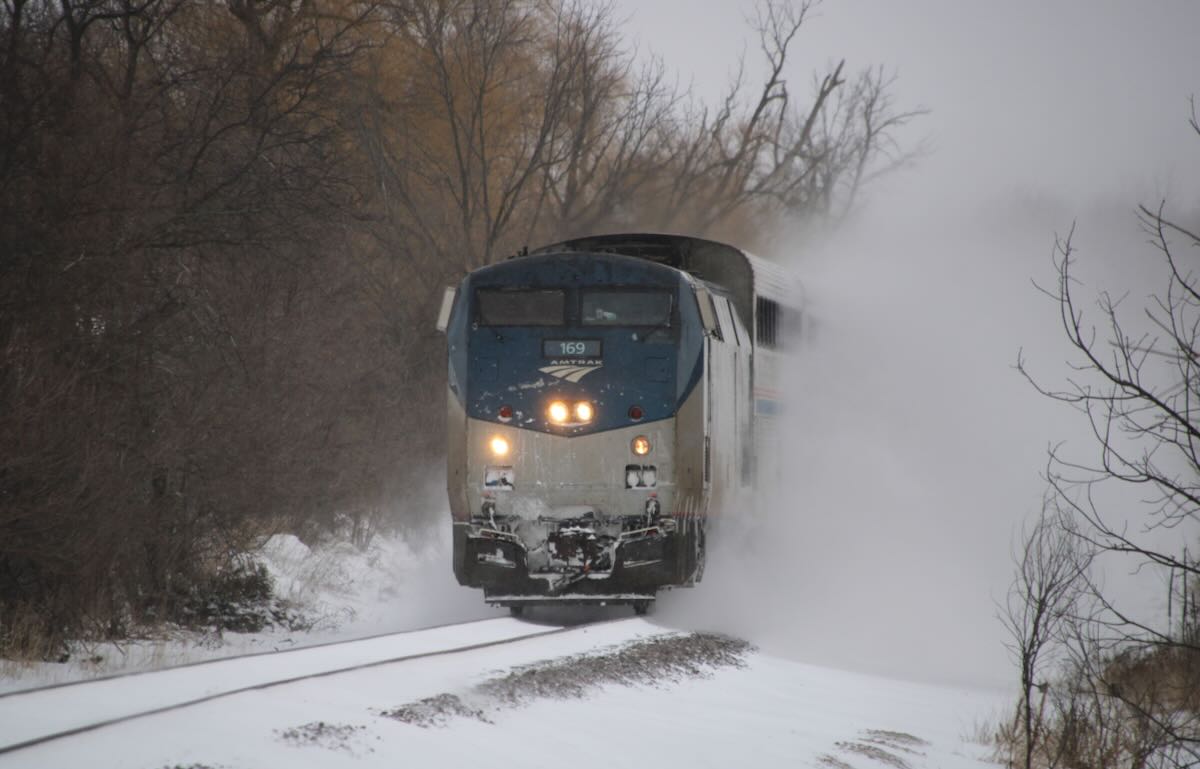
In January, Illinois Department of Transportation spokesman Scott Speegle told Trains via email that Amtrak had ordered four antennas, in addition to one already scheduled for installation. Once those antennas are installed on five Charger locomotives, he said, the state will have enough operable trainsets to use Venture equipment on the Chicago-Carbondale service.
The FRA awarded Amtrak $58.8 million to acquire onboard shunt enhancement devices on 443 locomotives and 192 cab cars in 2024 as part of the Consolidated Rail Infrastructure and Safety Improvement grant program [see “FRA awards $2.4 billion …,” Oct. 29, 2024].
Speegle’s January email said that “states were originally going to cover the 20% match, but the cost of the antennas came in significantly higher, and that has led to further guidance/revisions between Amtrak and the FRA.” An FRA spokesman confirms that the agency is covering 80% of the project’s cost. Information obtained by Trains reveals that states and Amtrak are equally splitting the remaining 20% on state-owned equipment.
Why shunt enhancers are needed
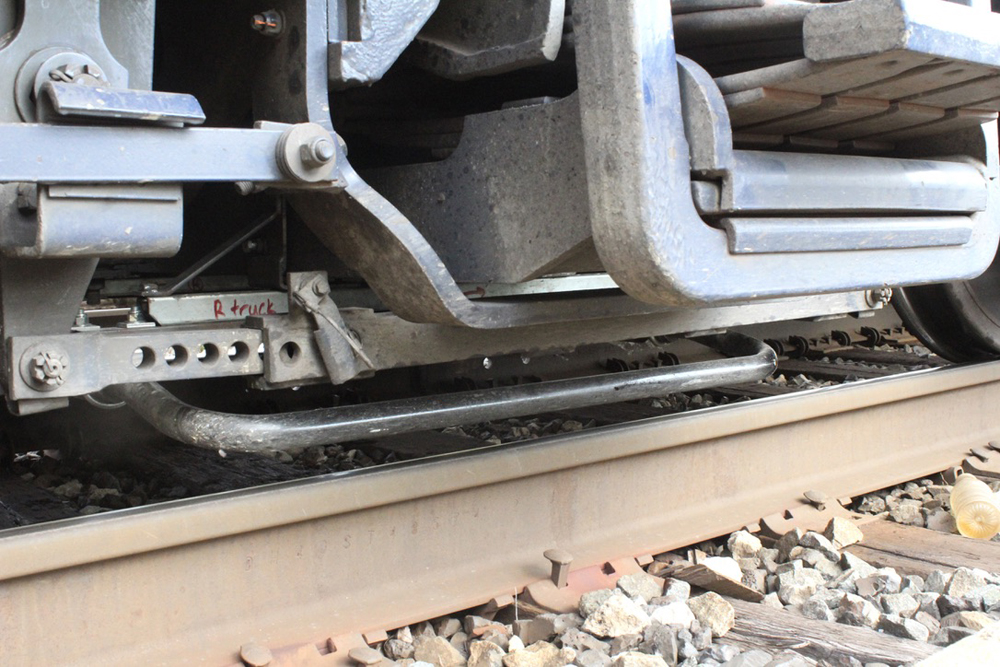
Electrical impulses triggering signals and highway warning devices are transmitted — or shunted — between rails through wheels and axles, completing circuits that signify train occupancy. For reasons still not quantifiable despite years of investigation, some routes are prone to a significant number of “loss of shunt” incidents in which the current is weak or intermittent.
Where inconsistent shunting results in less-than-timely warning-device activation, railroads have imposed non-negotiable operating conditions. These might include minimum train length (expressed in axle count, including the locomotive); passenger car equipment type (based on weight and/or wheel profile); maximum speed over a certain segment; or a combination of these.
This is why Canadian National requires Amtrak to assign seven Superliners to the Chicago-Carbondale trains, as well as the City of New Orleans, if 79-mph maximum speeds are to be maintained. The railroad says trains can operate with lighter single-level passenger cars, but at lower speeds.
Other routes where loss of shunt has been known to occur have minimum axle counts but no equipment edicts. These include Union Pacific’s St. Louis-Kansas City, Mo., Missouri River Runner corridor and California’s Gold Runners over BNSF through the San Joaquin Valley. In Canada, CN imposes speed restrictions on VIA Rail’s 24-axle Venture trainsets but none on shorter trains with legacy LRC coaches. VIA has challenged those restrictions, noting the Ventures have no issues activating crossing signals at 100 mph on VIA-owned tracks [see “VIA goes to court …,” Nov. 13, 2024].
Seeking reliability
Unexplained shunting failures on some routes led the FRA, CN, UP, and Amtrak to form a Loss of Shunt Technical Committee in August 2017. With funding from all parties, Canadian National then took the lead by beginning years of tests on a loss-of-shunt-prone stretch of its Champaign Subdivision near Effingham, Ill., to determine causes and possible remedies. The need for a controlled circuit testing environment led CN in 2022 to build a LOS Committee-sponsored test track at a yard in Pontiac, Mich.
Trains explored the issues in September 2023 [see “The quest to counteract …,” Sept. 5, 2023, and “Seeking answers …,” Sept. 6, 2023]. It also observed testing of onboard shunt-enhancing antennas at the test track and on CN’s adjacent Holly Subdivision that month. Results found the antenna’s effectiveness required an FRA waiver of top-of-rail clearance regulations — a process that took a year, following complaints by several unions that they were not involved in testing [see “Rail labor opposes Amtrak request …,” July 6, 2024].
A “white paper” with test results released by CN on Nov. 15, 2024, confirmed the device’s efficacy in preventing loss of shunt incidents. It noted loss of shunt can happen on any rail line, but did not draw conclusions on why the situation is more likely to occur on some routes.
— To report news or errors, contact trainsnewswire@firecrown.com.
Share this article

Comments were discontinued for about a day, now re-instated, and we ONCE AGAIN get these posts from a bot in Turkey with its name printed in red letters.
This is exactly right
9 years that the problem has been known. As far as I know it has never been disclosed if this more likely to happen with certain types or even brands of crossing predictors.