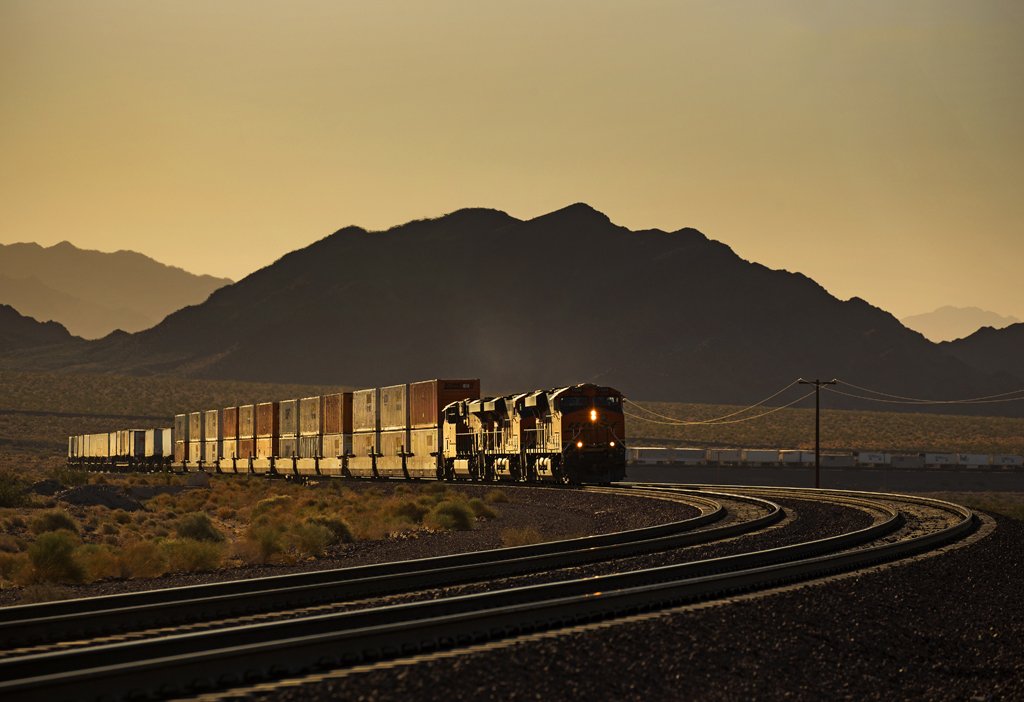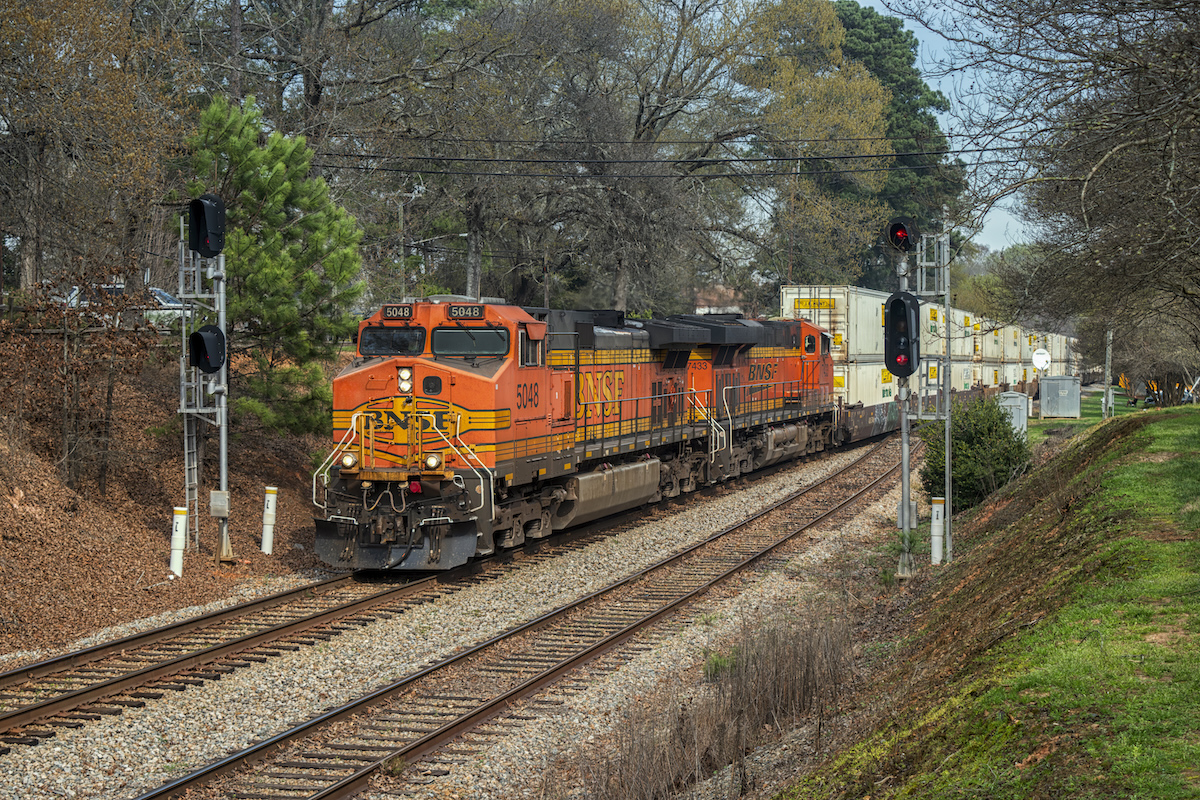
WASHINGTON — The final piece of CSX’s Howard Street Tunnel clearance project — raising a bridge in Baltimore — is expected to be completed late next month, opening the way for double-stack service in the Interstate 95 corridor.
“On the I-95 corridor we move a good amount of traffic already between Florida and the Northeast markets on our network,” Chief Commercial Officer Maryclare Kenney told an investor conference today (Tuesday, March 17). “Now we’ll have double the capacity there. But what it’ll also allow us to do is efficiently connect some other markets in the Southeast that, quite frankly, didn’t make sense before … because of the lack of efficiency that we had in single-stack operations.”

CSX will offer double-stack service between Atlanta and New Jersey, Philadelphia, and Chambersburg, Pa. “We’re excited about it,” Kenney says.
The overall $566 million Howard Street Tunnel project consists of vertical clearance improvements at 22 locations between Philadelphia and Baltimore. CSX began construction in Pennsylvania in 2022 and has been working its way south ever since. The tunnel itself was shut down from February through September last year for clearance work that was completed ahead of schedule.
Overall, CSX expects the Howard Street Tunnel project to allow the railroad to convert 75,000 to 125,000 truckloads per year to intermodal.
The project also will boost east-west intermodal volume for traffic moving between Chicago and Baltimore, Kenney says, because of the ability to use steelwheel interchange with BNSF and Union Pacific in Chicago. Without stack capability, eastbound containers originating in the West were unloaded at a BNSF or UP terminal in Chicago, trucked across town to a CSX terminal, and single-stacked for the trip to Baltimore.
CSX also has high expectations for its interline service with CPKC linking Dallas and points in Mexico with the Southeast. The service uses the former Meridian & Bigbee, which the railroads began operating in December 2024 as a shortcut linking their networks via a new interchange at Myrtlewood, Ala.
The railroads are nearly done with track improvements that will boost speeds to 49 mph while also improving service consistency and reliability. On CSX, the Southeast Mexico Express service currently serves Atlanta and points in Florida. Service to Charlotte, N.C., is being added, Kenney says.
“We’re talking to our channel partners and shippers right now,” Kenney says. “Now that we have that in place for about a year, how do we continue to work with them to target specific shippers that have historically moved traffic over the road and get that converted to the rail?”
CSX has been pleased with the intermodal alliance announced last year with BNSF. “We’ve been very happy with the results. We’ve seen the business perform well, and our customers have been very happy with the service product,” Kenney says. “So really kudos to both operating teams and how well they’ve worked together to create and deliver that solution.”
The interline service was in the works before the proposed Union Pacific-Norfolk Southern merger was announced on July 29, Kenney noted. “We’re always going to look for ways to collaborate,” she says. “Is there some big partnership to be announced? No.”
CSX’s overall intermodal volume is up 5% for the year to date through March 14, according to its latest Association of American Railroads weekly carload report.
Merchandise business is not faring as well, as CSX expected entering the year. Carload volume is down 0.6% thus far in 2026.
The spike in energy prices may have a negative impact on chemicals and plastics volume, as well as consumer-focused businesses like intermodal, Kenney says. But high natural gas prices are also helping create strong demand for domestic utility coal.
Recent fuel price volatility is expected to create a $20 million to $30 million headwind in the first quarter due to a lag in the railroad’s fuel surcharge program, Kenney says. CSX expects to recover that amount as fuel surcharges ramp up over the course of the year.
The automotive traffic and freight segments related to housing are challenged due to affordability and higher interest rates, Kenney says.
Auto production and sales are forecast to be down this year, and a CSX-served assembly plant will be shut down for retooling through early next year. “As you look across automotive, there’s just not a lot of signs for strong improvement,” Kenney says.
Forest products business, meanwhile, is suffering through the housing downturn.
But higher infrastructure spending is boosting the railroad’s minerals business, including aggregates and cement, Kenney says.
She spoke at the J.P. Morgan Industrials Conference.
— To report news or errors, contact trainsnewswire@firecrown.com.
Share this article