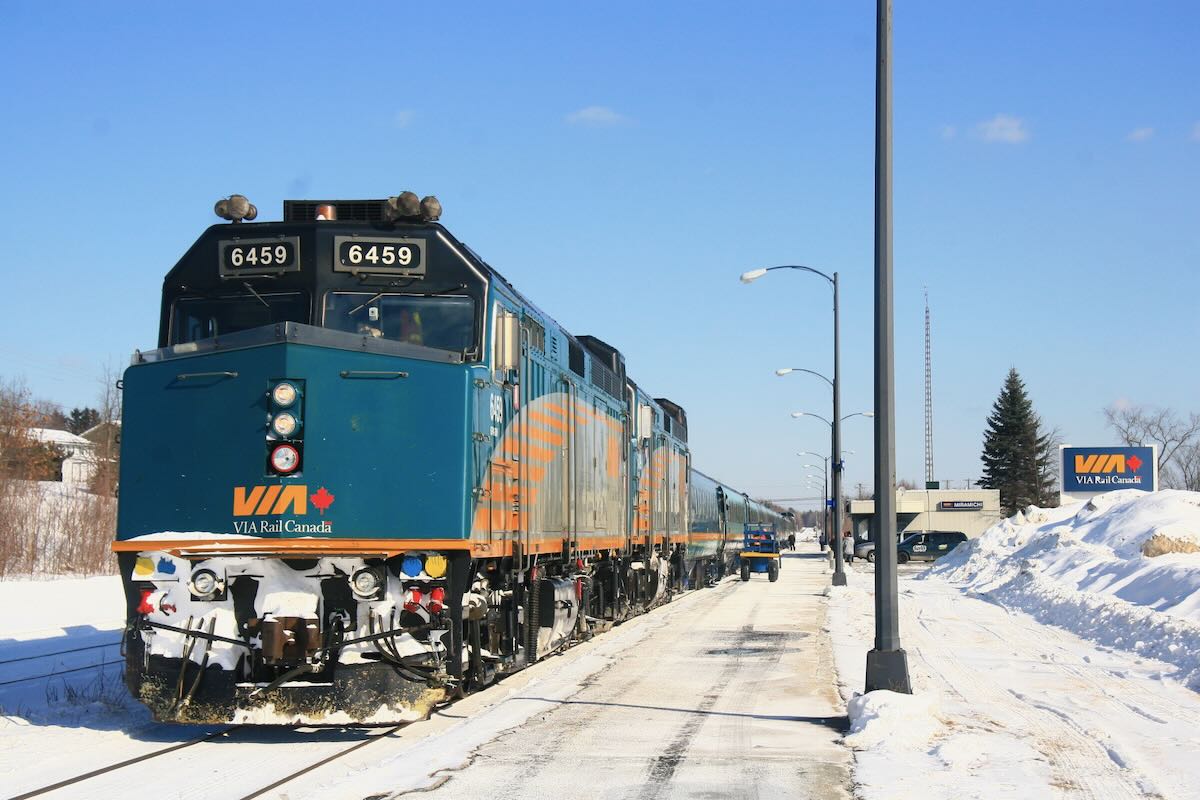
OTTAWA, Ontario — VIA Rail Canada needs to improve service and to address some managerial practices, the Auditor General of Canada says in a report issued Friday (Feb. 27). But an audit generally found the company to be well run.
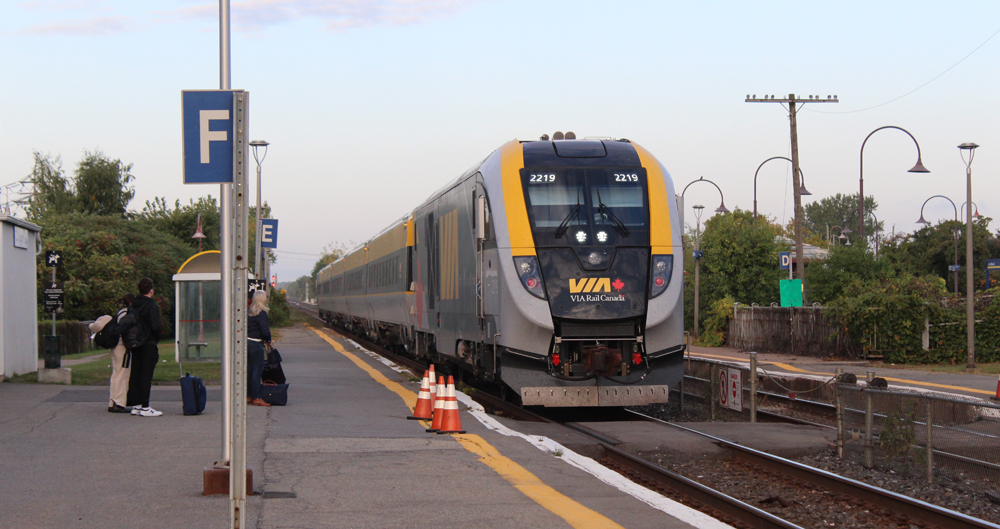
The audit report’s assessment of VIA operations notes that the company owns just 3% of the track it uses, and that under Canadian law, passenger trains do not have priority over freight traffic. VIA trains are often required to yield to freight operations, which “can result in substantial delays and impact service reliability,” the report notes.
It also notes that the passenger operator’s relationship with third-party owners — which include operators of the stations in Montreal and Toronto, as well as freight railroads — are governed by formal service agreements that require renegotiation for any proposed service change, such as additional frequencies. Those agreements also allow a host to impose regulations and restrictions.
The report acknowledges issues that have resulted with one such third party. While it does not identify Canadian National by name, VIA’s relationship with CN — which operates the majority of the third-party trackage it uses — is troubled enough that the passenger company asked the Canadian Transport Agency to impose a new service agreement in 2023. That request had gone nowhere more than a year later [see “VIA move against CN …,” Trains.com, Nov. 27, 2024]. And CN’s decision to impose speed restrictions on VIA’s Siemens Venture trainsets over grade-crossing activation issues has had “a significant impact on VIA’s on-time performance,” the report indicates. It also led VIA to take action in court, although the restrictions remain in place [see “VIA goes to court over CN speed restrictions …,” Trains.com, Nov. 13, 2024].
Given those conditions, the report found that VIA could not improve its service, which had seen on-time performance fall as low as 30% in the first quarter of 2025. But it also notes, “Declining punctuality increases the risk of losing passengers to other modes of transportation, threatens revenue targets, and undermines VIA’s ability to achieve its strategic objectives.”
Its recommendation to address this is a rather mild suggestion to “collaborate with third-party asset owners to identify and address the causes of service delays,” to which the company said it would “pursue collaborative and legal avenues if needed.”
Management assessment generally positive
The audit’s assessment of corporate governance found that VIA’s board generally did well in terms of fulfilling its responsibilities, although it did not conduct a required self-assessment of its practices; needed stronger controls for its expense policies; did not fully address all conflict-of-interest circumstances; and did not approve its CEO’s objectives in 2025 and failed to submit those objectives to the Minister of Transport.
It also found that VIA generally did well in terms of strategic planning and measuring its performance, although it lacked a talent management planning process for non-executive staff, and that its results in addressing sustainability goals were flawed because the goals themselves were not well-defined.
In its response, VIA agreed with those governance and planning assessments and has either already addressed them or said it will do so.
The full report is available here.
— To report news or errors, contact trainsnewswire@firecrown.com.