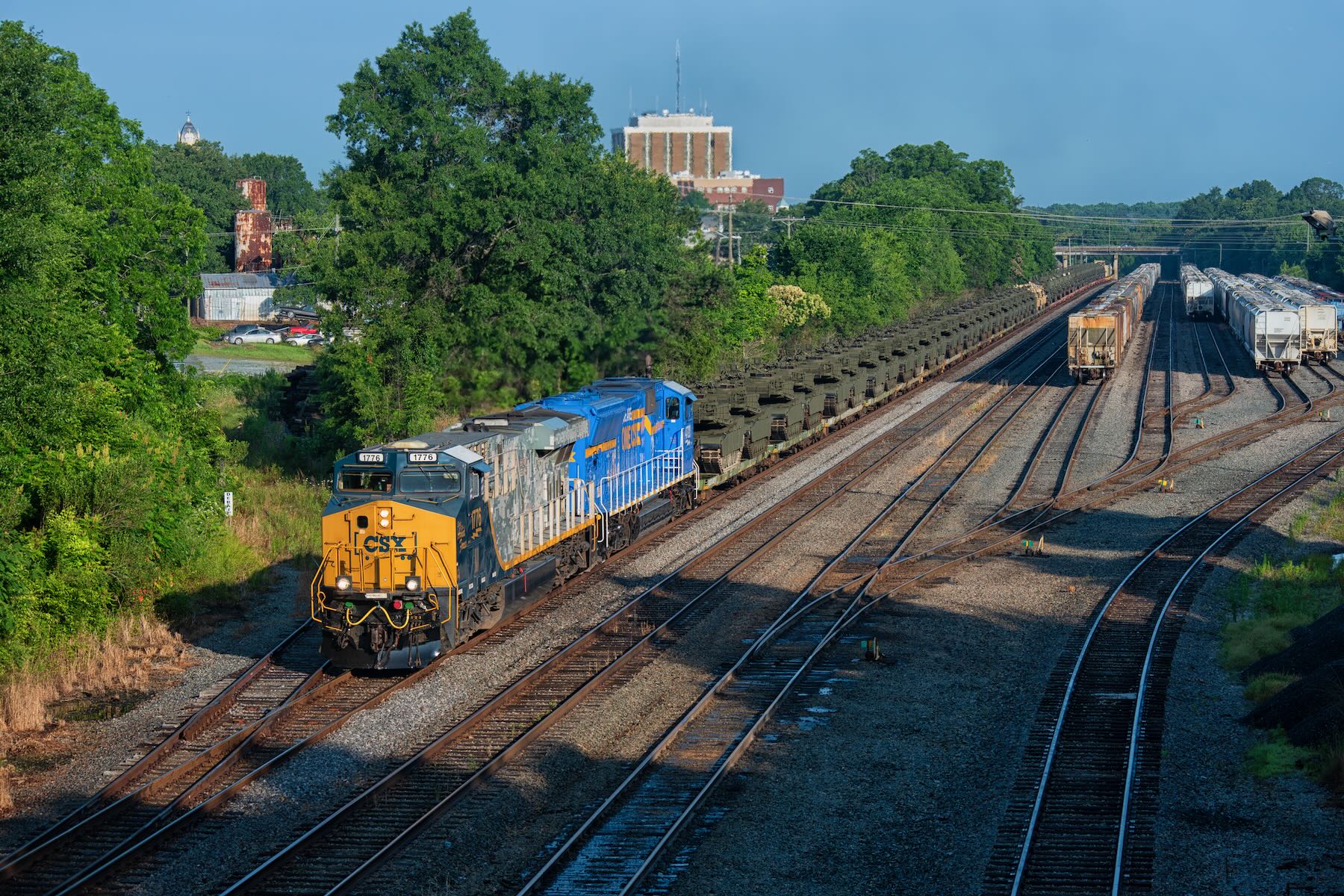
WASHINGTON — The U.S. Army has weighed in on the Surface Transportation Board’s proposal to revise its rules regarding reciprocal switching, saying such agreements would serve national defense interests.
The STB in January announced plans to repeal regulations that it says have prevented captive carload and bulk shippers from gaining access to a second railroad [see “STB proposal would make it easier …,” Trains.com, Jan. 7, 2026]. As part of its proposed rulemaking, the board would consider requests for reciprocal switching on a case-by-case basis.
A five-page submission filled with the acronyms that define military communications — for example, readers will learn that the continental United States is CONUS — indicates the military’s support for such case-by-case consideration. The filing by the Railroads for National Defense Program of the U.S. Army Transport Command (or RND, a part of ARTRANS, if you prefer) says railroads “generally provide adequate levels of support for peacetime needs and have often responded to unique peacetime military rotational requirements and timely mission objectives.”
But post-COVID operations “exposed risks in the rail network’s ability to adapt rapidly” to events outside of a railroad’s control, as well as to the impacts of the industry’s business decisions, the filing says. National or regional emergencies, sudden changes in demand, or post-merger service disruptions have led to instances where military response have had problems “if a major large-scale contingency deployment or mobilization was ordered.” Those situations make it critical “to have deployment options that mitigate these risks and to exercise these options before they are urgently needed.”
As a result, the RND program says it would “strongly consider advocating for reciprocal switching agreements at critical defense activities which currently rely on a single rail carrier for service” to gain flexibility to address rail service challenges. It would seek such an agreement “solely where it is reasonable, practicable and in the best interest of national defense.”
The filing concludes by asking the board to “consider the unique needs of national defense when evaluating reciprocal switching petitions … Ensuring flexibility, resiliency, and reliability in rail service is critical to safeguarding military readiness, national security, and the public interest.”
— To report news or errors, contact trainsnewswire@firecrown.com.