





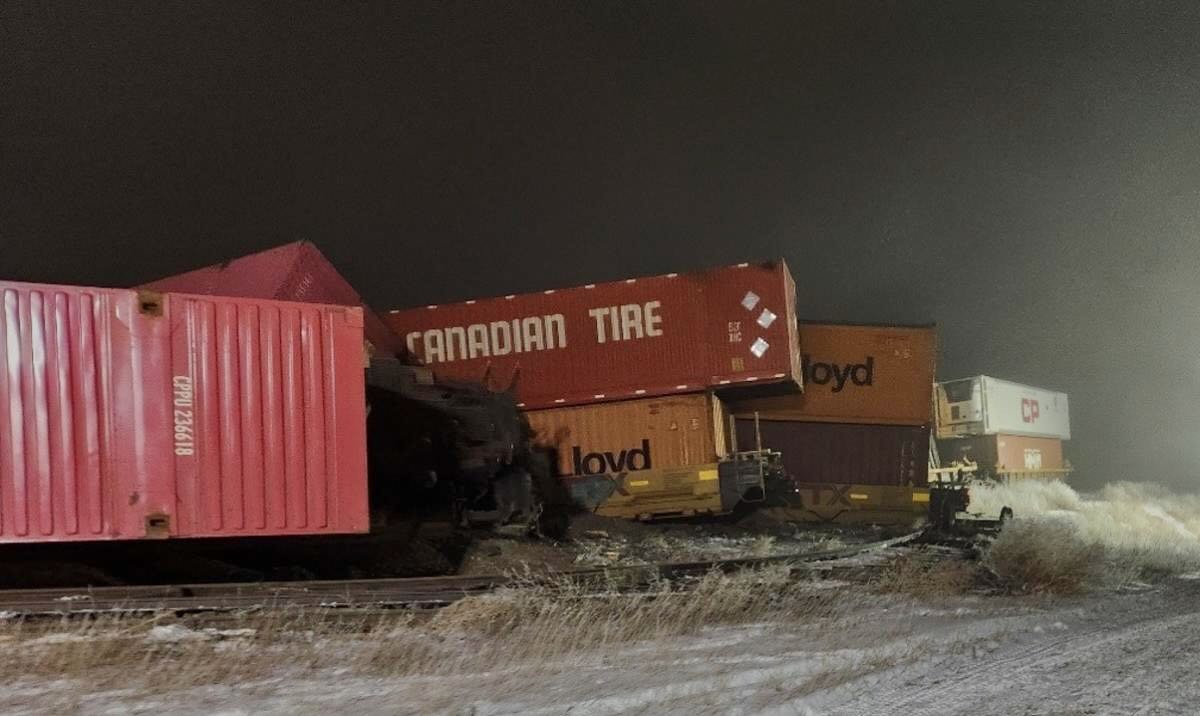
CALGARY, Alberta — Incomplete training of a maintenance supervisor played a part in the derailment of a CPKC intermodal train near Brooks, Alberta, the Transportation Safety Board of Canada said today in releasing its report on the Feb. 5, 2024, incident.
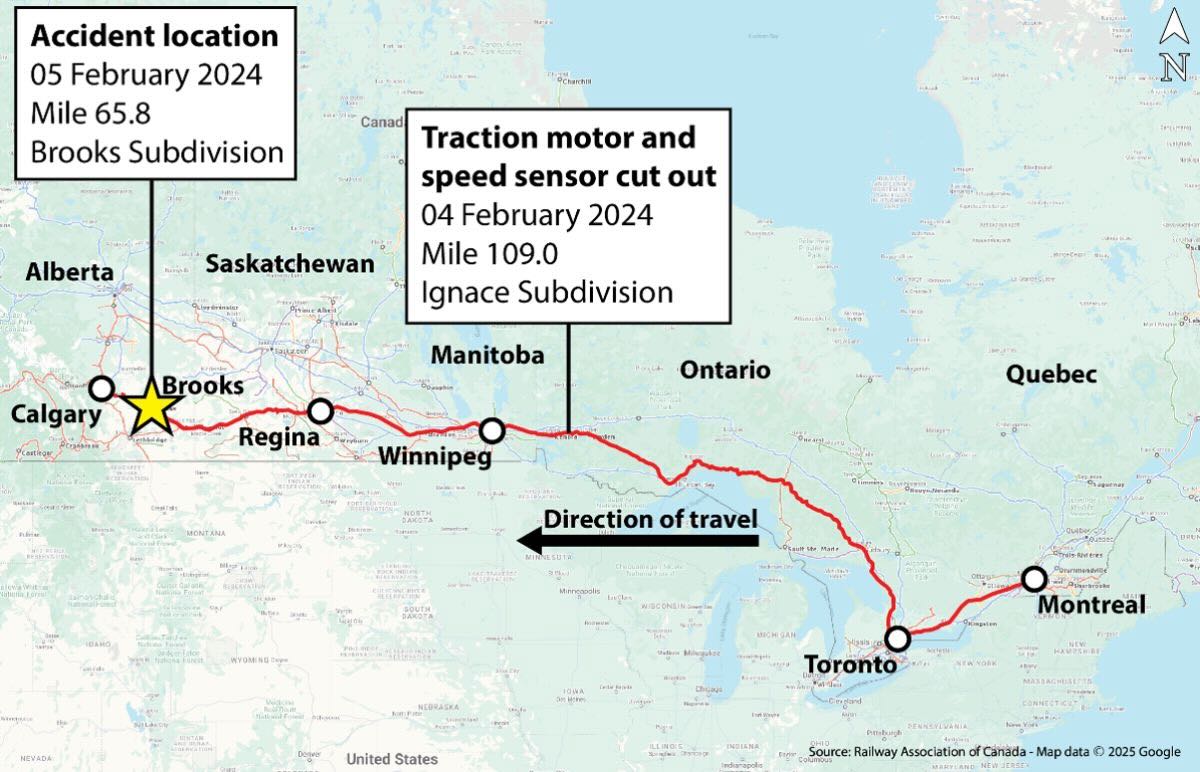
The derailment involved the trailing unit of two locomotives at the front of the train, as well as the first 17 intermodal cars (a total of 41 platforms) of the 97-car train. The train, traveling from Montreal to Edmonton, was traveling about 53 mph when the derailment occurred at 4:24 p.m. No one was injured; while some of the containers were carrying dangerous goods, none were breached or released their contents.
The TSB said its investigation determined that the train had stopped the day before in Ontario because of smoke coming from one of the traction motors of the locomotive that eventually derailed. After consulting with a mechanical supervisor, the engineer cut out the affected traction motors and their associated speed sensors. But in recording the issue, neither the engineer nor supervisor made note of the speed sensors being cut out. After several crew changes, the axle seized; the resulting damage caused a track failure and the derailment.
The TSB investigation found that cutting out the speed sensor removed a defense against a locked axle, but the engineer and supervisor did not fully understand this. The supervisor at the time was still completing training and had not yet covered the specific knowledge addressing this type of issue. The report also notes that CPKC had eliminated another position, the central locomotive specialist, which required in-depth knowledge of locomotive systems; the supervisor mechanical (locomotive), the position involved in this incident, has broader responsibilities.
“When specialist duties are transferred to a position occupied by an individual that is not specialized in those duties,” the TSB said in a press release, “unless technical training, mentoring, and operational experience are provided to bridge the gaps between the two positions, there is an increased risk that these duties will not be performed to meet safe railway operations.”
CPKC subsequently issued a bulletin to locomotive facilities addressing the importance of the traction motor speed sensor, and created a five-person Mechanical Locomotive Support desk which has taken over troubleshooting duties from the SML.
The full report is available here.
— To report news or errors, contact trainsnewswire@firecrown.com.


The executive that signed off eliminating the central locomotive specialist probably got a nice bonus!