





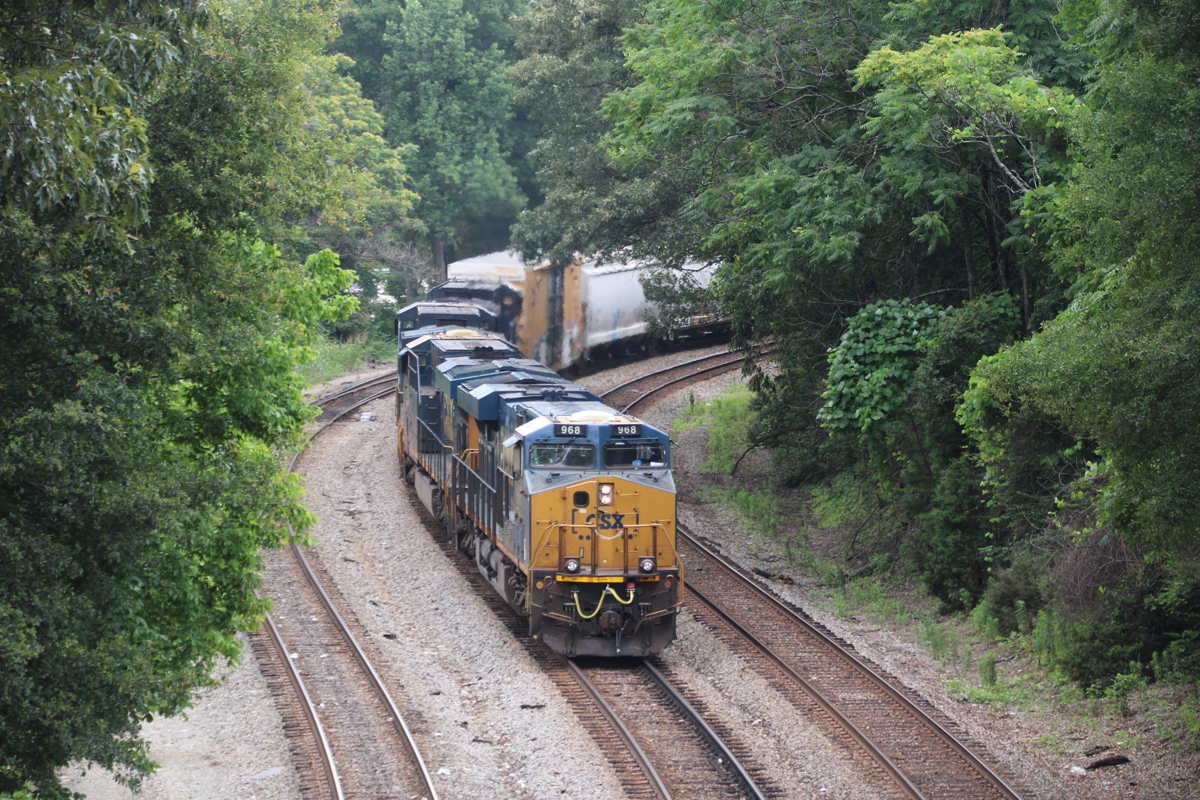
MIAMI BEACH, Fla. — CSX CEO Steve Angel says it should be no surprise that railroads are struggling to grow their freight volumes.
“When you look around the world, there really isn’t much growth,” Angel told an investor conference last week in his first detailed public remarks outside of earnings calls since becoming CEO in September.
China is no longer a growth engine, Europe has never been a source of growth, and the growing economies of places like India don’t have the scale of China, the European Union, or the U.S., Angel says.
“There’s a lot of industrial companies that are struggling with growth because industrial production has been flat pretty much around the world and in the United States for several years,” says Angel, a former Linde chief executive who came out of retirement to lead CSX. “So it’s not a phenomenon that’s unique to the railroads.”
U.S. Class I railroads have had relatively flat volumes for the past decade despite overall growth in the economy and truck tonnage.
Angel says merchandise traffic is a mature business that relies on mature industries for volume, some of which, like forest products, are in decline or, like chemicals, are pressured by global competition.
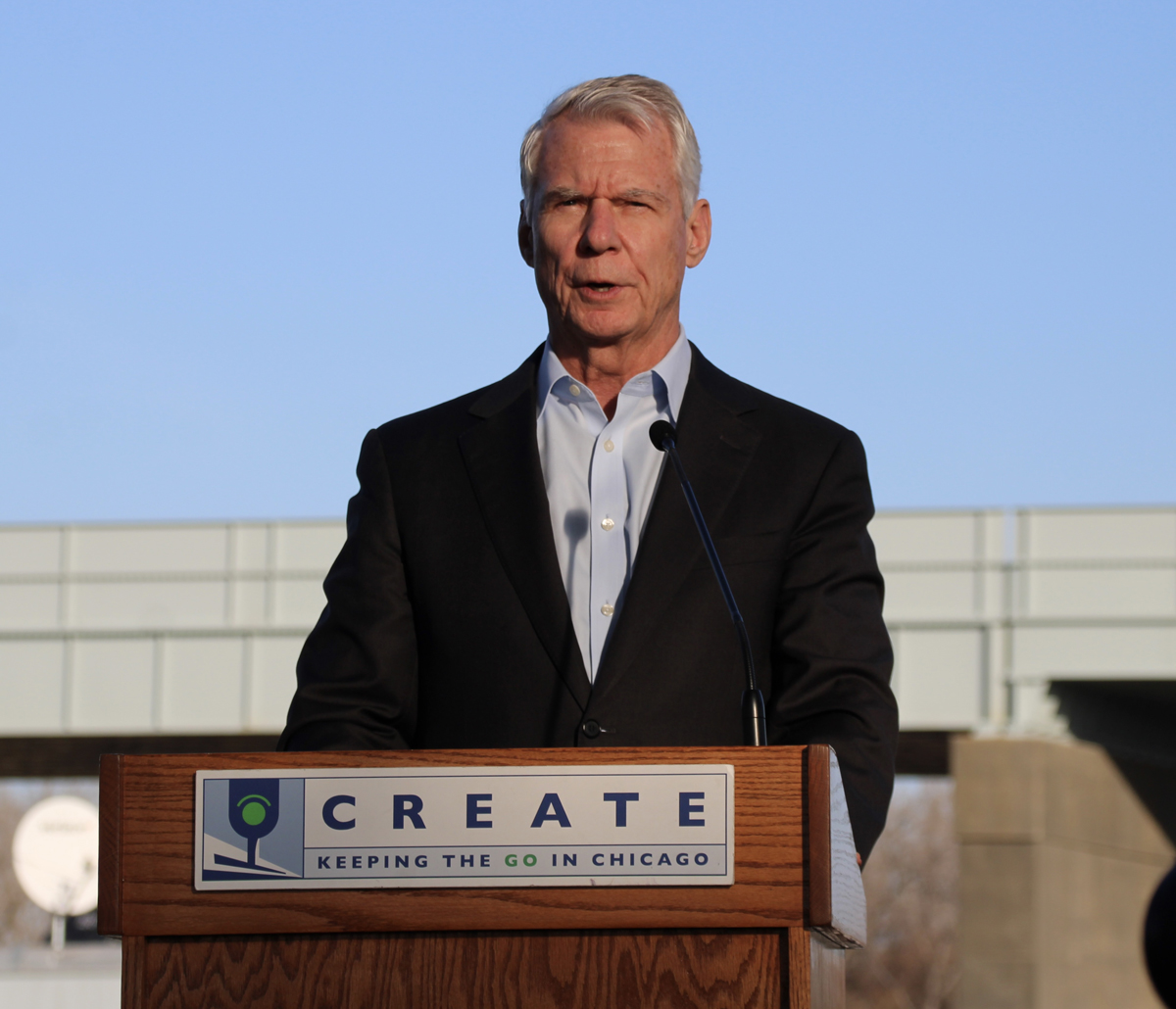
“At the end of the day, I’m not sitting here saying, ‘Gee, if you just give me 5% volume, I’ll be fine.’ I’m sitting here thinking I don’t really need that much,” Angel says. “I’ll take it. And if it comes, we’ll capitalize on it. But I think a lot of people in the railroad industry and people in the broader industrial world, generally speaking, have gotten used to having a low-growth environment to work in.”
That said, Angel says the U.S. remains the best bet for economic growth, including reindustrialization.
“If it’s going to happen, it’s going to happen on our network. And it is,” Angel says of the railroad’s industrial development pipeline, which remains full. “We do see those opportunities coming along. We work on a lot of it from a development standpoint. But it’s going to be a long game. It’s a long process. It takes time.”
Service improvements will help the railroad gain volume, particularly in intermodal, Angel says: “Being consistent in our performance is really important.”
As a relative newcomer, Angel, who once worked in locomotive sales at GE Transportation, was asked his impression of the railroad industry after spending nearly five months on the job at CSX.
“There’s nothing like railroads anywhere anywhere on the planet. I’ve never seen an industry like this,” he says. “In many ways, railroads are the heartbeat of the American economy. And, you know, the U.S. was built on railroads. There’s a lot of lore and history in this industry. You’re not going to walk into the offices at Meta or Google and meet fourth- and fifth-generation employees. It’s that kind of heritage. It runs that deep. And, you know, it’s a fascinating industry, and I enjoy it.”
Angel says his fascination with railroads helped pull him out of retirement. “I flunked retirement,” Angel says. “I tried that. It’s boring.”
Angel says his immediate focus remains on proving CSX as a successful standalone company and running the railroad better daily, rather than getting hyper-focused on the hypothetical outcomes of the proposed Union Pacific-Norfolk Southern merger.
“Anytime you have consolidation inside an industry, for the rest of participants it can create some challenges in terms of risk that you need to go manage, which is what CSX will do,” Angel says. “But it also creates opportunities at the same time. And so you need to manage the risk, manage the challenges, and capitalize on the opportunities.”
CSX has capitalized on its intermodal alliance with BNSF, which has boosted domestic intermodal volumes as new interline service was added between the West Coast and points on CSX in the Ohio Valley, Southeast, and Northeast.
“It’s going to be a long process. We really don’t know how it’s going to play out in the end,” Angel says. But the Surface Transportation Board will listen to comments from rail customers, who can shape the merger debate, he says.
Angel spoke at the Barclays 43rd Annual Industrial Select Conference.
— To report news or errors, contact trainsnewswire@firecrown.com.




Exactly. Look at CSX’s A-Line for example. Mostly single-track and running at near capacity. How do you attrack new business if you can’t move it efficiently? PSR and the hedge funds’ demands for ever-lower OR’s at the expense of cap-ex are the strangle-hold from which the class I’s can’t escape.
PSR, layoffs, miles of stored locomotives and cars, ripped out yards and doing everything humanly possible to maintain 40% margins and $30 million in CEO compensation “holds back railroad volume growth”.
Um, in 2025 CSX’s net profit margin was 20.5% and the CEO’s maximum compensation (if all goals are met) would be no more than $18.5 million. That may be too much but no sense exaggerating.