SCHAUMBURG, Ill. — The inescapable topic of artificial intelligence was, well, inescapable at last week’s Midwest Association of Rail Shippers winter meeting, making it one of the few topics to regularly elbow its way onto the event’s otherwise merger-dominated agenda.
Speakers throughout the two-day conference talked about the ways AI is already used in a wide range of functions, but also considered where it can still make an impact.
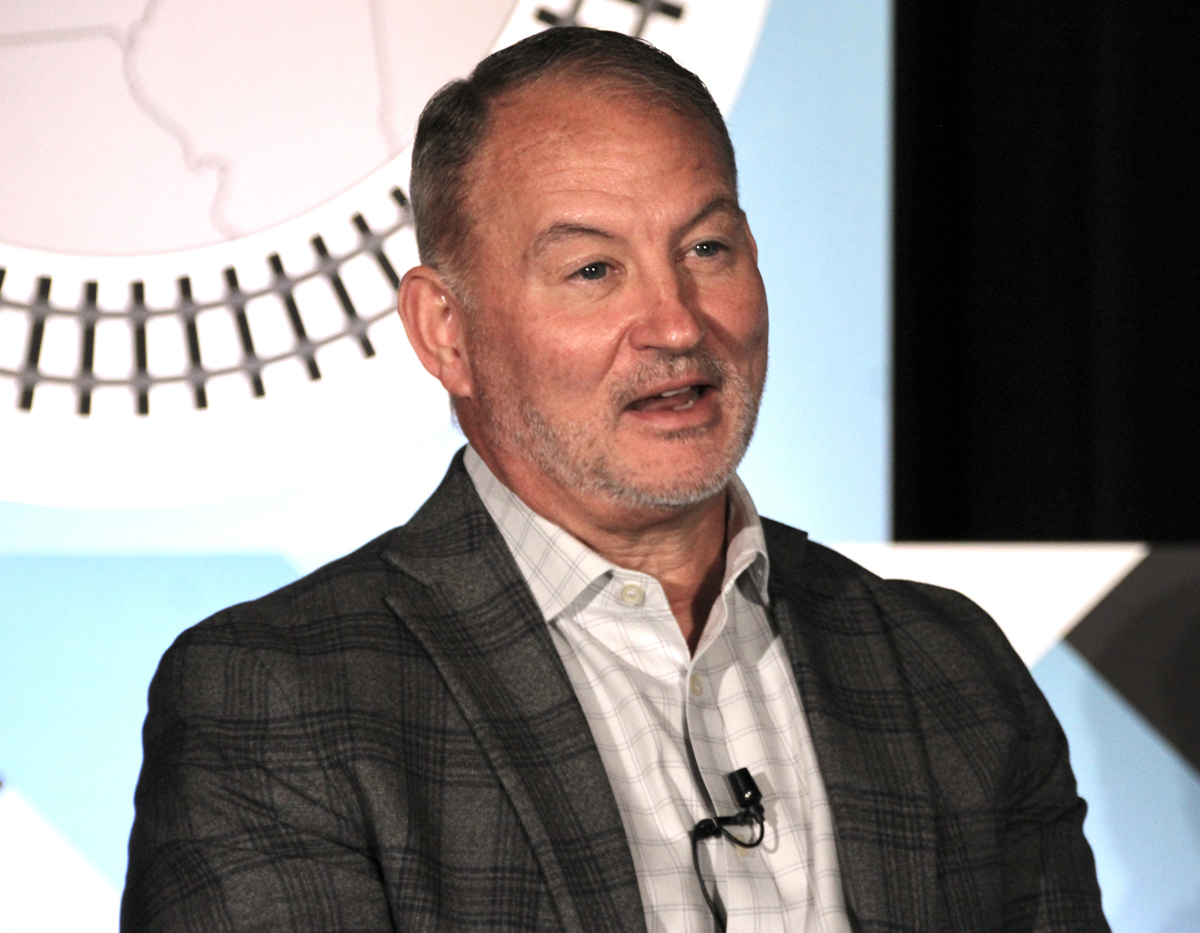
The best example of that range of use and potential may have been expressed as part of a larger discussion of the shortline industry by four CEOs: Michael Miller of Genesee & Wyoming, Justin Broyles of R.J. Corman, Jon Carnes of the Wheeling & Lake Erie and Transtar, and Joe Parsons of Iowa Interstate.
Miller said G&W is “bullish” to find ways to apply AI. The company has initially deployed it in its back-office functions “so we can free up time for our people to do other, more value-added things,” he said, and is starting to use it to address the health of its assets, as is increasingly the case at Class I railroads through programs like automated track inspection.
But, he said, its biggest inroads could come in making it easier for customers to do business with railroads. He cited the example of logistics firm C.H. Robinson, which — on its website — calls itself the “No. 1 global leader in Lean AI supply chains.”
Said Miller: “C.H. Robinson has just turned that ship around in a great recession. And it’s all driven through AI technology. They’re handling like 30,000 rate quotes a day without touching anything. … That goes toward removing that friction from the customer experience. I think we need to focus a little attention there.”
And, as Miller pointed out, G&W is currently involved with startup Parallel Systems in the testing of autonomous intermodal cars on two of its railroads in Georgia, a project he called “Waymo on our railroad.” The challenge there, he said, is the lengthy proving process required to gain Federal Railroad Administration approval.
“We’ve been working on Parallel Systems for four years now, and we’re still not in a commercialized state,” he said. “It’s hard for companies, particularly technology companies, to exist for four years without making any money. … We’ve got to get in a position where we can take technology and fully leverage it and allow technology to grow in our industry.”
Carnes said it is a “grand slam to use AI to get better reporting to make better decisions with,” but he also injected a note of caution to be “careful that we don’t overuse it, because we want our customers to be able to reach out to us to have that personal contact. That’s our special sauce in the shortline industry, right?”
Parsons said Iowa Interstate has always been an early adopter of technology in general, but it’s still trying to figure out the best applications for AI. Its operating systems group, which brings together its tech people and those with field experience, is “kind of dipping their toe into it,” he said.
“I’m sure our Class I friends are well ahead of us in that,” Parsons said, “and whatever we can learn from them, we will.”
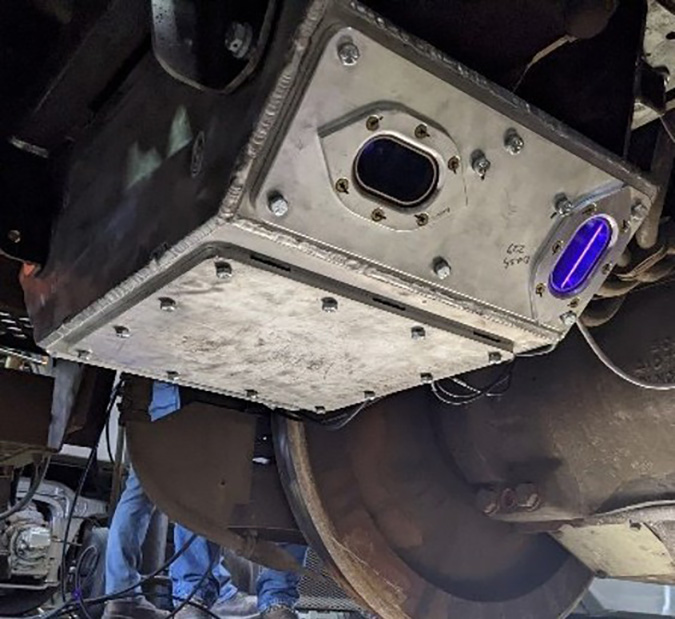
BNSF CEO Katie Farmer did, indeed, highlight her railroad’s efforts in technology, including AI. The railroad’s efforts in that area already include its in-house development of a locomotive-based track inspection system [see “BNSF rolls out …,” Trains.com, Dec. 9, 2025]. And last year, the company brought in Anju Gupta, with a background of more than 20 years in data and analytics, as chief data and AI officer.
“The minute she came on with us,” Farmer said, “we were getting applications from data scientists that wanted to come to work in the rail industry. For me, that’s exciting.”
BNSF, Farmer said, will use AI “across every aspect — changing our customer portal, getting more predictive ETAs. And you can see it starting to roll out across everything we’re doing.”
Janet Drysdale, Canadian National’s chief commercial officer, also mentioned automated track inspection among her company’s tech efforts.
“We have automated track inspection cars now that run in regular train service, covering our track well, well above the regulatory standards for track inspection, but more importantly, giving us the data and predictive analytics to fix things before they break,” she said. “And we’re doing that with our railcar portals as well.” [CN has been emphasizing both those programs for a number of years; see “Canadian National keen on adopting …,” Trains.com, June 5, 2019].
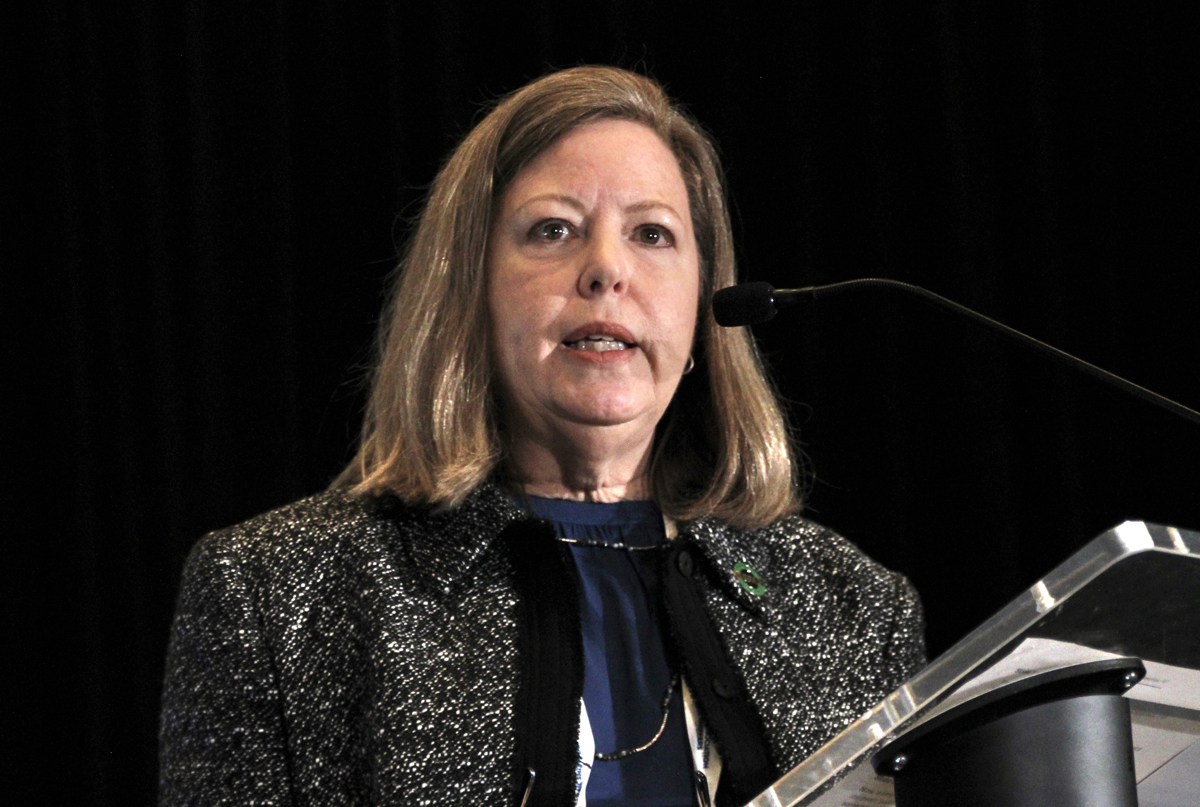
Railroads are not the only ones in the rail industry using AI, or still figuring out how best to use it. Lorie Tekorius, CEO of railcar manufacturer The Greenbrier Cos., had a foot in both camps.
She said Greenbrier is using AI in its production facilities to monitor safety practices, and suggested some other conference attendees were likely doing the same.
“You’re using CCTV to monitor what’s going on in the shop and to highlight if there’s unsafe practices,” she said. “Because while we all want to have that safety foreman or personnel who’s looking out for our workers, they can’t be everywhere all the time. So that’s an area where AI has really been helpful in our shops, to help us identify where we can get more safe.”
She later added, “As a leader, I have to admit I struggle a little bit with AI and trying to understand how I’m supposed to use it. But I’m willing to put that out there. I don’t know it all that much, but I know there’s a lot of people that do know better than I do, and they convince me that there’s a lot of opportunities for how this sort of technology can be used within our industry to make us bigger and stronger.”
— To report news or errors, contact trainsnewswire@firecrown.com.